
California Billionaire Tax Results, Proposition 40 Trails 56% to 44%, and Proposition 42 Could Block It Anyway
California’s Proposition 40, the one-time 5% billionaire wealth tax, is trailing in early returns from the November 3, 2026 election. The Associated Press had not called the race as of 5:05 a.m. Eastern Time on November 4, and California’s count is far from finished.
There is a second legal problem for the measure. Proposition 42, a competing constitutional amendment that would ban certain new state taxes on personal property, is leading. Under California’s rules for conflicting ballot measures, Proposition 42 could stop Proposition 40 from taking effect even if Proposition 40 later reaches a majority.
All times in this article are Eastern Time (ET). The source feeds report Pacific Time, and the figures below have been converted.
Quick Facts: California Proposition 40 Billionaire Tax Election Results
| Question | Latest information |
| Measure | California Proposition 40, “Imposes One-Time Tax on Certain Individuals and Trusts” |
| What it would impose | A one-time 5% tax on the net worth of qualifying billionaires |
| Proposition 40 result (4:30 a.m. ET, Nov 4) | 56.0% No, 43.9% Yes |
| No votes | 4,109,302 |
| Yes votes | 3,226,613 |
| Share of vote counted | 56.89% |
| Has the AP called Proposition 40? | No, as of 5:05 a.m. ET, Nov 4, 2026 |
| Competing measure | Proposition 42, a constitutional amendment limiting new state taxes on personal property and certain retroactive taxes |
| Proposition 42 result (4:11 a.m. ET, Nov 4) | 54.5% Yes, 45.4% No (3,939,406 Yes; 3,284,026 No; 56.01% counted) |
| Residency date used by the tax | January 1, 2026 |
| Campaign led by | SEIU United Healthcare Workers West (SEIU-UHW) |
| Official certification deadline | December 11, 2026 (California Secretary of State) |
| Official results source | California Secretary of State, Proposition 40 Official Voter Guide |
These are preliminary election-night numbers, not certified results. California counties keep counting and verifying ballots for weeks after Election Day.
Did California Pass the Billionaire Tax? Latest Proposition 40 Results
Not so far. Proposition 40 is behind by about 12 points in the latest count reviewed, but it has not been officially rejected.
| Time (ET), Nov 4 | Share counted | No | Yes |
| 3:18 a.m. | 54.67% | 56.3% (3,971,291) | 43.6% (3,078,488) |
| 4:30 a.m. | 56.89% | 56.0% (4,109,302) | 43.9% (3,226,613) |
The Yes share edged up between the two updates. That is a small move, and the gap is still large. Late-counted mail ballots in California can shift margins, so the safest description right now is that Proposition 40 is “trailing,” not “defeated.”
Why California’s vote count takes so long
California election officials must finish several steps before any statewide result becomes official.
- Late-arriving mail ballots. Under California Elections Code section 3020, mail ballots postmarked on or before Election Day are counted if they arrive within seven days.
- Signature verification and cure. Counties compare signatures on ballot envelopes and give voters a chance to fix problems, as set out in Elections Code section 3019.
- County canvass. Counties have 30 days after the election to complete their canvass under Elections Code section 15372, which puts the deadline at December 3, 2026.
- Statewide certification. The Secretary of State certifies the statewide results by the 38th day after the election under Elections Code section 15501. For this election, that is December 11, 2026.
- Recount rights. Any voter may request a recount within five days after the canvass is complete, at the requester’s own expense, under Elections Code section 15620.
Under Article II, Section 10(a) of the California Constitution, an initiative takes effect the fifth day after the Secretary of State files the statement of the vote, unless the measure sets a different date. So even a winning initiative does not become law on election night.
What Is California Proposition 40? How the One-Time 5% Billionaire Wealth Tax Works
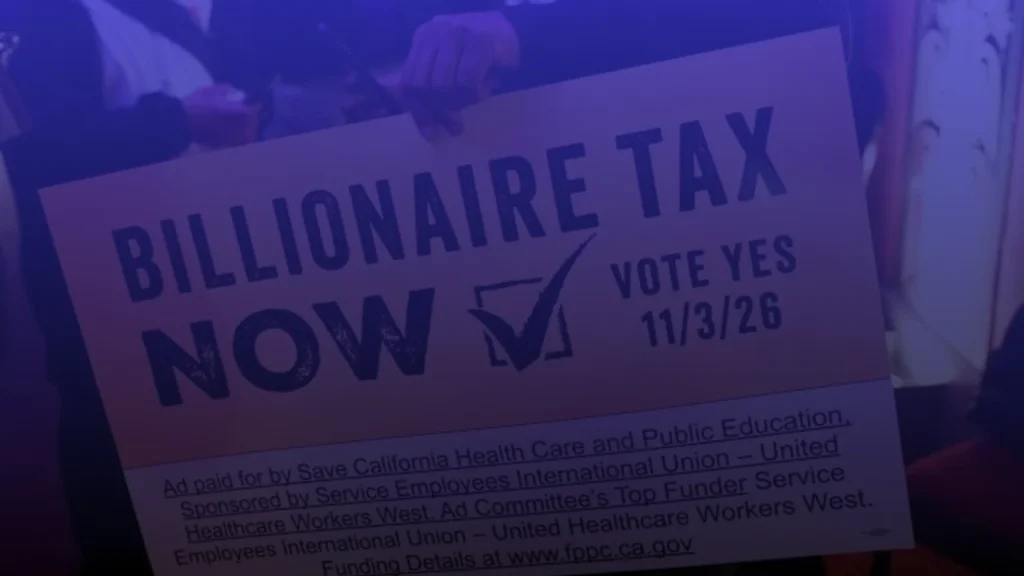
Proposition 40 is an initiative constitutional amendment and statute. It would impose a tax equal to 5% of the net worth of qualifying individuals and trusts holding more than $1 billion in covered assets who were California residents on January 1, 2026.
A wealth tax is different from an income tax. An income tax applies to what you earn in a period. A wealth tax applies to the value of what you own, minus liabilities. Proposition 40 would not change California’s income tax rates, and it would not tax ordinary homeowners or families.
Who would pay the Proposition 40 billionaire tax?
The tax is aimed at individuals and certain trusts with covered assets above $1 billion. The residency date is the key detail. A person had to be a California resident on January 1, 2026, to be in the targeted group.
Voters decided the measure on November 3, 2026, so the tax looks back about ten months to set who is covered. That backward-looking design is one reason constitutional scholars flagged legal risk (more below).
Which assets would count under Proposition 40?
The covered-asset categories include:
- Stocks and securities
- Business interests
- Intellectual property
- Art and collectibles
- Certain investment holdings and other personal property
Under the Legislative Analyst’s Office (LAO) analysis, real estate, pensions and many retirement accounts were generally excluded. The measure also includes valuation, liability, trust and anti-avoidance rules to calculate the taxable amount.
When would billionaires have paid the Proposition 40 tax?
According to the LAO, payment would have been due in 2027. Taxpayers could pay in one installment or elect to spread payments over five years at a higher total cost. It is a one-time tax, not an annual 5% charge.
Would moving out of California have avoided the tax?
Not automatically. Because the residency test is fixed at January 1, 2026, moving away later in the year would not by itself remove someone from the tax base. The measure also contains provisions aimed at transfers to trusts and similar arrangements.
This residency rule is the most contested feature of the measure and the center of the constitutional arguments discussed below.
How Much Money Would the California Billionaire Tax Raise?
Two estimates are in circulation, and they are far apart.
| Source | Estimate |
| SEIU-UHW (campaign sponsor) | Roughly $100 billion for healthcare and education over five years |
| California Legislative Analyst’s Office (nonpartisan) | Tens of billions of dollars spread over several years |
The LAO said the real number depends on taxpayer wealth, stock and business valuations, residency disputes, treatment of debts and trusts, and how taxpayers respond. Readers should treat the $100 billion figure as the union’s projection, not a guaranteed result.
Where would Proposition 40 revenue have gone?
| Share | Purpose |
| 90% | Healthcare services |
| 10% | Food assistance, education-related programs and administration of the tax |
The measure also barred using the new money simply to replace existing funding for those purposes. Proposition 40 would not have given Medi-Cal enrollees a fixed payment. The state would have decided how to spend the money within the measure’s rules.
What happens to Medi-Cal and healthcare funding if Proposition 40 fails?
Nothing changes automatically. Medi-Cal and other programs keep running on their existing federal and state funding sources, which depend on federal law and the California state budget. A defeat of Proposition 40 removes one proposed source of replacement money. It does not repeal any existing program.
Who Supported and Opposed Proposition 40?
SEIU-UHW led the campaign. Supporters argued California needed new revenue to offset federal healthcare funding cuts, and SEIU-UHW estimated the state could lose roughly $100 billion in federal healthcare funding over five years. U.S. Senator Bernie Sanders publicly backed the measure.
Governor Gavin Newsom opposed it, citing the risk that wealthy residents and business owners would leave California. His argument is that the state relies heavily on income taxes paid by high earners, so losing even some of them could cost more in recurring revenue than a one-time tax raises.
Sergey Brin, Larry Page and Mark Zuckerberg
Google co-founder Sergey Brin became one of the largest financial figures on the opposition side, according to AP reporting. AP also reported that Brin and Larry Page began cutting ties with California as the proposal advanced, and that Mark Zuckerberg made arrangements with Meta that would let him pay the proposed tax without losing his ownership stake. Whether any individual would actually have owed the tax depends on the measure’s residency rule, asset definitions and any court challenge.
How much did each side spend?
AP described the fight as one of the most expensive state ballot campaigns in California history and reported that the No side raised roughly ten times as much as the Yes side. Contribution totals can overlap because some committees spent on more than one proposition, so check the California Fair Political Practices Commission contributor list before quoting a specific dollar figure.
Can Proposition 42 Block the Billionaire Tax Even if Proposition 40 Passes?
Yes, potentially. This is the most important legal point in the election.
What is Proposition 42?
Proposition 42 is a proposed amendment to the California Constitution. It would prohibit new state taxes on personal property, including:
- Business interests
- Intellectual property
- Financial assets and investment accounts
- Other personal property
It would also prohibit certain retroactive taxes, meaning taxes based on conduct, activity or status that occurred before the tax took effect. The restrictions apply to taxes enacted or taking effect on or after January 1, 2026. Proposition 40 taxes exactly those kinds of assets using a January 1, 2026 residency date, which is why the two measures collide.
What are the latest Proposition 42 results?
At 4:11 a.m. ET on November 4, with 56.01% of the vote counted:
| Vote | Percentage | Votes |
| Yes | 54.5% | 3,939,406 |
| No | 45.4% | 3,284,026 |
In the reported counts, Proposition 42’s Yes total is higher than Proposition 40’s Yes total.
How does California decide between conflicting ballot measures?
Article II, Section 10(b) of the California Constitution says that when provisions of two or more measures approved at the same election conflict, the provisions of the measure receiving the highest number of affirmative votes prevail. Proposition 42 also has its own language stating that conflicting measures on the same ballot are void if Proposition 42 receives more affirmative votes. The LAO specifically warned voters that Proposition 42 could keep Proposition 40 from taking effect even if Proposition 40 receives a majority.
What about Proposition 41?
Proposition 41 is a separate constitutional amendment. It would bar certain new state taxes that exclude their revenue from the state spending limit (the Gann limit under Article XIII B of the California Constitution) and require audits of programs funded by certain special taxes. It also contains a competing-measure clause.
At 3:19 a.m. ET on November 4, Proposition 41 was trailing, with 47.7% Yes and 52.2% No. Proposition 42 is the more serious obstacle to the billionaire tax.
Three possible outcomes for Proposition 40
| Scenario | Legal consequence |
| Proposition 40 loses the final vote | The billionaire tax does not take effect. |
| Proposition 40 wins, and Proposition 42 also passes with more Yes votes | Proposition 42’s conflict provision and Article II, Section 10(b) could make Proposition 40’s conflicting provisions ineffective. Courts may be asked to decide the exact scope. |
| Proposition 40 wins, and Proposition 42 fails or does not conflict | The tax would take effect under Article II, Section 10(a), then face implementation and likely court challenges. |
Right now, it is too early to say Proposition 42 has “killed” the tax. The certified totals and any later court ruling will decide that.
Is Proposition 40 Constitutional? Legal Challenges the Billionaire Tax Would Have Faced
These are legal arguments made before the election, not court rulings. No court has decided whether Proposition 40 is constitutional.
Retroactive taxation and the Fourteenth Amendment
The tax uses a January 1, 2026 residency date even though voters acted in November. Critics argue this is a retroactive tax that raises Due Process Clause problems under the Fourteenth Amendment. In United States v. Carlton, 512 U.S. 26 (1994), the Supreme Court held that retroactive tax changes are not automatically unconstitutional, but the analysis turns on factors like how long the retroactive period is and whether the legislature had a legitimate purpose. Older decisions, including Blodgett v. Holden, 275 U.S. 142 (1927), Untermyer v. Anderson, 276 U.S. 440 (1928), and Welch v. Henry, 305 U.S. 134 (1938), also address limits on retroactive taxes, and challengers would likely cite them.
Right to travel and residency
A tax tied to January 1 residency can reach people who established residence in another state later in 2026. Challengers could argue this burdens interstate movement, relying on cases such as Saenz v. Roe, 526 U.S. 489 (1999), which recognized a constitutional right to travel and to be treated as a new resident of a state.
Commerce Clause and due process nexus
A state may tax only where it has sufficient connection to the taxpayer and the property taxed. Under Complete Auto Transit, Inc. v. Brady, 430 U.S. 274 (1977), a state tax must apply to an activity with substantial nexus to the state, be fairly apportioned, not discriminate against interstate commerce, and be fairly related to state services. Opponents argue taxing the full value of business interests and financial assets owned by someone who has left California may fail those requirements. The Tax Foundation published a legal analysis of Proposition 40’s constitutional issues making these points.
Valuation of private businesses
Privately held companies, intellectual property and complex trusts have no daily market price. Critics question how valuation disputes and penalties would work. The measure contains valuation rules, but they would likely be tested in court if the tax took effect.
What Happens to California Billionaires if Proposition 40 Fails?
If Proposition 40 fails or is nullified, no one owes the 5% tax and there is no 2027 payment under the measure. Wealthy residents still pay everything they pay today:
- California personal income tax
- Tax on capital gains when gains are recognized
- Applicable business taxes
- Federal income and estate tax
Would Proposition 42 stop California from taxing capital gains?
No. Proposition 42 targets new taxes on owning personal property and certain retroactive taxes. A tax on gains realized when an asset is sold is an income tax, and existing income tax law would continue. California could also still consider income taxes, sales taxes and other lawful taxes that do not conflict with the amendment. The exact limits would depend on the final text and future court interpretation.
Will California Try Another Billionaire Tax in 2028?
SEIU-UHW president Dave Regan has said the union could return in 2028 if the Legislature does not find another healthcare funding solution. That is a stated possibility, not an approved ballot measure.
A new proposal would have to work within the California Constitution as it stands after this election, including Proposition 42 if it passes. Sponsors might redesign the tax to be prospective rather than retroactive, or use a different approach such as an income-based tax. Whether any alternative is legal would depend on its exact language.
What Happens Next After the November 3, 2026 California Election?
| Date | What happens |
| November 3, 2026 | Election Day |
| November 4 onward | Counties keep counting and verifying mail and provisional ballots |
| December 3, 2026 | County canvass deadline (Elections Code section 15372) |
| December 11, 2026 | Secretary of State certification deadline (Elections Code section 15501) |
| 2027 | Date the tax would have been due if Proposition 40 had taken effect |
| 2028 | SEIU-UHW says it could pursue another proposal |
Watch the final counts for Proposition 40 and Proposition 42. If Proposition 40 stays below 50%, the tax fails. If it passes and Proposition 42 gets more Yes votes, the conflict rule could still stop it.
Related Reading From AllAboutLawyer.com
- Voting Rules and Legal Challenges Ahead of the 2026 Midterms, The Complete Picture
- DOJ Lawsuit Against California Over Mail-In Ballots: Trump’s Jail Threat, California’s Response and the Laws at Issue
- Can Trump Force California to Throw Away 20,000 Ballots? What the Supreme Court Just Decided
Frequently Asked Questions About the California Proposition 40 Billionaire Tax
Did California pass the Proposition 40 billionaire tax?
Not as of the latest count. At 4:30 a.m. ET on November 4, 2026, Proposition 40 was losing 56.0% No to 43.9% Yes with 56.89% counted, and the AP had not called the race as of 5:05 a.m. ET.
What is California Proposition 40?
It is a proposed one-time 5% tax on the net worth of qualifying billionaires and certain trusts that were California residents on January 1, 2026.
How much would California billionaires have paid under Proposition 40?
5% of qualifying net worth, as a one-time tax. Taxpayers could choose to pay over five years at a higher total cost.
Would Proposition 40 apply to billionaires who left California?
The tax uses a January 1, 2026 residency date, so leaving later in the year would not automatically remove someone from the tax base. That feature raises constitutional questions.
Would Proposition 40 tax homeowners or ordinary Californians?
No. It targets qualifying billionaires, and real estate and many retirement accounts were generally excluded under the LAO analysis.
Does Proposition 40 tax stocks and private business ownership?
Yes. Stocks, securities and business interests were among the covered asset types.
How much money would the California billionaire tax raise?
The LAO projects tens of billions of dollars over several years. SEIU-UHW projects roughly $100 billion over five years. Both are estimates.
Where would the Proposition 40 money go?
90% to healthcare services and 10% to food assistance, education-related programs and tax administration.
Can Proposition 42 cancel Proposition 40 in California?
Potentially. Under Article II, Section 10(b) of the California Constitution and Proposition 42’s own language, a conflicting measure can be overridden if Proposition 42 gets more Yes votes. The LAO flagged this conflict.
Is Proposition 42 winning?
At 4:11 a.m. ET on November 4, it led with 54.5% Yes and 45.4% No, with 56.01% of the vote counted. It is not final.
What is California Proposition 41?
A proposed constitutional amendment on state spending-limit treatment of certain taxes and audits of special-tax programs. It was trailing at 3:19 a.m. ET with 47.7% Yes and 52.2% No.
Did Gavin Newsom support Proposition 40?
No. Governor Newsom opposed it, citing the risk of wealthy residents leaving California and reducing recurring income tax revenue.
Who supported Proposition 40?
SEIU United Healthcare Workers West led the campaign, with backing from Senator Bernie Sanders and other advocates.
When will California certify the Proposition 40 results?
The Secretary of State has until December 11, 2026.
Will California try a billionaire tax again?
Possibly. SEIU-UHW’s president has said the union could try again in 2028.
Final Takeaway: Proposition 40 Is Trailing, and Proposition 42 Adds a Second Obstacle
California’s one-time 5% billionaire tax is losing in the early count, with roughly 56% voting No and 44% voting Yes. Proposition 42 is leading and carries a conflict rule that could block Proposition 40 even if the margin narrows. Neither outcome is official until counties finish counting and the Secretary of State certifies the results by December 11, 2026.
Sources and Legal References
Official California election and ballot materials
- California Secretary of State, Proposition 40 Official Voter Guide
- California Secretary of State, Proposition 42 Official Voter Guide
- California Secretary of State, Elections
- California Fair Political Practices Commission, November 2026 contributor list
Fiscal analysis
- Legislative Analyst’s Office, Proposition 40 analysis
- Legislative Analyst’s Office, Proposition 41 analysis
- Legislative Analyst’s Office, Proposition 42 analysis
Results and news
- KQED/AP, Proposition 40 live results
- KQED/AP, Proposition 42 live results
- Associated Press, California billionaire tax vote
- CalMatters, Propositions 40, 41 and 42
- Tax Foundation, Proposition 40 legal analysis
Constitutional provisions, statutes and cases
- California Constitution, Article II, Section 10
- California Elections Code sections 3019, 3020, 15372, 15501 and 15620
- U.S. Constitution, Fourteenth Amendment
- United States v. Carlton, 512 U.S. 26 (1994)
- Untermyer v. Anderson, 276 U.S. 440 (1928)
- Welch v. Henry, 305 U.S. 134 (1938)
- Blodgett v. Holden, 275 U.S. 142 (1927); Saenz v. Roe, 526 U.S. 489 (1999); Complete Auto Transit, Inc. v. Brady, 430 U.S. 274 (1977)
AllAboutLawyer.com is an independent legal information website, not a law firm. This article is for education and is not legal advice.
Researched and written by Israr Ahmad, legal content researcher and founder of AllAboutLawyer.com. All facts verified against AP election results as reported through KQED, the California Secretary of State’s official voter guide and the Legislative Analyst’s Office analysis, as of November 4, 2026, 5:05 a.m. ET. Last Updated: November 4, 2026.
About the Author
Israr Ahmad is a legal content researcher with 4+ years of experience covering class action settlements and consumer rights cases. He has researched and published coverage of 2,500+ settlements using verified court records, settlement administrator filings, and government sources. Learn more about Israr.