
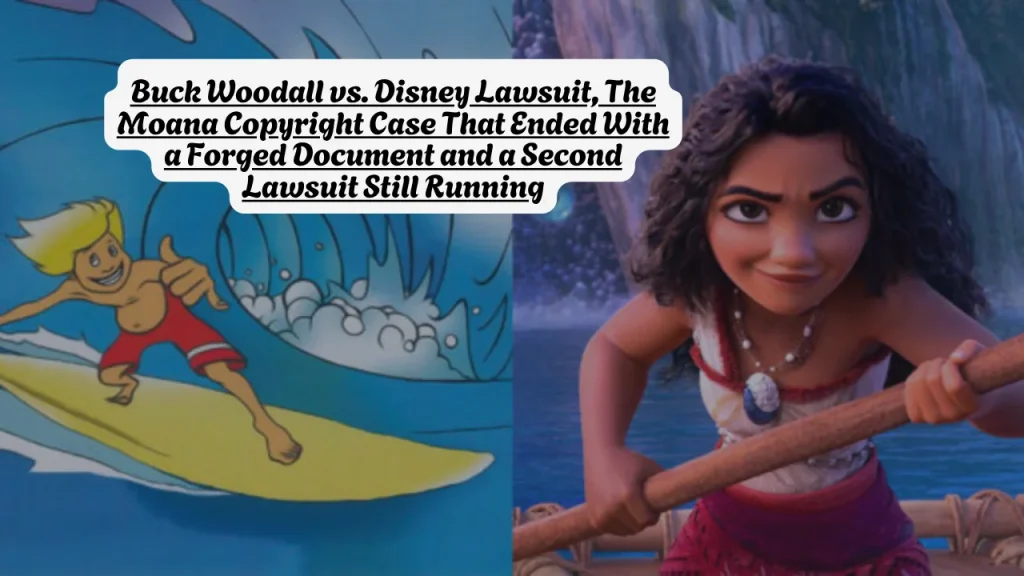
Buck Woodall vs. Disney Lawsuit, The Moana Copyright Case That Ended With a Forged Document and a Second Lawsuit Still Running
Disney was awarded $1.6 million in attorney fees after a federal judge ruled that animator Buck Woodall had brought federal and California trade-secret misappropriation claims in bad faith — and that Woodall had forged a key confidentiality agreement and backdated it to support those claims. The original Moana copyright case is over. But the story is not. Woodall filed a new lawsuit in January 2025 accusing Disney of plagiarizing his project for Moana 2, seeking $10 billion in damages — and that case is still active.
Quick Facts: Woodall v. Disney — Both Cases
| Field | Detail |
| Plaintiff | Buck G. Woodall |
| Defendant | The Walt Disney Company; Buena Vista Home Entertainment |
| Woodall I Case No. | 2:20-cv-03772, U.S. District Court, Central District of California |
| Woodall II Case No. | 2:25-cv-00273, U.S. District Court, Central District of California |
| Presiding Judge | Senior U.S. District Judge Consuelo B. Marshall |
| Woodall I Status | Concluded — jury verdict for Disney (March 10, 2025); $1.6M attorney fee award (May 2026); Woodall’s attorney stated intent to appeal |
| Woodall II Status | Active — no trial date set as of May 2026 |
| Woodall I Damages Sought | $100 million |
| Woodall II Damages Sought | $10 billion |
| Woodall’s Project | Bucky / Bucky the Wave Warrior / Bucky the Surfer Boy — developed from early 2000s to 2011 |
| Last Updated | May 17, 2026 |
What Woodall Claimed Disney Stole from His “Bucky” Project
Buck Woodall claimed that Disney’s 2016 blockbuster animated film Moana infringed on his screenplay Bucky the Wave Warrior. Woodall alleged he invested over 15 years and $500,000 developing the project, which included character designs, a full screenplay, and a theatrical trailer.
Woodall claimed he showed a presentation package and draft script for a film called “Bucky the Surfer Boy” to Jenny Marchick in 2003. At the time, Marchick worked at Mandeville Films, a movie production company located on the Disney studio lot in Burbank, California. Woodall argued that Marchick shared his proprietary materials with Disney Animation, which then released Moana 13 years later.
Woodall argued that Moana and Bucky were substantially similar — both featured teenagers defying parental warnings to embark on dangerous ocean voyages to save an endangered Polynesian island, protagonists who learn about ancient Polynesian culture while at sea, animal spirits that guide the hero, and a demigod character wielding a giant hook with tattoos.
Disney denied all of it. Moana directors John Musker and Ron Clements testified they had never heard of Woodall or his Bucky works, and that their film was an independent creation based on research and a desire to bring Polynesian stories to life through animation. Disney produced over 2 million emails and 20-plus terabytes of development data — none of which contained any reference to Woodall or Bucky.
How the Forged Document Ended the First Case
The Moana copyright trial was already extraordinary. What happened next made it historic.
When the case went to trial, Woodall admitted that before filing his lawsuit in 2020, he had put Marchick’s name on the confidentiality agreement, which had actually been signed by a Hawaii model who had worked for him. Woodall then backdated it to October 22, 2003, and attached a copy of the forged document to his complaint.
The judge also found that Woodall falsely alleged he had not seen Moana until June or July 2017, despite knowing he had seen the film in theaters in 2016 and on DVD at the latest in March 2017 — a lie designed to avoid the statute of limitations.
Related article: George Clinton Is Suing UMG for $1.1 Million in Frozen Royalties and the Reason Why Makes It Worse
The eight-person jury, six women and two men, deliberated for just two and a half hours before finding that Disney’s Moana creators never had access to Woodall’s materials. With that finding, the jury did not need to decide whether the two films were substantially similar.
Then came the attorney fee ruling. Senior U.S. District Judge Consuelo Marshall agreed with Disney that Woodall had in bad faith brought federal and California trade-secret misappropriation claims, ruling the misrepresentations showed that the claims were “objectively specious and brought/maintained with subjective bad faith.” Disney was awarded $1.6 million.
Woodall’s attorney stated they vehemently disagree with the judge’s findings and believe the orders are ripe for appellate review. Disney’s attorneys did not comment.
This case is a significant lesson for anyone considering an intellectual property lawsuit or copyright infringement claim: fabricating or backdating evidence is not just a failed legal strategy — it becomes the legal outcome itself. For background on how courts evaluate access and similarity in copyright cases, see our breakdown of the Spotify royalty and copyright infringement battles reshaping the music industry.
The Second Lawsuit — Woodall vs. Disney Over Moana 2 — Is Still Active
While Woodall I ended in Disney’s favor, Woodall filed a second lawsuit the moment Moana 2 gave him new grounds.
Woodall filed Buck G. Woodall v. The Walt Disney Company et al., Case No. 2:25-cv-00273, in the U.S. District Court for the Central District of California on January 10, 2025. This lawsuit seeks $10 billion in damages and alleges that Moana 2 continues the infringement of his copyrighted Bucky materials.
The second lawsuit points to several additional similarities between Moana 2 and Bucky: both involve missions to locate ancient islands and break curses, both feature a whirlpool-like oceanic portal, both include a large creature hidden in a mountain, and both use a symbolic necklace as a central plot element.
Disney’s attorneys are expected to seek dismissal of Woodall II based on the jury’s verdict in Woodall I — specifically through the legal doctrines of res judicata (claim preclusion) and collateral estoppel (issue preclusion), which can prevent re-litigating issues already decided by a court. No trial date has been set.
Are You Part of the Buck Woodall Disney Lawsuit?
This is not a class action. It is an individual copyright dispute between one plaintiff and Disney. There is no claim form, no settlement fund, and no consumer class affected.
This case matters to a different audience — writers, animators, screenwriters, and independent creators who pitch ideas to studios or production companies. If that describes you, here is what the Woodall case teaches:
- You may have a legitimate copyright claim if you pitched original materials to a production company with documented ties to a major studio, and that studio later released a project with substantial similarities to your work — and you can prove the studio had access to your materials
- The access question is decisive. Without evidence that someone who worked on the studio’s project actually saw your materials, similarity alone is not enough — the Woodall I jury never even reached the similarity question because access was not proven
- Document everything in real time. Woodall’s case collapsed in part because the evidence supporting his access theory was created or altered after the fact
- Statute of limitations is strict. Woodall’s claims as to Moana’s theatrical release were found time-barred, which is why the first trial focused only on Disney’s home video distribution arm, Buena Vista Home Entertainment. If you believe your work was stolen, consult a consumer rights lawyer or entertainment attorney immediately — waiting costs you claims
Woodall vs. Disney — Full Case Timeline
| Milestone | Date |
| Woodall pitches Bucky materials to Jenny Marchick at Mandeville Films | 2003–2011 |
| Disney releases Moana in theaters | November 2016 |
| Woodall claims he saw Moana (per court findings) | 2016 / early 2017 |
| Woodall files Woodall I — copyright lawsuit against Disney | April 24, 2020 |
| Court dismisses claims against Disney’s primary studios as time-barred; case narrowed to Buena Vista | November 2024 |
| Eight-person jury finds Disney had no access to Bucky materials — verdict for Disney in Woodall I | March 10, 2025 |
| Woodall files Woodall II — new lawsuit targeting Moana 2 | January 10, 2025 |
| Judge Marshall awards Disney $1.6M in attorney fees — trade secret claims brought in bad faith | May 2026 |
| Woodall’s attorney signals intent to appeal attorney fee ruling | May 2026 |
| Woodall II trial date | TBD — no date set as of May 17, 2026 |
Frequently Asked Questions
Is there a class action lawsuit against Disney over Moana?
No. Both the Woodall I and Woodall II cases are individual copyright and trade-secret lawsuits. No class of consumers is affected, and no claim form exists.
Did Disney steal the idea for Moana from Buck Woodall?
A federal jury found in March 2025 that Disney’s Moana creators never had access to Woodall’s Bucky materials. Without proven access, the copyright infringement claim cannot succeed regardless of any similarities between the two works.
Why did Disney get $1.6 million from Woodall?
The court found that Woodall brought his trade secret claims in bad faith — specifically because he forged a confidentiality agreement, backdated it to 2003, and falsely claimed he had not seen Moana until 2017 to avoid the statute of limitations. Attorney fee awards are a consequence courts impose when litigation is found to be objectively meritless and conducted dishonestly.
Is the Moana 2 lawsuit still active?
Yes. Woodall II, Case No. 2:25-cv-00273, was filed January 10, 2025 in the Central District of California and is still pending. No trial date has been set. Disney is expected to seek dismissal based on the Woodall I verdict.
Can Woodall appeal the $1.6 million attorney fee ruling?
Woodall’s attorney has stated they vehemently disagree with the judge’s findings and believe the orders are ripe for appellate review. An appeal has not been confirmed filed as of this writing.
What does the Woodall case mean for independent creators pitching to studios?
It underscores that proving access is more important than proving similarity in copyright cases — and that altering or backdating evidence to support a claim exposes a plaintiff to fee awards that can exceed the value of the original suit.
Sources & References
- Courthouse News Service: Disney Wins $1.6M in Attorney Fees for Defending Moana Trade Secrets Claims, May 2026
- Justia Dockets: Buck G. Woodall v. The Walt Disney Company, Case No. 2:20-cv-03772
- Justia Dockets: Buck G. Woodall v. The Walt Disney Company et al., Case No. 2:25-cv-00273
Disclaimer: This article is for informational purposes only and does not constitute legal advice. Legal claims and outcomes depend on specific facts and applicable law. For advice regarding your particular situation, consult a qualified intellectual property or entertainment attorney.
Prepared by the AllAboutLawyer.com Editorial Team and reviewed for factual accuracy against official court records and verified news reporting. Last Updated: May 17, 2026.
About the Author
Israr Ahmad is a legal content researcher with 4+ years of experience covering class action settlements and consumer rights cases. He has researched and published coverage of 2,500+ settlements using verified court records, settlement administrator filings, and government sources. Learn more about Israr.