
Blueface Reportedly Detained During Kick Livestream in Santa Clarita, What the Sheriff’s Station Confirmed, California Penal Code 148 and His Criminal Case History
Developing story, update log (October 20, 2026): Article published. Los Angeles County sheriff’s deputies detained one person on suspicion of misdemeanor obstruction while responding to a report of a man with a gun. Local outlet What’s Up SCV reported that the person was Blueface. The sheriff’s watch commander could not confirm the identity of the person detained. No charge against Blueface has been reported. This article will be updated when the sheriff’s station, a court record or reliable reporting adds facts.
Blueface Detention in Santa Clarita: What You Need to Know
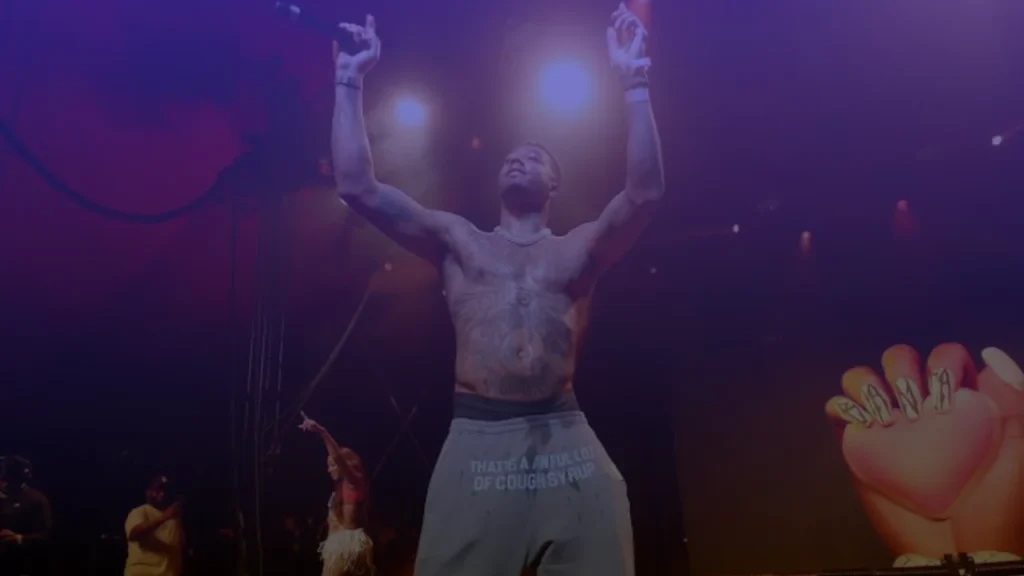
Rapper Blueface, whose legal name is reported as Johnathan Porter, was reportedly detained during a Kick livestream in Santa Clarita, California, on October 20, 2026, after Los Angeles County sheriff’s deputies responded to a report of a man with a gun at a local business.
According to the watch commander at the Santa Clarita Valley Sheriff’s Station, deputies went to the 24200 block of Magic Mountain Parkway after a caller said a man was armed. Deputies secured the scene and investigated. One person was detained on suspicion of misdemeanor delaying or obstructing deputies in the performance of their duties.
What is not confirmed: The watch commander could not confirm that the detained person was Blueface, and no formal charge against him has been reported. The identification comes from local outlet What’s Up SCV, as relayed by KTLA. The KTLA report also says it is unclear what prompted the report of an armed man and whether the person detained will face any charges.
The incident happened while Blueface was livestreaming on Kick, which helped it spread online. A viral video, a police detention, an arrest and a criminal charge are four different things. Nothing reported so far establishes that Blueface had a gun, was formally arrested, was booked, or will be prosecuted over this incident.
Quick Facts: The October 20, 2026 Santa Clarita Police Encounter
| Detail | What is currently reported |
| Person reportedly involved | Rapper Blueface (Johnathan Porter) |
| Date | October 20, 2026 |
| Location | 24200 block of Magic Mountain Parkway, Santa Clarita, California |
| Responding agency | Los Angeles County Sheriff’s Department, Santa Clarita Valley Sheriff’s Station |
| Initial call | Report of a man with a gun at a business |
| Livestream platform | Kick |
| Detention | One person detained on suspicion of misdemeanor delaying or obstructing deputies |
| Identity of the detainee | Reported as Blueface by What’s Up SCV; not confirmed by the watch commander |
| Gun found? | The report does not say one was found |
| Charge against Blueface | None reported |
| Official “swatting” label for this call? | Not in the October 20 reporting |
| Latest status | Investigation and any charging decision not clarified |
Why the wording matters: The accurate way to describe this story is that a detention occurred during a livestream in which Blueface was reportedly present. The identity of the detainee and any charge remain unconfirmed.
Why Did Sheriff’s Deputies Respond to the Magic Mountain Parkway Business?
Dispatchers received a call alleging that a man at a business was carrying a gun. Deputies treated it as an emergency. The report does not name the business, identify the caller, say why the caller believed someone was armed, or describe what commands deputies gave or what conduct led to the detention.
Was Blueface carrying a gun?
Nothing in the available reporting says so. The gun allegation is why deputies were dispatched. It is not a finding that anyone had a firearm, and a call alleging a weapon does not establish that a person had one or committed a crime.
Why was anyone detained if no armed man was found?
Deputies responding to a possible armed person may need to work out who is present, secure the area and investigate. That a report later proves unsubstantiated does not by itself make the initial response unlawful, but it also does not give officers unlimited power to detain people. Whether a specific detention was lawful depends on what officers knew and saw and whether they had a lawful basis to keep restraining someone. The public report does not give enough detail to judge that.
California Penal Code 148(a)(1): The Obstruction Law Behind the Reported Detention
The reported suspicion of “delaying or obstructing deputies” resembles the offense in California Penal Code Section 148(a)(1), commonly called resisting, delaying or obstructing a peace officer. The watch commander did not name a code section, so treat § 148(a)(1) as the likely relevant law, not a confirmed charge.
What does Penal Code 148(a)(1) prohibit?
It makes it a misdemeanor to willfully resist, delay or obstruct a public officer, peace officer or emergency medical technician in the discharge or attempted discharge of official duties, when no other punishment is prescribed. The maximum punishment is a fine of up to $1,000, up to one year in county jail, or both.
What must prosecutors prove under Penal Code 148(a)(1)?
California’s standard jury instruction generally requires prosecutors to show that:
- The officer was lawfully performing or attempting to perform official duties.
- The defendant willfully resisted, obstructed or delayed the officer in those duties.
- The defendant knew, or reasonably should have known, that the person was an officer performing or attempting to perform those duties.
Disagreeing with an officer is not automatically criminal obstruction, and prosecutors must prove every element beyond a reasonable doubt. The available reporting does not say what the detained person did.
Is livestreaming police a crime under Penal Code 148(g)?
No. Section 148(g) states that taking photographs or making an audio or video recording of a public or peace officer, when the officer is in a public place or the person recording is somewhere they have a right to be, does not by itself violate § 148(a). The recording alone also does not create reasonable suspicion to detain the person or probable cause to arrest them.
Recording does not grant immunity for other conduct. Someone can still face a lawful obstruction charge if the evidence independently proves the elements. The October 20 report says only that the incident happened during Blueface’s livestream. It does not say the livestream was the reason for the detention.
Is a police detention the same as an arrest?
No. A temporary detention lets officers investigate suspected criminal activity briefly when they have a legally sufficient basis. An arrest is a more substantial restraint and requires probable cause. A detention can end without an arrest, or turn into one if new information supplies probable cause. No formal arrest, booking or prosecution of Blueface has been confirmed.
For more on the limits of police authority, see Can ICE Agents Still Be Required to Identify Themselves? Federal Rules, California Law and What Residents Can Do.
Was the October 20 Incident Another Swatting Call Targeting Blueface?
Swatting means making a deliberately false emergency report to trigger a large police response at a target’s home or another location. Several earlier responses involving Blueface were later described by authorities or local reporting as hoaxes. The October 20 report does not officially classify this call as swatting or identify the caller. A call police cannot substantiate is not automatically a knowing lie, so it would be premature to call this a confirmed swatting attack.
Timeline of Reported Emergency Calls Involving Blueface in 2026
July 21, 2026, Canyon Country home. Blueface was livestreaming on Kick when deputies responded to his home after a report of a shooting. A Santa Clarita Valley Sheriff’s Station spokesperson said dispatchers received a report that a female had been shot, classified as assault with a deadly weapon. Video showed Blueface walking backward toward deputies, who handcuffed him and put him in a patrol vehicle. After searching the home, officials found no evidence of a shooting or any crime, and the sheriff’s station characterized it as swatting. The Independent, as relayed by Hoodline, reported that the hoax call claimed Blueface had fatally shot his girlfriend and tied up their daughter. See KHTS’s July 21 report.
August 23, 2026, King of Crab restaurant. Deputies responded around 5:27 p.m. to the restaurant after a report of a shooting or “severe violence.” Josh Nemeth of the Santa Clarita Valley Sheriff’s Station confirmed Blueface’s involvement, said he was detained and released, and said no crime occurred. Hoodline, citing Complex, reported that deputies detained Blueface at gunpoint. Video showed him cuffed while kneeling, and his partner, Nevaeh Akira, holding their newborn son. No suspect, weapon or victim was identified. Blueface was not arrested or charged. See TMZ’s August 24 report.
September 2–3, 2026, MB2 Entertainment. After a report that a person had brandished a weapon, a sheriff’s spokesperson described the call to KHTS as swatting directed at Blueface. The anonymous caller described what he was wearing. Deputies found no crime. See KHTS’s September 3 report.
September 30–October 1, 2026, Canyon Country home. Deputies responded after a caller alleged that a young child had been thrown to the ground. They found no children and could not locate the informant, and a spokesperson described it as another swatting call. TMZ also reported a second call that day describing a medical emergency. See KHTS and TMZ.
October 20, 2026, Magic Mountain Parkway. The latest call alleged a man with a gun at a business. No armed man was found, and one person was detained on suspicion of misdemeanor obstruction.
Who made the calls?
No suspect has been publicly identified in the reports reviewed, and authorities have not said the incidents are connected. Some coverage notes that the sheriff’s quotes do not always use the word “swatting,” and that some of the labeling comes from unnamed sources.
What Laws Apply to Swatting and False Emergency Calls in California and Under Federal Law?
If investigators prove that a caller knowingly made a false emergency report, several laws could apply. Which charge fits depends on what the caller said, what the caller knew, and what happened as a result.
California Penal Code Section 148.3: False emergency reports
Section 148.3 makes it a misdemeanor to knowingly report, or cause a report to be made, that an emergency exists when the report is false. The misdemeanor penalty is up to one year in county jail, a fine of up to $1,000, or both. It becomes punishable as a felony when the person knows the report is false, knows or should know the response is likely to cause death or great bodily injury, and someone actually suffers great bodily injury or dies. That version can carry a state-prison sentence or a fine of up to $10,000, or both. A person convicted may also be liable to the public agency for the reasonable cost of the emergency response. See California Penal Code Section 148.3.
California Penal Code Section 148.5: False reports of crimes
Section 148.5 makes it a misdemeanor to knowingly make certain false reports to law enforcement that a felony or misdemeanor has been committed. A fabricated report that someone committed a shooting or assault could fall under it, depending on the facts. See California Penal Code Section 148.5.
Federal hoax law: 18 U.S.C. § 1038
Federal law also makes it a crime to convey false information about activity that would violate certain federal laws, such as threats of violence, when the person knows the information is false. Penalties start at up to five years in prison and increase if someone suffers serious bodily injury (up to 20 years) or dies (any term of years or life). A convicted person can also be ordered to reimburse the cost of the response. Whether a particular swatting call meets the federal statute’s requirements depends on the facts, and no federal case has been reported here.
Does the October 20 report prove a swatting crime?
No. That deputies did not find an armed man does not alone show the caller knowingly lied. A mistaken report, a report based on incomplete information and a fabricated emergency are different. No caller has been identified and no charge from the call has been announced.
What Does the Fourth Amendment Say About Police Detentions During an Armed-Person Call?
The Fourth Amendment protects people against unreasonable searches and seizures, and a detention is a seizure. Under Terry v. Ohio, 392 U.S. 1 (1968), an officer may briefly detain someone to investigate when specific, articulable facts create reasonable suspicion of criminal activity. An arrest generally requires probable cause.
In a reported armed-person emergency, courts look at the content and credibility of the call, what officers saw, how people at the scene behaved, and how the situation unfolded. Courts have also recognized that officers may use handcuffs or draw weapons during a high-risk stop when the circumstances reasonably call for it, without that automatically turning a detention into an arrest. The analysis changes if a detention continues after its justification ends or if officers lacked a lawful basis to restrain someone at all. The October 20 report does not give enough evidence to decide whether this detention met the Fourth Amendment standard.
Can you sue if you are detained without a lawful basis?
Possibly, through a civil-rights claim or another remedy, depending on the facts and evidence. A brief detention that ends without charges does not automatically prove a violation, and being detained does not prove police acted lawfully either.
What to Do If Police Respond to a False Emergency Call at Your Location
Swatting responses are dangerous for everyone, including officers, so this is general information, not legal advice. Officers arriving at a reported shooting or armed-person call often cannot tell a real emergency from a hoax. Following clear commands, keeping hands visible and avoiding sudden movements lowers the risk of injury. You can say you do not consent to searches and ask for a lawyer, but argue your rights later, not at the scene. The Fifth Amendment protects against compelled self-incrimination, but it does not settle every question about what you must do in a police encounter. See What Is the 5th Amendment? Your Rights Against Self-Incrimination.
Who Is Blueface? Career and Background
Blueface is a Los Angeles rapper who rose to prominence in 2018 with “Thotiana,” which reached No. 8 on the Billboard Hot 100 in 2019. He released the album Find the Beat in 2020 and performed at Coachella in April 2026. His legal name is reported as Johnathan Jamall Porter, though some outlets shorten it or spell the first name “Jonathan.” He was 29 in October 2026. Livestreaming is central to his public presence and has featured in several of the police responses above.
His past cases explain his legal background, but they do not show he committed a new offense on October 20, 2026.
Blueface’s Previous Criminal Cases: What Actually Happened?
The key distinction is between arrests, allegations, dismissals, guilty pleas and sentences.
February 2019, loaded handgun charge dismissed. Blueface was charged with one felony count of carrying a loaded handgun without registration. It was dismissed in October 2019 for insufficient evidence, according to Pitchfork. It is not a firearms conviction.
September 2021, security guard assault allegation. Blueface was accused of assaulting a security guard at Skinny’s Lounge in the San Fernando Valley, according to TMZ’s contemporaneous report. The case led to probation. On August 9, 2024, he received a four-year prison sentence after a probation violation tied to that case, according to XXL.
October 8, 2022, Las Vegas shooting outside a club. Police initially pursued serious charges including attempted murder after a shooting outside the Euphoric Gentlemen’s Club. In July 2023, Blueface pleaded guilty to a felony firearms offense involving firing at a vehicle and a misdemeanor battery charge. On October 2, 2023, a Nevada judge sentenced him to three years of probation, warning that violations could bring a prison sentence of two to five years. See the Los Angeles Times.
June 2023, Las Vegas robbery charge dismissed. Blueface was arrested over an allegation involving a woman’s cellphone at the Palms Casino Resort. The robbery charge was dropped as part of the plea deal in the shooting case, so it is not a conviction. See the Las Vegas Review-Journal.
January 2024 to November 2025, probation violation, prison and release. He turned himself in during January 2024 over a probation violation, received the four-year sentence in August 2024, and was released on November 3, 2025 after roughly 21 months, according to Complex. No violation of any release condition has been reported in connection with the October 20 incident.
What Happens Next After the October 20 Santa Clarita Detention?
1. No charges. Authorities may release the detained person without charges if the investigation finds insufficient evidence of a crime.
2. A misdemeanor obstruction referral. If the detainee is identified and investigators believe the evidence supports the elements of Penal Code § 148(a)(1), they could refer it for charging review. No charge is confirmed.
3. A continued investigation of the caller. If evidence shows the call was knowingly fabricated, authorities could consider Penal Code §§ 148.3 and 148.5 or federal law. No caller has been identified.
4. No case against Blueface at all. If he was not the person detained, or if no evidence of a crime emerges, this may remain a police response tied to a livestream.
No reliable prediction is possible. A trustworthy update will come from the sheriff’s station, a booking record, a charging document or other reliable reporting.
Frequently Asked Questions About the Blueface Livestream Detention
Was Blueface arrested on October 20, 2026?
Not confirmed. Reports say one person was detained during an incident while Blueface was livestreaming. Local outlet What’s Up SCV said it was Blueface, but the sheriff’s watch commander could not confirm the person’s identity. No arrest, booking or charge against Blueface has been confirmed.
Why were deputies at Magic Mountain Parkway?
They responded to a call alleging that a man was armed with a gun at a business in the 24200 block of Magic Mountain Parkway. They found no armed man.
What was the person detained for?
Suspicion of misdemeanor delaying or obstructing deputies in the performance of their duties, according to the watch commander. The exact conduct has not been released.
What charges could Blueface face from this incident?
None has been reported. California Penal Code § 148(a)(1) resembles the reported suspicion, but authorities have not named a statute or confirmed the detainee’s identity.
Did police find a gun?
The reporting does not say a gun was recovered. Deputies determined there was no armed man at the location.
Was the October 20 incident officially swatting?
Not in the available report. Earlier incidents on July 21, September 3 and around September 30 were described as swatting by a sheriff’s spokesperson or local reporting, but the latest report does not identify the caller or say the call was deliberately false.
Is it illegal to livestream police in California?
Recording officers in a place where you have a right to be is not itself a violation of Penal Code § 148(a), under § 148(g). Separate conduct that meets the elements of obstruction can still be charged.
Can someone be charged for making a swatting call?
Potentially. Penal Code §§ 148.3 and 148.5 and the federal hoax statute, 18 U.S.C. § 1038, may apply if the caller knowingly made a false report. The penalties rise sharply if someone is seriously hurt or killed.
Is Blueface on probation?
His history includes probation in the Nevada shooting case and the California probation violation that led to prison. He was released in November 2025. The October 20 reporting does not confirm his current supervision status.
Sources
- KTLA, “Rapper Blueface reportedly detained while livestreaming in Southern California”: https://ktla.com/news/local-news/rapper-blueface-detained-livestream-southern-california/
- TMZ, August 24, 2026: https://www.tmz.com/2026/08/24/blueface-detained-by-police-on-live-stream/
- Hoodline reporting on the August 23 and September 30 incidents: https://hoodline.com/2026/10/blueface-s-canyon-country-home-targeted-in-swatting-call-deputies-say/
- iHeart 93.9 Beat, July 23, 2026: https://939beat.iheart.com/content/2026-07-23-blueface-detained-by-police-following-false-report-of-shooting-at-his-home/
- KHTS reports of July 21 and September 3, 2026, and TMZ, October 1, 2026 (links in the text above)
- California Penal Code §§ 148, 148.3 and 148.5 (Justia): https://law.justia.com/codes/california/code-pen/part-1/title-7/chapter-7/section-148/
- 18 U.S.C. § 1038 (U.S. Code)
- Pitchfork, XXL, Los Angeles Times, Las Vegas Review-Journal and Complex reports on the earlier cases (links in the text above)
This article is general legal information, not legal advice. Allegations, detentions, charges, pleas and convictions are different legal events and should not be treated as interchangeable.
Researched and written by Israr Ahmad, legal content researcher and founder of AllAboutLawyer.com. All facts verified against the KTLA report on the October 20 incident, local and entertainment reporting on the earlier incidents, and the text of the cited California and federal statutes, as of October 20, 2026. Last Updated: October 20, 2026.
About the Author
Israr Ahmad is a legal content researcher with 4+ years of experience covering class action settlements and consumer rights cases. He has researched and published coverage of 2,500+ settlements using verified court records, settlement administrator filings, and government sources. Learn more about Israr.