
Black Hawk County Jail Release Fee Class Action, Were You Forced to Pay Before Walking Out?
Roberts et al. v. Thompson et al. is a federal class action lawsuit filed in the U.S. District Court for the Northern District of Iowa, Eastern Division, alleging that Black Hawk County Sheriff Tony Thompson collected jail fees from convicted inmates through an unconstitutional process — forcing them to sign away their legal rights just to walk out the door. The case was filed in federal court and names Black Hawk County Sheriff Tony Thompson and Black Hawk County as defendants. No settlement exists yet. The Eighth Circuit Court of Appeals heard oral arguments on January 15, 2026, and a ruling is pending.
Roberts v. Thompson Quick Facts
| Field | Detail |
| Lawsuit Filed | May 13, 2024 |
| Defendant | Black Hawk County Sheriff Tony Thompson and Black Hawk County |
| Alleged Violation | Procedural Due Process Clause — 14th Amendment; 42 U.S.C. § 1983 |
| Who Is Affected | People convicted and sentenced at Black Hawk County Jail, Waterloo, Iowa, who signed a confession of judgment for jail fees on or after May 14, 2022 |
| Current Court Stage | Appeal pending — Eighth Circuit Court of Appeals, oral arguments heard January 15, 2026 |
| Court & Jurisdiction | U.S. District Court, Northern District of Iowa, Eastern Division; appeal at Eighth Circuit |
| Lead Law Firms | Public Justice (Debtors’ Prison Project), ACLU of Iowa, Fredrikson & Byron PA, Frerichs Law Office |
| Next Hearing Date | TBD — awaiting Eighth Circuit ruling after January 15, 2026 oral arguments |
| Official Case Website | publicjustice.net/case_brief/roberts-v-thompson |
| Last Updated | May 21, 2026 |
What Is the Black Hawk County Jail Fees Lawsuit About? Roberts et al. v. Thompson et al., Case No. 6:24-cv-02024
The lawsuit in federal court alleges that convicted prisoners were forced to sign a confession of judgment — agreeing to a balance and payment plan for administrative and room and board fees — before being released from the Black Hawk County Jail in Waterloo. The confession of judgment is an old legal document that lets someone agree to owe a debt and waive their right to contest it in court. Signing one at the jail door, while still in custody and without a lawyer, is exactly what the lawsuit says makes this practice unconstitutional.
The lawsuit alleges Black Hawk County is using confessions of judgment instead of the collection process laid out in Iowa’s jail fee statute — bypassing any judicial oversight over debts that may be unenforceable. The sheriff then garnishes people’s wages without even asking a court for permission first. Under Iowa law, counties are required to give a person being released an opportunity to appear before a judge to contest the fees. Black Hawk County skips that step entirely.
The civil rights groups claim the money collected by the sheriff’s office has been used to fund a shooting range for the enjoyment of department employees and families, outfitted with laser tag, and ice cream and cotton candy machines — not to cover actual jail costs. This alleged conflict of interest sits at the center of the consumer rights lawsuit: the sheriff sets the fee rates, pursues collection, and then directs the proceeds to his office’s own recreational use.
Related article: T-Mobile Location Tracking Class Action Lawsuit, Were Your Whereabouts Sold Without Your Permission?
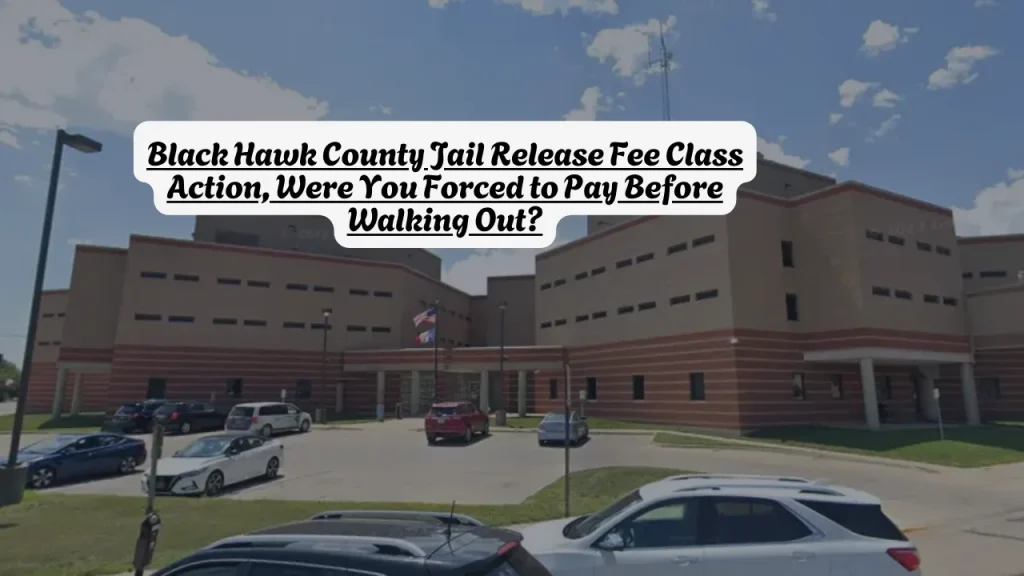
This is the kind of case that raises serious questions about due process of law. If you served time at the Black Hawk County Jail and paid these fees, this lawsuit may directly affect you. For a broader look at how civil rights class actions work, see our guide to consumer class action lawsuits and your legal rights on AllAboutLawyer.com.
Are You Part of the Black Hawk County Jail Class Action Lawsuit?
Here is how to know if this lawsuit includes you.
You may be part of this class if:
- You were released from the Black Hawk County Jail in Waterloo, Iowa
- You served a sentence following a conviction (not a pretrial detention)
- You signed a “confession of judgment” for jail fees at the time of your release on or after May 14, 2022
- You were charged a $25 booking fee and/or $70 per day for room and board
- Your wages were later garnished to pay those fees, or you made payments under the agreement
You are likely NOT included if:
- You were held at the jail before trial — the fees only apply to people serving a sentence following a conviction, not people awaiting trial
- You were released and never asked to sign a confession of judgment
- You were held at a different Iowa county jail
Lead plaintiff Leticia Roberts, a mother of three, filed the suit after she was billed $730 for her jail stay. Calvin Sayers, a retiree who cares for his disabled adult son, was assessed $4,340 and joined the suit as a plaintiff. Both say they signed the confession of judgment because they believed it was required for their release — not because they freely agreed to it.
If you are uncertain whether you qualify, consulting a consumer rights lawyer familiar with Iowa civil rights claims can help you understand your position before the case resolves. For a similar case involving government overreach and compensation for damages, see how courts handled the Orchard Place Iowa lawsuit settlement on AllAboutLawyer.com.
What Are Black Hawk County Plaintiffs Seeking in This Lawsuit?
This is not a settlement article — no money is available yet and no claim form exists. What plaintiffs are asking the court to do is stop the practice entirely and get their money back.
The plaintiff sought monetary damages, declaratory and injunctive relief, and attorneys’ fees, and also sought to certify a class of people released from the county jail who had signed confessions of judgment. The lawsuit argues that the Due Process Clause of the 14th Amendment requires the government to give people a meaningful opportunity to challenge a debt before taking their money — and Black Hawk County never does that.
The document allows the sheriff to get a rubber stamp from the district court clerk, without a judge ever reviewing it. Plaintiffs argue this entire collection system — from the document signed at the jail door to the wage garnishments that follow — violates their constitutional rights and should be shut down.
If the Eighth Circuit rules in the plaintiffs’ favor, the case returns to the district court for further proceedings, which could eventually include a damages award or negotiated resolution.
What Should You Do If You Were Affected by the Black Hawk County Jail Fees?
You do not need to file anything right now. Here is what matters:
Most class members are automatically included. The proposed class covers all individuals who have been released from the Black Hawk County Jail and signed a confession of judgment for jail fees since May 14, 2022, whose fees have been paid, are being paid, or will be paid under a confession of judgment absent a court order. If that describes you, you are likely already within the class definition — no action needed at this stage.
Save everything. Keep any paperwork you signed at the jail, any receipts or bank records showing fee payments, and any notices you received about garnishments. These records could matter significantly if this case proceeds to a damages phase.
Monitor the case. The Eighth Circuit ruling will be the next major development. You can track the case at the Public Justice case page: publicjustice.net/case_brief/roberts-v-thompson.
Consider a free legal consultation. If you believe you were harmed specifically or have questions about pursuing an individual claim, a class action lawsuit attorney familiar with Iowa civil rights law can advise you. The ACLU of Iowa can be reached at [email protected] or (515) 451-1777.
Black Hawk County Jail Fees Lawsuit Timeline
| Milestone | Date |
| Lawsuit Filed | May 13, 2024 |
| Temporary Injunction Request | September 2024 |
| District Court Dismissal (Judge C.J. Williams) | November 2024 |
| Notice of Appeal Filed | March 7, 2025 |
| Reply Brief Filed in Eighth Circuit | August 2025 |
| Oral Arguments — Eighth Circuit | January 15, 2026 |
| Eighth Circuit Ruling | TBD — pending after January 15, 2026 oral arguments |
| Expected Return to District Court (if reversed) | TBD — contingent on appellate ruling |
Frequently Asked Questions
Is there a class action lawsuit against Black Hawk County for jail fees?
Yes. Civil rights groups filed a federal class action lawsuit in May 2024 to block the Black Hawk County Sheriff’s Office from extracting money from people before releasing them from jail. The case is Roberts et al. v. Thompson et al., Case No. 6:24-cv-02024, filed in the Northern District of Iowa.
Do I need to do anything right now to be included?
No. If you were convicted, served time at the Black Hawk County Jail in Waterloo, and signed a confession of judgment for fees after May 14, 2022, you are likely already included in the proposed class. Save your records and monitor the case for updates.
When will a ruling come in the Black Hawk County case?
Oral arguments were presented before the Eighth Circuit Court of Appeals on January 15, 2026. The court has not yet issued a ruling as of May 2026. Eighth Circuit decisions typically follow oral arguments within several weeks to several months.
Can I file my own lawsuit against Black Hawk County instead?
You can pursue an individual claim, but doing so usually means stepping outside the class action. Speaking with a consumer rights lawyer before making that decision is strongly recommended — individual civil rights claims require their own filing, deadlines, and proof of harm.
How will I know if the Black Hawk County lawsuit settles?
If a settlement is reached, class members will receive direct notice by mail or email. You can also monitor updates at publicjustice.net/case_brief/roberts-v-thompson or the ACLU of Iowa website at aclu-ia.org.
What exactly is a “confession of judgment” and why does it matter?
A confession of judgment is a legal document in which a person agrees in advance that they owe a debt and gives up their right to contest it in court. Detainees, including lead plaintiff Leticia Roberts, were given this paperwork when they were discharged — the last thing they signed before walking out the jail’s doors to get their freedom back. Plaintiffs argue that signing such a document under those conditions, without a lawyer and while still in custody, cannot be considered voluntary.
Why does it matter that the fees funded a shooting range?
The lawsuit alleges this shows an unlawful conflict of interest by the sheriff’s office, as the sheriff is able to set fee rates, decide how to pursue the costs, and then spend a large share of the resulting proceeds on superfluous expenses for the sheriff’s office and its employees. Iowa law requires that 60% of jail fees go toward courthouse security, jail infrastructure, and inmate medical costs — not recreational perks for staff.
Sources & References
- Public Justice — Roberts et al. v. Thompson et al. case page: publicjustice.net/case_brief/roberts-v-thompson
- ACLU of Iowa — Statement on Oral Arguments, January 15, 2026: aclu-ia.org
- ACLU of Iowa — Notice of Appeal, March 7, 2025: aclu-ia.org
Prepared by the AllAboutLawyer.com Editorial Team and reviewed for factual accuracy against official court records and the Public Justice case page on May 21, 2026. Last Updated: May 21, 2026
Disclaimer: This article is for informational purposes only and does not constitute legal advice. Legal claims and outcomes depend on specific facts and applicable law. For advice regarding a particular situation, consult a qualified attorney.
About the Author
Israr Ahmad is a legal content researcher with 4+ years of experience covering class action settlements and consumer rights cases. He has researched and published coverage of 2,500+ settlements using verified court records, settlement administrator filings, and government sources. Learn more about Israr.