
Army Whistleblower Maj. Stephen Ramsbottom Says Leaders Ignored Warnings Before the Port Shuaiba Drone Strike That Killed 6 U.S. Soldiers in Kuwait
Army Reserve Maj. Stephen Ramsbottom, who survived the March 1, 2026 Iranian drone strike on Port Shuaiba, Kuwait, has filed a protected whistleblower disclosure. He alleges that senior Army leaders brushed aside warnings about thin defenses and thin medical support before the attack that killed six Army Reserve soldiers.
Ramsbottom submitted the disclosure on Friday, November 13, 2026, to the House and Senate Armed Services Committees. His attorneys also filed a confidential complaint with the Department of Defense Office of Inspector General. The story became public on November 15, when CBS News aired Ramsbottom’s interview with 60 Minutes correspondent Norah O’Donnell.
Two points matter before anything else. The allegations are his, and they are not established findings. The Army finished an internal investigation in June 2026, but its full findings have not been released to the public. The Pentagon has disputed broader claims that U.S. forces were unprepared, and a Pentagon spokesperson declined to comment on Ramsbottom’s specific allegations.
Army Whistleblower Stephen Ramsbottom Complaint: Key Facts
| Detail | Verified information |
| Whistleblower | Maj. Stephen Ramsbottom, U.S. Army Reserve |
| Unit | 103rd Expeditionary Sustainment Command (Iowa-based) |
| Attack date | March 1, 2026, the second day of Operation Epic Fury |
| Location | Port Shuaiba (Port of Shuaiba), Kuwait, about 65 miles from Iran |
| Weapon | Iranian one-way attack drone |
| Killed | 6 Army Reserve soldiers |
| Wounded | More than 20 service members, including Ramsbottom |
| Congressional disclosure | November 13, 2026 (House and Senate Armed Services Committees) |
| Inspector General complaint | Filed confidentially through counsel with the DoD Office of Inspector General |
| Public reporting | November 15, 2026 (CBS News, 60 Minutes) |
| Army internal investigation | Completed June 2026; full findings not public |
| Commanders named in reporting | Maj. Gen. John Hinson and Brig. Gen. Clint Barnes |
| Whistleblower’s attorneys | Andrew P. Bakaj, Mark S. Zaid and I. Charles McCullough III |
| Law invoked | Military Whistleblower Protection Act, 10 U.S.C. § 1034 |
| New independent investigation confirmed? | No, not as of November 16, 2026 |
| Criminal charges or disciplinary findings? | None announced against any named commander |
Who Is Army Reserve Maj. Stephen Ramsbottom?
Ramsbottom is an Army Reserve officer and engineer who served in the operations section of the 103rd Expeditionary Sustainment Command. He deployed to Kuwait in 2025 and was at Port Shuaiba when the drone hit. He was injured in the strike, and AP has reported that he suffered a traumatic brain injury and a piece of shrapnel in his head.
His attorneys say he has been selected for promotion to lieutenant colonel. They also say he went through lawful, protected channels so the questions could be answered without the Army investigating its own senior leaders.
On 60 Minutes, Ramsbottom did not exempt himself from blame. He called the attack “a tactical failure by the Army, our leadership, and myself—all the way down to my level,” and said, “We just did not plan this well, and this needs to be a lesson that we learn.”
Who Represents Ramsbottom?
His legal team is Andrew P. Bakaj of Compass Rose Legal Group, Mark S. Zaid and I. Charles McCullough III. They handle national security and federal whistleblower matters. They are seeking an independent investigation, preservation of related records and protection from reprisal. They are not seeking a personal settlement payment.
What Does Ramsbottom’s Port Shuaiba Whistleblower Complaint Allege?
1. Army Leaders Allegedly Dismissed Warnings That Port Shuaiba Was an Iranian Target
Soldiers have told CBS News, AP and The Washington Post that intelligence indicated Port Shuaiba was on an Iranian target list before the war. Ramsbottom says he raised the lack of aerial protection in meetings with Brig. Gen. Clint Barnes, who commanded the 103rd, and Maj. Gen. John Hinson, who oversaw logistics for U.S. Central Command. He says he heard versions of “We don’t have to worry about protection.”
The public record does not show that anyone knew when or how an attack would come. It does raise a legal question: did commanders reasonably evaluate a risk they had been told about?
2. The Port Shuaiba Command Post Allegedly Had No Dedicated Counter-Drone Protection
The complaint alleges that the post lacked dedicated protection against one-way attack drones. Survivors describe a command post built like those used in Iraq and Afghanistan before drone warfare, surrounded by steel-reinforced concrete barriers (T-walls) that protect mainly against vehicle bombs, not aerial threats. Reports say the only air-defense coverage in the area was a Patriot system near Camp Arifjan that was poorly suited to a low, slow drone.
Soldiers reportedly asked for counter-drone equipment, including a truck-mounted system, and were told it would be pursued. It either never arrived or arrived too late. Quadcopter drones were reportedly seen watching the site in the days before the strike. The public record does not yet show whether a formal request was made, who rejected it, or what other protections were available.
3. The 103rd Was Allegedly Kept at Port Shuaiba When Safer Options Existed
Reporting says most U.S. forces in Kuwait were moved farther from Iran before the war. Dozens of 103rd personnel were nonetheless relocated from Camp Arifjan to Port Shuaiba about a week before Operation Epic Fury began. CBS has reported that plans to rebase the unit farther from Iran, to sites in Jordan or Saudi Arabia, were presented and rejected by the commander. The Army has said the location was chosen according to operational plans.
4. Port Shuaiba Allegedly Lacked a Physician, a Fixed Aid Station and Enough Ambulances
The complaint says the post “had no physician, no fixed aid station, and only one ambulance.” Tanner Carson, a civilian medic stationed at the port, told 60 Minutes that medical staff lacked the equipment and personnel for a mass-casualty event. AP reported that after the strike, soldiers treated one another and used Google to find the nearest hospital in Kuwait City, about 20 minutes away.
What Happened at Port Shuaiba on March 1, 2026?
The United States and Israel launched military operations against Iran on February 28, 2026, under Operation Epic Fury. Iran answered with missile and drone attacks across the region. Soldiers at Port Shuaiba repeatedly moved into bunkers as alerts sounded.
According to CBS and earlier reporting, an all-clear came around 9 a.m. on March 1 and the soldiers went back to their operations center. About 30 minutes later, an Iranian drone hit the center of the building. Ramsbottom told AP that higher-ranking officers had pushed the officer in the bunker with him to get troops cleared to leave the shelters. Survivors say the strike came with little or no siren warning after the all-clear.
Who authorized the all-clear, and whether any procedure was broken, has not been established in public reporting. Warning logs, command communications and witness testimony would be needed to answer it.
Which Six U.S. Soldiers Were Killed in the Port Shuaiba Drone Strike?
The Army Reserve identified six members of the 103rd Expeditionary Sustainment Command. Their remains were returned in a dignified transfer at Dover Air Force Base on March 7, 2026.
| Service member | Age | Hometown |
| Capt. Cody A. Khork | 35 | Winter Haven, Florida |
| Sgt. 1st Class Nicole M. Amor | 39 | White Bear Lake, Minnesota |
| Sgt. 1st Class Noah L. Tietjens | 42 | Bellevue, Nebraska |
| Sgt. Declan J. Coady | 20 | Des Moines, Iowa |
| Maj. Jeffrey R. O’Brien | 45 | Waukee, Iowa |
| Chief Warrant Officer 3 Robert M. Marzan | 54 | Spotsylvania, Virginia |
Coady was promoted to sergeant after his death. Rank and hometown details come from Army Reserve releases and should be checked against the official announcements linked below.
Could Better Medical Support Have Saved Sgt. 1st Class Nicole Amor?
Some survivors and family members say yes. Her husband, Joey Amor, told CBS that she had voiced safety concerns before the attack. Ramsbottom said she was fighting for her airway when soldiers took her by vehicle to Adan Hospital, and CBS reports she was no longer breathing when she arrived and died there. He has said he believes more on-site medical support might have improved her chances.
That is an eyewitness opinion, not a medical finding. Deciding whether a death was preventable takes independent review of her injuries, treatment timeline and records.
Which Army Commanders Are Named in the Port Shuaiba Reporting?
Maj. Gen. John Hinson oversaw logistics for U.S. Central Command. Ramsbottom says he voiced his concerns in meetings that involved Hinson and got a dismissive answer.
Brig. Gen. Clint Barnes commanded the 103rd Expeditionary Sustainment Command. Several survivors say they raised concerns with him about location, drone threats and defenses, and reporting has also examined his actions during and after the strike.
Neither officer has been publicly found responsible. Being named in a whistleblower disclosure is not a finding of misconduct, negligence or regulatory violation.
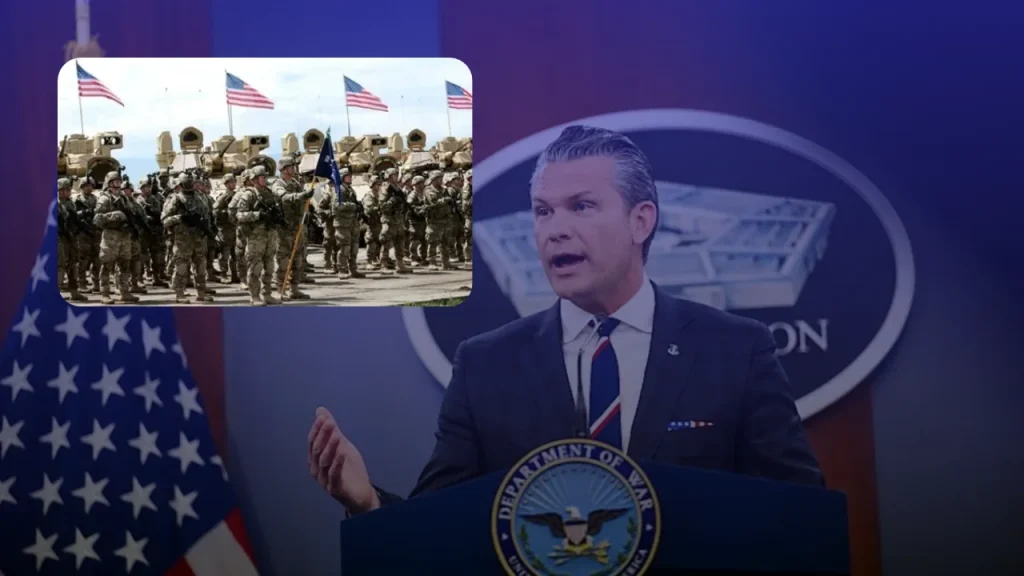
What Did Defense Secretary Pete Hegseth Say About the Port Shuaiba Drone Strike?
On March 2, Hegseth called the drone a “squirter” that got through defenses and hit a “fortified” tactical operations center. Survivors dispute that description and say the post was not fortified against aerial threats.
After the November 13 filing, a Pentagon spokesperson declined to comment on Ramsbottom’s allegations, including whether adequate force protection existed at Port Shuaiba. On November 13, Sen. Richard Blumenthal, ranking member of the Senate Permanent Subcommittee on Investigations, asked Hegseth for a classified briefing and “all force protection assessments” for the site.
Did the Pentagon Ignore Ukrainian Drone-Defense Technology?
Separate from the complaint, The Atlantic reported on November 15 that U.S. officers had warned about the Pentagon’s ability to counter Iranian Shahed-style drones and had urged use of Ukrainian-developed interceptors. The report says those warnings went largely unheeded. Pentagon spokesperson Sean Parnell rejected that characterization.
No one has shown that a specific Ukrainian system would have stopped the drone that hit Port Shuaiba. That depends on detection, time, local conditions and the weapon itself. The Atlantic report and Ramsbottom’s complaint raise overlapping questions, but they are separate matters.
Which Federal Law Protects Ramsbottom as an Army Reserve Whistleblower?
The Military Whistleblower Protection Act, 10 U.S.C. § 1034
The core protection is 10 U.S.C. § 1034, implemented by DoD Directive 7050.06. It does two main things. First, no one may restrict a service member from lawfully communicating with a Member of Congress or an Inspector General. Second, it bars retaliatory personnel actions, or threats of them, because of a protected communication.
A communication is protected when it goes to a covered recipient, such as a Member of Congress, an Inspector General, a DoD audit, inspection, investigation or law enforcement organization, or someone in the chain of command. It must also reflect a reasonable belief that the member is reporting one of the following:
- A violation of law or regulation
- Gross mismanagement
- Gross waste of funds
- An abuse of authority
- A substantial and specific danger to public health or safety
Force-protection and medical-readiness shortfalls tied to deaths and injuries fit most naturally under danger to safety and gross mismanagement or abuse of authority. Whether they meet those standards is for investigators to decide.
How a Reprisal Claim Works Under 10 U.S.C. § 1034
If a service member believes they suffered reprisal, they can file a complaint with the DoD Inspector General or a service IG. Section 1034 sets a filing window, generally one year from when the member learned of the personnel action. The IG investigates and reports findings to the Secretary concerned. A member who is unhappy with the outcome can seek relief through the service’s Board for Correction of Military Records under 10 U.S.C. § 1552.
Has Ramsbottom Alleged Retaliation?
His attorneys have asked for protection from reprisal, but their public statement does not say a retaliatory action has already occurred. Asking for an investigation of leadership decisions is different from an IG finding of retaliation.
Do Whistleblower Protections Cover Classified Information?
No. Section 1034 protects lawful disclosures through authorized channels. It does not authorize release of classified information to the public or press. Classified matters have to go through secure channels, which is part of why Ramsbottom’s counsel used congressional committees and the DoD Inspector General.
Can the DoD Inspector General Investigate Senior Army Generals?
Yes. Under the Inspector General Act of 1978, the DoD Office of Inspector General can review allegations of mismanagement, abuse of authority, and reprisal, including allegations that involve senior officials. An IG review could look at the Army’s own findings, operational decisions, internal warnings and documents.
Ramsbottom’s counsel has asked the IG to open an independent investigation, review the decisions around the attack and the earlier Army inquiry, preserve all related records, and protect witnesses who come forward. That request does not mean an investigation has been opened. The IG decides how to handle it.
Could Army Commanders Face Criminal Charges Under the Uniform Code of Military Justice?
It depends on what evidence shows. Military investigations can end in changes to procedure, administrative action, or in the most serious cases a referral for possible UCMJ violations.
Article 92, dereliction of duty (10 U.S.C. § 892). Article 92 can apply to a person subject to the UCMJ who fails to obey a lawful order or regulation or is derelict in performing a duty. A fatal attack alone does not prove dereliction. Investigators would need to identify the specific duty, what the officer knew or should have known, what was reasonably required, and whether each legal element is met.
No Article 92 charge arising from the November disclosure has been verified.
Can Congress Force the Pentagon to Release the Army’s Port Shuaiba Investigation?
Congress has broad oversight power, subject to constitutional, procedural and national-security limits. The House and Senate Armed Services Committees can request briefings and documents and hold hearings on military readiness. Where committee rules allow, they can issue subpoenas for testimony and records. Classified material may require closed hearings or secure handling, and the administration can raise legal objections to specific requests.
For how subpoena power works in practice, see Can Democrats Subpoena Trump, His Family, Banks and Private Companies in 2027? What Congress Can Legally Demand Under Trump v. Mazars, Executive Privilege and Contempt Law.
Congress has already been involved. In April 2026, lawmakers raised force-protection questions. On July 30, Sen. Elizabeth Warren, Rep. Pat Ryan and other lawmakers asked for answers about medical care for wounded soldiers. On September 22, a bicameral group urged the Armed Services Committee chairmen to hold public hearings.
Can Pete Hegseth Be Impeached Over Port Shuaiba?
The complaint does not mean Hegseth has been charged, impeached or found personally responsible. A Cabinet secretary can be impeached by a House majority and removed only by a two-thirds Senate vote. The process is explained in Can Democrats Impeach Defense Secretary Pete Hegseth? What Happens If Congress Removes a Cabinet Secretary.
Can Families of the Six Port Shuaiba Soldiers Sue the U.S. Government?
This is hard, and the law is not friendly to such suits.
The federal government is generally immune from suit unless Congress consents. Under the Feres doctrine, from Feres v. United States, 340 U.S. 135 (1950), courts generally bar Federal Tort Claims Act suits for injuries or deaths that arise incident to military service. The FTCA also excludes claims arising out of the “combatant activities” of the military during time of war under 28 U.S.C. § 2680(j). Together, these make a federal wrongful-death suit over combat-zone decisions very unlikely to succeed, even if an investigation finds mistakes.
Families have other paths. Survivors of service members who die on active duty can be eligible for the death gratuity under 10 U.S.C. §§ 1475–1480, Servicemembers’ Group Life Insurance (SGLI) and Dependency and Indemnity Compensation (DIC) through the VA. Eligibility depends on the member’s status and each program’s rules.
Ramsbottom’s disclosure is not a class action. It creates no settlement fund, no claims process and no automatic damages award.
Does the Whistleblower Complaint Challenge the Legality of the Iran War?
Not directly. It is about military preparation and protection of troops. Whether the president had legal authority for Operation Epic Fury involves the Constitution, the War Powers Resolution (50 U.S.C. §§ 1541–1548) and congressional authorization. That question is covered in Can Congress Stop Trump From Attacking Iran Again? The War Powers Resolution, the 60-Day Clock, H. Con. Res. 86 and What Happens Next.
An investigation can find poor planning without ruling on whether the war was legally authorized. And an authorized operation does not excuse a breach of military regulations.
Port Shuaiba Drone Attack and Whistleblower Timeline
| Date | Development |
| Late 2025 to February 2026 | Soldiers reportedly raise concerns about Port Shuaiba’s defenses and medical support |
| About one week before February 28, 2026 | Dozens of 103rd personnel relocated from Camp Arifjan to Port Shuaiba |
| February 28, 2026 | U.S. and Israeli operations against Iran begin (Operation Epic Fury) |
| March 1, 2026 | Iranian drone strikes Port Shuaiba; six soldiers killed |
| March 2, 2026 | Hegseth calls the drone a “squirter” and the site “fortified” |
| March 7, 2026 | Dignified transfer at Dover Air Force Base |
| April 2026 | Congressional force-protection questions |
| June 2026 | Army completes internal investigation |
| July 30, 2026 | Lawmakers press DoD on medical care for the wounded |
| September 22, 2026 | Lawmakers urge public hearings |
| October 5, 2026 | AP publishes survivor accounts on leadership and medical care |
| November 13, 2026 | Ramsbottom files congressional disclosure; counsel files confidential IG complaint |
| November 15, 2026 | CBS and 60 Minutes publish the allegations; counsel calls for an independent investigation |
| November 16, 2026 | No new independent investigation or disciplinary finding publicly confirmed |
Frequently Asked Questions About the Army Whistleblower and Port Shuaiba Attack
Who is the Army whistleblower in the Port Shuaiba drone strike?
Maj. Stephen Ramsbottom, an Army Reserve officer with the 103rd Expeditionary Sustainment Command who was wounded in the March 1, 2026 attack.
What does Stephen Ramsbottom accuse Army leaders of doing?
He alleges senior leaders dismissed concerns about thin fortifications and the lack of dedicated counter-drone protection at Port Shuaiba, and that the site had no physician, no fixed aid station and only one ambulance.
How many U.S. soldiers died in the Port Shuaiba drone attack?
Six Army Reserve soldiers were killed, and more than 20 others were wounded.
Was the Port Shuaiba attack carried out by Iran?
Yes. It was an Iranian one-way attack drone strike during Operation Epic Fury.
Where is Port Shuaiba?
It is a port facility on Kuwait’s southern coast, roughly 30 miles south of Kuwait City and about 65 miles from Iran, used for U.S. military logistics.
Which generals are named in the Port Shuaiba whistleblower reporting?
Maj. Gen. John Hinson and Brig. Gen. Clint Barnes. Neither has been publicly found responsible.
Did Army commanders know Port Shuaiba could be attacked?
Soldiers told CBS and AP they saw intelligence suggesting Port Shuaiba was an Iranian target. How much commanders knew, and what they did about it, is disputed.
Why were soldiers sent back to the operations center before the drone strike?
An all-clear was reportedly issued about 9 a.m., roughly 30 minutes before the strike. Who authorized it and why remain unresolved.
Did the Army already investigate the Port Shuaiba attack?
Yes. The Army completed an internal investigation in June 2026, but the full findings have not been released.
Can Stephen Ramsbottom be punished for blowing the whistle?
Section 1034 prohibits retaliation for lawful protected communications to Congress and Inspectors General. It does not protect unauthorized release of classified information or bar unrelated lawful personnel decisions.
Has Pete Hegseth been charged because of Ramsbottom’s complaint?
No. No criminal charge from this disclosure has been verified.
Can the families of the six soldiers receive lawsuit compensation?
The complaint creates no compensation fund. Death benefits may apply, but the Feres doctrine and the FTCA combatant-activities exception sharply limit lawsuits against the government.
What happens next after Ramsbottom’s whistleblower disclosure?
Possible next steps include a DoD Inspector General decision, congressional hearings, release of the Army’s June findings and testimony from survivors or named commanders.
Official Documents and Sources
Primary and official sources
- Statement From Ramsbottom’s Attorneys, November 15, 2026 (Compass Rose Legal Group)
- U.S. Army Reserve: Fallen Soldiers Announcement
- U.S. Army Reserve: Casualty Confirmation (Robert Marzan)
- Sen. Elizabeth Warren: July 30 Congressional Investigation
- Sen. Elizabeth Warren: September 22 Call for Public Hearings
- 10 U.S.C. § 1034: Military Whistleblower Protection
- 10 U.S.C. § 892: Article 92
- DoD Inspector General: Hotline Complaint Information
Reporting
- CBS News: Army whistleblower alleges senior military officials ignored warnings ahead of deadly attack in Kuwait
- CBS News: Commander rejected plans to rebase farther from Iran before deadly drone strike
- CBS News: Troops say Army ignored request for more medical support before deadly attack on Kuwait base
- The Atlantic: November 15 investigation of drone-defense warnings
- The Washington Post: July 12 survivor investigation
Verification note: Ramsbottom’s attorneys confirmed the congressional disclosure and the confidential IG complaint. The full disclosure and the Army’s investigation file are not public, so claims from them are attributed to the attorneys, CBS’s review of the complaint and interviewed witnesses.
Bottom Line: What Happens After Ramsbottom’s Port Shuaiba Whistleblower Complaint?
Maj. Stephen Ramsbottom has formally challenged how the Army prepared for the March 1, 2026 drone strike that killed six Army Reserve soldiers at Port Shuaiba. His disclosure raises serious questions about known threats, counter-drone equipment, medical support and command decisions. The Pentagon disputes the broader claim that forces were unprepared, and the Army’s June findings remain unreleased.
The next real test is whether the DoD Inspector General or Congress opens an independent inquiry that can establish what Barnes, Hinson and others knew, what protections were available, and whether any duty was breached.
This article provides general legal information, not legal advice. The allegations against named military leaders are unproven.
Researched and written by Israr Ahmad, legal content researcher and founder of AllAboutLawyer.com. All facts verified against CBS News and Associated Press reporting, the text of 10 U.S.C. § 1034, and the statement from Ramsbottom’s attorneys, as of November 16, 2026. Last Updated: November 16, 2026.
About the Author
Israr Ahmad is a legal content researcher with 4+ years of experience covering class action settlements and consumer rights cases. He has researched and published coverage of 2,500+ settlements using verified court records, settlement administrator filings, and government sources. Learn more about Israr.