
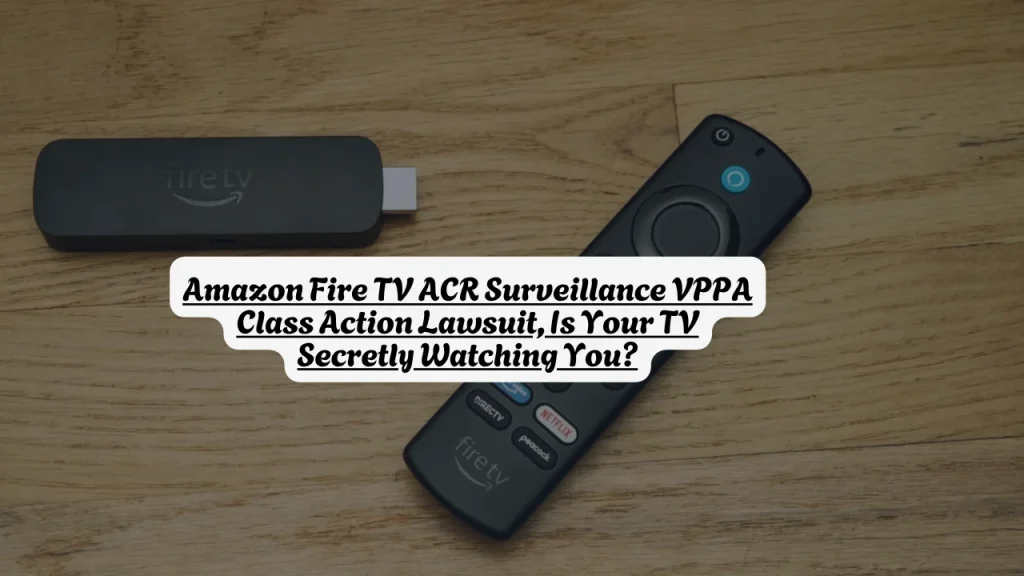
Amazon Fire TV ACR Surveillance VPPA Class Action Lawsuit, Is Your TV Secretly Watching You?
Amazon is facing a class action lawsuit filed in the U.S. District Court for the Western District of Washington, alleging it secretly collects and sells data about what consumers watch on Fire TV devices — without their knowledge or consent. Plaintiffs Nancy Manypenny and Kenneth Enser filed the proposed class action on May 6, 2026. Manypenny purchased an Amazon Fire TV in May 2024, and Enser bought a Toshiba television running Amazon’s Fire TV operating system in October 2024.
No settlement has been reached. No claim form exists yet. If you own a Fire TV or any TV running Amazon’s Fire TV software, here is what is happening and why it affects you directly.
| Field | Detail |
| Lawsuit Filed | May 6, 2026 |
| Defendant | Amazon.com, Inc. |
| Alleged Violation | Video Privacy Protection Act (VPPA), 18 U.S.C. § 2710 |
| Who Is Affected | Anyone who has owned or used a Fire TV or third-party TV running Fire TV OS |
| Current Court Stage | Complaint filed — pre-certification |
| Court & Jurisdiction | U.S. District Court, Western District of Washington |
| Lead Law Firms | Townsend Legal; Bryson Harris Suciu & Demay PLLC |
| Next Hearing Date | TBD — no hearing scheduled yet |
| Official Case Website | TBD — no administrator site yet |
| Last Updated | May 20, 2026 |
What Did Amazon’s Fire TV Software Actually Do? Manypenny et al. v. Amazon.com Inc., No. 2:26-cv-01534
Amazon’s Fire TV runs ACR (Automatic Content Recognition) technology that tracks the content displayed on screen and the audio output through the television’s speakers. According to the complaint, “Amazon knows every video you watch, which parts of those videos you watch, which parts you pause or rewind, and every word you hear.”
The ACR software goes further than tracking what apps you use. It captures every piece of content displayed on screen and audio through the speakers — and shares that data even when the content comes from a connected gaming system, DVD player, computer, or third-party streaming device you plugged in via HDMI.
The complaint also alleges the ACR technology creates a “digital fingerprint” using deep-learning software that identifies brands, faces, objects, and other visual elements on screen. That fingerprint is then matched against a database of movies, TV shows, and ads. Amazon allegedly uses this data to power its multibillion-dollar advertising business, combining Fire TV viewing data with its own e-commerce shopping data from Amazon.com to offer advertisers targeting that “no other advertising platform can match.”
The specific law at issue is the Video Privacy Protection Act (VPPA), a federal statute passed in 1988 that prohibits companies from disclosing a consumer’s video viewing history linked to personally identifiable information without their consent. If you have ever wondered whether your television was being used to build an advertising profile about you — this lawsuit says it was.
Related article: Federal Agency Rulemaking Explained, How Rules Get Made and How Courts Can Stop Them
This case follows a pattern of Amazon privacy litigation that has been building for years. If you want a broader picture, the Amazon Alexa class action lawsuit covers a related dispute over secret voice recordings — and the court’s July 2025 class certification ruling there may shape how judges handle this Fire TV case as well.
Are You Part of the Amazon Fire TV Class Action?
You may be part of this class if you owned or used any of the following:
- You may be part of this class if you purchased an Amazon-branded Fire TV at any point
- You may be part of this class if you own a third-party television — such as a Toshiba, Insignia, or other brand — that runs Amazon’s Fire TV operating system
- You may be part of this class if your viewing data was collected through Amazon’s ACR software without your informed consent
- You may be part of this class if you connected external devices (a game console, Blu-ray player, laptop) to a Fire TV and used those devices to watch content
You are likely NOT included if:
- You only use Amazon Fire TV Stick or Fire Cube devices that are not televisions (the complaint focuses on televisions, though this may broaden as the case develops)
- You never owned or used a Fire TV-branded or Fire TV-powered television
The proposed class action settlement eligibility covers a nationwide class — you do not have to live in Washington state to be included.
What Are the Plaintiffs Asking the Court to Do?
The lawsuit seeks to represent a nationwide class of consumers who owned or used an Amazon Fire TV or third-party Fire TV and whose data was collected without their consent. The plaintiffs are asking the court for statutory damages under the VPPA, which allows up to $2,500 per violation per consumer.
No specific total dollar amount has been confirmed in court filings. The plaintiffs are also seeking an injunction — a court order requiring Amazon to stop its current ACR data practices. This is not just about money. If the court agrees, Amazon may be forced to change how Fire TV collects and shares viewer data going forward.
No money is available yet. No claim form exists. This case is in the early litigation phase.
What Should You Do Right Now If You Own a Fire TV?
Most Fire TV owners will be automatically included in the class if the court certifies it — you do not need to file anything today. However, there are practical steps worth taking right now.
- Document your purchase. If you bought a Fire TV or any TV running Fire TV software, save your receipt, order confirmation, or Amazon account purchase history. This establishes your connection to the class.
- Check your privacy settings. Consumer Reports confirmed that Fire TV includes settings to limit data collection. Go to Settings → Preferences → Privacy Settings on your device. You can disable “Interest-Based Ads” and “Collect App and Over-the-Air Usage Data.”
- Monitor the case docket. Track updates at the PACER docket for Case No. 2:26-cv-01534 in the Western District of Washington.
- Consult a consumer rights lawyer if you believe you suffered specific, documentable harm from Amazon’s data collection practices and want to understand your individual options beyond the class action.
Do not contact Amazon directly about this lawsuit. Amazon has not acknowledged liability and has not responded publicly to the complaint as of the publication date.
Amazon Fire TV Lawsuit Timeline
| Milestone | Date |
| Lawsuit Filed | May 6, 2026 |
| Class Certification Motion | TBD — not yet filed |
| Last Major Court Ruling | TBD — case just commenced |
| Next Scheduled Hearing | TBD — no date set |
| Expected Settlement Timeline | TBD — minimum 1–3 years from filing at earliest |
Frequently Asked Questions
Is there a class action lawsuit against Amazon Fire TV?
Yes. Plaintiffs Nancy Manypenny and Kenneth Enser filed a proposed nationwide class action against Amazon on May 6, 2026, in the U.S. District Court for the Western District of Washington, Case No. 2:26-cv-01534. The lawsuit alleges Amazon’s Fire TV software secretly recorded viewing data and sold it to advertisers.
Do I need to do anything right now to be included in the Amazon Fire TV lawsuit?
No. If the court certifies a class, all eligible Fire TV owners in the U.S. will be automatically included unless they choose to opt out. Save your purchase records and watch for a court-issued notice in the future.
When will the Amazon Fire TV lawsuit settle?
TBD — no settlement discussions have been reported. Cases like this typically take one to three years to reach a settlement after filing, assuming the court certifies the class. The Amazon Alexa recordings case, filed in 2021, is still in litigation as of 2026.
Can I file my own lawsuit against Amazon over Fire TV data collection instead?
Yes. You can consult a data privacy attorney or consumer rights lawyer to pursue individual claims under the VPPA or state privacy laws. However, individual litigation is significantly more expensive and time-consuming than participating in a class action, and most affected consumers choose to wait for class resolution.
How will I know if the Amazon Fire TV lawsuit settles?
If a settlement is reached, Amazon is required to send notice to all class members by mail or email. You can also monitor the case docket on PACER (Case No. 2:26-cv-01534) or bookmark this page for updates.
What is the Video Privacy Protection Act and why does it apply here?
The VPPA is a 1988 federal law — 18 U.S.C. § 2710 — that prohibits companies from disclosing what a specific person has watched on video services without their consent. It was originally passed after a reporter obtained Supreme Court nominee Robert Bork’s video rental history. The plaintiffs argue Amazon violated the VPPA by sharing Fire TV viewing data linked to individual user identities with advertisers.
Does Amazon’s ACR software collect data from devices I connected to my Fire TV?
According to the complaint filed in Case No. 2:26-cv-01534, yes. The Fire TV ACR software shares data about content from connected gaming systems, DVD and Blu-ray players, computers, and third-party streaming devices — not just apps running natively on the Fire TV itself.
Sources & References
- Court Docket: Manypenny et al. v. Amazon.com Inc. et al., Case No. 2:26-cv-01534, U.S. District Court for the Western District of Washington — Justia Docket
- Law360 coverage: “Amazon Sees What You See On Your Fire TV, Users Claim,” May 6, 2026
Prepared by the AllAboutLawyer.com Editorial Team and reviewed for factual accuracy against the original court complaint (Case No. 2:26-cv-01534) and the Law360 case report dated May 6, 2026. Last Updated: May 20, 2026
Disclaimer: This article is for informational purposes only and does not constitute legal advice. Legal claims and outcomes depend on specific facts and applicable law. For advice regarding a particular situation, consult a qualified attorney.
About the Author
Israr Ahmad is a legal content researcher with 4+ years of experience covering class action settlements and consumer rights cases. He has researched and published coverage of 2,500+ settlements using verified court records, settlement administrator filings, and government sources. Learn more about Israr.