
$20.5M Amazon Oregon Nitrate Water Settlement, Can You Get Help for Contaminated Water?
Amazon Data Services agreed to pay $20.5 million to settle a class action lawsuit filed by residents of Morrow and Umatilla counties, Oregon, who allege the company’s data centers contributed to dangerous nitrate contamination of their drinking water. A motion for preliminary approval of the settlement was filed March 31, 2026, in the U.S. District Court for the District of Oregon, Pendleton Division. The money will not go directly to individuals as a check — instead, it funds clean water infrastructure for the region. Amazon denies wrongdoing. Court approval is still required.
Quick Facts
| Field | Detail |
| Settlement Amount | $20.5 million |
| Claim Deadline | TBD — court approval pending |
| Who Qualifies | Residents in the Lower Umatilla Basin Groundwater Management Area (Morrow & Umatilla counties, OR) |
| Payout Per Person | No direct cash payments — funds infrastructure projects; 6 named plaintiffs each receive $5,000 |
| Proof Required | TBD |
| Settlement Status | Proposed — preliminary approval motion filed March 31, 2026 |
| Case Name | Pearson v. Port of Morrow, U.S. District Court, District of Oregon (Pendleton Division) |
| Plaintiffs’ Attorneys | Hagens Berman; Bliven Law Firm; Heenan & Cook |
| Official Case Source | hbsslaw.com/press/oregon-groundwater-contamination |
Current Status & What Happens Next
- The settlement was filed March 31, 2026, and is awaiting a preliminary approval hearing open to the public for comment.
- Litigation continues against the remaining defendants — the Port of Morrow, Lamb Weston, Madison Ranches, Threemile Canyon Farms, Portland General Electric, and Columbia River Processing.
- Once a court grants final approval, a court-appointed administrator will oversee the distribution of funds for well and water treatment projects. No individual claim deadline has been set yet.
What Did Amazon Allegedly Do to Oregon’s Water?
The Port of Morrow is surrounded by four industrial parks with data processing centers, an ethanol plant, and food processors. It produces tons of nitrogen-rich water that it sends out to area farms to use on crops — but over the years, too much nitrogen has been spread, contributing to groundwater contamination.
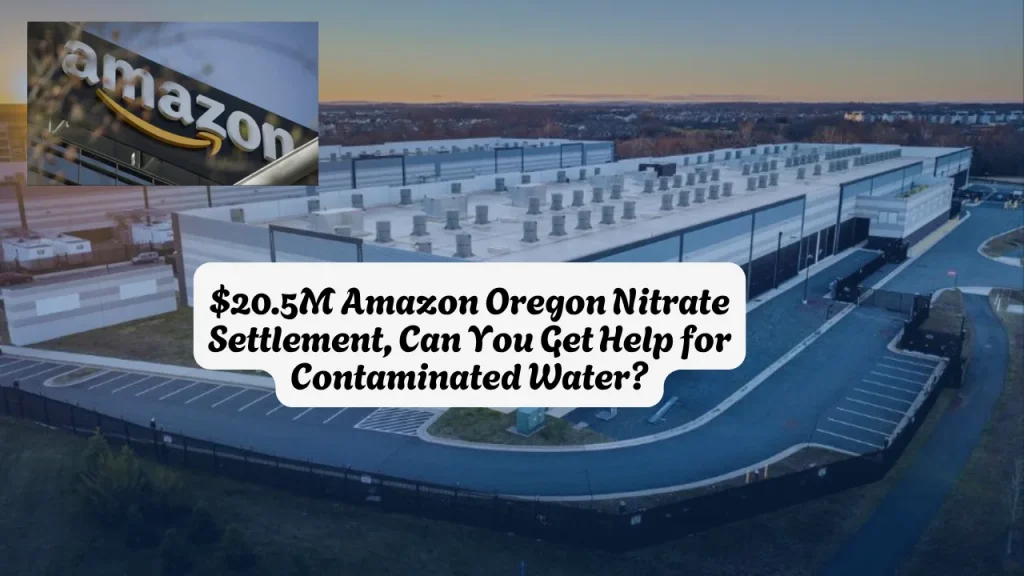
Amazon’s data centers sit at the center of the allegations because of how they use water. The nitrate-loaded wastewater ends up at Amazon’s data center facilities at the port, where the water is used to cool computer servers running 24/7. The water heats up and condenses as it cools the computers, further elevating the concentration of nitrate it holds, before being end-use applied to area farm fields.
The Oregon Health Authority has found that at least 634 domestic drinking water wells in the area contain unsafe levels of nitrate — some with nearly 10 times the federal limit for safe drinking water — and more than 420 show elevated levels that could lead to long-term health problems. Overexposure to nitrates is linked to harm in infants, and to cancer and thyroid disease in adults.
Related article: Google Bricked Your Nest Thermostat Class Action Lawsuit, What Owners Need to Know
Why Is This Settlement Historic?
This marks the first time a Big Tech company has committed to paying damages related to public health threats allegedly exacerbated by the construction and operation of its data centers. The Lower Umatilla Basin is the only source of drinking water for as many as 45,000 residents who rely on well water in and around Morrow County.
The Oregon Department of Environmental Quality designated the Lower Umatilla Basin as a groundwater management area back in 1990 because of high nitrate levels. A Nitrate Reduction Plan was developed in 2024 — but a 2025 report found that overall nitrate levels in the area have increased.
Amazon maintains it is not the root cause. An Amazon spokesperson said communities in Eastern Oregon have faced groundwater quality issues for decades, long before the company opened its data centers, and that its data centers draw from the same water supply as other local residents without adding nitrates to it. The company states it chose early settlement to focus resources on the community rather than prolonged litigation.
Who Is Eligible to Benefit?
This settlement works differently from most class actions. There are no individual claim checks. Instead, the funds go toward infrastructure. Here is who stands to benefit:
- You may qualify for a private well project if your home in the Lower Umatilla Basin Groundwater Management Area (Morrow or Umatilla County) has drinking water with nitrate levels above state safety limits.
- You may benefit from public water treatment funding if you live in the affected area and use a community water system that must remove nitrates.
- You may qualify as a class member if you are a property owner or renter within the Lower Umatilla Basin Groundwater Management Area affected by nitrate contamination.
- You are one of the six named plaintiffs — Michael Pearson, Michael and Virginia Brandt, and James and Silvia Suter — each receiving a $5,000 one-time payment for their role in achieving the settlement.
Important: Residents who live outside Morrow and Umatilla counties or outside the groundwater management area boundary likely do not qualify for infrastructure benefits under this specific settlement.
How Will the $20.5 Million Be Distributed?
Unlike a typical cash settlement, this money funds two infrastructure programs:
Fund 1 — Private Well Projects The first fund will cover private well projects that tap into a deeper, less contaminated portion of the aquifer for residents whose homes currently have drinking water with nitrate contamination levels above state safety limits.
Fund 2 — Public Water System Upgrades The second fund will underwrite public water-system projects for the treatment and distribution of cleaner water.
Named Plaintiff Payments A block of $30,000 will be set aside for $5,000 one-time payments to the six plaintiffs for their effort in achieving the settlement.
The remainder of the fund will cover attorney fees. A court-appointed administrator will manage distribution. The exact process for residents to apply for well projects or water system improvements has not yet been announced pending court approval.
How to Stay Informed and Take Action
Because this settlement has not yet received court approval, there is no active claim portal. Here are the steps to prepare:
Step 1 — Test your well. Contact the Oregon Health Authority or Oregon Rural Action to request a well water test if you haven’t already.
Step 2 — Document your situation. Keep records of bottled water purchases, elevated water bills, well test results, and any medical issues potentially linked to nitrate exposure.
Step 3 — Monitor the case. Watch the plaintiffs’ attorneys’ website at hbsslaw.com for court approval news and next steps.
Step 4 — Attend the public comment hearing. The settlement must be approved by the court after a hearing open to the public for comment. Watch for the hearing date announcement through the court or plaintiffs’ attorneys.
Step 5 — Register your interest with the plaintiffs’ attorneys. Contact Hagens Berman, Bliven Law Firm, or Heenan & Cook to ensure you are notified when the infrastructure application process opens.
Step 6 — Save your confirmation if you submit any inquiry or contact form for your records.
Estimated time to prepare: 20–30 minutes for documentation and registration.
Key Dates & Milestones
| Milestone | Date |
| Morrow County Emergency Declaration | 2022 |
| Oregon DEQ Groundwater Management Area Designated | 1990 |
| Pearson v. Port of Morrow Filed | February 2024 |
| Settlement Motion Filed | March 31, 2026 |
| Preliminary Approval Hearing | TBD |
| Public Comment Period | TBD |
| Final Court Approval | TBD |
| Infrastructure Fund Distribution Begins | TBD |
| Litigation Continues (Other Defendants) | Ongoing |
Frequently Asked Questions
Do I need a lawyer to benefit from this settlement?
No lawyer is required for residents who benefit through infrastructure projects — the water improvements will serve the community automatically. However, if you believe you have individual health or property damage claims beyond this settlement, consulting a personal injury or environmental attorney is advisable.
Is this settlement legitimate?
Yes. The $20.5 million settlement was announced by Hagens Berman and co-counsel, and a motion for preliminary approval was filed March 31, 2026, in the U.S. District Court for the District of Oregon, Pendleton Division. It requires a federal judge’s approval before any funds move.
When will I receive my payment or benefit?
There are no direct cash payments to most residents. Infrastructure projects — new wells and water treatment — will take time to plan and build after court approval. Realistically, physical improvements could take 12 to 24 months or more to reach affected households once the process begins.
What if I missed the claim deadline?
No claim deadline has been set yet. The settlement is still in the preliminary approval stage. Monitor the case at hbsslaw.com and the U.S. District Court for Oregon for announcements.
Will any settlement benefit affect my taxes?
Infrastructure improvements to wells or water systems are generally not considered taxable income since they are improvements to public or community assets, not personal payments. The six named plaintiffs who receive $5,000 each should consult a tax professional about those payments.
Why doesn’t every affected resident get a direct check?
The settlement fund goes toward fixing the underlying problem — contaminated water infrastructure — rather than individual compensation. Amazon stated that creating an independently managed fund devoted to building water infrastructure made more sense because it directly benefits residents now. Plaintiffs’ attorneys have signaled they will continue pursuing the remaining defendants for further compensation.
Are other companies still being sued for the same contamination?
Yes. Litigation continues against the main polluters — the Port of Morrow, Lamb Weston, Madison Ranches, Threemile Canyon Farms, Portland General Electric, and Columbia River Processing. Additional settlements may follow.
How dangerous are the nitrate levels in this area?
At least 634 domestic drinking water wells in the area contain unsafe levels of nitrate — some with nearly 10 times the federal limit — and more than 420 show elevated levels that could lead to long-term health problems. Nitrate overexposure is especially dangerous for infants and is linked to cancer and thyroid disease in adults.
Sources & References
- Hagens Berman (Plaintiffs’ Law Firm) — Official Settlement Announcement — hbsslaw.com/press/oregon-groundwater-contamination
- Oregon Capital Chronicle — Settlement Report — oregoncapitalchronicle.com (March 31, 2026)
Last Updated: April 16, 2026
Disclaimer: This article is for informational purposes only and does not constitute legal advice. Legal claims and outcomes depend on specific facts and applicable law. For advice regarding a particular situation, consult a qualified attorney.
About the Author
Israr Ahmad is a legal content researcher with 4+ years of experience covering class action settlements and consumer rights cases. He has researched and published coverage of 2,500+ settlements using verified court records, settlement administrator filings, and government sources. Learn more about Israr.