
Google Bricked Your Nest Thermostat Class Action Lawsuit, What Owners Need to Know
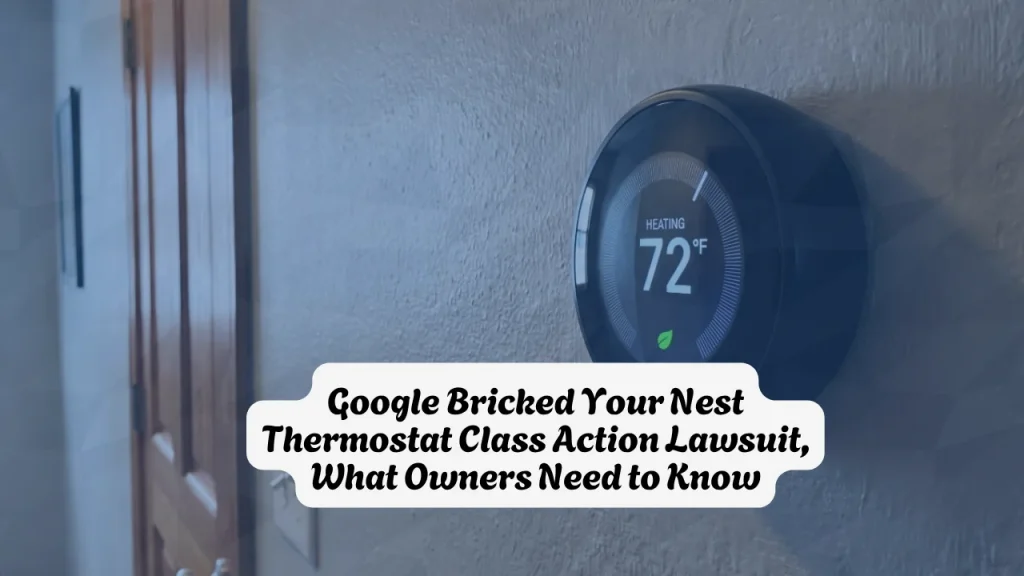
If your first- or second-generation Nest Learning Thermostat stopped working with your phone app in October 2025, you are not alone — and you may have legal options. A proposed class action lawsuit filed April 2, 2026 alleges that Google intentionally and unfairly “bricked” first- and second-generation Nest Learning Thermostats without disclosing to consumers prior to purchase that the devices could lose functionality at any time. No settlement exists yet. But if you still own an affected thermostat, your rights are worth understanding right now.
Quick Facts
| Field | Detail |
| Case Status | Proposed class action — litigation phase, no settlement |
| Defendant | Google LLC |
| Devices Affected | 1st-generation Nest Learning Thermostat (2011); 2nd-generation (2012) |
| When Support Ended | October 25, 2025 |
| Who May Qualify | U.S. residents who bought a Gen 1 or Gen 2 Nest Learning Thermostat and still owned it as of October 25, 2025 |
| Settlement Amount | TBD — no settlement reached |
| Claim Deadline | TBD — no action required yet |
| Potential Recovery | TBD — may include thermostat replacement cost and other damages |
| Court | TBD — filed April 2, 2026 |
| Laws Cited | Consumer protection, false advertising, warranty law |
Current Status: Early Litigation — No Action Required Yet
- This is a newly filed proposed class action. No settlement has been reached, and no claim portal exists.
- You generally do not need to do anything to join a class action when it is initially filed. If the case resolves with a settlement, class members will typically receive written notice via mail and/or email with instructions on next steps.
- The case could take months or years to resolve. Monitor this page and keep your thermostat purchase records in a safe place.
What Did Google Do to Your Nest Thermostat?
In April 2025, Google announced it would cut off software support for Gen 1 and Gen 2 Nest Learning Thermostats by October 25, 2025. Google “abruptly” announced that it would discontinue software updates and Wi-Fi connectivity for first- and second-generation Nest learning thermostats, rendering these once “smart” devices no better than an ordinary thermostat.
The physical thermostat still works — you can walk up and change the temperature by hand. But users can no longer control their thermostat via mobile device or take advantage of any of the thermostat’s premium smart features, such as home/away assist, filter reminders, and energy history, which allows a user to monitor their energy usage over time.
The lawsuit argues that stripping these features is not just an inconvenience — it is the core of what consumers paid for. The filing argues that Google deprived consumers of the “benefit of their bargain” when it unilaterally and “prematurely” decided that first- and second-generation Nest Learning Thermostats were “obsolete,” even when the actual hardware of the device itself has not run its useful life and functions perfectly.
Did Google Break a Promise It Made in Writing?
This is the heart of the case. When the second-generation Nest thermostat launched in October 2012, Google acknowledged in a blog post that it had made a “promise” to consumers to provide, and continue providing, software updates and connectivity for older models of the Nest Learning Thermostat.
Related article: Crunch Fitness Junk Fees Class Action Lawsuit, Are Members Being Overcharged?
The lawsuit claims Google walked back that promise 13 years later. The filing contends that consumers would not have bought a Nest thermostat, or would have paid significantly less, had they known its core functionality could be stripped away at any time based on “Google’s corporate whim.”
The case also cites the FTC directly. An FTC blog post affirmed that “consumers generally expect that the things they buy will work and keep working, and that includes any technical or other support necessary for essential functions.” The lawsuit argues that Google’s failure to disclose an end-of-support date before purchase is exactly the kind of deceptive practice the FTC has flagged.
The Bigger Issue: “Software Tethering” and Your Right to Own What You Buy
This lawsuit is about more than one thermostat. It targets a growing problem across all internet-connected products. At least one non-profit group refers to this practice as “software tethering” — when a manufacturer uses software to control a connected device after purchase and “infringe” on consumers’ right to ownership by removing advertised features.
The FTC has provided guidance that when evaluating a manufacturer’s failure to provide software updates or to disclose the duration of software support, it is appropriate to consider the scope of injury caused, whether the injury is reasonably avoidable by consumers, and whether there may be any offsetting benefits. The Nest case argues consumers could not have avoided the harm — Google made the decision, and owners had no say.
The case also raises a sustainability question. Perfectly functional hardware is now being pushed toward the landfill not because it broke, but because Google chose to cut the software that made it smart.
Who Is Eligible to Join This Lawsuit?
- You may qualify if you purchased a first-generation Nest Learning Thermostat (originally released 2011).
- You may qualify if you purchased a second-generation Nest Learning Thermostat (originally released 2012).
- You may qualify if you still owned the device as of October 25, 2025, when Google cut Wi-Fi connectivity and app support.
- You may qualify if you are a U.S. resident who bought the device and did not receive prior disclosure that its smart features could be removed at any time.
- You may NOT qualify if you owned a third-generation or later Nest Learning Thermostat — this lawsuit covers Gen 1 and Gen 2 only.
- You may NOT qualify if you had already replaced your thermostat before October 25, 2025.
Not sure which generation you own? The Gen 1 Nest has a stainless steel ring and was sold from 2011. The Gen 2 launched in 2012 with a slimmer profile. Check your original receipt or the Nest app’s device settings before it lost connectivity.
What Could You Recover If There Is a Settlement?
No settlement amount exists yet. But the lawsuit lays out what affected owners could potentially seek:
While there are no guarantees, it is possible that consumers could recover the cost of replacing their thermostat and any damages they are entitled to under state and federal law.
The complaint also seeks injunctive relief — meaning a court order that could require Google to change how it handles future software discontinuations for connected devices. That would benefit consumers far beyond just Nest owners.
What Should You Do Right Now?
You do not need to file anything today. Here are the steps to protect your position:
Step 1 — Confirm your device generation. Verify you own a Gen 1 (2011) or Gen 2 (2012) Nest Learning Thermostat.
Step 2 — Locate your purchase records. Find your original receipt, Amazon order history, credit card statement, or any documentation showing when and where you bought the thermostat and the price paid.
Step 3 — Document the loss of features. Note in writing (or take screenshots) that your app control, home/away assist, and other smart features no longer work as of October 2025.
Step 4 — Do not throw away your thermostat. Keep the physical device — it may serve as evidence of its functional hardware condition.
Step 5 — Monitor for settlement notices. If the case settles, affected owners will receive notice by mail or email. Make sure your address is current with any accounts connected to your Nest.
Step 6 — Watch this page for updates. Settlement terms, deadlines, and a claims portal will be announced here as soon as they become available.
Time to complete these steps: approximately 10 minutes.
Key Dates & Milestones
| Milestone | Date |
| Gen 1 Nest Thermostat Released | 2011 |
| Google’s “Promise” Blog Post (Gen 2 Launch) | October 2012 |
| Google Announces Support Cutoff | April 2025 |
| Software Support & App Connectivity Ended | October 25, 2025 |
| Class Action Lawsuit Filed | April 2, 2026 |
| Class Certification Hearing | TBD |
| Settlement Negotiations | TBD |
| Settlement Claim Deadline | TBD |
| Expected Resolution | TBD |
Frequently Asked Questions
Do I need a lawyer to join this lawsuit?
No. Class action lawsuits do not require individual legal representation. If the case settles, you will receive a notice explaining how to submit a claim. You can hire your own attorney if you believe your individual damages are significant, but it is not required to participate in a class settlement.
Is this lawsuit legitimate?
Yes. The 25-page Nest lawsuit was filed on April 2, 2026, and targets Google’s discontinuation of software and Wi-Fi connectivity for Gen 1 and Gen 2 Nest Learning Thermostats as of October 25, 2025. It is a proposed class action in active litigation.
When will I receive a payment?
No payment timeline exists yet — this lawsuit was just filed. Class action cases of this type typically take one to three years to reach settlement. If a deal is reached, expect payment processing to take additional months after final court approval.
What if I already replaced my Nest thermostat?
You may still qualify as a class member if you owned a Gen 1 or Gen 2 Nest as of October 25, 2025, even if you have since purchased a replacement. Keep your old thermostat and all records of both purchases.
Will a settlement payment affect my taxes?
Potentially. Payments that represent compensation for a product loss — rather than physical injury — may be treated as taxable income. Consult a tax professional if and when you receive any settlement funds.
What does “bricked” actually mean?
In tech terms, a “bricked” device is one that no longer functions as intended. In this case, although Nest owners can still adjust the temperature manually, they can no longer do so via mobile device or use premium smart features like home/away assist, filter reminders, or energy history. The hardware works fine — but the smart features that justified the premium price tag are gone.
Does this affect Nest thermostats beyond Gen 1 and Gen 2?
This specific lawsuit covers only first- and second-generation Nest Learning Thermostats. A separate federal class action, filed November 24, 2025, covers Google Nest Hub, Nest Hub Max, Nest Mini, and Nest Audio devices over alleged voice command failures. That is a different case with different eligibility rules.
What if I missed the claim deadline?
No claim deadline has been set. This case is in early litigation. Stay informed and act promptly once a settlement and claims process are announced.
Sources & References
- U.S. District Court Filing — Lawsuit Details — Monitor via PACER at pacer.gov
Last Updated: April 16, 2026
Disclaimer: This article is for informational purposes only and does not constitute legal advice. Legal claims and outcomes depend on specific facts and applicable law. For advice regarding a particular situation, consult a qualified attorney.
About the Author
Israr Ahmad is a legal content researcher with 4+ years of experience covering class action settlements and consumer rights cases. He has researched and published coverage of 2,500+ settlements using verified court records, settlement administrator filings, and government sources. Learn more about Israr.