
Abbott FreeStyle Libre 2 Class Action, Diabetic Patients Say the Sensor Gives Deadly Wrong Readings
Prepared by the AllAboutLawyer.com Editorial Team and reviewed for factual accuracy against official court records and verified legal sources on May 15, 2026. Last Updated: May 15, 2026
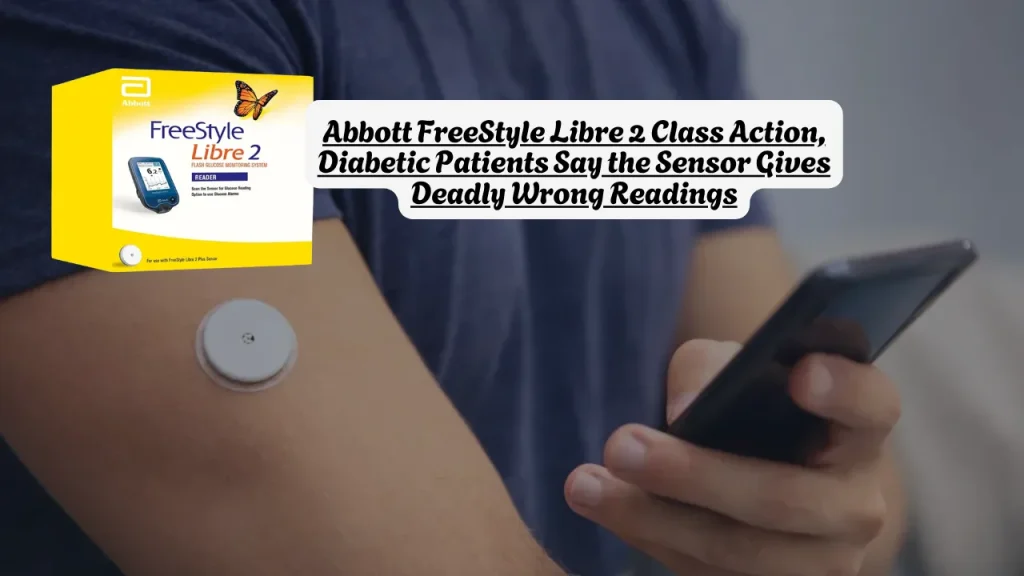
Abbott Laboratories is facing a class action lawsuit filed in Louisiana federal court alleging its FreeStyle Libre 2 and FreeStyle Libre 2 Plus continuous glucose monitors (CGMs) contain a design and/or manufacturing defect that causes them to report dangerously false low glucose readings. Plaintiff Sheila Connoly filed the complaint against Abbott Diabetes Care and Abbott Laboratories on April 21 in Louisiana federal court, alleging violations of state and federal consumer laws. If you or someone you know relied on a FreeStyle Libre 2 to manage diabetes, this lawsuit may include you.
Abbott FreeStyle Libre 2 Lawsuit — Quick Case Facts
| Field | Detail |
| Lawsuit Filed | April 21, 2026 |
| Defendant | Abbott Diabetes Care Inc. and Abbott Laboratories |
| Alleged Violation | State and federal consumer protection laws; design/manufacturing defect in a medical device |
| Who Is Affected | Anyone who used a FreeStyle Libre 2 or FreeStyle Libre 2 Plus CGM |
| Current Court Stage | Class action complaint filed — pre-certification litigation phase |
| Court & Jurisdiction | Louisiana Federal Court (U.S. District Court) |
| Lead Law Firm | Lambert, Zainey, Smith & Soso, APLC; Miller, Thibodeaux, Dysart, Veith & Paschal, LLC |
| Next Hearing Date | TBD — no hearing scheduled in public record yet |
| Official Case Website | TBD — no dedicated case site released yet |
| Last Updated | May 15, 2026 |
What Is the Abbott FreeStyle Libre 2 Lawsuit About? Connoly v. Abbott Diabetes Care Inc. et al.
According to the lawsuit, Abbott manufactures the FreeStyle Libre 2 and FreeStyle Libre 2 Plus Continuous Glucose Monitors, which are designed to help individuals with diabetes monitor their blood glucose levels. Connoly claims the devices are defective due to a design and/or manufacturing flaw that causes the sensor to falsely report low glucose readings, even when users’ actual blood glucose levels are normal or elevated.
This is a defective product lawsuit rooted in product liability law. The core allegation is that Abbott sold a medical device that could not do its one job accurately — and that for people with diabetes, an inaccurate reading is not a minor inconvenience. It is a life-or-death failure.
The lawsuit also comes in a broader context of Abbott facing scrutiny over its entire FreeStyle Libre product line. On January 23, 2026, the U.S. Food and Drug Administration issued a warning letter to Abbott over serious manufacturing and quality-control failures involving FreeStyle Libre continuous glucose monitors. The warning letter was made public on February 3, 2026, and came after an FDA inspection of Abbott’s diabetes care site in October 2025.
This case connects directly to a pattern of reported device failures across Abbott’s CGM product line. If you have used a FreeStyle Libre 2 and received a reading that did not match how you actually felt — or ended up in the hospital despite what your monitor showed — this lawsuit is talking about exactly that kind of harm. You may also want to review the PAM Spray Lawsuit 2026 — Jury Awards $25M for Lung Disease to understand how product liability claims involving consumer health products have played out in recent jury verdicts.
Are You Part of the Abbott FreeStyle Libre 2 Class Action Lawsuit?
Here is how to know if this lawsuit includes you. The proposed class covers a broad group, but these are the key factors to consider right now:
You may be part of this class if you:
- Used a FreeStyle Libre 2 or FreeStyle Libre 2 Plus CGM at any point before or after the filing date of April 21, 2026
- Received glucose readings that you believe were inaccurate — particularly readings showing normal or low blood sugar when you were actually experiencing elevated levels
- Were a Type 1 or Type 2 diabetic who relied on the FreeStyle Libre 2 to make treatment decisions, including insulin dosing or carbohydrate intake
- Suffered a health complication — including hospitalization, diabetic ketoacidosis, or other injury — that you believe was caused or worsened by a false CGM reading
- Purchased the device in the United States
You are likely NOT included if you:
- Only used the FreeStyle Libre 3, Libre 3 Plus, Libre 14-day, or Libre Pro — those models are addressed in separate litigation and the Abbott recall
- Suffered no harm and have no complaint about the device’s readings
It is worth noting that other FreeStyle Libre models — including Libre 14-day and Libre Pro — are not part of this specific action, nor are Libre readers, apps, or biowearables. The Connoly complaint targets the Libre 2 line specifically.
Related article: $2.53M Esse Health Data Breach Settlement, Were Your Medical Records Exposed? Here Is How to Claim Your Payment Before August 4
If you were affected, class action lawsuit eligibility does not require you to have hired an attorney or taken any prior legal action. Most class members are automatically included once a class is certified by the court. For now, the most important thing is to document your experience and monitor case developments.
For more on understanding how class action eligibility and consumer rights work, see our guide: Tide Pods Class Action Lawsuit: Consumers Fight Back Against Defective Products and False Advertising
What Plaintiff Sheila Connoly Says Happened — And Why It Matters
The story behind this lawsuit is the kind that makes the legal claims real.
Connoly, who is a Type 1 diabetic, says she used the FreeStyle Libre 2 CGM to monitor her blood glucose levels. On December 15, 2025, she checked her blood sugar with the device and received a high reading of 190 mg/dl. She administered two units of insulin, and her blood sugar reading returned to a normal level. However, the following morning, Connoly began feeling ill and went to the hospital, where she received a normal blood sugar reading of 167 mg/dl from her CGM — but her condition continued to decline, and the hospital diagnosed her with diabetic ketoacidosis, a life-threatening condition, with a blood sugar reading of approximately 700 mg/dl.
In other words, the device told her she was fine. She was not fine. She was critically ill, and her monitor gave her no warning.
Connoly alleges that Abbott is liable for the damages she sustained due to the defective product, including past, present, and future medical expenses, physical and mental pain and suffering, past lost wages, and loss of enjoyment of life. She is looking to represent anyone who used the FreeStyle Libre 2 or FreeStyle Libre 2 Plus CGMs.
This is not the first time Abbott’s glucose monitoring technology has been linked to serious harm. As of November 2025, there were 736 serious injuries and seven deaths associated with the FreeStyle Libre sensors. Those figures were linked primarily to the Libre 3 line, but the Connoly lawsuit now puts the Libre 2 under the same legal microscope.
What Plaintiffs in the Abbott Libre 2 Lawsuit Are Seeking
This is not a settlement article — no settlement exists yet, and no claim form is open. Here is what the lawsuit actually asks the court to do.
Connoly is seeking compensation for damages she personally suffered, and she wants to pursue those claims on behalf of every other FreeStyle Libre 2 and Libre 2 Plus user who experienced the same defect. She is demanding a jury trial.
The types of compensation for damages being sought include:
- Past, present, and future medical expenses caused by the defective readings
- Physical and mental pain and suffering
- Lost wages from time missed due to medical treatment
- Loss of enjoyment of life
The lawsuit does not name a specific dollar figure for the class as a whole. That determination comes later in the litigation process after discovery and, if applicable, class certification. No money is available right now, and no claim form exists yet.
What You Should Do Right Now If You Were Affected by a FreeStyle Libre 2
You do not need to do anything right now to be included in the class — but you should take these practical steps immediately.
1. Save every record you have. This means CGM readings, pharmacy receipts, hospital records, notes from your doctor, and any written communication you had about the device. The more documentation you have proving you used a FreeStyle Libre 2 and experienced a problem, the stronger your position will be if the case reaches a settlement or class certification.
2. Check whether your device is affected. If you use a FreeStyle Libre sensor, you can visit www.FreeStyleCheck.com to confirm whether your sensor is affected by Abbott’s medical device correction. If you did not receive a letter from Abbott, you can go to their November 24, 2025 press release on their website to learn how to determine if your device is one of the affected units. Note that this verification tool was set up for the Libre 3 recall — but checking whether Abbott contacted you about any of its CGM products is a useful step.
3. Contact Abbott directly for support. Individuals with recall-related inquiries can contact Abbott Diabetes Care at 1-833-815-4273.
4. Report adverse events to the FDA. Adverse reactions should be reported to the FDA’s MedWatch Adverse Event Reporting program. This creates an official record that strengthens consumer rights claims.
5. Consult a consumer rights lawyer or class action lawsuit attorney if you suffered a serious injury — hospitalization, diabetic ketoacidosis, or other documented harm — that you believe was caused by a false reading from your FreeStyle Libre 2. Individual harm claims may warrant pursuing separate legal advice beyond the class action.
6. Monitor this case. The court docket is the official source. Check PACER (Public Access to Court Electronic Records) for Connoly v. Abbott Diabetes Care Inc. et al. filed April 21, 2026, in Louisiana federal court for updates.
Abbott FreeStyle Libre 2 Lawsuit Timeline
| Milestone | Date |
| Lawsuit Filed | April 21, 2026 |
| Class Certification Motion | TBD — not yet filed |
| Last Major Court Ruling | TBD — case is in early stage |
| Next Scheduled Hearing | TBD — not yet scheduled |
| Related: Abbott FreeStyle Libre 3 Plus Recall Issued | December 3, 2025 |
| Related: FDA Warning Letter to Abbott (Libre CGMs) | January 23, 2026 |
| Expected Settlement Timeline | TBD — litigation is in early stage; class certification must happen first |
Frequently Asked Questions About the Abbott FreeStyle Libre 2 Class Action Lawsuit
Is there a class action lawsuit against Abbott for the FreeStyle Libre 2?
Yes. Plaintiff Sheila Connoly filed a class action complaint against Abbott Diabetes Care and Abbott Laboratories on April 21, 2026 in Louisiana federal court. The lawsuit targets the FreeStyle Libre 2 and Libre 2 Plus specifically, alleging the devices give falsely low glucose readings that can cause life-threatening harm to diabetics.
Do I need to do anything right now to be included in this lawsuit?
No. If the court certifies this case as a class action, most FreeStyle Libre 2 users who experienced the defect will be automatically included. You do not need to file anything now. Focus on saving your records — CGM data, medical bills, hospital records — so you can document your claim when the time comes.
When will a settlement be reached in the Abbott FreeStyle Libre 2 case?
No settlement timeline is available yet. The case was filed on April 21, 2026, and is in the earliest stage of litigation. Class certification and discovery must happen before settlement talks become realistic. Cases like this often take one to three years to resolve, though some settle faster.
Can I file my own lawsuit against Abbott instead of joining the class action?
Yes, you can opt out of the class action and pursue an individual claim — but only if your personal damages are significant enough to justify the cost and time of solo litigation. If you were hospitalized or suffered serious injury due to a false Libre 2 reading, a free legal consultation with a product liability attorney is worth pursuing before making that decision.
How will I know if the Abbott FreeStyle Libre 2 lawsuit settles?
The court is required to notify all class members before any settlement can be approved. You will receive notice by mail or email. You can also monitor the case on PACER using the case details from the April 21, 2026 filing in Louisiana federal court. Bookmark this page — AllAboutLawyer.com will update it as the case develops.
What if my FreeStyle Libre 2 gave me wrong readings but I was not hospitalized — am I still part of the class?
Possibly. Connoly is looking to represent anyone who used the FreeStyle Libre 2 or FreeStyle Libre 2 Plus CGMs — not just those who were hospitalized. The broader class may include consumers who purchased a device that failed to perform as advertised, even without a severe medical event. Documented inaccurate readings still matter.
Is the FreeStyle Libre 2 defect the same as the Libre 3 recall?
They are different but related. Abbott confirmed that certain FreeStyle Libre 3 sensors could display falsely low glucose readings, and seven deaths have been linked to the sensor malfunction — none in the U.S. to date. The Connoly lawsuit claims the Libre 2 suffers from the same type of false-low-reading defect. They are separate devices, but the underlying failure — reporting normal or low blood sugar when glucose is actually dangerously elevated — is the same alleged pattern.
Sources & References
- Court filing: Connoly v. Abbott Diabetes Care Inc. et al., filed April 21, 2026, Louisiana Federal Court — available via PACER
- U.S. Food and Drug Administration, Warning Letter to Abbott Diabetes Care, issued January 23, 2026, made public February 3, 2026: FDA.gov
- FDA MedWatch Adverse Event Reporting: fda.gov/safety/medwatch
- Abbott FreeStyle Libre sensor check: FreeStyleCheck.com
Disclaimer: This article is for informational purposes only and does not constitute legal advice. Legal claims and outcomes depend on specific facts and applicable law. For advice regarding a particular situation, consult a qualified attorney.
About the Author
Israr Ahmad is a legal content researcher with 4+ years of experience covering class action settlements and consumer rights cases. He has researched and published coverage of 2,500+ settlements using verified court records, settlement administrator filings, and government sources. Learn more about Israr.
I want to be included in the class action law suit.
please include me in the lawsuit.
Donald Simons