
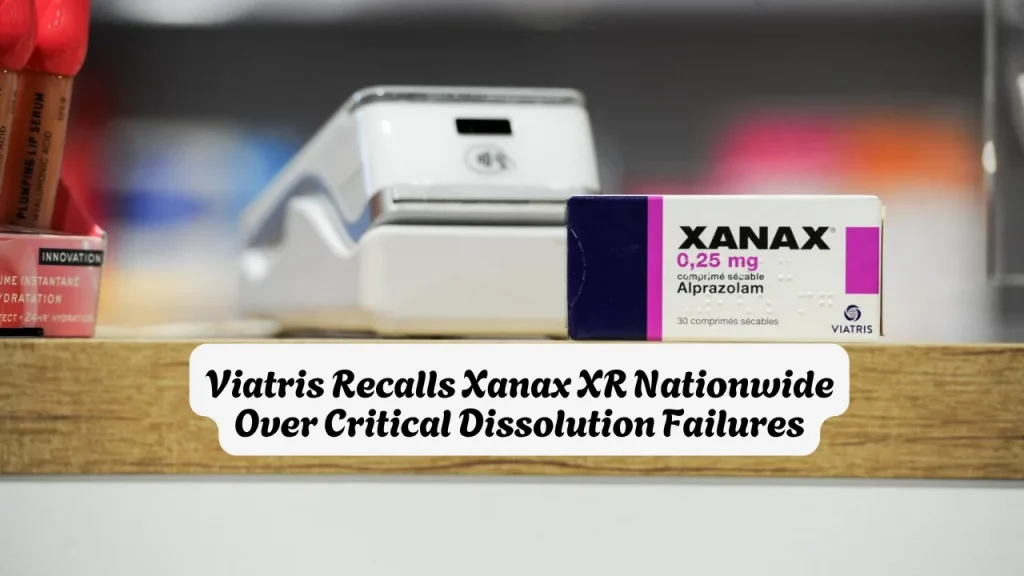
Viatris Recalls Xanax XR Nationwide Over Critical Dissolution Failures
Viatris Specialty LLC (formerly Mylan) has issued a nationwide recall for a specific lot of Xanax XR (alprazolam) 3 mg extended-release tablets due to failed dissolution specifications. This failure means the medication may not release the active ingredient at the intended rate, potentially leading to sub-therapeutic dosing or unexpected side effects for patients managing panic and anxiety disorders.
The recall affects Lot #8177156 with an expiration date of February 28, 2027. Consumers who possess this lot should stop using the medication immediately and contact their healthcare provider or Viatris at 1-800-796-9526 to initiate a return and refund. Because this is a Class II recall, the FDA warns that use of the affected product could cause temporary or medically reversible adverse health consequences.
Quick Facts: Xanax XR Recall Alert
| Feature | Details |
| Manufacturer | Viatris Specialty LLC |
| Product Name | Xanax XR (Alprazolam) Extended-Release |
| Dosage / Strength | 3 mg Tablets (60-count bottles) |
| Lot Number | 8177156 |
| Expiration Date | February 28, 2027 |
| Reason for Recall | Failed Dissolution Specifications |
| Risk Level | FDA Class II (Potential for health issues) |
| Action Required | Discontinue use and contact Viatris for a refund |
| Official Website | Viatris.com |
Understanding the Xanax XR Recall
The primary concern regarding the April 2026 Xanax recall is “dissolution failure.” In pharmaceutical terms, dissolution refers to the process by which a drug becomes a solution in the digestive tract, allowing it to be absorbed into the bloodstream. For an extended-release (XR) medication like Xanax, this timing is critical.
If a tablet fails to meet dissolution requirements, it may dissolve too slowly—rendering the dose ineffective—or too quickly, potentially causing a “dose dump” where too much medication enters the system at once. For patients treating severe panic disorders, an ineffective dose can lead to the sudden return of debilitating symptoms or withdrawal-like effects.
Scope and Distribution
The affected lot, #8177156, was distributed across the United States between August 27, 2024, and May 29, 2025. This wide distribution window means patients may have had this medication in their cabinets for several months before the formal recall was initiated on March 17, 2026, and highlighted by the FDA in April.
Discovery Insights: How the Hazard Was Identified
In pharmaceutical litigation and reporting, the “Discovery” phase often reveals whether a company was aware of manufacturing deviations before a recall was triggered. In this instance, the recall was initiated “out of an abundance of caution” following internal stability testing that produced dissolution results outside of the strictly regulated specifications.
While no injuries or adverse reactions have been officially reported to date, the discovery of these deviations suggests a lapse in Current Good Manufacturing Practice (cGMP). For legal purposes, discovery efforts in potential future litigation would focus on:
- The exact date Viatris first identified the dissolution variance.
- Whether previous batches showed “borderline” failures that were ignored.
- The maintenance records of the equipment used to manufacture Lot #8177156.
Related article: Trump Administration Contempt Proceedings & Settlement: Are You Eligible?
Bellwether Context: Previous Alprazolam Litigation
To understand the legal risk for Viatris, we must look at Bellwether Context—how similar cases have performed in the U.S. court system. Alprazolam and its generic counterparts have a history of Class II recalls related to “foreign substances” or “potency” issues.
Historically, pharmaceutical manufacturers that fail to meet dissolution standards face significant liability if patients can prove they suffered from “rebound anxiety” or medical emergencies due to the medication’s failure. In past bellwether trials involving benzodiazepines, courts have focused heavily on whether the manufacturer provided adequate warnings about the potential for manufacturing variability. Because Xanax is a controlled substance with a high potential for physical dependence, any disruption in the delivery of the drug (such as dissolution failure) is viewed with high scrutiny by regulatory bodies like the FDA.
Legal Analysis: Missing Pillars of the Xanax Case
Objector Status and Class Integrity
In the event that this recall transitions into a nationwide class action lawsuit, “Objectors” may play a role. Objectors are class members who challenge the fairness of a settlement. For a Xanax recall, objectors typically argue that a standard refund for the drug cost is insufficient for those who experienced medical crises (e.g., panic attacks leading to ER visits) because the medication failed to dissolve. Class integrity will depend on whether the court separates “economic loss” claimants (those who just want their money back) from “personal injury” claimants.
Attorney Fee Breakdown
If a settlement is reached, legal news standards suggest a transparent breakdown of fees. Typically, in pharmaceutical class actions, attorney fees are capped between 25% and 33% of the total settlement fund. These fees cover the cost of expert witnesses, such as pharmacologists who testify on the impact of dissolution failure on human blood-plasma levels.
Tax Implications for Consumers
Refunds for the cost of the medication are generally not taxable, as they are considered a return of capital. However, if a patient receives a settlement for “emotional distress” or “punitive damages” related to a medical emergency caused by the recalled Xanax, those portions of the payout may be considered taxable income by the IRS. Always consult with a tax professional regarding settlement proceeds.
What Consumers Should Do Now
If you are currently taking Xanax XR, follow these steps immediately:
- Verify the Lot Number: Check the side of your prescription bottle for Lot #8177156.
- Consult Your Doctor: Do not stop taking benzodiazepines abruptly without medical supervision, as this can cause dangerous withdrawal symptoms. Ask your physician for a replacement prescription for a different lot or a generic equivalent.
- Secure the Product: Do not discard the bottle until you have recorded the lot number and, if possible, taken a photograph.
- Contact Viatris: Reach out to the Viatris Customer Service line at 1-800-796-9526 to request a refund or a pre-paid mailer to return the affected tablets.
- Monitor Symptoms: If you feel the medication is not working or if you experience unusual side effects, contact your healthcare provider immediately and report the incident to the FDA MedWatch program.
Frequently Asked Questions
Which Xanax products are affected?
Only the 3 mg Xanax XR (Extended-Release) tablets in 60-count bottles from Lot #8177156 are included in this recall. Standard immediate-release Xanax and other XR strengths (0.5 mg, 1 mg, 2 mg) are not affected.
How do I know if I have an affected bottle?
The lot number (8177156) and expiration date (Feb 28, 2027) are printed on the label of the plastic bottle provided by the manufacturer. If your pharmacy put the pills in a standard orange pharmacy vial, you may need to call your pharmacist to confirm which lot they used to fill your prescription.
What are the risks of taking the recalled medication?
The main risk is that the drug will not work as intended. This could lead to a recurrence of anxiety or panic symptoms. Because it is a Class II recall, there is also a remote possibility of more serious health consequences if the drug “dose dumps” (releases too much at once).
Can I get a refund?
Yes. Viatris is obligated to provide a refund or replacement for the affected product. Contact their customer service at 1-800-796-9526 for instructions.
Is there a Xanax class action lawsuit?
Currently, this is a voluntary recall. While individual lawsuits may be filed by those who suffered physical harm, a large-scale class action for economic damages typically follows if the manufacturer fails to adequately compensate all affected consumers.
Last Updated: April 16, 2026. This article is for informational purposes only. Always follow official recall guidance from the company or relevant regulatory authority for additional instructions.
About the Author
Israr Ahmad is a legal content researcher with 4+ years of experience covering class action settlements and consumer rights cases. He has researched and published coverage of 2,500+ settlements using verified court records, settlement administrator filings, and government sources. Learn more about Israr.