
Wisconsin TikTok Lawsuit 2026, Why the State Is Suing Over Children’s Social Media Use
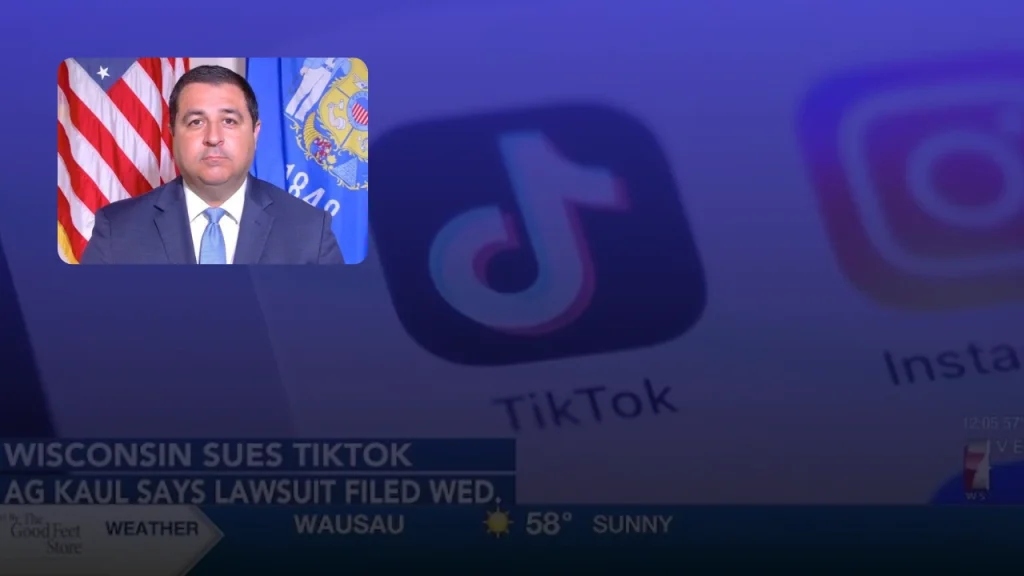
Wisconsin has sued TikTok, accusing the company of designing addictive features that allegedly harm children while misleading parents about the platform’s safety. Attorney General Josh Kaul filed the lawsuit on November 18, 2026 in Dane County Circuit Court and announced it on November 19. The state’s 67-page complaint alleges TikTok knew its design could interfere with children’s sleep, schooling and mental health but kept promoting the app as appropriate for teenagers.
Wisconsin seeks court orders, civil penalties and restitution for consumers with qualifying monetary losses. This is a state enforcement lawsuit, not a class action settlement, and parents cannot currently file a claim for compensation. The allegations are unproven. TikTok disputes them and says it has safety measures for young users.
Wisconsin TikTok Lawsuit: Quick Facts
| Question | Verified information |
| Lawsuit | State of Wisconsin v. TikTok and related entities |
| Filed / announced | November 18, 2026 / November 19, 2026 |
| Court | Dane County Circuit Court, Wisconsin |
| Plaintiff | State of Wisconsin, through Attorney General Josh Kaul |
| Defendants | TikTok and related entities, including ByteDance companies |
| Complaint length | 67 pages |
| Main allegations | Addictive platform design and misleading child-safety representations |
| Legal claims | Deceptive trade practices (Wis. Stat. § 100.18) and public nuisance |
| Requested relief | Injunctions, restitution, civil forfeitures, nuisance abatement and enforcement costs |
| Case number | Not yet verified. The redacted complaint shows only a “26-CX” placeholder |
| Class action? | No |
| Settlement / claim form? | None announced / not available |
| Official settlement website | None. No settlement exists |
Official documents: Wisconsin DOJ’s November 19 announcement and the 67-page redacted complaint.
Why Is Wisconsin Attorney General Josh Kaul Suing TikTok in 2026?
The lawsuit follows a bipartisan investigation into TikTok’s business practices and their possible effects on children and teenagers. The state says TikTok designs its app to encourage prolonged use, because higher engagement can generate more advertising revenue, while making statements that understate the risks to young people.
The state is not just arguing that heavy social media use can be harmful. It alleges TikTok made deceptive statements about how the platform works and how well it protects children. The lawsuit challenges both TikTok’s alleged conduct and what the company allegedly told Wisconsin consumers about it. No court has found these allegations to be true.
Which TikTok Features Does Wisconsin Say Are Addictive?
| TikTok feature | What Wisconsin alleges |
| For You recommendation algorithm | Keeps serving personalized videos that encourage continued viewing |
| Infinite scroll | Removes natural stopping points by loading content continuously |
| Autoplay | Starts the next video without the user choosing it |
| Push notifications | Pulls users back into the app through alerts, including late at night |
| TikTok LIVE | Uses livestreams, virtual gifts and real-time interaction to prolong use |
| TikTok Stories | Creates pressure to check disappearing content |
How Does the TikTok For You Algorithm Allegedly Create Harmful Content Loops?
The complaint alleges the recommendation engine learns from user behavior and can repeatedly show similar content, creating harmful loops. Paragraph 53 describes a 2023 internal test using a profile of a 16-year-old boy, in which employees allegedly found a concentrated stream of content about suicide, self-harm and eating disorders after about 90 minutes of scrolling and related searches. That is a claim about one test described in the complaint. It does not show that every teenager receives such recommendations.
How Do Infinite Scroll, Autoplay and Notifications Work Together, According to Wisconsin?
The state argues these features remove chances to disengage: the next video appears automatically, and notifications invite users back after they close the app. The complaint compares these mechanisms to the variable rewards used in gambling technology. That is Wisconsin’s legal theory. The court has not found that TikTok is equivalent to a gambling product or that its features cause a recognized medical addiction.
What Internal TikTok Documents Does the Wisconsin Complaint Cite?
According to the complaint, internal materials show TikTok employees understood the risks of compulsive use. These figures are attributed to internal documents cited by Wisconsin and are not verified measurements of current screen time for all Wisconsin teens:
- Paragraph 76: about 34% of users aged 13–17 in the referenced data spent more than two hours daily on TikTok, about 25% more than two and a half hours, and about 10% more than four hours.
- Paragraph 81: nearly 20% of users aged 13–15 and 25% of users aged 16–17 were active between midnight and 5 a.m.
Did TikTok Know Its Screen-Time Prompt Was Ineffective, According to Wisconsin?
The state alleges so. The complaint describes a screen-time prompt shown after about 100 minutes of use. Wisconsin says internal testing found only about 4% of children who saw it enabled a limit, while 71% dismissed it and kept using the app. It also cites internal estimates that firm daily limits could substantially reduce time on the platform. TikTok disputes the state’s overall characterization.
Did TikTok Mislead Wisconsin Parents About Restricted Mode, Family Pairing and App Store Ratings?
Restricted Mode. Wisconsin alleges TikTok overstated how well the feature filters mature or harmful material. For a separate dispute over the same feature, see TikTok Restricted Mode Lawsuit, Were You Affected? — State of Texas v. TikTok Inc., No. D-1-GN-25-003118. The Texas case is legally separate from Wisconsin’s.
Family Pairing. Paragraphs 146–149 allege some Family Pairing restrictions could be bypassed through other access methods or by unlinking accounts, and that TikTok would not generally delete a 13-to-17-year-old’s account at a parent’s request. These allegations may be contested.
App store age ratings. TikTok generally requires users to be at least 13. Wisconsin alleges the platform’s descriptions of mature material as “mild” and “infrequent” mislead parents about what teenagers can encounter. The lawsuit does not ban TikTok for people under 18.
What Has TikTok Said About the Wisconsin Lawsuit?
A TikTok spokesperson, as reported by Wisconsin Public Radio, said the lawsuit relies on misleading and inaccurate claims and overlooks safety measures, and that the company will defend itself. TikTok has pointed to account privacy settings, age-specific protections, screen-time controls and Family Pairing, and has said teen accounts include more than 50 preset safety, privacy and security settings.
What Did TikTok Announce on November 19, 2026 About Family Pairing?
On the day Wisconsin announced its lawsuit, TikTok published a redesigned Family Pairing experience. TikTok says parents can see more information about daily and nighttime screen time, changes in followers, following and blocked accounts, examples of content interests, and public posts and their performance. It also described alerts, still under development, to help parents when teens repeatedly search certain self-harm-related terms. Teen accounts have a default 60-minute daily screen-time setting, which is not the same as an unbreakable limit.
The update does not show Wisconsin’s allegations are false, and the lawsuit does not show TikTok’s tools are ineffective in every situation. The legal question is what TikTok represented, what its tools actually did, and whether any gap violated Wisconsin law. Source: TikTok’s November 19 announcement.
Which Wisconsin Laws Does TikTok Allegedly Violate?
Count One: Wisconsin Deceptive Trade Practices Act, Wis. Stat. § 100.18(1)
This statute prohibits untrue, deceptive or misleading statements to the public in connection with the sale or distribution of products and services. The Attorney General alleges TikTok made misleading statements about the platform’s safety for children, its content moderation, Restricted Mode, Family Pairing, the appropriateness of content for younger users, and screen-time tools. The state says these statements were material to parents. The court must decide whether any were legally actionable. Under § 100.18(11)(d), Wisconsin may seek orders against violations and restitution for qualifying pecuniary losses.
Count Two: Wisconsin Public Nuisance Law, Wis. Stat. §§ 823.01 and 823.02
A public nuisance generally means an unreasonable interference with rights shared by the public. Paragraphs 193–201 describe alleged consequences including compulsive use, sleep deprivation, mental-health difficulties, exposure to harmful material and public costs of addressing them. The state seeks abatement of the alleged nuisance. This is a broader public-interest claim than one parent’s suit over one child’s injuries, and Wisconsin must prove the legal elements.
Could Section 230 or the First Amendment Affect the Wisconsin TikTok Lawsuit?
Potentially. Section 230 of the Communications Decency Act may protect platforms from claims that treat them as publishers of third-party content, but it does not automatically resolve claims about a company’s own statements or product design. First Amendment arguments about content selection and recommendation systems may also arise. The complaint does not plead a separate Children’s Online Privacy Protection Act claim. Early rulings on these defenses will be an important marker of how far the case goes.
What Penalties and Remedies Is Wisconsin Seeking From TikTok?
| Requested remedy | What it could mean |
| Injunction | A court order against deceptive practices that are legally established |
| Restitution | Repayment to qualifying consumers with pecuniary losses |
| Civil forfeitures | Generally 50–200 per proven violation under Wis. Stat. § 100.26(4) |
| Supplemental forfeitures | Up to $10,000 in qualifying cases involving elderly or disabled victims, under § 100.264 |
| Remedial relief | Funds or measures reasonably necessary to address proven harm |
| Public nuisance abatement | Court-directed action if a nuisance is established |
| Enforcement expenses | Recovery of qualifying state investigation and litigation costs |
These are potential statutory penalties, not payments owed to individual teenagers or parents. No total amount has been awarded or fixed.
Can Wisconsin Parents Get Money From the TikTok Lawsuit?
No. There is no open claim form, approved settlement or guaranteed payment for Wisconsin families. The Attorney General requested restitution for consumers with qualifying monetary losses, but restitution is not automatic compensation for screen time, anxiety or other alleged harms. Who might qualify would depend on a court decision or a future agreement. Even in large state settlements, funds often go to state abatement programs or youth mental-health initiatives rather than direct checks to users.
| Legal avenue | Current status |
| Wisconsin Attorney General enforcement lawsuit | Pending, with no claims process |
| Future restitution or state settlement program | Not announced |
| Separate private legal action | May be possible depending on facts, law and evidence |
Wis. Stat. § 100.18 provides a private civil remedy in certain circumstances involving pecuniary loss, but a private claim must meet its own elements and is not created by the Attorney General’s suit. Parents of children with documented serious injuries sometimes consult private attorneys about individual product-liability claims, which are legally separate from the state case. If a family ever resolved such a claim, tax treatment under IRC § 104(a)(2) would depend on whether damages were for physical injury or physical sickness versus emotional distress or punitive damages.
For more on individual lawsuits versus settlements, see TikTok Settles Three Teen Social Media Addiction Lawsuits Here’s What That Actually Means for You. Those settlements create no claim deadline or payment right under Wisconsin’s case.
The case is brought by the Wisconsin Department of Justice, so ordinary families do not pay legal fees to participate. Attorney fees in this case would arise only from statutory cost recovery, not from a percentage of a consumer settlement fund.
Does the Wisconsin TikTok Lawsuit Affect Families in Milwaukee, Madison, Green Bay and Other Wisconsin Cities?
The state’s action concerns alleged harm to Wisconsin consumers statewide, not just Dane County residents. Dane County is the filing location because the state Department of Justice sued in the capital. Living in Wisconsin or having a child who uses TikTok does not make someone a member of a certified class. There is no class in this enforcement action, and families outside Wisconsin should not assume they qualify for relief. Other states have separate TikTok proceedings under their own laws.
What Can Wisconsin Parents Do Now About TikTok Use?
- Review Family Pairing. Open TikTok settings and check which screen-time, privacy and content controls are actually available on your account.
- Check daily and nighttime use. Consider device-level tools such as Apple Screen Time or Google Family Link, which work separately from TikTok’s own controls.
- Review content and privacy settings. Check privacy, comments, messaging and Restricted Mode. No filter catches every inappropriate video.
- Preserve relevant information. If you believe a TikTok statement contributed to a financial loss or documented problem, keep screenshots, purchase records, correspondence and dates. Do not post a child’s private messages or health records publicly.
- File a Wisconsin consumer complaint. Use the Wisconsin DATCP complaint page or the Consumer Protection Hotline at 800-422-7128. You can also contact the Wisconsin DOJ Consumer Protection and Antitrust team. A complaint helps regulators but is not an application for money.
If a child’s mental health is a concern, seek professional support rather than waiting for the lawsuit.
Could the Wisconsin Lawsuit Force TikTok to Change Its App?
Potentially, if Wisconsin wins an order or negotiates an enforceable agreement. But no order has been entered banning TikTok, removing autoplay, shutting down the algorithm or requiring teens to stop using the app. Requested relief is not a rule in force.
How Is the Wisconsin TikTok Case Different From California’s AB 1709 Lawsuits?
Google, Meta and TikTok have challenged California’s AB 1709, a law addressing addictive platform features. Wisconsin’s case is a consumer-protection enforcement action over alleged existing practices and statements. For the California dispute, see Google, Meta and TikTok Sue California, Will Social Media Feeds Be Restricted for Children Under 16?. That outcome will not automatically decide Wisconsin’s claims.
How Does Wisconsin’s TikTok Lawsuit Compare With Wisconsin’s Meta Settlement?
Wisconsin DOJ places the TikTok suit alongside an August 2026 multistate settlement with Meta Platforms valued at up to $17.1 billion across participating states, under which Wisconsin would receive $219 million, potentially rising to $313 million if conditions are met, along with child-safety reforms. That does not mean TikTok has agreed to pay anything in Wisconsin. The companies, allegations and terms are separate, and no TikTok agreement has been announced.
Frequently Asked Questions About the Wisconsin TikTok Lawsuit
Why did Josh Kaul sue TikTok?
Kaul alleges TikTok knowingly uses features that encourage excessive engagement among children while misleading Wisconsin parents about the app’s safety and parental controls. The state asserts deceptive trade practices and public nuisance claims.
Is TikTok illegal for children under 18 in Wisconsin?
No. The lawsuit does not create a statewide ban on teen use. TikTok generally requires users to be at least 13 for standard accounts.
Can Wisconsin parents join a TikTok class action?
No. The November 18 case is a state enforcement lawsuit, not a class action. Separate private claims may be possible depending on individual circumstances.
Is Wisconsin offering a TikTok settlement payment?
No. The state seeks restitution and other remedies, but no payment program, administrator or claim deadline has been announced.
What is the Wisconsin TikTok lawsuit case number?
The redacted complaint shows a placeholder beginning “26-CX,” not a full case number, so none is given here. The case was filed in Dane County Circuit Court on November 18, 2026.
Did Wisconsin prove TikTok causes depression or anxiety in children?
No. The state cites research, internal documents and alleged effects, but the lawsuit does not establish that TikTok caused any particular child’s condition.
What happens if Wisconsin wins?
Depending on the court’s findings, possible outcomes include orders against deceptive practices, forfeitures, restitution for qualifying losses and other available relief. None has been determined.
What Happens Next in the Wisconsin TikTok Lawsuit?
The case is at an early stage. TikTok can challenge the allegations and raise defenses, and the court may be asked to rule on whether the state’s claims are legally sufficient. If the case proceeds, discovery is likely to focus on TikTok’s internal product research, youth retention metrics, testing of scroll and notification features on teen accounts, and the reliability of the internal documents the state cites. A negotiated resolution is possible but not inevitable.
The main takeaway: Wisconsin has challenged TikTok’s alleged addictive design and safety claims, but no court has established liability or approved compensation. Parents can review their children’s account settings and report concerns now, and follow the case for any court orders or settlement news.
Official Sources and Legal References
- Wisconsin DOJ, AG Kaul Sues TikTok for Allegedly Damaging Youth Mental Health, November 19, 2026
- State of Wisconsin v. TikTok, redacted 67-page complaint, November 18, 2026
- Wisconsin Statutes § 100.18, deceptive trade practices
- Wisconsin Statutes § 100.26(4), civil forfeitures
- Wisconsin Statutes §§ 823.01–823.02, public nuisance
- Wisconsin Statutes § 100.264, supplemental forfeitures
- TikTok Newsroom, Redesigned Family Pairing, November 19, 2026
- Wisconsin DATCP, File a Consumer Complaint
- Wisconsin DOJ, Consumer Protection Concerns
- Wisconsin Public Radio, November 20 report with TikTok’s response
Disclaimer: The allegations against TikTok have not been established by a court. This is a state enforcement proceeding, not a certified class action or approved settlement. This is general legal information, not legal or medical advice.
Researched and written by Israr Ahmad, legal content researcher and founder of AllAboutLawyer.com. All facts verified against the official Wisconsin DOJ announcement, the redacted 67-page complaint, TikTok’s newsroom statement and Wisconsin Public Radio reporting, as of November 23, 2026. Last Updated: November 23, 2026.
About the Author
Israr Ahmad is a legal content researcher with 4+ years of experience covering class action settlements and consumer rights cases. He has researched and published coverage of 2,500+ settlements using verified court records, settlement administrator filings, and government sources. Learn more about Israr.