
Willis Towers Watson Sues Lockton Companies Over 44-Minute Boston Broker Walkout
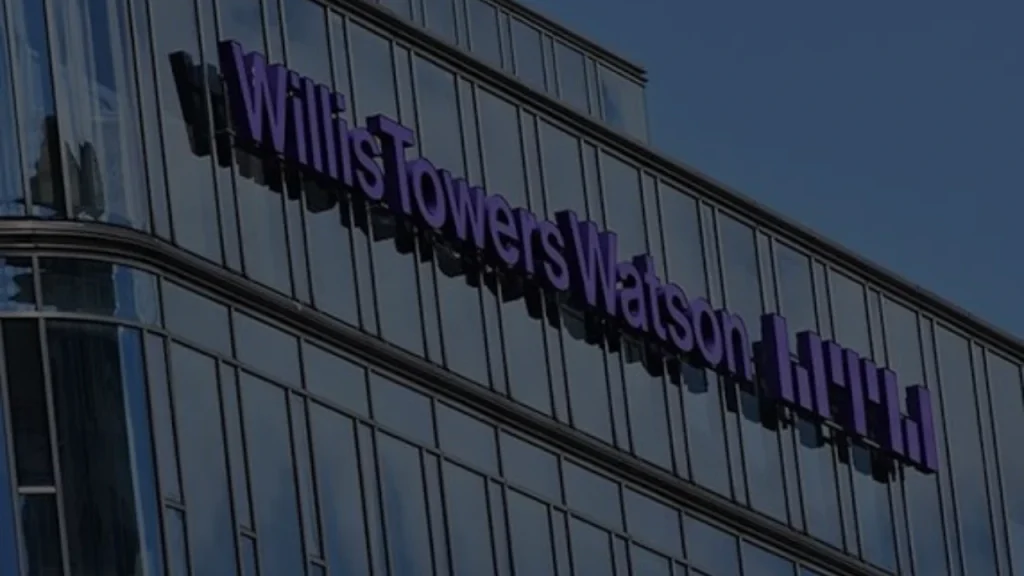
Eighteen insurance brokers on Willis Towers Watson’s Northeast construction team resigned within a 44-minute window on August 19, 2026 — and every one of them landed at rival brokerage Lockton Companies. WTW responded with a 67-page lawsuit accusing Lockton of orchestrating what the complaint calls a “smash and grab” on its Boston office, its people, and its clients.
Quick Facts
| Case Name | Willis Towers Watson Northeast, Inc. et al. v. Lockton Companies, LLC et al. |
| Court | Suffolk County Superior Court, Massachusetts (Boston) |
| Filed | August 24, 2026 |
| Plaintiff | Willis Towers Watson Northeast, Inc. and affiliated WTW entities |
| Defendants | Lockton Companies, LLC and all 18 former WTW brokers |
| Claim Type | Breach of contract, breach of non-solicitation and confidentiality agreements, aiding and abetting, unjust enrichment |
| Relief Sought | Temporary restraining order, preliminary and permanent injunctions, disgorgement of compensation, compensatory and punitive damages |
| Status | Recently filed; no ruling yet on requested injunctive relief |
| Last Updated | September 9, 2026 |
What Happened on August 19
According to the complaint, 18 members of WTW’s Northeast construction insurance practice — including senior leadership — resigned in a coordinated window between 8:02 a.m. and 8:46 a.m. Every one of them went to Lockton. WTW identifies Michael Scott, its New England construction practice leader, and Thomas Grandmaison, its chief client officer for construction, as the executives who led the walkout.
The group was based mostly in Massachusetts, with additional employees in Pennsylvania, Rhode Island, and Alabama. WTW’s Boston office sits at 125 High St.; Lockton’s Boston office, where several of the departing brokers apparently landed, is a few blocks away at 225 Franklin St.
WTW says the timing wasn’t a coincidence. The complaint alleges none of the 18 gave the 15 days’ written notice their employment contracts required — and that within 48 hours of the mass resignation, 13 WTW clients worth more than $5 million in annual revenue had also moved their business to Lockton.
The Legal Claims
WTW’s lawsuit rests on a few distinct theories, each targeting different conduct:
- Breach of non-solicitation agreements. Most of the departing brokers signed agreements barring them from soliciting WTW clients after leaving. WTW argues the near-immediate client movement shows those agreements were violated from day one.
- Breach of confidentiality obligations. The complaint singles out two employees, Wendysue Ash and Richard Scott, alleging they accessed WTW’s internal client files hours after resigning — conduct WTW frames as more than a simple restrictive-covenant violation.
- Aiding and abetting against Lockton. WTW isn’t just suing the individuals who left. It accuses Lockton itself of orchestrating and enabling the breach, arguing the rival firm engineered the coordinated exit rather than simply hiring available talent.
- An individual clawback claim. One defendant, William Darrin of Marblehead, Massachusetts, faces a separate claim: WTW says he owed back a $98,000 signing bonus if he left the firm within five years, and he left before that window closed.
WTW describes the departing brokers’ conduct in the complaint as “so brazen, severe, and outrageous” — language aimed at supporting its request for punitive damages, not just compensatory ones.
Related article: Concora Credit TCPA Settlement, Check If You Qualify, Seals v. Concora Credit Inc., No. 3:2025-cv-00728
Why This Matters Beyond Boston
Coordinated team departures — sometimes called “lift-outs” in the insurance and financial services industries — have become a recurring flashpoint in restrictive-covenant litigation. The core legal question in cases like this one usually comes down to two things: whether the individual agreements are enforceable under Massachusetts law, and whether the receiving firm did more than passively hire talent that wanted to leave anyway. WTW’s decision to sue Lockton directly, rather than only the individual brokers, signals it’s trying to prove the second point — that this was planned and facilitated by Lockton, not a spontaneous mass resignation.
For employers, this case is a reminder that restrictive covenants are only as strong as a company’s willingness and ability to enforce them quickly — WTW moved to file within days of the walkout, seeking a temporary restraining order rather than waiting to see how much business it lost first. For employees considering a coordinated move to a competitor, it’s a reminder that the risk isn’t limited to the departing workers; a receiving employer that helps plan the exit can be named as a defendant too.
What Happens Next
WTW is seeking emergency injunctive relief, which typically moves faster than the rest of a civil case — a court could rule on the TRO and preliminary injunction requests well before the underlying breach-of-contract and damages claims are resolved. None of the allegations have been proven, and Lockton and the individual defendants have not yet filed their formal response.
Frequently Asked Questions
Is this a class action?
No. This is a business lawsuit between two insurance brokerages and a group of individual former employees — not a class action, and there’s no consumer claim process associated with it.
What is a non-solicitation agreement?
It’s a contract provision, common in insurance brokerage and financial services, barring a departing employee from soliciting their former employer’s clients or coworkers for a set period after leaving.
Can a company be sued for hiring employees who have non-solicitation agreements?
Yes, if the hiring company is alleged to have actively helped orchestrate the breach — as opposed to simply extending job offers to people who approached them independently. That’s the theory WTW is pursuing against Lockton.
What is WTW asking the court to do?
It’s seeking a temporary restraining order and injunctions to stop the alleged solicitation, plus disgorgement of compensation and both compensatory and punitive damages.
Has Lockton responded to the allegations?
As of this writing, Lockton and the individual defendants have not filed a public response to the complaint.
Sources Used in This Article
- Business Insurance — “Willis Towers Watson sues Lockton over broker exodus,” August 2026: https://www.businessinsurance.com/willis-towers-watson-sues-lockton-over-mass-broker-exodus/
- Insurance Journal — “Willis Towers Watson Accuses Lockton of ‘Smash and Grab’ of Construction Team,” August 25, 2026: https://www.insurancejournal.com/news/east/2026/08/25/882745.htm
- Boston.com — “Eighteen insurance brokers quit within 44 minutes. Now their former employer is suing,” September 8, 2026: https://www.boston.com/news/business/2026/09/08/eighteen-insurance-brokers-quit-within-44-minutes-now-their-former-employer-is-suing/
Related reading on AllAboutLawyer.com: For background on how these disputes typically play out, see our Business Disputes section, and our Employment Law coverage for how restrictive covenants affect departing employees.
Researched and written by Israr Ahmad, legal content researcher and founder of AllAboutLawyer.com. All facts verified against Business Insurance, Insurance Journal, and Boston.com reporting on the filed complaint, as of September 9, 2026. Last Updated: September 9, 2026.
This article is for informational purposes only and does not constitute legal advice. Laws vary by state and individual circumstances differ. For advice about your specific situation, consult a qualified attorney.
About the Author
Israr Ahmad is a legal content researcher with 4+ years of experience covering class action settlements and consumer rights cases. He has researched and published coverage of 2,500+ settlements using verified court records, settlement administrator filings, and government sources. Learn more about Israr.