
Why Are They Detonating in Iowa? What the Army Is Doing and What It Means for You
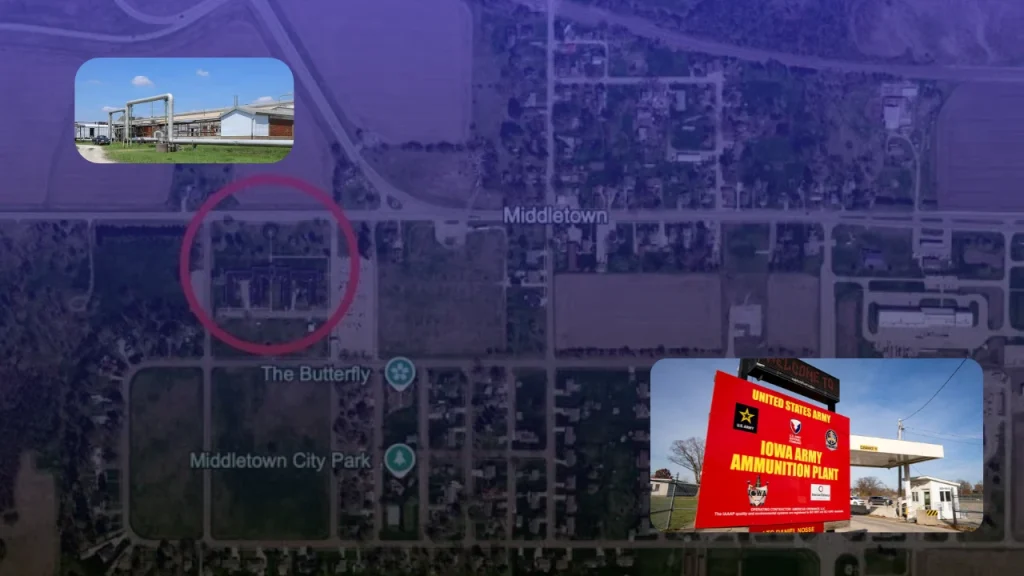
The U.S. Army plans to blow up about 5 tons of old, damaged lead azide at the Iowa Army Ammunition Plant in Middletown on Wednesday, November 25, 2026, at about 9 a.m. Central time (10 a.m. Eastern). The Army says the explosive has become so unstable that it could go off by itself at any time, and that a controlled blast is safer than waiting for that to happen.
The blast will also put lead dust in the air. That is the part worrying people in Iowa, Missouri and Illinois, and it is why this story has legal, health and money questions attached to it.
This article explains the “why” in plain language, where to find the official plume map, what to do before and after the blast, what the court decided, and how to file a claim if the operation damages your property. At the time of writing, the detonation had not been confirmed as completed. The Army will announce an all-clear, and we will update this page when it does.
What to Do Right Now If You Live Near the Iowa Army Ammunition Plant
The Army’s advisory sorts people into two groups. Check which one you are in on the official map before anything else.
Official Army maps and updates: army.mil/asc, Iowa Army Ammunition Plant section. Under the EPA permit, the Army must update the maps six hours before the blast and every hour after that until it happens.
If you are in the recommended evacuation zone (Middletown and a cone extending 5 miles southwest of the plant): leave if you can and use the help available. FEMA is paying for short-term hotel stays through Friday, November 27, plus food, water and rides for people who cannot drive. Call the FEMA helpline at 1-800-621-3362 (24 hours a day) or register at DisasterAssistance.gov. Local reporting put the number of households asked to relocate at nearly 150. Wait for the Army’s phone call saying it is safe before you return.
If you are outside that zone but in the wider area: stay indoors. Close all windows and exterior doors, set your heating to recirculate indoor air, turn off bathroom and kitchen exhaust fans, and keep small children and pets inside. Cover outdoor feed and water for livestock. The Army also suggests a new furnace filter rated MERV 11 or higher if you can get one.
After the all-clear: wet-wipe things children touch, like porches, decks, window sills and play equipment. Wipe with a damp cloth rather than dry-sweeping, which can stir dust back into the air.
Infants, children under 6, pregnant women and people with heart disease, kidney disease or dementia are more sensitive to lead and air pollution, so they should take the most care.
Why Is the Army Detonating Lead Azide in Iowa?
Because the Army says the explosive can no longer be safely stored, moved or treated.
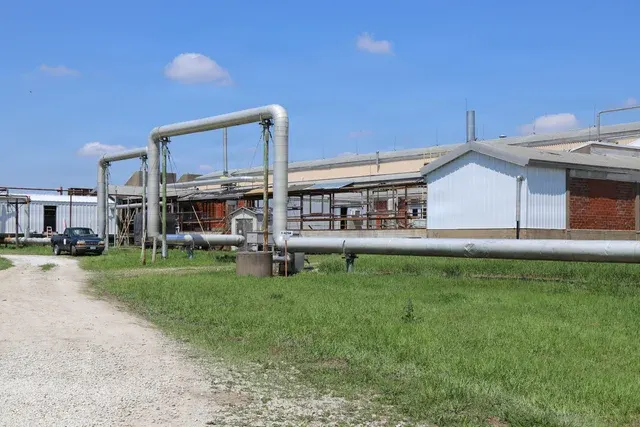
Lead azide is a very sensitive explosive. For decades it was used in the tiny charges that set off larger explosives in military ammunition. Roughly 68 drums of it, holding more than 9,700 pounds, were sitting in earth-covered concrete storage bunkers at the Iowa plant. The Associated Press reports it is the nation’s entire stockpile.
A routine inspection on March 11, 2026 found the material had started to crystallize. In that state it reacts to even slight friction, bumps, heat changes or cold. An Army explosives commander told the court that even a small amount of friction can break the crystals and set off a chain reaction. The Army says the drums have gotten worse over the past eight months, with crystals building up on the outside of the barrels and the lids.
That crystal buildup is the core of the problem. It locks the lids in place. The Army says you cannot move the drums without risking an explosion, and you cannot open them to treat what is inside.
Cold weather adds to the risk. Less liquid in a drum means it freezes more easily, which makes the crystals more touchy. The head of the federal explosives agency (ATF) said temperature swings are just as dangerous as freezing. In the Army’s words, an uncontrolled explosion is a matter of time.
Why Can’t the Army Just Move It or Neutralize It?
Federal experts looked at four other options and rejected each one, according to the Army:
| Option | Why the Army says it won’t work |
| Truck it to another site | Moving the drums means vibration and bumps, which could set it off |
| Neutralize it with chemicals | You would have to open the drums and mix chemicals in, which the Army says is unsafe with crystals on the lids |
| Burn or heat-treat it | Also requires handling the drums |
| Keep storing it | The risk grows as temperatures drop |
An Army explosives group commander said the team tested a chemical neutralizer and found it unsafe. The environmental groups that sued say the alternatives were not examined closely enough. A federal appeals court looked at that argument and was not persuaded, at least for now (more on that below).
If Lead Is Toxic, Why Set Off an Explosion That Spreads It?
This is the question most people are asking, and the honest answer is that officials are choosing between two risks.
Risk one is a planned blast, with barriers, water, foam, air monitoring and an evacuation zone in place. Risk two is an accidental blast at an unknown time, with none of that preparation.
The Army says it has built protections around the bunkers, including sand-filled barriers about two stories tall, walls of water tanks, gel and foam blocks, and misting machines that soak the soil and air so dust gets weighed down and falls back inside the plant. It says most of the cloud will be harmless things like nitrogen gas, sand, soil and water vapor, with a small share being fine lead dust.
That small share still matters, because the blast destroys the explosive but not the lead. Lead does not break down. Whatever escapes will settle on the ground, roofs, cars, gardens and farm fields, and it stays there until it is cleaned up. That is why the Army, EPA and health agencies are focused on sampling and cleanup after the blast.
Where Is the Iowa Lead Plume Going? How to Read the Map
The Army publishes maps of two different things: where lead dust may travel through the air, and where it may land on the ground. The maps are estimates and change with the weather.
As of the most recent reporting, the forecast shows dust drifting southwest from Middletown toward northeastern Missouri between about 9 a.m. and 5 p.m. Central on Wednesday. NBC News reported that the Army’s map shows meaningful amounts of lead dust could land roughly 40 miles away, toward the Farmington area and into Missouri. Illinois officials said the Wednesday forecast was unlikely to affect their state, but they are monitoring and a tracking page is available.
Keep two things in mind. A forecast map is a prediction, not a measurement. The Army says it will publish a final estimate of the affected area after the blast, and teams will take soil, air, surface-water and wipe samples to find out where lead actually landed.
Official sources:
Is Lead Dust Dangerous to My Family?
Lead is a poison that harms the brain and nervous system. The CDC says no safe blood lead level has been found for children. Young children and pregnant women are at the highest risk.
There are two ways people can be exposed after the blast. One is breathing in lead particles while the cloud passes. The other is getting lead dust on your hands and then in your mouth, or touching surfaces where it settled, like play equipment, porches, vehicles and garden produce.
Living in the forecast area does not mean you will be poisoned. The amount that reaches you, and for how long, depends on the wind and your distance from the plant. Lead often causes no obvious symptoms at first, so a blood lead test is the only reliable check. If you are worried, especially about a child under 6 or a pregnancy, call your doctor or local health department and ask about testing. The Iowa Department of Health and Human Services has guidance on lead exposure.
Will My Yard Be Tested and Cleaned?
Yes, if you ask. EPA said sampling teams are already in the field taking baseline samples before the blast and will sample during and after it. If you want your property tested, EPA’s sampling request line is 1-833-649-9624. Tell them you are making a sampling request and give your name, phone number and address.
The Army said that if a home’s soil tests above the permit’s cleanup standard of 200 parts per million, crews will remove the affected soil, clean surfaces and restore the property at the government’s expense.
Is the Detonation Legal? The EPA Permit and the Court Fight
Short answer: a federal appeals court has so far allowed it to go ahead, but the legal fight is not entirely over.
The permit. Lead azide counts as hazardous waste under a federal law called the Resource Conservation and Recovery Act (RCRA), so destroying it normally takes a permit. On November 18, 2026, EPA issued the Army an emergency permit, saying the explosion risk was an imminent and substantial threat to human health and the environment. The rule that allows emergency permits is 40 C.F.R. § 270.61. The permit requires the Army to warn the public in advance, sample before and after, clean up contaminated areas, and report to EPA.
The lawsuit. The Iowa Environmental Council and the Sierra Club’s Iowa Chapter, represented by Earthjustice, asked the U.S. Court of Appeals for the Eighth Circuit to block the permit. They argued EPA did not fully weigh the risks or the alternatives and gave residents too little notice. The court first paused the permit while it considered the request. The Army then argued it could proceed under emergency powers even without a permit.
The ruling. On Monday, November 23, a three-judge panel declined to block the permit. The judges found EPA had built in enough safeguards, including barriers, weather limits, advance notice, updated air modeling and monitoring, and that the Army had looked at a full range of alternatives. The court acknowledged the real risks of the blast but said the damaged explosive could go off unplanned and without any of those protections.
This was a ruling on emergency relief, meaning the groups had not shown they were likely to win, rather than a final decision on every claim. The plaintiffs’ lawyer said the case is about the permit’s validity, not the Army’s decision to act under its emergency authority, and that the Army “created this emergency through neglect.”
The politics. On Monday, President Trump said the Army would not proceed unless the court allowed it and Governor-elect Rob Sand agreed. Sand, who does not take office until January, said the decision belongs to the administration. The Army then said outgoing Gov. Kim Reynolds supported going forward. The detonation was originally set for Friday, November 20, then pushed back several times. The Army said Wednesday has the best weather.
Related article: LaKesha Womack Felony Charge Dismissed, Why Prosecutors Dropped the Rental Car Case
Why Did Iowa Declare a Disaster Emergency?
On November 24, Gov. Reynolds issued a disaster emergency proclamation for Des Moines, Lee and Van Buren counties. It turns on state emergency response plans and lets the Iowa National Guard provide up to 100 soldiers, who are helping contact households in the evacuation area. It is a precaution. It does not say those counties are contaminated, and it does not by itself pay anyone money.
Can I File a Claim With the Army If the Blast Damages My Property?
Yes. The Army says its Claims Service will handle property damage from blast vibrations, and the Illinois EPA page says livestock and property damage claims can go to the Army’s Office of the Staff Judge Advocate at Fort Leavenworth. Losses must be proven, and not every loss is paid.
Before the blast: the Army’s claims guide advises documenting your property in advance with photos, videos, samples or documents. Do that now if you can. Pictures of your house, barn, wells, equipment and fields taken today are your baseline.
How to file:
- Download Standard Form 95 (SF-95).
- Describe what happened, when and where, and what damage or injury resulted.
- State a specific dollar amount for each claimant. The Army says not to write “to be determined.”
- Sign and date it. If someone files for you, include proof they may do so.
- Attach photos, repair estimates, receipts, medical records or other proof. Do not wait on missing records, since the office can ask for more later.
- Confirm where to send it, then keep a full copy and proof of delivery.
| Army claims contact | Details |
| Office | Fort Leavenworth Claims Office, Office of the Staff Judge Advocate |
| Address | 415 Custer Avenue, Fort Leavenworth, KS 66027 |
| Phone (Army claims guide) | 520-669-4483 |
| Phone (listed on the Illinois EPA page) | (913) 684-3564 |
| [email protected] |
Two phone numbers appear in official materials, so if one does not connect, try the other.
Deadlines. A claim generally must reach the Army within two years of when the injury or damage happened. If the Army denies it in writing, you usually have six months to sue in federal court under the Federal Tort Claims Act. A phone call or an incomplete note may not count as a proper claim, so use the form. Filing does not guarantee payment. If your loss is large, talk to a lawyer.
Is There a Class Action or Settlement Fund for the Iowa Detonation?
No. As of publication, no class action, settlement fund or public claim form exists for this event. The Eighth Circuit case is a challenge to EPA’s permit. It is not a lawsuit seeking payments for residents.
Be careful with any website or message offering a “settlement claim.” Use only .gov and .mil sites for relocation, testing and claims. If contamination is later confirmed and people are injured, lawsuits could follow, but that depends on future facts. For a sense of how long lead-related payouts can take, see Benton Harbor $25 Million Lead Water Settlement, Insurers Face Fight Over Resident Payments. That is a different case in Michigan and does not mean Iowa residents will receive anything.
For the day-by-day story, including the earlier court pause, see our earlier coverage: Iowa Lead Azide Detonation November 25, Why the Army Plans an Explosion Despite a Federal Court Stay.
Quick Facts: Iowa Lead Azide Detonation
| Question | Answer |
| What is being destroyed? | 68 drums of degraded lead azide, more than 9,700 pounds (about 5 tons) |
| Where? | Iowa Army Ammunition Plant, Middletown, Des Moines County, Iowa |
| When? | Wednesday, November 25, 2026, about 9 a.m. Central (10 a.m. Eastern), exact time depends on weather |
| How? | Controlled blast in place inside reinforced bunkers, with barriers, water and foam; reported as two quick detonations |
| Who is in charge? | U.S. Army, with EPA, FEMA, HHS, ATF and state agencies |
| Legal basis | EPA emergency permit under RCRA, issued November 18, 2026 |
| Court status | Eighth Circuit declined to block the permit on November 23 |
| Evacuation | Recommended for Middletown and a 5-mile cone southwest of the plant; FEMA hotel help through November 27 |
| Plume forecast | Southwest toward northeastern Missouri; Illinois officials say impact unlikely |
| Radioactive? | No. This is a chemical explosive containing lead |
| Completed? | Not confirmed at time of writing |
Timeline of the Iowa Lead Azide Detonation
| Date | What happened |
| March 11, 2026 | Routine inspection finds the stored lead azide has begun to crystallize |
| November 18, 2026 | EPA issues the RCRA emergency permit |
| November 20, 2026 | Original detonation date; Eighth Circuit temporarily pauses the permit; state emergency office activated |
| November 23, 2026 | Eighth Circuit declines to block the permit; Trump says he wants court and governor-elect sign-off |
| November 24, 2026 | Army announces the 9 a.m. Central Wednesday plan; FEMA relocation begins; Gov. Reynolds issues disaster proclamation |
| November 25, 2026 | Scheduled detonation |
Frequently Asked Questions About the Iowa Lead Azide Detonation
Why are they detonating lead azide in Iowa?
The Army says the drums have crystallized and cannot be moved, opened or treated without risking an explosion, so a controlled blast is the safest way to get rid of them.
What time is the Iowa explosion?
About 9 a.m. Central, which is 10 a.m. Eastern, on November 25, 2026. The Army said it may adjust the exact time based on weather.
Is the Iowa explosion nuclear or radioactive?
No. Lead azide is a chemical explosive. It contains lead, which is toxic, but it is not radioactive.
Does the blast destroy the lead?
No. It destroys the explosive, but lead dust can drift and settle nearby. That is why there is an evacuation zone, monitoring and cleanup.
Will the lead plume reach Illinois or Missouri?
The latest forecast points southwest toward northeastern Missouri. Illinois officials said Illinois was unlikely to be affected. Winds can change, so check the Army’s hourly updates.
Should I get a blood lead test?
Ask your doctor, especially for children under 6 and pregnant women, if you are in the affected area. Lead often causes no early symptoms, so testing is the only reliable way to know.
Did a court stop the detonation?
A court briefly paused the EPA permit, but on November 23 the Eighth Circuit declined to block it.
Can I get money if the blast damages my home or farm?
You can file a claim with the Army using Form SF-95. Payment is not guaranteed and depends on what you can prove.
Is there a class action settlement?
No class action or settlement fund exists for this event at the time of writing.
Sources
- U.S. Army: Public Safety Advisory, Controlled Detonation of Unstable Lead Azide at Iowa Army Ammunition Plant (Nov. 24, 2026)
- U.S. Army: Army announces controlled detonation of degraded explosive material at Iowa Army Ammunition Plant (Nov. 24, 2026)
- U.S. Army: Maps and community notifications
- EPA: IAAAP Lead Azide emergency response page
- U.S. Army: Army Claims guide for prospective claimants (Nov. 2026)
- Associated Press via PBS News: Army to detonate degraded bomb-making material in Iowa on Wednesday
- CBS News: Army to detonate lead azide explosives in Iowa Wednesday morning
- CBS News: Maps show Iowa lead dust plume drifting southwest into Missouri
- NBC News: Army to detonate lead explosives in Iowa on Wednesday morning
- KCRG: Gov. Reynolds issues Disaster Emergency Proclamation
- Illinois EPA: Iowa Army Ammunition Plant updates
- Iowa HHS: Lead exposure and surveillance
- CDC: About childhood lead poisoning prevention
- Standard Form 95, Claim for Damage, Injury or Death (GSA)
Update log: November 25, 2026 (Eastern Time): Article published before the scheduled detonation. We will add the Army’s all-clear and post-blast sampling results when they are released.
This article is for informational purposes only and does not constitute legal or medical advice. Laws vary by state and individual circumstances differ. For advice about your specific situation, consult a qualified attorney or healthcare provider. This is a developing situation, and the time, maps and evacuation guidance may change. Follow current instructions from emergency management and public health officials.
Researched and written by Israr Ahmad, legal content researcher and founder of AllAboutLawyer.com. All facts verified against the U.S. Army’s November 24, 2026 public safety advisory and press release, EPA’s emergency response page, the Army’s November 2026 claims guide, the Iowa Department of Health and Human Services, and reporting from the Associated Press and CBS News on the Eighth Circuit ruling, as of November 25, 2026. Last Updated: November 25, 2026.
About the Author
Israr Ahmad is a legal content researcher with 4+ years of experience covering class action settlements and consumer rights cases. He has researched and published coverage of 2,500+ settlements using verified court records, settlement administrator filings, and government sources. Learn more about Israr.