
When Does Protesting Become Harassment? Know the Legal Line Between Protected Protest and Unlawful Harassment
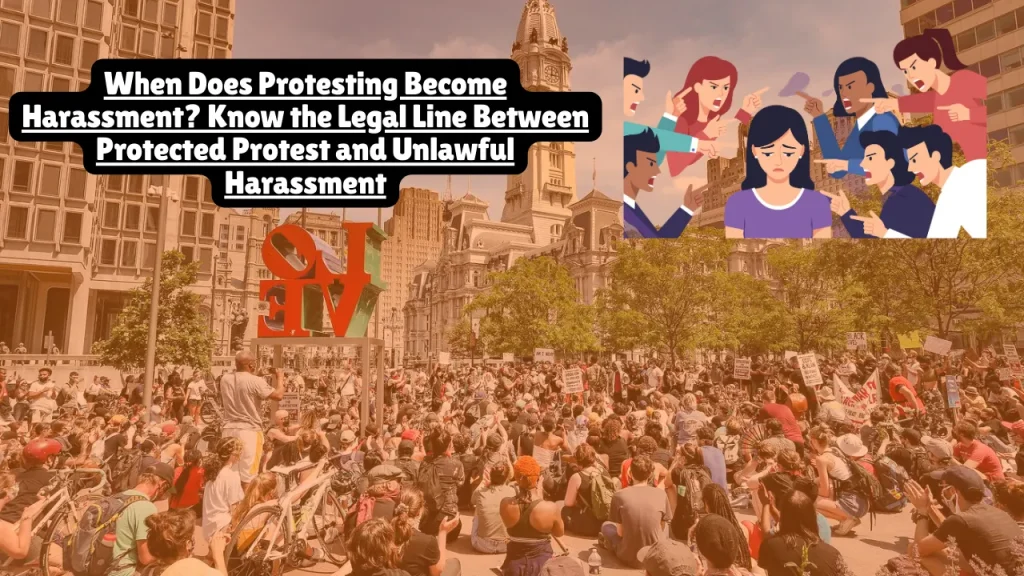
Protesting is generally protected by the First Amendment, but protesting becomes harassment when it involves targeted, repeated conduct directed at a specific individual or entity with the intent to threaten, intimidate, or substantially interfere with that person’s or entity’s rights, safety, or property. The distinction depends on whether conduct is targeted versus general, repeated versus isolated, threatening or intimidating, or substantially interferes with the target’s daily life.
Understanding this boundary helps you exercise your constitutional rights while avoiding harassment liability—increasingly important as states enact new anti-protest laws in 2026.
First Amendment Protections and Their Limits on Harassment
What the First Amendment Protects—and Doesn’t
The First Amendment—the constitutional protection for freedom of speech and assembly—protects your right to express your views and gather with others. These protections apply to general protest activity expressing a message to the public.
However, the First Amendment does not protect harassment, threats, or targeted conduct intended to intimidate specific individuals. The Supreme Court has established that true threats and incitement to imminent lawless action are not protected speech.
Understanding what is the supreme law of the land that overrules everything helps you recognize that while the Constitution protects speech, state and federal harassment laws must still comply with constitutional limits.
General Protest Versus Targeted Harassment
General protest activity—carrying signs, chanting slogans, distributing literature expressing opposition to a policy or entity—is typically protected. This activity addresses the public and expresses a message.
Targeted harassment differs fundamentally. When you direct repeated contact, confrontation, or threats at a specific individual—showing up repeatedly at their home or workplace, sending repeated emails or messages, making personal threats—your conduct crosses from general protest into harassment.
The key distinction: Are you expressing a message to the public, or are you targeting a specific person with conduct intended to threaten, intimidate, or interfere with their daily life?
Criminal Harassment and Stalking Statutes
How States Define Criminal Harassment
Most states criminalize conduct that harasses, threatens, intimidates, or causes emotional distress to a specific person. These statutes require targeted conduct with specific intent.
For example, many states define harassment as engaging in a course of conduct directed at a specific person that serves no legitimate purpose and would cause a reasonable person substantial emotional distress.
“Course of conduct” means a pattern of behavior—not an isolated incident. Repeated contact, confrontation, or communication directed at a specific target establishes the pattern required for criminal harassment.
Stalking and Cyberstalking Laws
Stalking laws criminalize repeated conduct that causes a reasonable person to fear for their safety or the safety of others. This conduct can include following, surveilling, contacting, or appearing at a person’s home or workplace.
Cyberstalking extends these protections to online harassment through email, social media, text messages, or other digital platforms. Repeatedly contacting, threatening, or intimidating someone online can constitute cyberstalking even if you never physically confront them.
In June 2025, KQED reported that the First Amendment “does not protect against true threats, incitement, fighting words or harassment.” The law distinguishes between expressing ideas to the public and targeting individuals with threatening or intimidating conduct.
When Repeated Contact Becomes Criminal
The Role of Intent and Repetition
Intent matters significantly in harassment cases. Some statutes require that you intended to harass or knew your conduct was likely to harass. Others focus on whether a reasonable person would feel threatened or intimidated.
Repetition establishes the “course of conduct” required for most harassment and stalking charges. An isolated incident—one confrontation, one email, one appearance at someone’s workplace—typically doesn’t constitute harassment.
However, repeated, escalating conduct demonstrates a pattern. When you show up at someone’s home multiple times, send dozens of messages, or repeatedly confront them in person, you establish the pattern required for criminal liability.
Threats and Intimidation Cross the Line
Any threats—whether of violence, property damage, or harm—are not protected speech. Making threats against a specific individual or entity can result in criminal charges for terroristic threatening, making criminal threats, or similar offenses.
Intimidating conduct that causes a reasonable person to fear for their safety also crosses into criminal territory. This includes following someone, appearing unexpectedly at their location, or engaging in conduct that would make a reasonable person fear harm.
Civil Harassment Remedies and Restraining Orders
How Victims Obtain Protection
Individuals experiencing harassment can seek civil remedies including restraining orders (also called protective orders or civil harassment orders). These court orders prohibit contact or conduct directed at the protected person.
Violating a restraining order is criminal contempt, carrying penalties including arrest and jail time. Courts take restraining order violations seriously because they demonstrate willful disregard for judicial authority and victim safety.
Related article: New Jersey E-Bike Laws 2026 Classification, Registration, and Where You Can Ride
Civil harassment claims can also result in monetary damages. If your harassment causes emotional distress, lost wages, medical expenses, or other damages, you may face civil liability beyond any criminal penalties.
Online Harassment and Social Media
Harassment through social media platforms constitutes cyberstalking when it involves repeated contact, threats, or intimidation directed at a specific person. Posting repeatedly about someone, tagging them in threatening content, or sending repeated direct messages can all constitute harassment.
Many states have updated their harassment and stalking statutes to explicitly include electronic communication. The medium doesn’t matter—harassment is harassment whether conducted in person, through email, or via social media.
What Activists and Organizers Need to Know
Conducting Lawful Protest Campaigns
Focus your protest on expressing a message to the public rather than targeting specific individuals. Address policies, practices, or institutional behavior—not individual people.
Avoid repeated contact, confrontation, or communication with specific individuals or entities. If your protest strategy involves repeatedly showing up at someone’s home or workplace, you risk crossing into harassment territory.
Do not make threats or engage in intimidating conduct. Express your opposition to policies or practices, but never threaten individuals with violence or harm.
Legal Consequences of Harassment
Criminal harassment charges can result in misdemeanor or felony convictions depending on the severity of conduct and state law. Penalties include fines, probation, and imprisonment.
Stalking convictions carry serious penalties, often including mandatory restraining orders, sex offender registration in some states, and significant prison time for repeat offenses.
Civil liability can be financially devastating. Harassment victims can sue for damages including emotional distress, lost wages, and punitive damages intended to punish and deter the conduct.
Understanding is it legal to protest in a church demonstrates similar principles—your First Amendment rights have limits when your conduct crosses into harassment, trespassing, or interference with others’ rights.
Last Updated: January 21, 2026
Disclaimer: This article is for informational purposes only and explains the legal framework governing when protest activity becomes harassment; consult an attorney for legal advice about your specific situation or rights.
Take Action: Understand the distinction between general protest and targeted harassment. Research local harassment and stalking laws before organizing protests. Avoid targeted, repeated contact or threats. Know your First Amendment rights and limitations. Understand criminal harassment and stalking statutes. Understand civil harassment remedies and restraining orders. Conduct lawful protest activity. Know when to consult an attorney.
Stay informed, stay protected. — AllAboutLawyer.com
Sources:
- U.S. Constitution First Amendment: https://constitution.congress.gov/constitution/amendment-1/
- Supreme Court Brandenburg v. Ohio, 395 U.S. 444 (1969): https://supreme.justia.com/cases/federal/us/395/444/
- California Penal Code § 646.9 (Stalking): https://leginfo.legislature.ca.gov/faces/codes_displaySection.xhtml?lawCode=PEN§ionNum=646.9
- Model Stalking Code (DOJ): https://www.justice.gov/archives/ovw/page/file/1046271/download
- ACLU Protesters’ Rights: https://www.aclu.org/know-your-rights/protesters-rights
- Freedom Forum When Protesting Becomes Illegal: https://www.freedomforum.org/when-does-protesting-become-illegal/
- KQED Protest Legal Rights (June 2025): https://www.kqed.org/news/11984807/know-your-rights-california-protesters-legal-standing-under-the-first-amendment
About the Author

Sarah Klein, JD, is a licensed attorney and legal content strategist with over 12 years of experience across civil, criminal, family, and regulatory law. At All About Lawyer, she covers a wide range of legal topics — from high-profile lawsuits and courtroom stories to state traffic laws and everyday legal questions — all with a focus on accuracy, clarity, and public understanding.
Her writing blends real legal insight with plain-English explanations, helping readers stay informed and legally aware.
Read more about Sarah