
Washington State Patrol Trooper Injured After Elderly Driver Rear-Ends Patrol SUV on I-90 Near Cle Elum
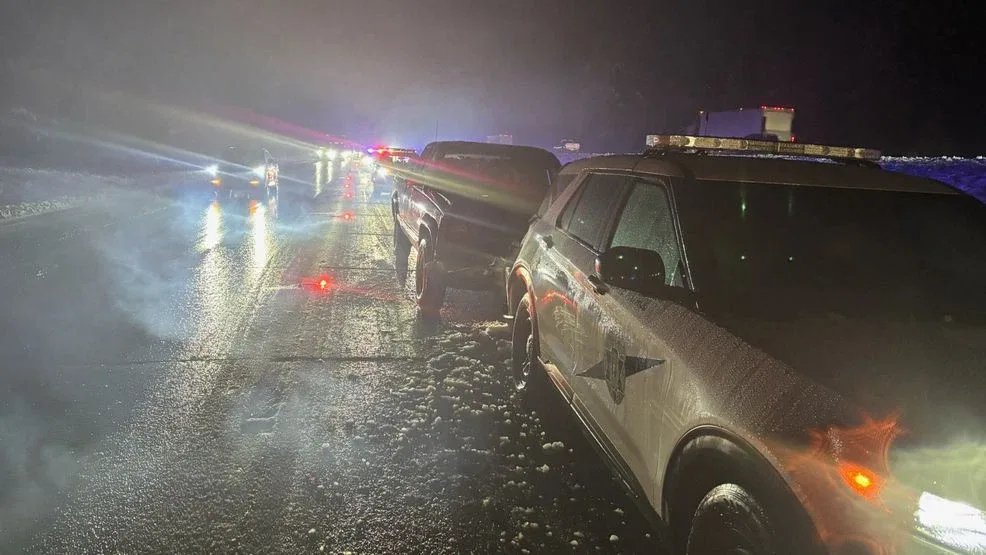
A Washington State Patrol trooper sustained injuries Thursday afternoon when an 86-year-old Easton man rear-ended a patrol SUV parked with emergency lights activated on westbound I-90 near Cle Elum. Trooper Chance Forman, 30, was transported to Kittitas Valley Healthcare in Ellensburg for treatment, while the elderly driver, Charles White, faced no injuries but pending charges. The collision occurred around 4:25 p.m. in the right lane where the patrol vehicle was stopped with lights flashing.
What Happened in the I-90 Crash Near Cle Elum?
The crash happened around 4:25 p.m. on I-90 in the westbound lanes when White’s pickup truck rear-ended the patrol vehicle, which was parked in the right lane with its emergency lights on.
The driver of the emergency vehicle, 23-year-old Jorge Ortiz, was outside of the car when the crash occurred, avoiding injury. Forman, seated in the passenger seat, bore the brunt of the impact.
The patrol SUV was fully marked and clearly visible with activated warning lights when White’s vehicle struck from behind.
What Injuries Did Trooper Chance Forman Sustain?
One trooper had minor injuries and was taken to a hospital. Emergency crews transported Forman to Kittitas Valley Healthcare in Ellensburg for evaluation and treatment.
The extent of Forman’s injuries has not been detailed beyond characterization as minor, though any collision forceful enough to require hospital transport raises concerns about potential neck, back, or head trauma common in rear-end crashes.
Trooper Ortiz avoided injury by being outside the vehicle during impact.
What Caused the Elderly Driver to Rear-End the Patrol SUV?
Investigation findings indicate driver inattention as the primary factor. Drugs or alcohol did not play a factor in the crash, which remains under investigation.
The 86-year-old driver failed to observe the stationary patrol vehicle despite its emergency lights being fully activated in the right lane of westbound I-90.
Weather and road conditions have not been cited as contributing factors, suggesting the collision resulted from failure to maintain proper observation of traffic ahead.
What Charges Does Charles White Face?
Charges are pending against White, who was uninjured. The Washington State Patrol continues investigating before forwarding charges to the Kittitas County Prosecutor’s Office.
Potential charges likely include:
Negligent driving in the second degree under RCW 46.61.525, which applies when a driver operates a vehicle in a manner endangering persons or property. A driver causing a collision with an emergency vehicle may face negligent driving charges under RCW 46.61.525, with fines exceeding $550 and possible license suspension.
Following too closely under RCW 46.61.145, which requires drivers to maintain safe following distances.
Failure to yield to emergency vehicle violations under Washington’s Move Over Law if the driver failed to properly respond to the patrol vehicle’s activated lights.
What Washington State Laws Apply to Rear-End Collisions with Emergency Vehicles?
Multiple Washington statutes govern this incident.
Rear-End Collision Liability
Washington law holds that the following driver will be deemed at fault in a rear-end accident in most cases. Courts have established that the primary duty of avoiding collisions rests upon the following driver.
The following driver is not necessarily excused even in the event of an emergency, for it is the driver’s duty to keep such distance from the car ahead and maintain such observation of that car that the driver can make such emergency stop as may be required by reasonably foreseeable traffic conditions.
Emergency Vehicle Protection Laws
Washington’s Move Over Law, RCW 46.61.212, mandates specific driver duties when approaching stationary emergency vehicles. The law requires drivers to change lanes or reduce speed when passing a stationary emergency vehicle with activated warning lights.
On highways with four or more lanes, drivers must move away from the lane occupied by the emergency vehicle when safe. On roads with fewer lanes, drivers must proceed with caution and reduce speed.
Enhanced Penalties for Emergency Vehicle Collisions
More severe cases, particularly those involving injuries or fatalities, can lead to reckless driving charges under RCW 46.61.500, a gross misdemeanor punishable by up to 364 days in jail and fines up to $5,000.
While White’s case will likely result in negligent driving charges given the minor injuries and lack of aggravating factors, enhanced scrutiny applies to all collisions involving law enforcement vehicles.
Is This Part of a Pattern on I-90 Near Cle Elum?
The Cle Elum corridor has witnessed multiple incidents involving patrol vehicles and inattentive drivers.
In October 2023, two Washington State Patrol troopers were injured when a 75-year-old Texas driver failed to heed lane closures and struck a Department of Transportation attenuator truck, which then crashed into a parked WSP patrol unit. The driver of the second crash, who was wearing his seatbelt at the time, was transported to hospital for treatment of minor injuries. Investigators determined the second crash was also caused by inattentiveness, and charges are pending.
That incident occurred while troopers investigated an earlier rollover crash, creating a protected work zone that the inattentive driver drove directly into.
Days before the recent White collision, another trooper’s SUV was struck in what Washington State Patrol described as at least the second incident in several days. A WSP sergeant had minor injuries after a head-on crash in Pierce County on Wednesday.
These recurring collisions demonstrate persistent failure by drivers to recognize and respond appropriately to emergency vehicles with activated warning lights.
What Does This Incident Reveal About Elderly Driver Safety?
While age alone doesn’t determine driving capability, this incident highlights concerns about elderly driver attention and reaction time.
Washington state requires drivers age 65 and older to renew licenses every six years rather than the standard eight-year renewal period, though no additional testing is mandated based solely on age.
The National Highway Traffic Safety Administration reports that drivers over 70 have higher crash rates per mile driven than middle-aged drivers, primarily due to declining vision, slower reaction times, and reduced ability to process multiple inputs simultaneously.
Rear-end collisions specifically suggest failure to maintain proper visual scanning or inability to process and respond to brake lights or hazard indicators ahead.
What Safety Measures Could Prevent Similar Crashes?
Several interventions could reduce collisions with stationary emergency vehicles.
Enhanced driver education about Move Over Laws and emergency vehicle protocols. Many drivers remain unaware of specific requirements when approaching patrol vehicles with activated lights.
Increased elderly driver screening including vision tests, reaction time assessments, and driving evaluations at renewal. Current Washington law doesn’t require road tests for senior renewals.
Technology solutions including forward collision warning systems and automatic emergency braking, which could have prevented this collision by detecting the stationary vehicle and alerting or braking automatically.
Stricter enforcement of Move Over Law violations. Citations for failure to yield to emergency vehicles remain relatively rare compared to other traffic violations.
Public awareness campaigns highlighting the frequency of patrol vehicle collisions and legal consequences for failures to move over or slow down.
What Happens Next in the Investigation?
Washington State Patrol continues investigating to determine final charges and complete collision reconstruction.
Once the investigation concludes, the case will be forwarded to the Kittitas County Prosecutor’s Office for charging decisions. White will receive citations or formal charges depending on the severity prosecutors determine appropriate.
If charged with negligent driving second degree, White faces fines, potential license suspension, and possible impacts on insurance rates. The collision will likely trigger Department of Licensing review given his age and the circumstances.
Trooper Forman’s recovery timeline will influence proceedings, particularly if injuries prove more serious than initially assessed.
Recent Pattern of Trooper Vehicle Collisions Raises Concerns
The frequency of patrol vehicle collisions in Washington has prompted renewed emphasis on driver attentiveness near emergency scenes.
Beyond the October 2023 Cle Elum incident and the recent Pierce County head-on crash, Washington State Patrol regularly reports near-misses and collisions involving marked patrol vehicles with activated lights.
These incidents occur despite Washington law clearly requiring drivers to move over and slow down, suggesting widespread failure to comply with emergency vehicle laws.
The recurring nature of these collisions—particularly involving elderly drivers and inattentiveness—suggests systemic issues requiring policy intervention beyond individual enforcement.
Frequently Asked Questions
What is Washington’s Move Over Law and does it apply to parked patrol vehicles?
Yes. RCW 46.61.212 requires drivers to change lanes away from or slow down when approaching stationary emergency vehicles with activated warning lights. The patrol SUV White struck had emergency lights on, triggering Move Over Law requirements.
Is the rear driver always at fault in Washington rear-end collisions?
Generally yes. Washington courts hold that the primary duty to avoid rear-end collisions rests on the following driver. Exceptions exist for sudden unexpected stops or mechanical failures, but these rarely apply to collisions with stationary vehicles.
What penalties does Charles White face for rear-ending the patrol vehicle?
White likely faces negligent driving second degree charges with fines exceeding $550, possible license suspension, and increased insurance rates. Enhanced penalties apply because the collision injured a law enforcement officer.
Does Washington require additional testing for elderly drivers?
No. Washington requires drivers 65+ to renew licenses every six years instead of eight, but no additional road tests, vision tests, or competency assessments are mandated based solely on age.
Can the injured trooper sue the elderly driver for injuries?
Potentially. While workers’ compensation covers Trooper Forman’s medical expenses, he may have grounds for civil action if injuries exceed what workers’ compensation covers or if negligence was particularly egregious.
How common are collisions with stationary patrol vehicles in Washington?
Increasingly common. Washington State Patrol reports multiple incidents annually where drivers strike parked patrol vehicles despite activated emergency lights, with inattentiveness cited as the primary factor in most cases.
What should drivers do when they see a patrol vehicle with lights on?
On multi-lane roads, change lanes away from the patrol vehicle when safe. On two-lane roads, reduce speed significantly and proceed with extreme caution. Always maintain awareness of stationary emergency vehicles ahead.
Will this incident affect elderly driver laws in Washington?
Unclear. While individual incidents rarely trigger immediate legislative action, accumulating evidence of elderly driver-involved collisions may prompt future discussions about age-based testing requirements or graduated renewal restrictions.
Legal Disclaimer: This article provides general information about a specific incident and applicable Washington traffic laws. It does not constitute legal advice. Laws and penalties vary based on circumstances and jurisdiction.
About the Author

Sarah Klein, JD, is a licensed attorney and legal content strategist with over 12 years of experience across civil, criminal, family, and regulatory law. At All About Lawyer, she covers a wide range of legal topics — from high-profile lawsuits and courtroom stories to state traffic laws and everyday legal questions — all with a focus on accuracy, clarity, and public understanding.
Her writing blends real legal insight with plain-English explanations, helping readers stay informed and legally aware.
Read more about Sarah