
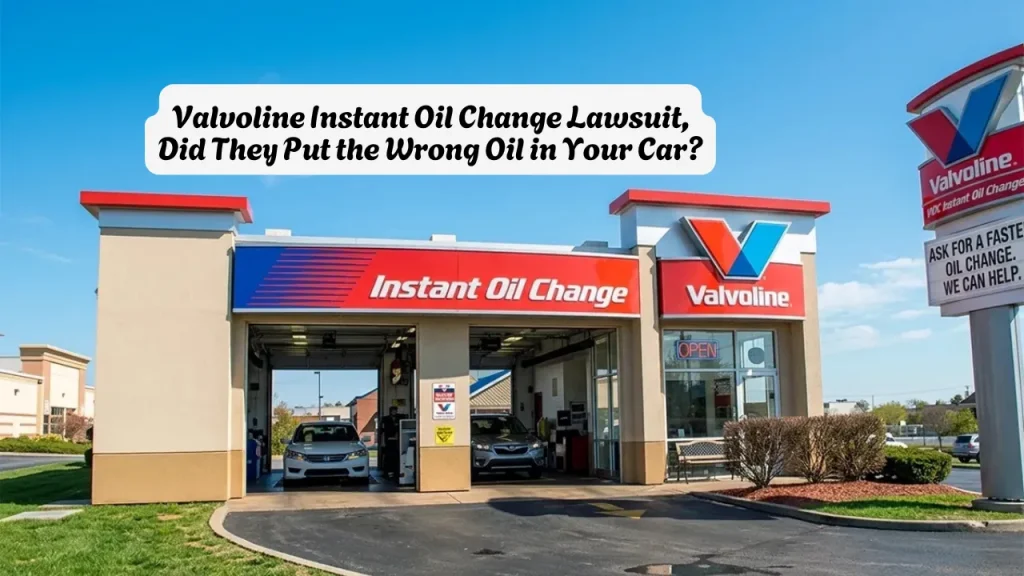
Valvoline Instant Oil Change Lawsuit, Did They Put the Wrong Oil in Your Car?
A class action lawsuit filed in February 2026 accuses Valvoline of putting the wrong oil in customers’ vehicles at its Instant Oil Change locations across the country. The lawsuit claims Valvoline routinely uses oil that does not match what vehicle manufacturers require, putting engines at risk and potentially voiding warranties. No settlement exists yet. This is an active, early-stage lawsuit — but if you have ever had an oil change at a Valvoline Instant Oil Change location, here is exactly what you need to know.
Quick Facts
| Field | Detail |
| Case Name | Campbell v. Valvoline Inc., Case No. 1:26-cv-00291-JRS-TAB |
| Court | U.S. District Court, Southern District of Indiana (Indianapolis Division) |
| Filed | February 11, 2026 |
| Lead Plaintiff | Robert Campbell, Indiana resident, owner of a 2025 Kia Sorento |
| What the Lawsuit Alleges | Valvoline used wrong oil viscosity at Instant Oil Change locations, violating manufacturer specifications |
| Laws Alleged to Be Broken | Breach of contract, breach of implied warranty, Indiana Deceptive Consumer Sales Act, unjust enrichment |
| Who Could Qualify | All U.S. customers who had engine oil replaced at a Valvoline Instant Oil Change location with oil that did not meet their vehicle manufacturer’s specifications |
| Settlement Amount | No settlement — active litigation |
| Claim Deadline | No claim form exists yet |
| Payout Per Person | TBD |
| Case Status | Early litigation — no class certified, no settlement reached |
Where Things Stand Right Now
- The Valvoline class action lawsuit was filed on February 11, 2026, in the U.S. District Court for the Southern District of Indiana. Plaintiff Robert Campbell claims Valvoline used oil of a different viscosity than specified by the vehicle manufacturer, resulting in out-of-pocket losses, decreased performance, engine damage, and loss of warranty coverage.
- This case is in its earliest stage. No class has been certified, no settlement has been negotiated, and no claim form exists. If a settlement is eventually reached, affected customers will receive notice by mail or email with instructions on how to file a claim.
- The lawsuit seeks to represent a nationwide class of all Valvoline Instant Oil Change customers who received oil that did not match their vehicle manufacturer’s specifications — meaning this case could ultimately affect millions of drivers.
What Valvoline Is Accused of Doing
When you take your car to an oil change shop, you trust them to use the right oil. Your car’s owner manual and manufacturer documentation specify a precise oil viscosity — a code like 0W-30 or 5W-30 — that engineers determined your engine needs to run properly and stay protected.
According to the 16-page complaint, although auto manufacturers specify a particular engine oil viscosity for their vehicles, Valvoline frequently uses Valvoline-branded motor oil with different viscosities when performing oil changes. The complaint argues that manufacturers’ specifications on what oil to use are “legally and engineering-significant, not just advisory.”
The lawsuit claims that Valvoline’s alleged failure to use the correct oil can risk or cause significant, expensive damage to vehicles, including decreased performance and fuel economy, engine damage, and voiding of the vehicle warranty.
What makes this case particularly striking is what Valvoline allegedly told the plaintiff when he complained. According to the lawsuit, when the plaintiff complained to Valvoline customer service, he was told that Valvoline service centers do not carry the oil with the same specifications required by his vehicle, as no such oil is manufactured by Valvoline. In other words, the problem may not be an isolated mistake by one technician — it may reflect a structural limitation in what Valvoline stocks and sells.
What Happened to the Lead Plaintiff
The lawsuit traces back to a routine oil change that quickly became anything but routine.
Robert Campbell had his 2025 Kia Sorento serviced at a Valvoline Instant Oil Change location in Westfield, Indiana, in October 2025. He paid $102.99 for the oil change. Days later he discovered the Valvoline Instant Oil Change facility had used 5W-30 oil — despite Kia’s specification that only 0W-30 oil be used in his vehicle.
Campbell asked for a refund. Instead of a refund, he was given a different oil that also did not meet Kia’s manufacturer specifications. This left him no choice but to have the oil replaced a third time at a different service provider, at his own expense.
Additionally, the lawsuit claims Valvoline’s own website incorrectly states that 5W-30 oil is the proper oil for all 2025 Kia Sorento 2.5-liter turbo engines, contrary to Kia’s specifications. That detail matters because it suggests the problem was not a one-off human error — it was baked into Valvoline’s own information systems.
Related article: $15.6M State Farm Class Action Lawsuit, Their Total Loss Settlement, Did They Shortchange Your Car Payout?
Why the Oil Viscosity Difference Matters
You might wonder: how different can 0W-30 and 5W-30 really be? Both have “30” in the name. The answer depends on conditions — and the difference is most significant when your engine needs it most.
The first number in the viscosity grade (0W or 5W) represents how the oil flows when the engine is cold. Lower numbers indicate better flow at low temperatures. Oil is more viscous when cold, and at low enough temperatures 0W oil flows more easily than 5W oil, meaning it can reach the engine more quickly and provide better protection during cold starts. Once the engine reaches operating temperature, both grades should perform similarly.
The lawsuit also notes that Kia recommends fully synthetic oil for the 2025 Sorento with its turbocharged engine. Using a lower-grade oil of the wrong viscosity in a turbocharged engine — which runs hotter and at higher pressures than a naturally aspirated engine — carries a higher risk of inadequate lubrication over time.
Beyond engine wear, using non-specified oil creates a warranty problem. If your manufacturer discovers you used the wrong oil specification during a warranty claim, they can deny coverage for related engine damage. The lawsuit alleges that the wrong type of oil can lead to engine damage, a drop in vehicle performance, and the voiding of the manufacturer’s warranty.
Who Could Be Eligible?
Campbell wants to represent a nationwide class and an Indiana subclass of consumers who had their vehicle engine oil replaced at a Valvoline Instant Oil Change location with oil that did not conform to the vehicle manufacturer’s specifications.
This means you could potentially be part of this lawsuit if all of the following are true:
- You had your vehicle’s engine oil replaced at a Valvoline Instant Oil Change location.
- The oil Valvoline used did not match your vehicle manufacturer’s specified viscosity grade or performance requirements.
- You experienced damages as a result — such as costs to correct the oil, potential engine damage, diminished vehicle value, or warranty concerns.
The nationwide class definition is broad by design. It covers any vehicle make or model — not just Kia — where Valvoline allegedly substituted a different oil viscosity than what the manufacturer required.
What You Should Do Right Now
Because this is early-stage litigation with no claim form yet, here is the practical action plan:
Step 1 — Check your oil change receipt. Valvoline provides a service record showing the oil grade used. Compare that grade to the specification listed in your vehicle’s owner’s manual or on the oil cap under your hood. They should match.
Step 2 — Look up your vehicle’s spec. Your owner’s manual lists the required oil viscosity in the lubrication section. Many manufacturers also post specifications on their official websites by entering your VIN or vehicle year/make/model.
Step 3 — Document everything. Save your Valvoline receipts, any service records showing the oil grade used, and records of any follow-up expenses you incurred to correct the oil. If you had a warranty claim denied related to engine problems after a Valvoline oil change, save those records too.
Step 4 — Monitor the case for updates. When a class is certified or a settlement is reached, eligible customers typically receive notification by mail or email at the address associated with their service. You can also track the docket through the federal court system using Case No. 1:26-cv-00291-JRS-TAB.
Step 5 — Consult an attorney if you suffered significant damage. If you believe a wrong-oil service at Valvoline caused actual engine damage or a denied warranty claim, speak with a consumer protection or automotive defect attorney. Individual damages of that magnitude may warrant separate action alongside or instead of the class case.
Important Dates
| Milestone | Date |
| Incident (Lead Plaintiff’s Oil Change) | October 8, 2025 |
| Class Action Lawsuit Filed | February 11, 2026 |
| Class Certification | TBD |
| Settlement Negotiations | TBD |
| Claim Filing Opens | TBD |
| Claim Deadline | TBD |
| Final Approval Hearing | TBD |
| Expected Payment Date | TBD |
Frequently Asked Questions
Did Valvoline put the wrong oil in my car?
Possibly, if your vehicle requires an oil viscosity that Valvoline does not carry. The lawsuit alleges that Valvoline service centers do not carry oil meeting certain manufacturers’ specifications, because Valvoline itself does not manufacture those oil grades. Check your Valvoline service receipt against your owner’s manual to see if the viscosity grades match.
Is there a settlement I can claim money from right now?
No. This lawsuit was filed in February 2026 and is in early litigation. No settlement has been reached, no claim form exists, and no payment deadline has been announced. When a settlement is reached, eligible customers will receive direct notice. Do not submit personal information to any website claiming to have a Valvoline claim form open right now — no such form is authorized by the court.
Do I need a lawyer to join this lawsuit?
No. If a class is certified and a settlement is reached, class members are automatically included and can file claims on their own without hiring an attorney. The class action attorneys representing the plaintiffs handle the litigation on behalf of all class members.
When will I receive my payment?
No payment timeline exists. This case was just filed in February 2026 and must go through class certification, potential discovery, and either a trial or settlement negotiations before any money is distributed. Class action automotive defect cases of this type typically take one to three years to resolve.
What if I missed the deadline?
There is no deadline to miss yet. No claim deadline has been announced. This is an active lawsuit in its earliest stage.
Will a settlement payment affect my taxes?
Portions of any future settlement payment that compensate you for actual out-of-pocket losses — such as the cost of correcting the oil change — are generally not considered taxable income. Amounts covering other damages may be treated differently. Consult a tax professional when you receive any payment.
What if Valvoline damaged my engine?
If you suffered real engine damage from an incorrect oil change at Valvoline — not just the inconvenience of correcting the wrong oil — your individual damages may be significant enough to pursue separately, in addition to any class action participation. Consult an attorney who handles automotive service negligence or consumer protection cases in your state.
How is this lawsuit different from a routine mechanic dispute?
Most oil change errors are one-off mistakes. This lawsuit alleges the problem is structural — that Valvoline service centers do not stock the oil grades required by certain vehicle manufacturers, and that Valvoline’s own website reflects incorrect oil specifications for affected vehicles. That pattern across multiple locations is what makes this a class action rather than an individual complaint.
Sources & References
Last Updated: April 5, 2026
Disclaimer: This article is for informational purposes only and does not constitute legal advice. Legal claims and outcomes depend on specific facts and applicable law. For advice regarding a particular situation, consult a qualified attorney.
About the Author
Israr Ahmad is a legal content researcher with 4+ years of experience covering class action settlements and consumer rights cases. He has researched and published coverage of 2,500+ settlements using verified court records, settlement administrator filings, and government sources. Learn more about Israr.