
Utah Kalshi Criminal Charges, CEO Tarek Mansour and COO Luana Lopes Lara Charged Over Alleged Illegal Gambling Promotion
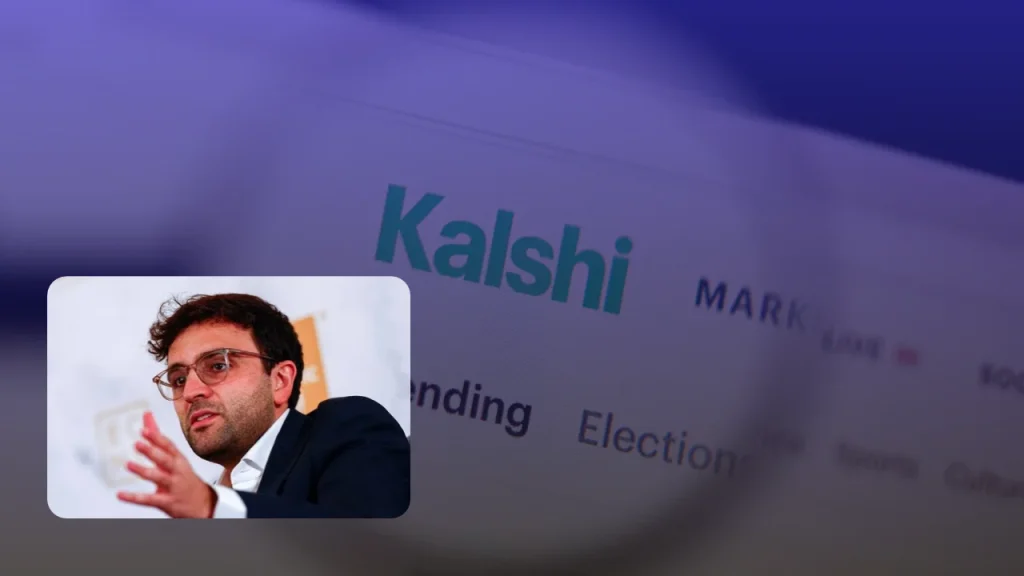
On October 28, 2026, the Utah Attorney General’s Office filed criminal charges against prediction-market company Kalshi and its two co-founders, CEO Tarek Mansour and COO Luana Lopes Lara. The state says Kalshi illegally promoted online gambling by letting a Utah-based undercover agent bet on sports through the platform.
The charging document lists 14 counts: one second-degree felony for a pattern of unlawful activity, 12 third-degree felony counts of online gambling promotion, and one Class A misdemeanor count of general gambling promotion. Kalshi calls the case “a crazy overreach” and says Utah is “clearly playing politics.”
This is not a lawsuit from customers, and there is no payout or claim form. It is a state prosecution, running alongside a separate Utah civil case and a federal lawsuit in which the U.S. Commodity Futures Trading Commission (CFTC) is trying to stop Utah from enforcing its gambling laws against Kalshi.
No one has been convicted. The charges are allegations that Utah must prove in court.
Utah Kalshi Criminal Charges: Quick Facts
| Detail | Information |
| Filed | October 28, 2026 |
| Court | Utah Third Judicial District Court, Salt Lake County |
| Prosecutor | Utah Attorney General Derek Brown |
| Defendants | KalshiEX LLC; Tarek Mansour (co-founder, CEO); Luana Lopes Lara (co-founder, COO) |
| Counts | 14: one second-degree felony, 12 third-degree felonies, one Class A misdemeanor |
| Main statute | Utah Code § 76-9-1404 (online gambling promotion) |
| Evidence cited | 12 sports wagers placed by a state investigator on a Utah-based undercover account, totaling $114.87 |
| Arrests | None reported. Mansour and Lopes Lara were issued summonses |
| Kalshi’s position | Federally regulated exchange; says the charges are political overreach |
| Status | Newly filed. No conviction, no trial date reported |
Reports vary on whether the 14 counts apply to each defendant or to the three defendants collectively. The charging document was not independently reviewed for this article, so check the count breakdown against the filing before relying on it.
What Is Kalshi, and Why Does Utah Call It Gambling?
Kalshi runs a prediction market where users buy and sell contracts tied to future events, including sports results, elections and economic data. A “yes” contract pays out if the event happens; a “no” contract pays out if it does not.
Kalshi says these are federally regulated financial contracts, traded on an exchange overseen by the CFTC, and therefore not sports bets. Utah says that calling something a “prediction market” doesn’t change what it is. Attorney General Derek Brown put it this way: “Gambling is illegal in Utah, whether you place the bet, run the game, or promote it.” He added that being federally registered “doesn’t put a company above the law.”
That disagreement is the whole case. If Kalshi is a CFTC-regulated exchange, Kalshi argues, states can’t treat its contracts as local sports betting. If Utah is right, the contracts are bets, and Utah’s ban applies.
How Did Utah Build the Criminal Case Against Kalshi?
According to the probable cause affidavit reported by FOX 13 Utah, Attorney General’s investigator Scott Eggerman used a Utah-based IP address to open a Kalshi account under an undercover name. The account’s details, including a Utah home address, a Utah phone number and a bank account at a Utah institution, identified the user as a Utah resident.
Reason reported that Eggerman placed 12 wagers over about two weeks in September 2026, spending $114.87 in total. The bets covered the NFL, MLB, a college football game involving Utah State, and a Major League Soccer match involving Real Salt Lake. The Salt Lake Tribune reported that one wager was on the Utah Mammoth’s September 26 home game.
The affidavit also points to Kalshi’s fees. Prosecutors argue that the fee charged on each wager meant Kalshi collected proceeds from an unlawful pattern of activity and reinvested them in running the business. The same affidavit alleges that Mansour acquired or maintained control of Kalshi through that pattern.
These are the state’s allegations. The undercover purchases are evidence prosecutors will present, not findings.
What Are the 14 Charges Against Kalshi and Its Founders?
| Count | Alleged offense | Classification |
| 1 | Pattern of unlawful activity | Second-degree felony |
| 2–13 | Online gambling promotion (one per wager) | Third-degree felony |
| 14 | General gambling promotion | Class A misdemeanor |
Online gambling promotion under Utah Code § 76-9-1404
This is the statute behind the 12 felony counts. It took effect May 7, 2025. Under it, a person commits online gambling promotion by intentionally providing, or offering to provide, a form of online gambling to someone in Utah. A violation is a third-degree felony. The law exempts internet service providers, hosting companies, telecom providers and online ad services that merely pass along or store material at a user’s direction. Utah’s position is that Kalshi isn’t a neutral conduit. It runs the exchange where the contracts are made.
Pattern of unlawful activity and general gambling promotion
The second-degree felony rests on the theory that the wagers, and the fees Kalshi collected on them, add up to a pattern of unlawful activity connected to Kalshi’s business. The misdemeanor charges general gambling promotion. Kalshi will likely contest both on the ground that its contracts are not gambling under Utah law at all.
What penalties are possible?
Under Utah’s sentencing statutes, a second-degree felony carries a term of one to 15 years and a third-degree felony up to five years. A Class A misdemeanor carries up to 364 days. Those are statutory ranges, not predicted sentences. A company cannot be imprisoned, so KalshiEX LLC would face other penalties if convicted.
Why Are Tarek Mansour and Luana Lopes Lara Personally Charged?
Utah named both co-founders as defendants rather than only the company. FOX 13 reported that Mansour and Lopes Lara were issued summonses to appear in court, not arrested.
Holding the title of CEO or COO does not make someone criminally liable. The state must prove each defendant’s own conduct and intent. How far personal liability reaches for prediction-market executives is one of the questions this case puts in front of a court, and it is why other companies in the industry are watching it.
What Is Kalshi’s Defense?
Kalshi’s statement to FOX 13 was short: “This is a crazy overreach; Utah is clearly playing politics. We look forward to putting a stop to this in court, just like we did in Arizona.”
Its legal argument is that the Commodity Exchange Act gives the CFTC exclusive authority over contracts traded on a federally registered exchange, and that federal law overrides state gambling rules. The CFTC agrees. Utah and a federal judge have so far disagreed.
The August 4 federal ruling
Before the criminal charges, Kalshi had sued Utah officials in federal court. On August 4, 2026, U.S. District Judge Robert J. Shelby granted summary judgment to Utah, holding that the federal law Kalshi relied on does not preempt Utah’s ability to enforce its anti-gambling laws against Kalshi’s sports contracts. He called Kalshi’s reading of congressional intent implausible.
Kalshi appealed to the Tenth Circuit (No. 26-4100). On September 8, a two-judge panel denied its emergency request for an injunction while the appeal proceeds. That means Utah can enforce its laws in the meantime, but the Tenth Circuit has not yet decided the appeal on the merits. Brown’s statement leans on this history: he says a federal court already ruled that Utah’s laws apply and that Kalshi kept taking bets from Utahns anyway.
Utah’s Separate Civil Lawsuit Against Kalshi
Don’t confuse the criminal case with the civil one. On October 20, 2026, Utah filed a civil enforcement lawsuit in state court asking a judge to block Kalshi from operating in Utah. The Salt Lake Tribune reported that the complaint describes Kalshi as the manager of a “back-alley gambling den.” Reporting on the complaint says Utah estimates Kalshi collected roughly $30 million to $60 million in fees from Utah users and wants that money back. Those figures are the state’s estimates, not a court finding.
The civil case is broader than the criminal one. The criminal counts rest on the 12 undercover sports wagers.
Why Is the Federal Government Suing Utah Over Kalshi?
On October 27, the day before the criminal charges, the CFTC announced it had sued Utah to block the state’s efforts to shut down CFTC-registered contract markets. CFTC Chairman Michael S. Selig said Congress made the CFTC the federal regulator with “sole responsibility” over these markets. The agency said it has also started legal proceedings against nine other states.
The federal suit does not automatically stop Utah’s prosecution. A court would have to grant relief first, and none had been reported as of October 31, 2026.
How Is the Utah Case Different From Arizona’s?
Arizona filed the first criminal case against Kalshi on March 17, 2026: 20 misdemeanor counts covering sports and election contracts. A federal judge in Arizona, Michael Liburdi, denied Kalshi’s own request for an injunction in April, finding that the Anti-Injunction Act barred it from stopping a pending state prosecution. The CFTC then asked for relief in its own name. The court granted a temporary restraining order on April 10 and a preliminary injunction on May 5, halting Arizona’s case.
Utah is different in two ways. Its charges include felonies, and its civil and criminal cases come after a federal court ruled for the state. The Arizona order does not control Utah’s case. For the Arizona charges, see our earlier article, Kalshi Lawsuit 2026, Criminal Charges in Arizona and the $54M “Khamenei Market” Legal Case.
Federal appeals courts are also divided. According to Action Network, the Third Circuit ruled for Kalshi on preemption in a New Jersey case in April, while the Ninth Circuit ruled against it in a Nevada case on August 28. Reason reported that the NFL, 39 states and D.C. filed briefs this month asking for clarity on whether states or the CFTC hold authority. The Supreme Court may eventually be asked to decide, though it has not agreed to hear any of these cases. New York has also gone after another prediction market over similar claims; see New York Sues Polymarket, Were You Affected As A User?
Does This Make Kalshi Illegal Everywhere?
No. The charges apply to conduct in Utah under Utah law. They don’t revoke Kalshi’s CFTC registration or shut it down nationwide, and other states have different laws and different court rulings.
Can Kalshi Users Get a Refund or Compensation?
No. There is no settlement, claim form or customer compensation program tied to the Utah criminal charges. Utah’s civil lawsuit asks for the return of fees Kalshi allegedly collected, but no restitution has been ordered and no distribution process exists. Be wary of any site promising a “Kalshi lawsuit payout.”
What Happens Next in the Utah Kalshi Case?
- Criminal case: Mansour, Lopes Lara and KalshiEX LLC must respond to the charges. Expect motions arguing that federal law preempts Utah’s gambling statutes and that Kalshi’s contracts aren’t gambling. No trial date or public docket number had been reported as of October 31.
- Civil case: Utah’s October 20 lawsuit continues separately in state court.
- Federal suit: The CFTC’s lawsuit against Utah awaits court action.
- Tenth Circuit: Kalshi’s merits appeal of the August 4 ruling is pending.
Utah v. Kalshi Timeline
| Date | Development |
| March 17, 2026 | Arizona files 20 misdemeanor counts against Kalshi |
| April 10, 2026 | Arizona federal court issues temporary restraining order halting the Arizona prosecution |
| May 5, 2026 | Arizona federal court grants preliminary injunction against Arizona’s enforcement |
| August 4, 2026 | Judge Shelby grants summary judgment to Utah in Kalshi’s federal suit |
| Early August 2026 | Kalshi appeals to the Tenth Circuit (No. 26-4100) |
| September 8, 2026 | Tenth Circuit denies Kalshi’s emergency injunction request |
| September 13–26, 2026 | Utah investigator places 12 sports wagers on an undercover Kalshi account |
| October 20, 2026 | Utah files civil enforcement lawsuit against Kalshi |
| October 27, 2026 | CFTC announces lawsuit against Utah |
| October 28, 2026 | Utah files criminal charges against KalshiEX LLC, Mansour and Lopes Lara |
Utah Kalshi Criminal Charges FAQ
Why did Utah charge Kalshi?
Utah says Kalshi illegally promoted online gambling by letting a Utah-based undercover agent place money on sports outcomes through its platform.
Who is charged in the Utah Kalshi case?
KalshiEX LLC, co-founder and CEO Tarek Mansour, and co-founder and COO Luana Lopes Lara.
What are the charges?
One second-degree felony (pattern of unlawful activity), 12 third-degree felonies (online gambling promotion) and one Class A misdemeanor (general gambling promotion).
How much did the undercover agent bet?
The investigator placed 12 wagers totaling $114.87 in September 2026.
Were Kalshi’s founders arrested?
No arrests were reported. Mansour and Lopes Lara were issued summonses to appear in court.
Could the founders go to prison?
If convicted of the felonies, potentially. Utah law sets a range of one to 15 years for a second-degree felony and up to five years for a third-degree felony. Those are maximum ranges, not predicted sentences.
What does Kalshi say?
Kalshi calls the case a “crazy overreach,” says Utah is playing politics, and maintains its contracts are federally regulated financial products, not gambling.
Did Kalshi already lose a federal case against Utah?
Yes. On August 4, 2026, a federal judge ruled that federal law doesn’t stop Utah from enforcing its gambling laws against Kalshi’s sports contracts. Kalshi’s appeal to the Tenth Circuit is pending.
Why is the CFTC suing Utah?
The CFTC says Congress gave it sole responsibility for overseeing federally registered contract markets and that Utah can’t use state law to shut them down.
Is the criminal case the same as Utah’s civil lawsuit?
No. The October 28 criminal case rests on the 12 undercover wagers. The October 20 civil lawsuit is broader and seeks to stop Kalshi from operating in Utah and to recover fees.
Can Kalshi users get compensation?
Not at this point. No settlement, claim form or refund program exists.
Does the Utah case mean Kalshi is illegal in every state?
No. It applies to Utah law. Other states and federal courts have reached different results.
Sources
- FOX 13 Utah, Utah levels criminal charges against Kalshi and some of its executives (October 28, 2026)
- The Salt Lake Tribune, Utah files 14 criminal charges against Kalshi and its founders (October 28, 2026)
- Reason, Utah files criminal charges against Kalshi co-founders (October 29, 2026)
- Associated Press, Utah charges Kalshi and its founders, escalating a fight over who can regulate prediction markets (October 28, 2026)
- CFTC, Release No. 9315-26 (October 27, 2026)
- Utah Code, § 76-9-1404, Online gambling promotion
- Action Network, Kalshi Utah: 10th Circuit denies emergency injunction (September 2026)
- Arizona News From The States, Arizona’s criminal case against Kalshi blocked by federal judge (May 5, 2026)
Researched and written by Israr Ahmad, legal content researcher and founder of AllAboutLawyer.com. All facts verified against FOX 13 Utah, The Salt Lake Tribune, Reason and Associated Press reporting, the CFTC’s October 27 release and Utah Code § 76-9-1404, as of October 31, 2026. Last Updated: October 31, 2026.
This article is for informational purposes only and does not constitute legal advice. Laws vary by state and individual circumstances differ. For advice about your specific situation, consult a qualified attorney.
About the Author
Israr Ahmad is a legal content researcher with 4+ years of experience covering class action settlements and consumer rights cases. He has researched and published coverage of 2,500+ settlements using verified court records, settlement administrator filings, and government sources. Learn more about Israr.