
Sean Combs vs. NBCUniversal and Peacock Defamation Lawsuit Dismissed, The Full Story and Final Outcome
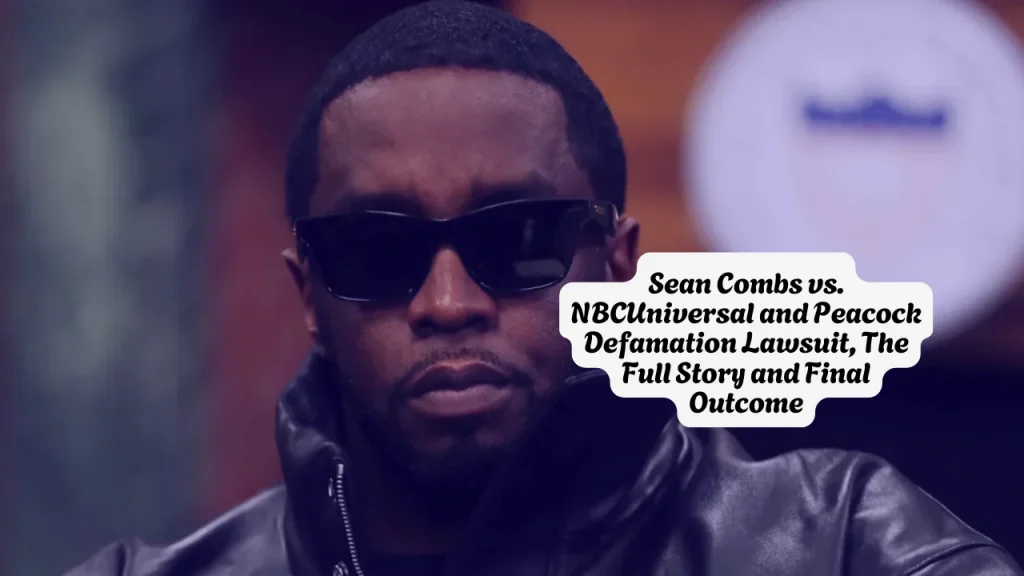
Sean Combs v. NBCUniversal Media, LLC, Peacock TV LLC, and Ample LLC is a defamation lawsuit in which Sean “Diddy” Combs alleged that NBCUniversal and its streaming platform Peacock caused him substantial reputational and financial harm by broadcasting a documentary containing what he called “fresh lies and conspiracy theories” — and the case was dismissed in full by a New York judge on April 21, 2026. Combs had sought $100,000,000 in damages. The court found he failed to meet the legal standard for defamation under New York law and applied the libel-proof plaintiff doctrine, ruling his reputation was already severely damaged before the documentary aired.
Quick Facts
| Field | Detail |
| Plaintiff | Sean Combs (also known as “Diddy”) |
| Defendants | NBCUniversal Media, LLC; Peacock TV LLC; Ample LLC d/b/a Ample Entertainment |
| Case Name & Number | Sean Combs v. NBCUniversal Media, LLC et al., Index No. 151935/2025 |
| Court | Supreme Court of the State of New York, New York County |
| Date Filed | February 12, 2025 |
| Legal Claim | Defamation — libel and slander under New York law |
| Damages Sought | $100,000,000 |
| Outcome | Dismissed in full — all claims rejected — April 21, 2026 |
| Settlement Amount | None — case dismissed before any settlement |
| Plaintiff’s Counsel | Michael Tremonte — Sher Tremonte LLP |
| Defense Counsel | Connor Sullivan — Gibson Dunn & Crutcher LLP |
| Last Updated | April 23, 2026 |
Case Timeline
| Date | Event |
| January 2, 2025 | Diddy: The Making of a Bad Boy premieres on Peacock |
| February 12, 2025 | Sean Combs files $100 million defamation lawsuit in New York County Supreme Court |
| November 2025 | NBCUniversal files motion to dismiss, citing Combs’ own sentencing statements as evidence his reputation was already destroyed |
| April 21, 2026 | Judge Phaedra F. Perry-Bond dismisses all claims in full |
| April 23, 2026 | Combs potentially faces liability for NBCUniversal’s legal fees — appeal status TBD |
What Is the Sean Combs vs. NBCUniversal Lawsuit About? Sean Combs v. NBCUniversal Media, LLC et al., Index No. 151935/2025
Sean Combs filed this defamation lawsuit against NBCUniversal Media, LLC, Peacock TV LLC, and Ample LLC in the Supreme Court of the State of New York, New York County, alleging that the documentary Diddy: The Making of a Bad Boy — which aired on Peacock on January 2, 2025 — defamed him by broadcasting false and damaging claims about his involvement in the deaths of several people in his orbit. Defamation is a legal claim that arises when a false statement of fact is published to third parties, causing harm to a person’s reputation. Under New York law, public figures must prove the defendant acted with actual malice — meaning the defendant knew the statement was false or acted with reckless disregard for its truth or falsity.
According to the lawsuit, the documentary “maliciously” claimed that Combs played a role in the deaths of his ex-partner Kim Porter, Christopher “The Notorious B.I.G.” Wallace, and Dwight “Heavy D” Myers. The lawsuit further alleged the documentary “maliciously and baselessly” concluded that Combs is a “monster” and “an embodiment of Lucifer” with similarities to Jeffrey Epstein, and that “the entire premise of the documentary assumes that Mr. Combs has committed numerous heinous crimes, including serial murder, rape of minors, and sex trafficking of minors.”
Combs argued that NBCUniversal prioritized profits over journalistic responsibility in rushing the documentary to market. Combs’ lawsuit claimed the documentary “advances the false narrative” that he had a hand in the deaths of multiple people, and that it “shamelessly advances conspiracy theories that lack any foundation in reality.”
Who Are Sean Combs, NBCUniversal, and Ample LLC?
Sean Combs — known professionally as Diddy — is a hip-hop mogul, record executive, and founder of Bad Boy Entertainment. Combs is currently serving a four-year prison sentence for arranging cross-country prostitution events known as “freak-offs.” He is appealing and arguing that the sentence was unduly harsh, given that jurors acquitted him of more serious sex-trafficking and racketeering charges. He filed this defamation lawsuit while incarcerated.
NBCUniversal Media, LLC is one of the largest media and entertainment companies in the United States, operating the Peacock streaming platform. Ample LLC d/b/a Ample Entertainment is the production company that produced Diddy: The Making of a Bad Boy. A lawyer for NBC, Connor Sullivan of Gibson Dunn, stated after the dismissal: “This is an important ruling that protects filmmakers and journalists by dismissing this meritless complaint as barred by New York law and the First Amendment.” Understanding [how New York’s defamation standard differs from the federal actual malice standard] is key context for this ruling, as New York applies a “grossly irresponsible journalism” test for media defendants in cases involving public figures.
Related article: Hair Relaxer Chemical Hair Straightener Lawsuit, Are You Eligible to Join?
How Did the Sean Combs vs. NBCUniversal Lawsuit End?
Judge Phaedra F. Perry-Bond dismissed every claim Combs filed against NBCUniversal, Peacock TV, and Ample LLC over the documentary Diddy: The Making of a Bad Boy. The dismissal was granted in full on April 21, 2026 — Combs lost on every count without any finding in his favor.
The judge applied two separate grounds to reject the lawsuit. First, she ruled that NBCUniversal’s conduct did not rise to the level of grossly irresponsible journalism — the standard New York courts apply to determine whether a media outlet acted with sufficient fault to be liable for defamation of a public figure. Second, she applied the libel-proof plaintiff doctrine — a legal principle holding that a plaintiff whose reputation is already so severely damaged cannot claim additional harm from a new publication. The judge stated: “It is inconceivable as to how the Documentary created additional damage to [Diddy’s] reputation, which was already tarnished by the numerous lawsuits, domestic violence video, press coverage, and a criminal indictment prior to the Documentary’s publication.”
The court applied the libel-proof plaintiff doctrine, supported by evidence including a hotel surveillance video showing Combs assaulting singer Cassie Ventura, his federal criminal indictment, and numerous civil lawsuits against him. The judge also referenced Combs’ own sentencing statement, where he admitted his actions were “disgusting, shameful and sick.” The complaint was dismissed in full, and Combs may face liability for the defendants’ legal fees. Whether Combs intends to appeal the dismissal has not been confirmed in available public sources as of April 23, 2026.
What Does the Sean Combs vs. NBCUniversal Case Mean for Defamation and Media Law?
This ruling carries significance well beyond Combs himself. The Manhattan judge ruled that Combs had not shown the defendants were “grossly irresponsible” — the standard required under New York defamation law for a public figure to prevail against a media defendant. The decision reaffirms that documentary filmmakers and journalists retain broad First Amendment protection when covering public figures who already face documented legal proceedings and publicly available evidence of wrongdoing.
The application of the libel-proof plaintiff doctrine is particularly notable. Courts apply this doctrine sparingly — it is reserved for cases where the plaintiff’s reputation has been so thoroughly destroyed by prior events that no documentary or publication could meaningfully worsen it. By invoking it here, Judge Perry-Bond signaled that Combs’ pre-existing legal record — including his criminal conviction, the hotel surveillance footage, and dozens of civil lawsuits — had already done the reputational damage he tried to attribute to Peacock.
The ruling also carries a financial sting beyond the dismissal itself. When a defamation plaintiff loses on a motion to dismiss in New York, courts have discretion to award attorneys’ fees to the prevailing defendant — meaning Combs could owe NBCUniversal’s legal costs on top of the failed $100 million claim.
Frequently Asked Questions
Who filed the Sean Combs lawsuit against Peacock and why?
Sean Combs filed the lawsuit on February 12, 2025, in New York County Supreme Court. He alleged that NBCUniversal, Peacock TV LLC, and Ample LLC defamed him by broadcasting Diddy: The Making of a Bad Boy — a documentary he claimed falsely linked him to multiple deaths and described him as a “monster” and “an embodiment of Lucifer.” He sought $100,000,000 in damages.
What court handled the Sean Combs vs. Peacock case?
The case was filed and decided in the Supreme Court of the State of New York, New York County, under Index No. 151935/2025. Judge Phaedra F. Perry-Bond presided over the case and issued the dismissal ruling on April 21, 2026.
Has the case been resolved?
Yes. Judge Phaedra F. Perry-Bond dismissed every claim Combs filed against NBCUniversal, Peacock TV, and Ample LLC on April 21, 2026. The case is concluded at the trial court level. Whether Combs will appeal the dismissal to a higher New York court has not been confirmed as of April 23, 2026.
How much money was involved?
Combs sought $100,000,000 in damages. He received nothing — the case was dismissed before any trial or settlement. Combs may now face a court order to pay NBCUniversal’s legal fees, though the amount has not been determined as of April 23, 2026.
Can I read the court documents?
Yes. The original complaint and related filings are publicly available through the New York State Courts Electronic Filing system (NYSCEF) under Index No. 151935/2025, New York County Supreme Court. The original complaint was also published by Deadline on February 12, 2025.
What is the libel-proof plaintiff doctrine?
The libel-proof plaintiff doctrine is a legal principle that bars a defamation claim when a plaintiff’s reputation is already so thoroughly damaged — by prior events, convictions, or public record — that no new publication could cause meaningful additional harm. The court applied this doctrine supported by evidence including a hotel surveillance video, Combs’ federal criminal indictment, and numerous civil lawsuits against him. It is a high bar and applied rarely — but the court found Combs’ prior record met it.
What is the “grossly irresponsible journalism” standard?
Under New York defamation law, a public figure suing a media outlet must show the outlet acted with gross irresponsibility — meaning it published false information in a way that departed radically from accepted journalistic standards. The judge ruled Combs had not shown the defendants were “grossly irresponsible” — meaning even if some claims in the documentary were disputed, NBCUniversal’s editorial process did not reach the level of recklessness required for a defamation finding.
Sources & References
- Billboard — Diddy Loses Lawsuit Over Peacock Doc’s Kim Porter, Biggie Death Claims, April 22, 2026: https://www.billboard.com/pro/diddy-cant-sue-nbc-over-biggie-kim-porter-death-claims/
- Law360 — NBC Beats Diddy’s $100M Suit Over ‘Salacious’ Documentary, April 21, 2026: https://www.law360.com/articles/2468124/nbc-beats-diddy-s-100m-suit-over-salacious-documentary
- New York State Courts Electronic Filing (NYSCEF) — Index No. 151935/2025: https://iapps.courts.state.ny.us/nyscef/
Prepared by the AllAboutLawyer.com Editorial Team and reviewed for factual accuracy against Billboard, Law360, and AllHipHop reporting dated April 21–22, 2026, and NYSCEF public court records. Last Updated: April 23, 2026
Disclaimer: This article is for informational purposes only and does not constitute legal advice. Information about this concluded legal case is based on publicly available court records and verified reporting. Allegations described in this article reflect claims made in court filings and have not necessarily been proven in court. For advice regarding a particular legal situation, consult a qualified attorney.
About the Author
Israr Ahmad is a legal content researcher with 4+ years of experience covering class action settlements and consumer rights cases. He has researched and published coverage of 2,500+ settlements using verified court records, settlement administrator filings, and government sources. Learn more about Israr.