
North Royalton Shooting, Edward Biesiada Mental Health Evaluation Ordered, Insanity Plea Reported in David Smerek Murder Case, Charges, Motive and Latest Court Updates
The man accused of fatally shooting North Royalton Building Commissioner David Smerek inside a city government building in Ohio is now facing a mental-health evaluation. Reporting also indicates his defense is pursuing a not-guilty-by-reason-of-insanity plea. The case involves a yearslong property dispute, earlier court proceedings and allegations of workplace violence against a public servant.
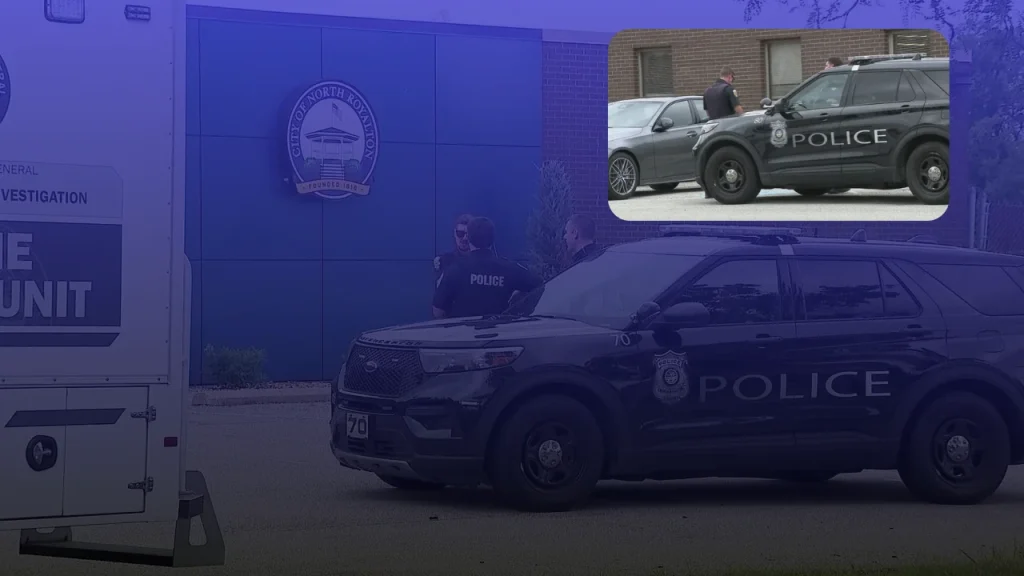
Edward Biesiada, 69, of North Royalton, has been indicted on aggravated murder, two counts of murder, two counts of felonious assault and intimidation in connection with the July 24, 2026 shooting of Smerek, 52, of Brunswick, at the North Royalton Service Center, 11545 Royalton Road.
On November 4, 2026, a Cuyahoga County judge ordered a mental-health evaluation. Biesiada remains held without bond, and his next reported court appearance is December 8, 2026.
Prosecutors allege Biesiada walked into the Service Center, approached Smerek, shot him multiple times, put his firearm on a counter and walked outside, where police and firefighters detained him. Court records show a deeper history. Biesiada challenged a neighbor’s fence permit in litigation that dates to 2023, Smerek submitted an affidavit in that case, and Smerek issued Biesiada a property-maintenance citation shortly before the shooting.
That history gives context, but no court has determined that either dispute caused the killing.
North Royalton Shooting: Quick Facts About David Smerek’s Killing and Edward Biesiada’s Case
| Detail | Verified information |
| Victim | David A. Smerek |
| Age | 52 |
| Occupation | North Royalton building commissioner |
| Residence | Brunswick, Ohio |
| Accused | Edward Biesiada, of North Royalton |
| Accused’s age | 69 |
| Shooting date | Friday, July 24, 2026 |
| Time | About 1:22–1:25 p.m. |
| Location | North Royalton Service Center, 11545 Royalton Road |
| County | Cuyahoga County, Ohio |
| Weapon (reported) | Glock 43 handgun, left on a counter |
| Injuries | Shot multiple times (reported as three times) |
| Death | Pronounced dead at the scene |
| Arrest | July 24, 2026, at the scene |
| Indictment | August 7, 2026 |
| Charges | Aggravated murder, murder (2 counts), felonious assault (2 counts), intimidation |
| Arraignment | August 12, 2026 |
| Plea | Not guilty |
| Latest development | November 4: mental-health evaluation ordered |
| Reported defense request | Change plea to not guilty by reason of insanity |
| Custody | Held without bond |
| Next reported hearing | December 8, 2026 |
| Criminal court | Cuyahoga County Court of Common Pleas |
| Conviction | None |
| Wrongful-death lawsuit by Smerek’s family | None independently verified |
Current status: The criminal prosecution is pending. Biesiada has not been convicted. A court-ordered evaluation or an insanity-plea request does not establish that he meets Ohio’s legal definition of insanity.
What Happened During the North Royalton Service Center Shooting on July 24, 2026?
According to Cuyahoga County Prosecutor Michael C. O’Malley, the shooting happened on Friday afternoon, July 24, 2026, inside North Royalton’s municipal Service Center. The building houses city operations, including the Building Department where Smerek worked. Prosecutors gave this sequence:
About 1:22 p.m.: Biesiada arrives at the city building
Prosecutors allege Biesiada drove to the Service Center, parked in the lot and entered the building carrying a firearm. They say he approached Smerek while the commissioner was working.
Smerek is shot multiple times
Prosecutors allege Biesiada shot Smerek multiple times. Reporting citing court proceedings said Smerek was shot three times with a Glock 43. The shooting happened inside a government building, not in a residential neighborhood or at Biesiada’s home. A North Royalton police sergeant said another employee overheard the shooting and that is how police got the call. Authorities have not publicly described every movement inside the office before the gunfire.
Biesiada puts the gun on a counter and walks outside
According to prosecutors, Biesiada put the firearm on the counter and walked outside to the front of the building. North Royalton police and firefighters responded and encountered him there. He was arrested at the scene. Police said he waited outside for officers.
Smerek is pronounced dead
Emergency responders found Smerek fatally wounded, and he was pronounced dead at the scene. The Cuyahoga County Medical Examiner’s Office and the Ohio Bureau of Criminal Investigation (BCI) were among the agencies involved, with BCI helping North Royalton police with the crime scene. Mayor Paul Marnecheck II called the killing “senseless gun violence.” Authorities have not indicated any ongoing threat to the public related to the July incident.
Who Was David A. Smerek, the North Royalton Building Commissioner Who Was Killed?
David A. Smerek was a 52-year-old public employee from Brunswick, Ohio. He worked in building inspection and code enforcement for years. Reporting describes him as a former Brunswick building inspector who joined North Royalton’s Building Department and became building commissioner in 2024, succeeding Dan Kulchytsky. Other local reporting said he worked for North Royalton for more than 10 years, first as a building inspector and then as commissioner.
The commissioner’s job involves enforcing building regulations, reviewing permits, inspecting properties and helping residents understand construction and maintenance requirements.
How did colleagues and the community describe Smerek?
Mayor Marnecheck described Smerek as a dedicated public servant who often tried to help residents with code questions. His family and colleagues described him as committed to helping others through his work. His family issued a statement thanking the community and Mayor Marnecheck for support and asking for prayers.
On Monday, July 27, more than 1,000 people attended a vigil at St. Albert the Great Catholic Parish in North Royalton. City flags were lowered and city buildings closed to the public for days. North Royalton City Council unanimously approved two ordinances providing benefits for Smerek’s family, including health-insurance continuation provisions.
North Royalton has faced other tragedy in recent months, including the line-of-duty death of Firefighter Ryan Milligan in early November while fighting a house fire in Broadview Heights. That incident is unrelated to the shooting.
Smerek’s death raised wider concerns about the safety of government workers who deal with residents during inspections, permit disputes and code enforcement.
Who Is Edward Biesiada, the Man Accused of Killing David Smerek?
Edward Biesiada is a 69-year-old North Royalton resident accused of killing Smerek. He had a documented history of disagreements with city officials involving property regulations, a neighbor’s fence and enforcement actions. Court records show he pursued legal proceedings challenging a zoning decision about a neighboring property. Local reporting also found public-records requests, communications with city officials and earlier contacts with Smerek, and Biesiada sent numerous letters and records requests to the city over several years about neighborhood and property issues.
These are documented contacts. They are not evidence by themselves that Biesiada committed the charged offenses. He pleaded not guilty at his August 12 arraignment, and his defense later sought a mental-health evaluation and, according to reports, an insanity plea.
Why Did Edward Biesiada Allegedly Shoot David Smerek? What Public Records Show About the Motive
Public records show significant prior conflicts, but the precise motive is a matter for the criminal proceedings. North Royalton police described Biesiada as disgruntled over code-enforcement matters. Police Sgt. John Stolarski told Spectrum News in July that evidence appeared to point toward a grievance involving the city. Mayor Marnecheck cautioned that investigators had not reached final conclusions.
The neighbor’s fence dispute began in 2022
On October 14, 2022, Biesiada’s neighbor, Penny Kurowski, applied for a permit to build a fence. On December 14, 2022, she applied for a zoning variance about how close the fence could extend toward the front wall line of her home. Under the municipal rules, the placement would ordinarily have required a setback. Kurowski explained that the alternative location would interfere with a door used to let her dogs outside.
January 2023: Biesiada objects to the variance
On January 19, 2023, the North Royalton Board of Zoning Appeals took up the request. Biesiada appeared and objected, raising concerns about alleged unpermitted structures and a disputed property line. The board found he had not supported those allegations with enough evidence and approved the variance.
February 2023: Biesiada files an administrative appeal
Biesiada challenged the board’s decision through an administrative appeal in Cuyahoga County court (Case No. CV 23 975442). The matter eventually reached the Ohio Court of Appeals. The appellate record matters because it shows a direct legal connection between Biesiada and Smerek years before the shooting.
What was David Smerek’s role in the fence case?
Smerek submitted an affidavit confirming the fence had been substantially completed. It was attached to a motion asking the court to dismiss Biesiada’s appeal. The defendants argued the fence was already built and that Biesiada had not obtained an order stopping construction while his appeal was pending. The trial court dismissed the appeal in May 2023.
March 14, 2024: The Eighth District Court of Appeals rules against Biesiada
The Eighth District Court of Appeals affirmed the dismissal in Biesiada v. N. Royalton Mayor, 2024-Ohio-965, Case No. 112840. The court found the appeal moot because Biesiada had not secured a stay or injunction before the fence was substantially built.
That was a procedural ruling about whether the court could still provide meaningful relief. It was not a criminal proceeding, and it did not establish that Biesiada made threats or committed violence. The opinion is available through the Ohio Court of Appeals case record.
What Happened in the Days Before David Smerek Was Shot? The Property-Maintenance Citation
Smerek issued Biesiada a misdemeanor citation over the condition of the exterior of his property on Patricia Drive, filed through North Royalton Mayor’s Court. FOX 8 reported the property was surrounded by construction materials and other clutter.
The reported date of the citation differs by source. Reporting based on the records cites July 10, 2026, which is 14 days before the shooting. Other reports cite July 20, and FOX 8 said police believed Biesiada went to the Service Center six days after receiving the citation. The exact date should be confirmed in the Mayor’s Court record.
Did the citation trigger the shooting?
That has not been conclusively established. The timing is significant, but a chronological connection does not automatically prove motive. Prosecutors would have to prove any alleged link with admissible evidence, and the role of the citation in the prosecution’s theory may become clearer through testimony, filings or trial evidence.
What Do Emails and Records Show About Earlier Tensions Between Biesiada and North Royalton Officials?
FOX 8 investigative reporters obtained emails through public-records requests showing that disagreements between Biesiada and city officials went back years. An email sent shortly before the shooting reportedly accused Smerek of negligence and of holding a personal vendetta against Biesiada. Other records included correspondence in which Smerek described difficulties dealing with Biesiada over property matters, and one record referred to a 2016 encounter about an abandoned vehicle.
These communications show repeated interactions over many years. They should not be treated as an admission of criminal intent or proof of motive. A jury would weigh any relevant communications alongside the rest of the evidence.
What Criminal Charges Does Edward Biesiada Face for Killing David Smerek?
Biesiada was initially charged with murder after his arrest. On August 7, 2026, a Cuyahoga County grand jury returned an indictment announced by Prosecutor Michael C. O’Malley that included six felony counts:
| Charge | Counts | Ohio statute |
| Aggravated murder | 1 | R.C. § 2903.01 |
| Murder (divisions A and B) | 2 | R.C. § 2903.02 |
| Felonious assault | 2 | R.C. § 2903.11 |
| Intimidation | 1 | R.C. § 2921.03 |
| Total | 6 |
The prosecutor’s announcement described the two murder counts as alternative theories under divisions A and B. Multiple homicide counts do not mean multiple people were killed, because different counts can address different legal theories arising from the same death. Under Ohio’s allied-offenses statute, R.C. § 2941.25, some counts may merge for sentencing if the legal requirements are met, and a court makes that decision based on the actual offenses and conduct.
For comparison, see AllAboutLawyer’s coverage of Asia Nguyen-Duy (Daniel Jones of Ashland, Oregon) Charged in Oberlin, Ohio Double Homicide, $3 Million Bond and What We Know, which shows how Ohio murder and assault counts can arise in another prosecution. The Oberlin case is unrelated.
What is aggravated murder under Ohio law?
R.C. § 2903.01 includes several forms of aggravated murder. One involves purposely causing another person’s death with prior calculation and design. Others involve specified circumstances, such as certain felonies or protected categories of victims. The allegations that Biesiada arrived with a firearm, approached Smerek and shot him could bear on purpose and prior planning, but prosecutors must prove each element of the charged offense beyond a reasonable doubt.
Smerek’s public employment is important context, but Ohio law does not automatically make every killing of a government employee aggravated murder. The specific statutory elements must be met.
Why are there two murder charges?
R.C. § 2903.02 contains two principal murder theories. Division A generally covers purposely causing another person’s death. Division B covers causing death as the proximate result of committing or attempting a qualifying violent felony. Prosecutors sometimes charge both when the evidence could support either theory. They are alternative statutory bases for liability, not proof of separate deaths.
What is felonious assault under Ohio law?
Under R.C. § 2903.11, felonious assault generally covers knowingly causing serious physical harm, or knowingly causing or attempting to cause physical harm with a deadly weapon. It is ordinarily a second-degree felony, with higher classifications in certain circumstances. A firearm can qualify as a deadly weapon.
Why was Biesiada also charged with intimidation?
This charge matters because Smerek was a municipal employee performing governmental duties. R.C. § 2921.03 prohibits knowingly attempting to influence, intimidate or hinder a public servant in the discharge of official duties through specified unlawful conduct, including force or unlawful threats. It is a third-degree felony, and the statute expressly allows certain civil claims by people harmed by a violation.
The prosecution’s public summary does not set out every factual allegation behind the count. It would be premature to say the charge rests on a particular email, zoning dispute or statement without the indictment’s detailed allegations.
November 4 Update: Why Was a Mental-Health Evaluation Ordered for Edward Biesiada?
The most recent major courtroom development came on November 4, 2026, when a judge ordered Biesiada to undergo a mental-health evaluation. Reporting indicates his defense attorneys sought to change his plea to not guilty by reason of insanity (NGRI). WKYC reported that his privately retained attorneys from Friedman Nemecek Long & Grant LLC were retained on September 2, after his arraignment. Earlier reports said a public defender had been appointed, and prosecutors had noted he had significant retirement funds, with arguments over how accessible those assets were. An earlier September report also described a referral to determine his competency to stand trial.
Under R.C. § 2943.03, a plea of not guilty by reason of insanity is generally entered at arraignment unless the court allows it later for good cause, which is why a defense request to change the plea comes before a judge. These developments involve related but different legal questions.
1. Competency to stand trial
Competency concerns a defendant’s present ability to understand the proceedings and help in the defense. Under R.C. § 2945.37, courts examine whether a defendant can understand the nature and objectives of the proceedings and assist counsel. A person found incompetent may need treatment or competency-restoration proceedings (R.C. § 2945.38) before the case continues, and the time allowed for restoration is limited by statute. Incompetency does not mean innocence.
2. Not guilty by reason of insanity
An insanity defense concerns the defendant’s mental condition at the time of the alleged offense. Under R.C. § 2901.01(A)(14), the defendant must show that because of a severe mental disease or defect, he did not know the wrongfulness of his acts when they occurred. This is narrower than a claim of emotional distress, anger or psychological difficulty. Under R.C. § 2901.05, the defendant carries the burden of proving the insanity defense by a preponderance of the evidence. Ohio does not recognize a general “diminished capacity” defense, so mental-health evidence must fit within the insanity standard or be used on other limited issues.
What is the difference?
| Legal issue | Central question |
| Competency | Can the defendant currently understand and take part in court proceedings? |
| Insanity defense | Did a severe mental disease or defect prevent the defendant from knowing the conduct was wrong when it occurred? |
| Ordinary criminal guilt | Has the prosecution proven the charged offense beyond a reasonable doubt? |
These questions are not interchangeable.
Does a mental-health evaluation mean Biesiada is insane?
No. A court order for an evaluation is a procedural step, not a diagnosis or a ruling on the defense. R.C. § 2945.371 authorizes evaluations when competency is questioned or an insanity defense is raised. The examiner reviews relevant evidence and reports to the court, and the court then applies the legal standards. As of November 11, no verified ruling had found Biesiada incompetent or legally insane at the time of the shooting.
Could Biesiada avoid prison if his insanity defense succeeds?
A successful insanity defense could prevent a conviction, but it does not mean immediate release. Under R.C. § 2945.40, a verdict of not guilty by reason of insanity triggers further proceedings. If the requirements for commitment are met, the person may be committed to a psychiatric facility. Ohio also provides continuing court supervision and procedures for possible conditional release (R.C. § 2945.401), and commitment can last up to the maximum prison term for the most serious offense charged.
Could he still be convicted despite the insanity defense?
Yes. The prosecution can challenge the defense’s evidence and expert opinions, and the factfinder decides whether the defense meets Ohio’s standard. If it fails, the ordinary criminal charges remain subject to the prosecution’s burden of proof.
What Sentence Could Edward Biesiada Receive if Convicted?
Penalties depend on which charges end in conviction and whether particular specifications apply.
Aggravated murder
Under R.C. §§ 2929.02 and 2929.03, aggravated murder can carry life imprisonment without parole, or life imprisonment with parole eligibility after a lengthy minimum period (20, 25 or 30 full years, depending on the findings and specifications). Ohio also permits the death penalty in qualifying aggravated-murder cases, but only when the indictment includes a statutory aggravating-circumstance specification under R.C. § 2929.04(A) and the capital sentencing procedures are followed.
The public indictment summary does not list a capital specification or say prosecutors will seek death. The death penalty should not be described as a confirmed sentencing demand.
Murder
A conviction under R.C. § 2903.02 generally carries an indefinite sentence of 15 years to life under R.C. § 2929.02(B), subject to applicable provisions. A firearm specification, if charged and proven (R.C. § 2941.145), can add a mandatory prison term. The public summary does not list one.
Felonious assault and intimidation
These offenses carry separate felony penalties depending on classification, specifications and the court’s sentencing findings. Overlapping counts must also be reviewed under Ohio’s merger rules.
No sentence has been imposed because Biesiada has not been convicted.
Is Edward Biesiada in Jail? Bond History in the Smerek Murder Case
Biesiada remains in custody. After his arrest, a municipal court judge set an initial bond of $15 million at his first appearance on Monday, July 27. Mayor Marnecheck said at the time that he “definitely deserved the bond he got.” At his first appearance in Cuyahoga County Common Pleas Court, a judge denied bond after Smerek’s friend and colleague and Smerek’s brother asked the judge to protect the community. A public defender was assigned at that stage.
At his August 12 arraignment, he pleaded not guilty, and November 4 reporting still described him as held without bond. Ohio’s Constitution (Article I, Section 9) and R.C. § 2937.222 allow bail to be denied in certain serious cases where the proof is evident or the presumption great and the person poses a substantial risk to the community. No release has been announced.
What Is the Family Trust Lawsuit Involving Edward Biesiada’s Sisters?
According to September 23 investigative reporting by FOX 8, Biesiada’s sisters filed a separate case in Cuyahoga County Probate Court about his administration of a family trust. The complaint reportedly alleged problems with distributing trust assets and access to real estate, and argued that his arrest made it impracticable for him to keep serving as successor trustee. The report said he had not responded to the complaint at the time.
This is not a wrongful-death lawsuit by David Smerek’s family. The trust litigation is legally separate from the murder prosecution. His arrest may affect his ability to manage trust property, but that does not show that the family property dispute motivated the shooting. No final probate ruling was independently verified.
Could David Smerek’s Family File a Wrongful-Death Lawsuit Against Edward Biesiada?
Potentially. Ohio law permits wrongful-death claims when a person’s death results from another’s wrongful act, neglect or default. R.C. § 2125.01 expressly recognizes that civil liability can arise even when the death is a murder or other criminal homicide. Under R.C. § 2125.02, a wrongful-death action is generally brought by the decedent’s personal representative for the eligible beneficiaries. Damages can include funeral expenses, loss of support, services, companionship and other compensable losses. A separate survival claim for the decedent’s own losses can be brought under R.C. § 2305.21.
The ordinary filing deadline is two years from the date of death (R.C. § 2125.02(D)), subject to exceptions. For Smerek’s July 24, 2026 death, that points to July 24, 2028. Family members should get advice from an Ohio attorney instead of relying only on that general deadline.
For a full explanation, see What Is a Wrongful Death Lawsuit? Everything Families Need to Know.
Are workers’ compensation death benefits available for a public employee killed at work?
Possibly. A public employee who dies from an injury arising out of employment can leave dependents eligible for death benefits under Ohio’s workers’ compensation system (R.C. Chapter 4123), administered through the Bureau of Workers’ Compensation. Whether and how benefits apply depends on the claim and the city’s coverage arrangement. Workers’ compensation is generally the exclusive remedy against an employer, which limits civil claims against an employer except in narrow circumstances, and it does not stop a wrongful-death claim against the person who caused the death.
Could the City of North Royalton face liability?
Ohio’s political-subdivision immunity law, R.C. Chapter 2744, can shield municipalities and their employees from many civil claims, subject to statutory exceptions. One exception, R.C. 2744.02(B)(4), concerns injuries caused by physical defects within or on the grounds of buildings used for government functions, which is a narrow category. The analysis would depend on the duty claimed, immunity, the foreseeability of the risk and whether an exception could be proven.
Ohio’s Public Employment Risk Reduction Program (R.C. Chapter 4167) sets workplace-safety obligations for public employers, but a violent crime inside a government building does not by itself establish municipal negligence. No lawsuit finding North Royalton legally responsible has been verified.
For an Ohio example involving a death, civil liability and a proposed settlement, see James Williams Canton Police Shooting, City Proposes $3.5 Million Settlement With Family. That case involved police use of force and different legal claims.
Has Smerek’s family already sued?
No wrongful-death complaint by Smerek’s estate or family was verified in the sources reviewed. No settlement, damages award, class action or public claims process has been established.
Can the Family Receive Ohio Crime Victim Compensation?
The Ohio Attorney General’s Crime Victims Compensation Program (R.C. 2743.51 et seq.) can help eligible victims and families with costs such as funeral expenses, counseling and lost support, subject to statutory limits and eligibility rules. A conviction is not necessarily required. This is a state victim-assistance program, not a settlement in the case.
What Rights Does David Smerek’s Family Have During the Criminal Case?
Ohio’s crime-victims’ rights provisions, often called Marsy’s Law, are in Article I, Section 10a of the Ohio Constitution and implemented in R.C. Chapter 2930. They give qualifying victims and lawful representatives rights that include requesting notice of proceedings, attending public hearings, conferring with prosecutors and being heard at certain key stages. When the victim has died, a family member or other representative can exercise those rights. Courts can also order restitution for qualifying economic losses. Criminal restitution and civil damages are different remedies, since the criminal case seeks to determine guilt and punishment and a wrongful-death action seeks civil compensation.
What Did North Royalton Change After the Shooting?
The killing raised security concerns at municipal facilities. North Royalton temporarily closed city buildings to the public while employees mourned and officials reviewed safety procedures. Buildings reopened to employees on Tuesday, July 28, with new security measures, and public access stayed restricted. Public Safety Director James Chura said the city wanted stronger measures that balance residents’ access to public offices with employee safety.
Measures discussed or reported included:
- Requiring appointments or advance notice for some public visits.
- Assigning an armed police officer to the Building Department for the foreseeable future.
- Reviewing entrances and access controls at municipal buildings.
- Considering metal detectors, security cameras and controlled-entry systems.
- Exploring added active-shooter awareness training for employees.
These were reported security responses, not findings that earlier measures violated a legal duty.
Timeline: North Royalton Shooting and Edward Biesiada Case
| Date | Development |
| October 14, 2022 | Biesiada’s neighbor applies for a fence permit |
| December 14, 2022 | Neighbor seeks a zoning variance |
| January 19, 2023 | Biesiada objects at the zoning board hearing |
| February 2023 | Biesiada files an administrative appeal |
| May 2023 | Trial court dismisses the appeal as moot, after Smerek’s affidavit is submitted |
| March 14, 2024 | Eighth District Court of Appeals affirms the dismissal |
| July 10, 2026 (as reported; other reports differ) | Smerek issues Biesiada a property-maintenance citation |
| July 24, 2026 | Smerek is fatally shot at the North Royalton Service Center; Biesiada is arrested at the scene |
| July 27, 2026 | Biesiada’s first appearance (initial $15 million bond); community vigil for Smerek |
| August 3, 2026 | Common Pleas court denies bond; council approves benefit ordinances for Smerek’s family |
| August 7, 2026 | Grand jury indicts Biesiada on six felony counts |
| August 12, 2026 | Biesiada pleads not guilty at arraignment |
| September 2026 | Competency referral and family trust litigation reported; private defense counsel retained September 2 |
| November 4, 2026 | Judge orders a mental-health evaluation; insanity-plea request reported |
| December 8, 2026 | Next reported court appearance |
Frequently Asked Questions About the North Royalton Shooting and Edward Biesiada
What happened in the North Royalton shooting?
Building Commissioner David Smerek was fatally shot inside the North Royalton Service Center on July 24, 2026. Edward Biesiada was arrested at the scene and later indicted on six felony counts.
Who was killed?
David A. Smerek, 52, a Brunswick resident and North Royalton’s building commissioner.
Who is accused of the shooting?
Edward Biesiada, 69, a North Royalton resident with a documented history of property disputes involving city officials.
Where and when did the shooting happen?
At the North Royalton Service Center, 11545 Royalton Road, at about 1:22–1:25 p.m. on July 24, 2026.
Why was David Smerek allegedly shot?
Investigators have examined Biesiada’s prior disputes with the city, including a zoning appeal and a property citation. The precise motive has not been established in court.
Was the shooting connected to a fence dispute?
Court records show a past fence dispute involving Biesiada and an affidavit by Smerek. That connection does not by itself prove the motive for the shooting.
Did Biesiada know Smerek?
They had documented official interactions before the shooting. Whether they had any personal relationship outside municipal proceedings has not been established.
What charges does Biesiada face?
One count of aggravated murder, two counts of murder, two counts of felonious assault and one count of intimidation.
Has Biesiada pleaded guilty?
No. He pleaded not guilty, and reporting indicates his defense has sought to change the plea to not guilty by reason of insanity.
What is the latest court update?
On November 4, 2026, the court ordered a mental-health evaluation. His next reported hearing is December 8.
Is Edward Biesiada mentally incompetent?
No court finding of incompetency was verified. An evaluation order is not a legal determination.
Can Biesiada be released if he is found not guilty by reason of insanity?
Not automatically. Ohio law requires further proceedings to decide whether involuntary commitment is appropriate.
Is he facing the death penalty?
Aggravated murder can be a capital offense in specified circumstances, but a capital specification or a decision to seek death was not confirmed in the public indictment summary.
Is Biesiada still in jail?
Yes. The latest reports say he is held without bond.
How much was Biesiada’s bond?
A municipal judge first set a $15 million bond. The Common Pleas court later denied bond.
Did Smerek’s family file a lawsuit?
No wrongful-death lawsuit was independently verified. A separate probate case was reported involving Biesiada’s sisters and a family trust.
Is there a settlement?
No publicly verified settlement related to Smerek’s death has been identified.
What Happens Next in the North Royalton Shooting Case?
The next major development is expected at Biesiada’s December 8 court appearance. The mental-health evaluation may affect how the court handles the insanity-plea request and other pretrial matters. If competency remains an issue, the court may need to decide whether Biesiada can understand the proceedings and assist his attorneys. If an insanity plea is permitted, prosecutors and defense lawyers may present evidence about his mental condition at the time of the alleged offense. The case could then move through further pretrial hearings, possible negotiations or trial.
The documented property disputes may become relevant to prosecutors’ arguments about motive, intent and earlier interactions, but the outcome cannot be determined from public reports. Biesiada remains presumed innocent unless the state proves the charged offenses beyond a reasonable doubt. The case is being handled by the Cuyahoga County Prosecutor’s Office and the courts, and updates may follow the evaluation results.
The Bottom Line
The North Royalton shooting began as a fatal workplace attack on a municipal employee and has become a criminal case involving an aggravated-murder indictment, years of documented property disputes and a mental-health evaluation tied to a reported insanity-defense request. The November 4 order for an evaluation is the most important recent procedural development.
The record includes a 2024 appellate decision involving Biesiada, a property citation issued by Smerek shortly before the shooting and communications showing earlier tension with city officials. Those facts help explain the history investigators are examining, but they do not independently establish motive or guilt.
For Smerek’s family, coworkers and the North Royalton community, the questions ahead are whether Biesiada can proceed to trial, whether an insanity defense is established, what evidence prosecutors present and how the courts resolve the case.
Primary Documents and Sources
- Cuyahoga County Prosecutor’s Office — Edward Biesiada Indicted for Shooting and Killing David Smerek. August 7, 2026. Official allegations, chronology and indictment charges.
- Biesiada v. N. Royalton Mayor, 2024-Ohio-965. Published appellate opinion on the fence dispute, Smerek’s affidavit and the procedural dismissal.
- Cleveland 19 — Mental Health Evaluation Ordered. November 4, 2026. Latest court development, custody status and December 8 hearing.
- Cleveland 19 — Edward Biesiada Arraignment. August 12, 2026. Not-guilty plea and criminal proceedings.
- Cleveland 19 — Public Records Link Biesiada to Smerek. July 27, 2026. Property enforcement and court-record analysis.
- News 5 Cleveland — 69-Year-Old Man Identified as Suspect in Fatal Shooting of North Royalton Building Commissioner. Weapon, shot count, initial bond and the citation.
- News 5 Cleveland — No Bond Issued for Man Accused of Fatally Shooting North Royalton Building Commissioner. Common Pleas bond ruling and public defender assignment.
- FOX 8 Investigative Report — Emails and Jail Calls. August 19, 2026. Public-records communications involving Biesiada and city officials.
- FOX 8 Investigative Report — Mental Evaluation and Family Trust Suit. September 23, 2026.
- Cleveland 19 — North Royalton City Buildings Reopen. July 2026. Security changes.
- Ohio Revised Code § 2903.01 — Aggravated Murder.
- Ohio Revised Code § 2945.371 — Mental-Health Evaluations.
- Ohio Revised Code § 2901.01 — Insanity Defense Definition.
- Ohio Revised Code § 2125.02 — Wrongful Death.
Verification note: The August 7 indictment’s charge list was confirmed through the prosecutor’s official announcement. The indictment’s detailed specifications, the full November mental-health motion and any confidential examination report were not independently reviewed. No later court ruling changing Biesiada’s status was verified through November 11, 2026. Sources differ on the date of the property citation (July 10 versus a later date).
Disclaimer: AllAboutLawyer.com is an independent legal-information website, not a law firm. This article is public-record reporting and general information about Ohio law, not legal advice. All criminal charges remain allegations unless established by a guilty plea or conviction. Edward Biesiada is presumed innocent unless proven guilty beyond a reasonable doubt.
Researched and written by Israr Ahmad, legal content researcher and founder of AllAboutLawyer.com. All facts verified against the Cuyahoga County Prosecutor’s Office announcement, the published Ohio Court of Appeals opinion in Biesiada v. N. Royalton Mayor, local court reporting (Cleveland 19, News 5, WNIR, FOX 8) and the Ohio Revised Code, as of November 11, 2026. Last Updated: November 11, 2026.
About the Author
Israr Ahmad is a legal content researcher with 4+ years of experience covering class action settlements and consumer rights cases. He has researched and published coverage of 2,500+ settlements using verified court records, settlement administrator filings, and government sources. Learn more about Israr.