
Nebraska Public School Funding Lawsuit, What Jacobsen v. Spellerberg Actually Argues — Case Filed in the District Court of Lancaster County, Nebraska
Two Lincoln families are asking a Nebraska judge to declare the state’s entire system for funding public education unconstitutional. Their argument isn’t about test scores or tax rates. It’s a free-speech claim: Nebraska requires every parent to educate their kids, but only pays for that education if the parent enrolls them in a public school that teaches the government’s preferred viewpoints. Everyone else pays out of pocket. The families call that an unconstitutional condition. Legal critics, including at least one Lincoln parent and practicing attorney, call the theory a stretch.
Nebraska Public School Funding Lawsuit — Key Facts
| Case Name | Jacobsen v. Spellerberg |
| Plaintiffs | Justin Jacobsen, and Timothy and Joanna Menter — two Lincoln, Nebraska families |
| Defendants | State Treasurer Joey Spellerberg, Attorney General Michael Hilgers, Commissioner of Education Brian L. Maher, State Board of Education President Elizabeth Tegtmeier, the City of Lincoln, Lancaster County, Lancaster County Treasurer Rachel M. Garver, Lincoln Public Schools, and Lincoln Board of Education President Bob Rauner |
| Plaintiffs’ Counsel | New Civil Liberties Alliance (NCLA), with local counsel in Lincoln |
| Alleged Harm | Nebraska’s education funding structure allegedly conditions a public benefit on parents accepting public-school curriculum and viewpoints, penalizing families who choose private school or homeschooling |
| Legal Claims | First Amendment compelled-speech and viewpoint-discrimination claims; the unconstitutional conditions doctrine; damages sought under 42 U.S.C. § 1983 |
| Court & Case Number | District Court of Lancaster County, Nebraska; specific docket number UNVERIFIED — not disclosed in available reporting |
| Lawsuit Filed | August 13, 2026 |
| Current Stage | Newly filed; no hearing dates reported |
| Lead Plaintiff Deadline | Not applicable — this is not a class action |
| Settlement Status | No settlement, no class, and no ruling yet. This is a fresh complaint |
| Last Updated | August 25, 2026 |
Who Is Involved and Why Are They Being Sued?
The named defendants aren’t accused of personal wrongdoing — they’re sued in their official capacities because they administer the parts of Nebraska’s system the plaintiffs are challenging. State Treasurer Joey Spellerberg oversees state education funding, which is why the case carries his name. Lincoln Public Schools and its board are named because the complaint focuses specifically on curriculum choices made in Lincoln classrooms. The Nebraska Attorney General and Commissioner of Education are named because they enforce the compulsory-education law and manage how education funding flows to public schools statewide.
What Does the Lawsuit Actually Argue?
Nebraska law requires parents to educate their children — skipping that duty is a Class III misdemeanor. But the state only fully funds that education inside a public school. Choose private school or homeschooling instead, and a family forfeits roughly $19,000 per child per year in public funding, with no tax credit, voucher, or education savings account to offset it. Nebraska voters rejected a state-funded scholarship program by referendum in November 2024, and the legislature hasn’t revived one since.
Related article: Recent Nashville Arrests Highlight AI’s Role in Online Child Sexual Exploitation
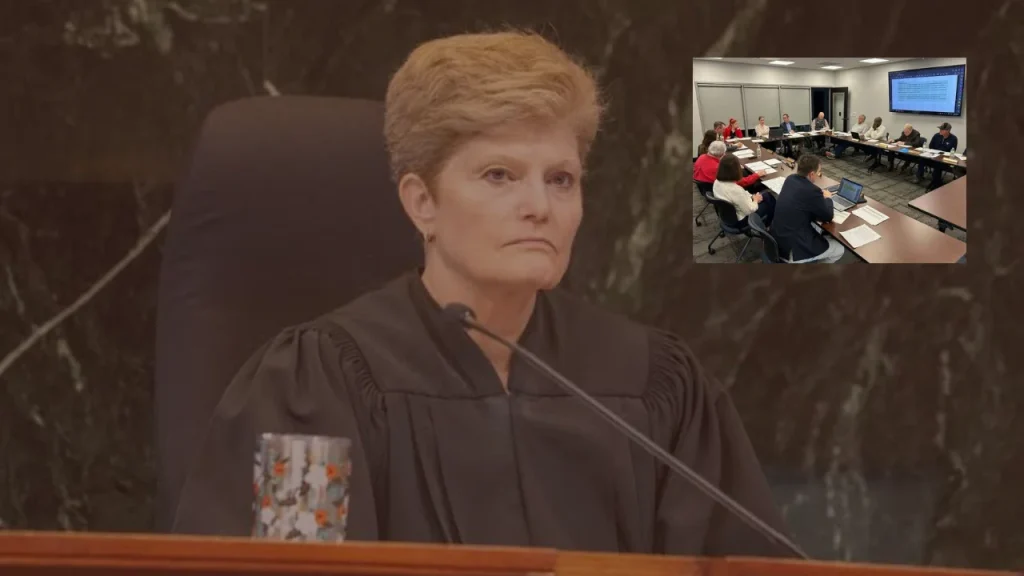
The plaintiffs argue that arrangement amounts to viewpoint discrimination. Their theory: because “education is speech,” conditioning a valuable public benefit on accepting one set of government-selected viewpoints is the kind of unconstitutional condition the Supreme Court barred in earlier cases, and one the plaintiffs argue the Court reinforced this year in Mahmoud v. Taylor, a 2025 decision on parental rights and school curriculum. The complaint also points to a First Amendment compelled-speech theory: parents, not the state, hold what the complaint calls the “paramount authority” to direct their children’s educational message.
The complaint specifically cites Lincoln Public Schools’ handling of material related to gender identity and sexual orientation, including a classroom sticker the Menter family objected to, as an example of the kind of “government viewpoint” they say they’re being forced to subsidize if they want any public education funding at all. The lawsuit doesn’t challenge the content of that material directly — it uses it as the example that anchors the broader funding argument.
Whether that mechanism amounts to a constitutional violation, or simply a state government funding public schools the way most states do, is exactly what a judge will now have to decide.
What Are the Plaintiffs Asking the Court to Do?
Unlike a typical lawsuit seeking a specific fix, this complaint deliberately avoids proposing one. It asks the court to declare the current arrangement unconstitutional and issue an injunction barring officials from conditioning educational funding on public-school enrollment — then leaves the actual remedy (vouchers, tax credits, education savings accounts, or something else) to the Nebraska Legislature to design.
Separately, the plaintiffs are seeking damages under 42 U.S.C. § 1983, the federal civil rights statute that allows people to sue government officials for constitutional violations. They’re asking the City of Lincoln and Lancaster County to pay each family an amount equal to the per-pupil value of public school funding, multiplied by their number of school-age children, continuing every year until either the funding scheme changes or their children graduate, get a GED, or turn 19.
Private school tuition in Nebraska runs roughly $7,100 a year at the elementary level and $11,000 at the high school level, meaning a full K-12 private education can exceed $100,000 per child. Homeschooling avoids tuition costs but typically costs a family one parent’s income. That gap between what public school “costs” a family that opts out and what public funding is worth is the number this lawsuit is built around.
How Have the Defendants Responded?
Lincoln Public Schools’ communications director said the district had contacted its counsel and would not comment on the pending litigation. The state treasurer’s chief of staff said Spellerberg and his staff remain committed to carrying out their statutory and constitutional duties under Nebraska law — a standard non-committal response typical of officials named only in their official capacity. No other defendant’s public response was available in reporting as of this writing.
What Legal Critics Say Is Wrong With the Theory
This case is drawing skepticism as well as support, and both sides are worth understanding before assuming the outcome. One Nebraska attorney and Lincoln Public Schools parent, writing publicly about the case, argues the underlying doctrine doesn’t stretch this far: the unconstitutional conditions cases the complaint relies on typically involve the government withholding a benefit because of a person’s speech, not a state simply choosing to fund one form of a mandatory service more fully than an unfunded alternative. That critique also notes Nebraska’s own constitution restricts the state from directing public funds toward private and sectarian schools, which could complicate the remedy even if the underlying claim succeeds — and points out that voters explicitly rejected a state-funded scholarship program in a 2024 referendum, an outcome this lawsuit would effectively route around through a district court ruling rather than a new vote or new legislation.
Supporters of the lawsuit counter that popular votes and legislative inaction don’t override constitutional protections — if the funding structure genuinely coerces parents into surrendering a First Amendment right, they argue, a referendum result doesn’t fix that problem. That’s the core disagreement a judge will now have to sort through: whether Nebraska’s education funding is a form of coercion the Constitution prohibits, or an ordinary public-benefits decision that’s a matter for the Legislature and the voters, not the courts.
What Happens Next
This is a freshly filed complaint, not a ruling. Cases built on novel constitutional theories like this one typically take years to resolve, and defendants haven’t yet formally responded in court. Nothing about how Nebraska funds public schools, or how Lincoln Public Schools operates, has changed as a result of this filing. Families currently navigating school choice decisions in Nebraska should not expect any near-term change in available funding options because of this case alone.
If you’re a Nebraska parent weighing your own education options, or believe your own constitutional rights around your child’s education have been affected, a consultation with an education law or constitutional rights attorney can help you understand what current law actually requires, separate from what this lawsuit is asking a court to change.
Nebraska Public School Funding Lawsuit — Frequently Asked Questions
Is Nebraska public school funding currently ruled unconstitutional? No. Jacobsen v. Spellerberg is a newly filed complaint asking a court to make that ruling. Nothing has been decided yet, and current funding rules remain in effect.
Who filed this lawsuit and why? Two Lincoln families, Justin Jacobsen and Timothy and Joanna Menter, filed it through the New Civil Liberties Alliance after withdrawing their children from Lincoln Public Schools over curriculum content related to gender identity and sexual orientation.
Does this lawsuit create a school voucher program in Nebraska? No. The complaint specifically avoids asking for a voucher program, tax credit, or education savings account. It asks the court only to declare the current funding scheme unconstitutional and let the Legislature decide the remedy.
How much money are the plaintiffs seeking? Damages equal to the per-pupil value of public school funding for each of their school-age children, paid annually by the City of Lincoln and/or Lancaster County until the scheme changes or the children age out of K-12 education.
What is the “unconstitutional conditions doctrine” the lawsuit relies on? It’s a legal principle that says the government can’t require someone to give up a constitutional right in exchange for a public benefit it’s otherwise offering, even if the benefit itself isn’t constitutionally required.
Has a court ruled on similar cases before? The complaint cites Mahmoud v. Taylor, a 2025 U.S. Supreme Court decision on parental rights and school curriculum, along with earlier unconstitutional-conditions precedent, though no court has yet ruled on this specific funding-based theory.
What do critics say is the weakness in this case? Legal skeptics argue the doctrine typically applies when government withholds a benefit because of someone’s speech, not when a state funds one service more fully than an unfunded alternative, and note Nebraska’s constitution separately restricts public funds from going to private or sectarian schools.
When will this case be decided? No hearing dates have been reported. Constitutional cases built on novel legal theories typically take years to work through trial and appellate courts.
Sources Used in This Nebraska Public School Funding Lawsuit Article
- New Civil Liberties Alliance — Press release, “New NCLA Lawsuit: Nebraska’s Educational Scheme Violates Parents’ Free Speech,” August 13, 2026: https://nclalegal.org/press_release/new-ncla-lawsuit-nebraskas-educational-scheme-violates-parents-free-speech/
- The Daily Signal — “‘Teach Children What to Think’: Lawsuit Targets Nebraska Schools’ Funding Formula,” August 14, 2026: https://www.dailysignal.com/2026/08/14/teach-children-what-to-think-lawsuit-targets-nebraska-schools-funding-formula/
- Reason — “Nebraska lawsuit argues that school choice is a First Amendment issue,” August 17, 2026: https://reason.com/2026/08/17/lawsuit-argues-that-school-choice-is-a-first-amendment-issue/
- Zachary W. Anderson Law — “Is a Classroom Sticker Unconstitutional? A Nebraska Lawsuit,” legal analysis, published within the past week: https://www.zandersonlaw.com/blog/does-a-sticker-on-a-classroom-door-violate-the-constitution
No relevant existing AllAboutLawyer.com article was found to link to internally — this case doesn’t overlap with the site’s current settlement or class action coverage, so no anchor link was forced.
Researched and written by Israr Ahmad, legal content researcher and founder of AllAboutLawyer.com. All facts verified against the New Civil Liberties Alliance’s press release and independent news coverage listed above, as of August 25, 2026. Last Updated: August 25, 2026.
This article is for informational purposes only and does not constitute legal advice. It presents the arguments made by the parties and by outside legal commentators on both sides of this dispute; it does not reflect an endorsement of either position. Laws vary by state and individual circumstances differ. For advice about your specific situation, consult a qualified attorney.
About the Author
Israr Ahmad is a legal content researcher with 4+ years of experience covering class action settlements and consumer rights cases. He has researched and published coverage of 2,500+ settlements using verified court records, settlement administrator filings, and government sources. Learn more about Israr.