
Minnesota 1st Congressional District Recount, Jake Johnson Leads Brad Finstad by 323 Votes. What Happens Next?
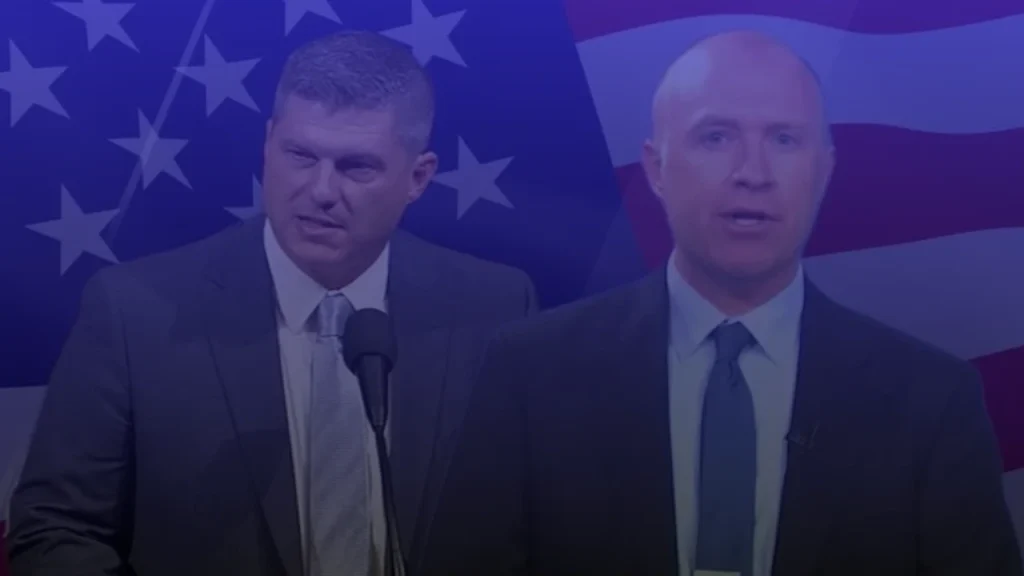
Democrat (DFL) Jake Johnson holds a razor-thin lead over Republican incumbent Rep. Brad Finstad in Minnesota’s 1st Congressional District, with every precinct reporting. The margin is small enough to qualify for a state-funded recount under Minnesota law, but a recount is not automatic. The trailing candidate must request it in writing, after the results become official, and within a short statutory window.
Official results and the recount-request process: Minnesota Secretary of State, electionresults.sos.mn.gov and sos.mn.gov/elections-voting/how-elections-work/recounts. (There is no settlement website or claim form. This is an election count, not a lawsuit settlement.)
Quick Facts: Minnesota’s 1st District Recount
| Question | Answer |
| Who currently leads? | Jake Johnson (DFL) |
| Latest unofficial totals | Johnson 163,057; Finstad 162,734 (some early November 4 reports showed Finstad at 162,733, a 324-vote margin) |
| Margin | 323 votes (about 0.10% of ballots counted for the office) |
| Write-ins | 391 |
| Has the AP called the race? | No |
| Are results certified? | No |
| Is a recount automatic? | No. A written request is required |
| Publicly funded recount threshold | Margin less than 0.25% of total votes counted for the office (Minn. Stat. § 204C.35, subd. 1(b)) |
| Does this race qualify? | Yes, on current unofficial totals |
| Who may request it? | The candidate whose election is in question (generally the apparent loser after the canvass) |
| Request filing officer (U.S. House) | Minnesota Secretary of State |
| Request deadline | 5 p.m. on the second day after the canvass (commonly described as 48 hours) |
| Who pays? | The state, if the margin qualifies |
| State canvass date | Scheduled for November 19, 2026 per the Secretary of State’s 2026 calendar |
| Can mail ballots be challenged? | Accepted absentee ballots are counted and individual ballot decisions can be challenged; rejected absentee envelopes generally cannot be added in a recount |
| Next Congress begins | January 3, 2027 (120th Congress) |
1. What Do the Latest Results Show?
According to the latest unofficial figures from the Minnesota Secretary of State:
| Candidate | Party | Votes | Percentage |
| Jake Johnson | DFL | 163,057 | 49.99% |
| Brad Finstad (incumbent) | Republican | 162,734 | 49.89% |
| Write-in candidates | None | 391 | 0.12% |
The total reported for the contest is approximately 326,182 votes. Johnson’s lead of 323 is about 0.10% of that total.
Why do some reports say 324 votes? Early November 4 media reports, including MPR News, showed Finstad at 162,733. A later Secretary of State display lists him at 162,734, which lowers the margin by one vote. Local officials audit and correct election-night figures during canvassing, so the exact margin can still change. Always check the Secretary of State’s results page for the current number.
“All precincts reporting” is not certification. Election-night totals are unofficial until county canvassing boards and the State Canvassing Board review and certify them. Some outlets have called this a recount situation already, but no recount has been requested or ordered.
What the race means politically. Finstad has represented the district since 2022 and won it comfortably in 2024. A Johnson victory would be a significant upset, and the seat is one of the House races watched nationally. Johnson has declared victory; Finstad has not conceded.
2. Why 323 Votes Matters: Minnesota’s 0.25% Rule
Minnesota Statutes § 204C.35, subdivision 1(b), provides for a publicly funded manual recount in a state general election when the difference between the apparent winner and the second-place candidate for a federal, statewide or judicial office is less than one-quarter of one percent (0.25%) of the total votes counted for that office. U.S. House seats fall in this category. State legislative races use a different, 0.5% threshold.
The math in this race:
- Johnson: 163,057
- Finstad: 162,734
- Difference: 323
- Total votes counted (including 391 write-ins): about 326,182
- 0.25% of 326,182: about 816 votes
The 323-vote margin is well below the roughly 816-vote ceiling, so the race currently meets the numerical condition for a state-funded recount. If the margin were larger than 0.25%, a trailing candidate could still seek a discretionary recount under Minn. Stat. § 204C.36, but would have to pay the cost and post security. Qualifying for a publicly funded recount does not by itself start one.
3. Is the Recount Automatic? No.
This is the most misunderstood point in the race. Some headlines have described the contest as heading to an “automatic recount.” Under Minnesota law, a close margin makes the race eligible for a recount, but the process begins only when the candidate whose election is in question submits a written request to the filing officer. For U.S. House races, the filing officer is the Secretary of State (§ 204C.35, subd. 4).
Key points:
- Who can request: The candidate whose election is in question, generally the apparent losing candidate once the canvass is complete. A voter, party or supporter cannot trigger a publicly funded recount on their own.
- No proof of fraud required: The candidate does not have to identify a specific error. A timely written request and a qualifying margin are what matter.
- No cost for a qualifying recount: The state pays when the margin is within the threshold.
- Recounts cannot be requested on unofficial results. The request period opens only after the canvassing board makes the results official.
- A recount does not delay the canvass. Under § 204C.35, the recount must not delay other parts of the canvass, and the board certifies recount results as soon as possible.
4. The Recount Request Deadline
Immediately after the canvassing board meets, the filing officer must notify the candidate that the candidate has the option to request a recount at no cost. The written request must be received no later than 5 p.m. on the second day after the general-election canvass. The Secretary of State describes this as a 48-hour window.
Key dates:
| Date | Event |
| November 3 | Election Day |
| About November 6 to 11 | County canvassing boards meet (for example, Aitkin County scheduled its board for November 10) |
| November 19 | State Canvassing Board scheduled to meet and certify federal and statewide results |
| 5 p.m., second day after the canvass | Statutory deadline for a publicly funded recount request (if the canvass is November 19, this falls on November 21) |
If the candidate misses the deadline, the publicly funded recount option can be lost, although separate election-contest procedures may remain available. Confirm exact times and filing instructions with the Secretary of State.
5. How a Minnesota Recount Works
A recount is an administrative process, not a new election. Officials manually re-examine the ballots already cast.
- Who runs it: A recount official, generally the county auditor, oversees the process in each county under rules adopted under Minn. R. ch. 8235, with State Canvassing Board supervision for multi-county federal races.
- Scope: Under § 204C.35, subd. 3, a recount determines the number of votes validly cast for the office.
- Hand count: Trained election officials open, sort and count ballots by precinct. Voter intent is judged from the face of the ballot (Minn. Stat. § 204C.22).
- Observers: Candidates and their authorized representatives may observe, and the public may watch. Observers cannot handle ballots.
- Challenged ballots: A candidate’s representative can challenge an official’s determination, and the challenged ballot is set aside for the canvassing board to rule on (Minn. R. 8235.0800). The board may make images of challenged ballots available to the public (§ 204C.35, subd. 5).
6. Can Mail and Absentee Ballots Be Challenged?
Yes, in a limited way. The distinction matters.
- Accepted absentee and mail ballots were approved by local absentee ballot boards before Election Day or during processing. In a recount they are sorted by precinct and counted with all other ballots, and representatives can challenge how a particular ballot’s marks are interpreted.
- Previously rejected absentee envelopes are generally outside the recount. In Coleman v. Ritchie, 759 N.W.2d 47 (Minn. 2009), arising from the 2008 U.S. Senate recount, the Minnesota Supreme Court held that the administrative recount is limited to counting votes validly cast and that wrongly rejected absentee envelopes are generally not added through a recount, with a narrow exception where election officials and both campaigns agree envelopes were rejected in error.
- Eligibility disputes such as signature verification or voter qualification are typically pursued through an election contest in court, not at the recount table.
Reports that “mail ballots can be challenged for any legal reason during a recount” overstate the recount’s scope.
Related article: Max Miller Loses Reelection, Will the House Ethics Committee Investigation End When He Leaves Congress on January 3, 2027?
7. What Happens If the Recount Changes the Winner?
Hand recounts can differ from machine tallies, for example because of an unscanned write-in or an ambiguous mark. If the recount changes the order of the candidates, the State Canvassing Board certifies the corrected totals, and the candidate with the most legally counted votes is declared elected. If Johnson stays ahead, his result is certified. A changed total does not by itself mean fraud or misconduct.
Under Minn. Stat. § 204C.40, when a recount is conducted under § 204C.35, no certificate of election may be prepared or delivered until the recount is complete.
8. Certification Timeline
- County canvass (Minn. Stat. § 204C.33): County boards review returns shortly after Election Day and send certified reports to the Secretary of State.
- State canvass: The State Canvassing Board reviews the county reports and declares the result for federal offices.
- Recount (if requested): A timely written request triggers the manual recount, after which the board certifies the recount results.
- Certificate: After certification, the state certificate of election for the U.S. House seat is prepared and sent to the Clerk of the House.
- Seating: The 120th Congress is scheduled to convene on January 3, 2027.
9. Election Contests and Lawsuits After the Canvass
Minnesota election contest (Chapter 209)
Under Minn. Stat. Chapter 209, an eligible voter, including a candidate, can contest the election of a U.S. Representative. Grounds include irregularities in the conduct of the election or canvass, or a dispute over which candidate received the most legally cast votes.
- Deadline: A general-election contest notice generally must be filed within seven days after the canvass is completed (§ 209.021).
- Recount timing: If a publicly funded recount occurs, the time for notice of a contest begins when the canvassing board certifies the recount results (§ 204C.35, subd. 1(d)).
- Court’s role in congressional contests: Under § 209.12, the court determines which candidate received the highest number of votes legally cast and is entitled to the certificate of election. Evidence of other violations may be preserved and forwarded to the presiding officer of the House, which keeps its own constitutional authority.
Federal contest in the House
Under the Federal Contested Elections Act (2 U.S.C. §§ 381 to 396), a candidate can file a written notice of contest with the Clerk of the House within 30 days after the state declares the result. The Committee on House Administration reviews the evidence and the full House decides. This is a congressional process, not a lawsuit in federal district court.
Federal court lawsuit
A candidate cannot obtain a federal court recount or a declaration of victory simply because the margin is narrow. A federal suit needs a genuine federal claim, jurisdiction and standing, such as an alleged constitutional or federal voting-rights violation.
Article I, Section 5
The Constitution makes each chamber “the judge of the elections, returns and qualifications of its own members.” In Roudebush v. Hartke, 405 U.S. 15 (1972), the Supreme Court held that a state recount for a U.S. Senate seat did not interfere with the Senate’s own judgment. The House ordinarily seats the candidate holding a valid state certificate, but it can review a properly filed contest.
10. What Could Still Change the Margin?
- Corrections and reconciliation during county canvasses
- Late-arriving ballots in categories where state law allows them, if any remain
- Challenged ballots resolved by the canvassing board
- The outcome of a recount, if one is requested
Because the margin is a few hundred votes, even small corrections matter.
11. What Voters and Readers Should Do
- Rely on the Secretary of State’s website for the official count and the recount notice rather than social media posts.
- Do not treat a candidate’s declaration of victory or a media report of a “likely recount” as an official result.
- If you are a Minnesota voter with questions about your own ballot, contact your county elections office.
- Anyone considering a legal challenge should consult a Minnesota-licensed election-law attorney.
Frequently Asked Questions
Who is winning Minnesota’s 1st Congressional District?
Jake Johnson (DFL) leads Brad Finstad (R) by 323 votes in the latest unofficial results. The AP has not called the race and nothing is certified.
Is there an automatic recount?
No. The margin qualifies for a publicly funded recount, but the candidate whose election is in question must submit a written request after the canvass.
What is the recount threshold for U.S. House races in Minnesota?
Less than 0.25% of the total votes counted for the office (Minn. Stat. § 204C.35).
Who pays for the recount?
The state, if the margin is within the threshold. A discretionary recount outside it must be paid for by the requester.
When is the recount request due?
By 5 p.m. on the second day after the general-election canvass. The State Canvassing Board is scheduled to meet November 19, 2026.
Can Finstad request a recount right now?
No. Recount requests can be made only after results are official following the canvass.
Does the candidate have to prove fraud or errors?
No. A timely written request and a qualifying margin are the central requirements for a publicly funded recount.
Who counts the ballots?
Trained election officials under a recount official, generally the county auditor. Observers can watch but cannot handle ballots.
Are mail ballots recounted?
Accepted absentee ballots are counted with all other ballots. Previously rejected envelopes are generally not added in a recount.
What happens if the recount flips the winner?
The State Canvassing Board certifies the recount results, and the candidate with the most legally cast votes is declared elected.
Can the loser file a lawsuit?
Possibly. A Minnesota election contest (Chapter 209) must generally be filed within seven days of the completed canvass, or of recount certification if there is a recount. A federal House contest must be filed with the Clerk within 30 days. A federal court suit requires a separate federal legal claim.
Can Congress overrule the state?
The House has constitutional authority to judge its own members’ elections, but it ordinarily seats the candidate with a valid state certificate unless a contest is properly filed.
When does the new Congress start?
The 120th Congress is scheduled to begin January 3, 2027.
Final Takeaway
Jake Johnson’s 323-vote lead puts Minnesota’s 1st District well inside the 0.25% window for a state-funded recount, but there is no recount unless the trailing candidate requests one in writing after the official canvass. Until the State Canvassing Board certifies results, any recount is resolved, and any contest is decided, the race remains unofficial. The final outcome rests on the canvass, the recount if requested, and, for the House seat, the chamber’s own constitutional authority.
Related Coverage
- Election Day Voting Rights 2026: What to Do If Your Name Is Missing, You Don’t Have ID, or You’re Turned Away at the Polls
- Voting Rules and Legal Challenges Ahead of the 2026 Midterms: The Complete Picture
- What Happens If Democrats Win the House, the Senate or Both in the 2026 Midterms?
Sources and Legal References
- Minnesota Secretary of State, November 3, 2026 General Election Results: https://electionresults.sos.mn.gov/
- Minnesota Secretary of State, Recounts: https://www.sos.mn.gov/elections-voting/how-elections-work/recounts/
- Minnesota Secretary of State, Canvassing Boards: https://sos.mn.gov/elections-voting/how-elections-work/canvassing-boards/
- Minnesota Secretary of State, 2026 Election Calendar: https://www.sos.mn.gov/media/444mstt3/secretary-of-state-elections-calendar.pdf
- Minnesota Statutes § 204C.35, Federal, State and Judicial Races: https://www.revisor.mn.gov/statutes/cite/204C.35
- Minnesota Statutes § 204C.36, Discretionary Recounts: https://www.revisor.mn.gov/statutes/cite/204C.36
- Minnesota Statutes § 204C.22, Determining Voter’s Intent: https://www.revisor.mn.gov/statutes/cite/204C.22
- Minnesota Statutes § 204C.33, Canvass of State General Elections: https://www.revisor.mn.gov/statutes/cite/204C.33
- Minnesota Statutes § 204C.40, Certificates of Election: https://www.revisor.mn.gov/statutes/cite/204C.40
- Minnesota Statutes Chapter 209, Election Contests: https://www.revisor.mn.gov/statutes/cite/209/full
- Minnesota Rules, Chapter 8235, Recounts (including Part 8235.0800): https://www.revisor.mn.gov/rules/8235/full
- Coleman v. Ritchie, 759 N.W.2d 47 (Minn. 2009): https://law.justia.com/cases/minnesota/supreme-court/2009/opa082169-0306.html
- Roudebush v. Hartke, 405 U.S. 15 (1972): https://supreme.justia.com/cases/federal/us/405/15/
- Federal Contested Elections Act, 2 U.S.C. §§ 381 to 396: https://uscode.house.gov/
- Congressional Research Service, The Federal Contested Election Act: https://www.everycrsreport.com/reports/IF11734.html
- U.S. Constitution, Article I, Section 5
- MPR News, “Minnesota’s 1st Congressional District race too close to call” (November 4, 2026): https://www.mprnews.org/story/2026/11/04/minnesotas-1st-congressional-district-race-too-close-to-call
- Minnesota Reformer, “Jake Johnson declares victory in potentially huge upset in MN’s 1st Congressional District” (November 4, 2026): https://minnesotareformer.com/2026/11/04/jake-johnson-declares-victory-in-potentially-huge-upset-in-mns-1st-congressional-district/
- Associated Press, U.S. House District 1, Minnesota (race not called as of November 4, 2026)
Disclaimer: All About Lawyer is an independent legal information website, not a law firm. This article is for informational and educational purposes only and does not constitute legal advice. Election results are unofficial and subject to change until certified.
About the Author
Israr Ahmad is a legal content researcher with 4+ years of experience covering class action settlements and consumer rights cases. He has researched and published coverage of 2,500+ settlements using verified court records, settlement administrator filings, and government sources. Learn more about Israr.