
Meta AI Glasses Wiretapping Lawsuit, Did Ray-Ban Meta Glasses Record Conversations Without “Hey Meta”?
Meta Platforms is facing a putative class action alleging that its AI-powered smart glasses recorded private conversations and sent them to Meta even when the wearer never said the wake phrase “Hey Meta.” The case is Subia v. Meta Platforms, Inc., No. 3:26-cv-12135, filed October 19, 2026, in the U.S. District Court for the Northern District of California.
This is a lawsuit, not a settlement. No class has been certified, no judge has found that Meta broke the law, no money has been awarded, and there is no claim form. The allegations are unproven, and Meta says it intends to fight the case.
Meta AI Glasses Lawsuit Quick Facts: Subia v. Meta Platforms
| Detail | Information |
| Case name | Subia v. Meta Platforms, Inc. |
| Case number | 3:26-cv-12135 |
| Court | U.S. District Court, Northern District of California |
| Filed | October 19, 2026 |
| Plaintiff | Angelo Subia, of Plumas Lake, California |
| Defendant | Meta Platforms, Inc. |
| Product | Meta AI Glasses (the complaint does not name one specific model) |
| Claims | California Invasion of Privacy Act (CIPA), Cal. Penal Code §§ 631 and 632 |
| Damages remedy | Cal. Penal Code § 637.2: $5,000 per violation or three times actual damages, whichever is greater |
| Plaintiff’s lawyers | Neal J. Deckant, Joshua B. Glatt, Joseph I. Marchese and Alec M. Leslie of Bursor & Fisher, P.A. |
| Proposed class | People in California who purchased Meta AI Glasses and had their communications recorded without using the trigger words |
| Class certified? | No |
| Settlement or claim form? | No. There is no settlement website because there is no settlement. |
| Jury trial | Demanded |
| Status | Early litigation. As of early November 2026, no ruling and no response by Meta had been reported on the public docket. |
The $5,000 figure is the statutory amount the plaintiff may seek. It is not an approved payment.
What Does the Meta AI Glasses Lawsuit Allege?
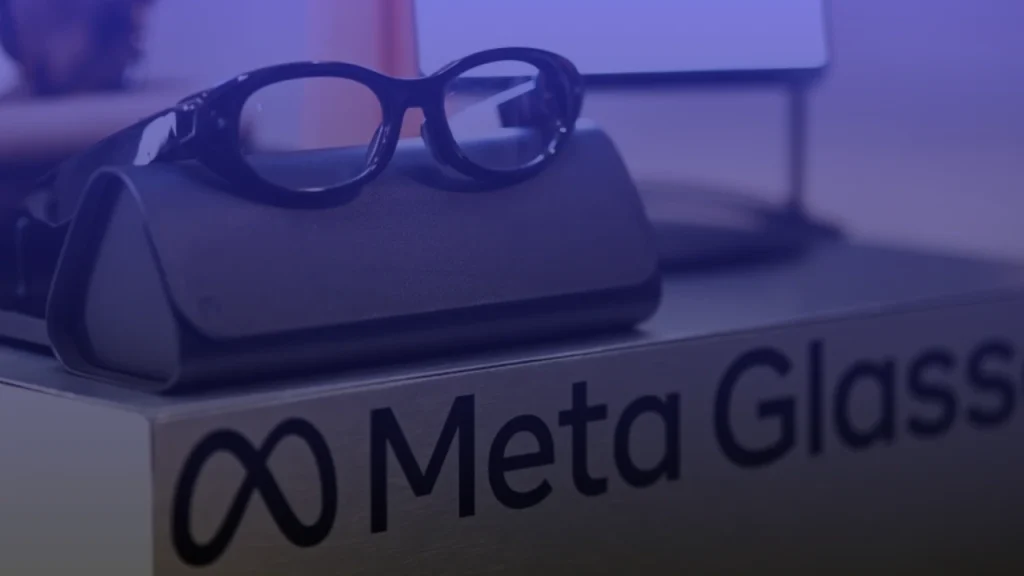
Meta AI Glasses are marketed as wearable AI assistants. They can answer questions, handle calls and messages, and, on camera models, capture video and audio. The glasses are designed to listen and respond after the wearer says “Hey Meta” or uses a touch control.
The complaint alleges the glasses did not follow that design. It claims they listened to and recorded conversations without the wake phrase, and that the recordings were transmitted to Meta and showed up in the owner’s Voice Activity Log. The complaint also cites user reports of ordinary conversations being captured with the “Respond without Hey Meta” setting turned off, of the recording indicator lighting up without the wake phrase after a firmware update, and of the problem appearing across multiple pairs and generations of glasses.
The complaint does not identify the technical cause of the alleged recordings.
Who Is Angelo Subia and What Does He Say Happened?
According to the complaint, Angelo Subia bought Meta AI Glasses at a LensCrafters store in Sacramento, California, around January 2026. He says he wore them daily and had many conversations with family members, friends, doctors and financial institutions. He alleges some of those conversations were recorded even though he never said “Hey Meta,” and that they appeared in his Voice Activity Log.
He says he bought the glasses understanding they would only record after the wake phrase, and that he never agreed to recordings outside that trigger. These are allegations. The court has not found that his glasses recorded the conversations described.
What Did Meta Say About the Recording Problem?
According to reports, Meta told Android Authority on October 13, 2026, that “this issue has been resolved,” and said users can review, manage and delete their voice logs in settings. After the lawsuit was filed, Bloomberg Law reported on October 20 that Meta said it intends to fight the case, that privacy was built into the glasses, and that Meta AI starts with “Hey Meta” or touch controls.
Meta has not publicly explained the cause, how many devices were affected, how long the recordings went on, or whether any recordings were reviewed or used to improve its AI. A statement that a problem was fixed is not an admission of liability, and it does not decide whether earlier recordings broke the law.
Which Meta AI Glasses Could Be Covered? Ray-Ban Meta and Oakley Meta
The Subia complaint refers to “Meta AI Glasses” as a product and names no specific models. Reports of unexpected recordings that the complaint relies on mostly involve Ray-Ban Meta glasses, including second- and third-generation devices. Oakley Meta and other Meta AI glasses with microphones are not excluded by the complaint, but owners should not assume they qualify. The proposed class definition and any certification order will decide which products and buyers count.
Which California Laws Does the Subia v. Meta Lawsuit Rely On?
California Penal Code § 631: wiretapping
Section 631 targets unauthorized interception. It reaches anyone who, without the consent of all parties, willfully taps or makes an unauthorized connection to a communication line, or willfully reads or tries to learn the contents of a communication while it is in transit, or uses information obtained that way. The plaintiff’s theory is that Meta intercepted the contents of conversations as audio traveled from the glasses to Meta’s servers. The case will turn on how the audio was captured and transmitted, and on whether the communications were intercepted “in transit,” which are technical questions.
California Penal Code § 632: recording confidential communications
Section 632 prohibits intentionally recording or eavesdropping on a confidential communication, using an electronic device, without the consent of all parties. Under § 632(c), a communication is “confidential” if the circumstances reasonably indicate a party wants it limited to the participants, and it excludes settings where a party may reasonably expect to be overheard or recorded. In Flanagan v. Flanagan, 27 Cal.4th 766 (2002), the California Supreme Court held that a conversation is confidential when a party has an objectively reasonable expectation that it is not being overheard or recorded. A conversation with a doctor or bank is a stronger example than a chat in a public place, so the setting of each alleged recording will matter.
California Penal Code § 637.2: damages
Section 637.2 gives a person injured by a CIPA violation a civil action for the greater of $5,000 per violation or three times actual damages, and allows an injunction. Section 637.2(c) says a plaintiff need not prove actual damages to sue. This is why the complaint seeks statutory damages. It does not mean every owner will receive $5,000. The plaintiff must prove a violation, the court must count the violations, and a class would have to be certified.
Why this is a California state-law case
CIPA requires the consent of all parties to a confidential communication. The federal Wiretap Act, 18 U.S.C. § 2511(2)(d), generally allows recording when one party consents, so California’s rule is stricter. The Subia complaint is built on CIPA §§ 631 and 632, not on the federal Wiretap Act or the federal Electronic Communications Privacy Act.
What Might Meta Argue in Response to the Subia Lawsuit?
Meta has not filed a response yet, so these are issues a court is likely to face, not arguments Meta has made.
- Intent. Section 632 requires intentional recording, and § 631 requires willful conduct. Meta could argue that an accidental software activation is not intentional interception by the company.
- Consent. Meta could point to its terms, privacy disclosures or device settings. Subia alleges he never consented to recordings he did not start.
- Confidential communications. Under Flanagan and § 632(c), not every captured sound is a confidential communication.
- Interception in transit. Section 631 asks how and when the audio was intercepted, which depends on evidence about the device and Meta’s systems.
- Standing. In federal court, a plaintiff must show a concrete injury, a requirement from TransUnion LLC v. Ramirez, 594 U.S. 413 (2021). Privacy plaintiffs usually argue that a recording of a private conversation is itself a concrete harm.
- Class certification. Under Federal Rule of Civil Procedure 23(a) and (b)(3), the plaintiff must show common questions predominate. Meta may argue that models, settings, firmware versions and each recording differ too much.
- Motion to dismiss. Meta can ask the court to dismiss the complaint under Rule 12(b)(6) for failing to state a claim.
How Is Subia v. Meta Different From In re Meta AI Glasses Litigation?
Subia is the second putative class action about Meta’s AI glasses this year. They are separate cases.
| Issue | Subia v. Meta Platforms | In re Meta AI Glasses Litigation (including Bartone v. Meta Platforms) |
| Case number | 3:26-cv-12135 | 3:26-cv-01897 (lead filing) |
| Filed | October 19, 2026 | March 4, 2026 |
| Main issue | Recording of conversations without “Hey Meta” | Alleged misleading privacy promises and human review of captured footage |
| Main laws | Cal. Penal Code §§ 631, 632, 637.2 | Consumer protection and false advertising, privacy and related claims |
| Defendants | Meta Platforms | Meta Platforms and Luxottica of America |
| Proposed coverage | California purchasers | Broader proposed buyer, user and bystander classes |
| Judge | Not reported | Judge Edward M. Chen |
| Settlement | None | None |
The consolidated case involves more than 70 named plaintiffs, according to reporting. It is not a multidistrict litigation (MDL) and is not the same lawsuit as Subia. For background on the human-review allegations, read Meta Class Action, Privacy Lawsuit Alleges AI Glasses Secretly Send Intimate Video to Overseas Workers.
A person recorded by someone else’s glasses is not automatically in the Subia class. Bystander allegations appear in the separate consolidated case.
Who May Qualify for the Subia v. Meta Putative Class Action?
The proposed class is people in California who bought Meta AI Glasses and had communications recorded without using the “Hey Meta” trigger. The complaint estimates it could include hundreds of thousands of people, though no number is established.
- People outside California are not part of the proposed Subia class. The consolidated In re Meta AI Glasses Litigation proposes broader groups.
- Bystanders recorded by another person’s glasses are not covered by the Subia purchaser class as proposed.
- Owners who never had an unexpected recording are outside the class as described, since the class is limited to people whose communications were recorded without the trigger.
The class description can change. The court decides whether any class is certified under Rule 23.
How to Check the Voice Activity Log on Meta AI Glasses
The menu names may change with app updates. A commonly reported path in the Meta AI app is:
- Open the Meta AI app on your phone.
- Select Glasses.
- Open Device Settings and choose your glasses.
- Go to Glasses Privacy.
- Open Voice Activity Log.
Look for recordings or transcripts from times you did not use “Hey Meta.”
What evidence should you save before deleting anything?
- Screenshots of the Voice Activity Log entries
- The date and approximate time of each recording
- Your receipt and the model of your glasses
- The firmware and Meta AI app versions
- Your voice-activation settings, including “Respond without Hey Meta”
- Any messages with Meta customer support
Meta says users can delete voice recordings in settings. If you are thinking about a legal claim, document recordings before deleting them. You can also turn off voice activation to reduce the risk, at the cost of some AI features.
Can You Get $5,000 From the Meta AI Glasses Lawsuit?
Not now. The $5,000 amount is the statutory damages figure in Cal. Penal Code § 637.2. Before anyone receives money from a putative class action, the case usually has to:
- Survive Meta’s motion to dismiss, if it files one.
- Reach class certification under Rule 23.
- End in a settlement or judgment.
- Receive court approval of any settlement.
- Notify class members and open a claims process.
None of this has happened. Be careful with websites that offer to “register” you for a guaranteed Meta glasses payout.
What Happens Next in Subia v. Meta Platforms?
The case is at an early stage. Expect Meta’s first response, which may be a motion to dismiss, followed by rulings on the sufficiency of the claims and, later, class certification. The federal court has jurisdiction in part because this is a putative class action, with the requirements of the Class Action Fairness Act at 28 U.S.C. § 1332(d) (more than 100 class members and more than $5 million in controversy, with minimal diversity). Evidence about device behavior, firmware, voice logs and Meta’s processing of audio is likely to matter. Track the docket for No. 3:26-cv-12135 on CourtListener or PACER instead of relying on ads or social media.
Related Reading From AllAboutLawyer.com
- WhatsApp Class Action Lawsuit, Did Meta and Accenture Read Your Private Messages?
- OpenAI Class Action Lawsuit, ChatGPT Allegedly Sent Your Private Queries to Meta and Google
Frequently Asked Questions About the Meta AI Glasses Lawsuit
Is there a lawsuit over Meta AI glasses recording without “Hey Meta”?
Yes. Angelo Subia filed Subia v. Meta Platforms, Inc., No. 3:26-cv-12135, on October 19, 2026 in the Northern District of California.
Is the Meta AI glasses case a settlement?
No. It is a putative class action in early litigation. No class is certified and no settlement exists.
Which law does the lawsuit rely on?
The California Invasion of Privacy Act, specifically Penal Code §§ 631 and 632, with damages under § 637.2.
Can I get $5,000 from Meta?
No payment is available. The $5,000 figure is the statutory damages amount a plaintiff may seek under § 637.2 for each violation.
Does the lawsuit cover Oakley Meta glasses?
The complaint names no specific model. Ray-Ban Meta glasses appear in most user reports. Do not assume Oakley Meta owners are covered until the class definition is settled.
I live outside California. Can I join?
The proposed Subia class is limited to California. The separate In re Meta AI Glasses Litigation proposes broader classes.
Does the lawsuit cover people recorded by someone else’s glasses?
Not under the proposed Subia purchaser class. Bystander claims appear in the separate consolidated case.
Did Meta admit the glasses recorded without permission?
No. Meta reportedly said the issue “has been resolved” and that it will fight the lawsuit. It has not admitted liability.
Is this the same as the Meta AI glasses human-review lawsuit?
No. Subia is about recordings without the wake phrase. In re Meta AI Glasses Litigation is about privacy promises and human review of captured footage.
What should I do if I find unexpected recordings?
Take screenshots of your Voice Activity Log, note the dates, save your receipt and settings, and consider speaking to a privacy attorney. Document recordings before deleting them.
Final Takeaway: Subia v. Meta Tests Whether AI Glasses Can Record Without the Wake Phrase
The Subia lawsuit asks whether a company can be liable under California’s all-party-consent privacy law when a wearable assistant allegedly records conversations without being activated. The answer will depend on proof of how the glasses behaved, whether the conversations were confidential, whether Meta acted intentionally, and whether a class can be certified. For now, it is an unproven putative class action, not a payout. California buyers who find unexpected recordings should save the evidence and follow the docket.
Sources and Legal References
Court filings and case reporting
- Subia v. Meta Platforms, Inc., No. 3:26-cv-12135 (N.D. Cal.), class action complaint
- Bloomberg Law, Meta Sued Over Private Conversations Recorded by AI Glasses (Oct. 20, 2026)
- Bloomberg Law, Meta Faces False Ad Suit Over AI Glasses Privacy Promise (Bartone v. Meta Platforms, No. 3:26-cv-01897)
- 9to5Google, Meta Says It Has Fixed an Issue That Let Ray-Ban Smart Glasses Record on Their Own
- Meta, Responsible Innovation and AI Glasses privacy information
Statutes, rules and cases
- California Penal Code § 631
- California Penal Code § 632
- California Penal Code § 637.2
- 18 U.S.C. § 2511(2)(d); 28 U.S.C. § 1332(d)
- Fed. R. Civ. P. 12(b)(6), 23(a) and 23(b)(3)
- Flanagan v. Flanagan, 27 Cal.4th 766 (2002)
- TransUnion LLC v. Ramirez, 594 U.S. 413 (2021)
AllAboutLawyer.com is an independent legal information website, not a law firm. The allegations described have not been proven in court. This article is for education and is not legal advice.
Researched and written by Israr Ahmad, legal content researcher and founder of AllAboutLawyer.com. All facts verified against the Subia complaint (No. 3:26-cv-12135), the California Penal Code sections cited, and published reporting on the case, as of November 4, 2026. Last Updated: November 4, 2026.
About the Author
Israr Ahmad is a legal content researcher with 4+ years of experience covering class action settlements and consumer rights cases. He has researched and published coverage of 2,500+ settlements using verified court records, settlement administrator filings, and government sources. Learn more about Israr.