
Massachusetts Property Boundary Tree Damage Lawsuit, Neighbor Ordered to Pay $310,000 After Tree Trespass Dispute
A Massachusetts dispute over trees, property boundaries and alleged encroachments ended with a $310,000 judgment against a neighboring landowner. On March 3, 2026, the Massachusetts Appeals Court affirmed the judgment in David P. Baillargeon & another v. Mathew Lennon, a case between neighbors in Huntington, Massachusetts.
The case matters because Massachusetts General Laws Chapter 242, Section 7 can allow triple damages when someone willfully cuts down, carries away, girdles or otherwise destroys another person’s trees without permission.
But it does not mean any Massachusetts homeowner whose neighbor’s tree causes damage can sue for money. Massachusetts has a separate rule protecting owners of healthy trees from liability for ordinary damage the tree itself causes, such as falling branches or roots. The facts are very different when someone cuts or damages trees on another person’s land.
Quick Facts: Baillargeon v. Lennon Massachusetts Tree Damage Case
| Detail | Information |
| Case | David P. Baillargeon & another v. Mathew Lennon |
| Appeals Court docket | 25-P-724 |
| Underlying court | Hampshire County Superior Court (Civil Action No. 21-077) |
| Plaintiffs | David P. Baillargeon and Lori A. Baillargeon |
| Defendant | Mathew Lennon |
| Dispute | Alleged tree cutting and damage, and property encroachments |
| Jury tree-damage award | $100,000 |
| Tree damages after trebling | $300,000 |
| Encroachment damages | $10,000 |
| Principal judgment | $310,000 |
| Appeals Court decision | March 3, 2026 (judgment affirmed) |
| Class action / settlement / claim form | None |
Some 2025 news reports gave a total of about $360,451, apparently including amounts beyond the principal judgment. The Appeals Court describes the principal judgment as $310,000, which is the figure used here.
What Happened in the Baillargeon v. Lennon Tree Lawsuit?
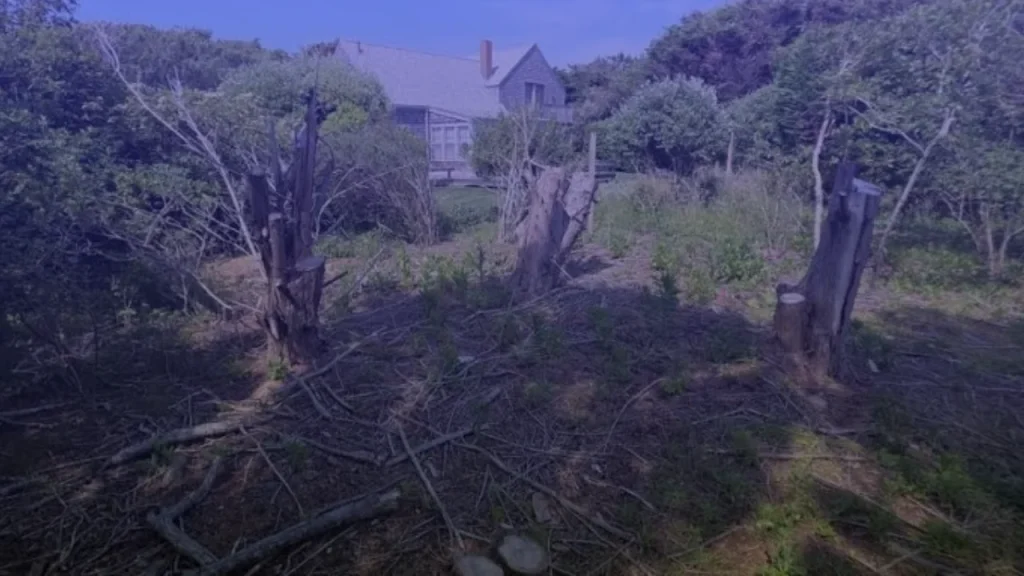
The Baillargeons sued Lennon in Hampshire County Superior Court in 2021 after he began working on property he had bought near theirs. They alleged he cut or damaged trees on their land and encroached on it, including with a building addition and a construction trailer. Those allegations were disputed. The case went to a jury trial in April 2025, and both sides represented themselves, according to the appellate decision.
How the Massachusetts Jury Reached the $310,000 Judgment
The jury found $100,000 in damages for the trees, which was trebled to $300,000 under Chapter 242, Section 7 because the conduct was found to be willful trespass to trees. It also awarded $10,000 for two encroachments: an addition to a building and a construction trailer. Together these make the $310,000 principal judgment.
Why Massachusetts Law Tripled the Tree Damages Under Chapter 242, Section 7
The statute makes a person who, without permission, willfully cuts down, carries away, girdles or otherwise destroys trees, timber, wood or underwood on another person’s land liable for three times the damages assessed. There is a protection for honest mistakes: if the defendant had good reason to believe the land was theirs or that they were otherwise authorized to do the work, the statute provides for single damages instead.
What Evidence Supported the Massachusetts Tree Damage Verdict?
Lori Baillargeon testified she saw a man hanging from a rope and cutting branches with a chainsaw on the Baillargeons’ property. Lennon acknowledged using a chainsaw and cutting piles of logs on his own property. The Appeals Court found this gave some support to the jury’s finding.
Lennon also did not move for a directed verdict at trial. Because of that, the Appeals Court did not do ordinary sufficiency review. It asked only whether there was an “absolute dearth” of evidence or a manifest injustice, and found neither.
How a Tree Expert Supported the $100,000 Tree Damage Figure
The Baillargeons presented tree expert Richard D’Agostino, who reviewed their list assigning replacement values to the damaged trees. The list totaled approximately $109,000, and he testified that the figures were reasonable and “in the ballpark.” The jury awarded $100,000, close to that valuation. Lennon challenged the expert because he had not been identified in exactly the same way in an earlier pretrial filing, but the court upheld admission because the substance of the expected testimony was consistent and Lennon did not object to its substance at trial.
What the $10,000 Massachusetts Encroachment Award Covered
Photographs and a property plan gave the jury a basis to find that removing the building addition and restoring the area would cost more than a nominal amount. The trailer had stayed on the property for months. The verdict form did not split the $10,000 between the two encroachments, so the Appeals Court left the award alone.
Is the Baillargeon v. Lennon Decision Binding Massachusetts Precedent?
No. The three-judge panel (Justices Vuono, Neyman and Sacks) issued a memorandum and order under Appeals Court Rule 23.0. Such decisions are primarily directed to the parties and, if issued after February 25, 2008, may be cited for persuasive value but are not binding precedent. The ruling also did not decide who owns every tree near a Massachusetts boundary line.
Can You Sue a Massachusetts Neighbor Because a Healthy Tree Damaged Your Property?
Usually not just because the healthy tree caused the damage. In Shiel v. Rowell, 480 Mass. 106 (2018), the Supreme Judicial Court reaffirmed the long-standing Massachusetts rule (from cases such as Michalson v. Nutting and Ponte v. DaSilva) that an owner whose property is damaged by a neighbor’s healthy tree generally has no claim against the tree’s owner. Different rules can apply to unhealthy trees.
The same decision confirms you can cut back branches and roots that cross onto your own property, but that is not a license to destroy the tree.
| Situation | Massachusetts Rule |
| A neighbor’s healthy tree drops branches or its roots intrude | Generally no damages claim; you may cut back what crosses onto your land |
| A neighbor willfully cuts or destroys trees on your land | Possible claim under M.G.L. c. 242, § 7, with treble damages |
| A neighbor cuts trees believing, with good reason, the land was theirs | Single damages under c. 242, § 7 |
Who Owns a Tree on a Massachusetts Property Line?
Where the trunk stands matters. Massachusetts case law generally treats the owner of the land where the trunk stands as the tree’s owner, with the neighbor entitled to cut intruding branches and roots. A tree whose trunk crosses the boundary is more complicated. In Levine v. Black, 312 Mass. 242 (1942), the Supreme Judicial Court discussed a tree standing across a boundary, and a later Land Court decision addressed the same issue. Do not cut a tree just because it seems “half yours.” Establish the actual property line and trunk location first. A professional survey is far stronger evidence than a fence line or an old deed description.
What Evidence Should Massachusetts Property Owners Keep After Tree Damage?
- Dated photos and video of the trees, before and after cutting
- A professional survey, deeds, recorded plans and prior surveys
- Arborist reports, species, measurements and replacement-value estimates
- Receipts for restoration work
- Messages with the neighbor, and any written permission or objection
- Names of contractors who did the work
This case shows why evidence of who did the cutting and how the trees should be valued can decide the outcome.
Massachusetts Tree Law: Criminal and Civil Rules Are Separate
Besides the civil remedy in Chapter 242, Section 7, Massachusetts has criminal provisions on injuring another person’s trees (Chapter 266, Section 113). Whether conduct is a crime, a civil trespass or something else depends on the facts, so calling the police will not necessarily settle a boundary dispute.
Was Baillargeon v. Lennon a Class Action, and Can Other Homeowners Claim Money?
No. It was an individual dispute between neighboring landowners. There is no class, settlement, administrator, claim form or deadline, and other Massachusetts property owners do not receive money because of the Appeals Court’s decision.
Baillargeon v. Lennon Timeline
| Date | Development |
| 2018 | Dispute began after Lennon acquired neighboring property in Huntington, per case filings and reporting |
| June 25, 2021 | Superior Court action filed |
| 2022 | Baillargeons filed materials describing their tree, boundary and encroachment allegations |
| April 2025 | Jury trial in Hampshire County Superior Court; jury awarded $100,000 for trees (trebled) and $10,000 for encroachments |
| 2025 | Lennon appealed |
| March 3, 2026 | Massachusetts Appeals Court affirmed the $310,000 principal judgment |
FAQs: Massachusetts Tree Damage and Property Boundary Lawsuits
Can I sue my Massachusetts neighbor if they cut down my trees?
Potentially. M.G.L. c. 242, § 7 provides a civil remedy when someone willfully cuts down or destroys trees on another person’s land without permission, and treble damages can be available.
Can Massachusetts tree damage result in triple damages?
Yes, for qualifying willful and unauthorized destruction of another person’s trees. Honest, well-founded mistakes about ownership get single damages.
How much are damaged trees worth in Massachusetts?
There is no automatic figure. The measure depends on the circumstances, and expert evidence can be important. In this case expert testimony supported the $100,000 jury figure.
Can I cut my neighbor’s branches that extend over my property?
Generally yes, you may cut back branches and roots that intrude onto your property, per Shiel v. Rowell. That does not give you authority to destroy the tree or enter your neighbor’s land.
Can I sue because my neighbor’s healthy tree damaged my property?
Generally no, under the Massachusetts rule. Different rules can apply to unhealthy trees.
Who owns a tree whose trunk crosses the property line?
It is more complicated than a tree wholly on one parcel, so get the boundary and trunk location established first.
Does the $310,000 judgment apply to other homeowners?
No. It applies only to the parties in this lawsuit.
Did the Appeals Court create a new tree law?
No. It affirmed this judgment in a Rule 23.0 summary decision, which is not binding precedent.
What is the case number?
Appeals Court docket 25-P-724, David P. Baillargeon & another v. Mathew Lennon. The underlying case is Hampshire County Superior Court Civil Action No. 21-077.
Bottom Line for Massachusetts Property Owners
The Massachusetts Appeals Court affirmed a $310,000 principal judgment against Mathew Lennon: $300,000 in trebled tree damages and $10,000 for encroachments. Willful, unauthorized cutting of another person’s trees can lead to triple damages under Chapter 242, Section 7, while owners of healthy trees are generally protected from liability for ordinary damage the tree causes. Where the property line and trunk are, who did the cutting, whether permission was given and whether the conduct was willful can all change the legal analysis. Time limits apply to bringing a claim, so talk to a Massachusetts attorney early.
Sources and Legal References
- Massachusetts Appeals Court, David P. Baillargeon & another v. Mathew Lennon, No. 25-P-724 (March 3, 2026).
- Massachusetts General Laws, Chapter 242, § 7 (willful trespass to trees).
- Massachusetts Supreme Judicial Court, Shiel v. Rowell, 480 Mass. 106 (2018).
- Massachusetts Supreme Judicial Court, Levine v. Black, 312 Mass. 242 (1942).
- Massachusetts Appeals Court, Ritter v. Bergmann, 72 Mass. App. Ct. 296 (2008).
- Massachusetts Appeals Court, Glavin v. Eckman, 71 Mass. App. Ct. 313 (2008).
- Massachusetts official legal-information page on neighbors and trees.
This article is for informational purposes only and is not legal advice. Property-boundary, tree-trespass and damages disputes depend on the specific facts and applicable Massachusetts law.
Researched and written by Israr Ahmad, legal content researcher and founder of AllAboutLawyer.com. All facts verified against the Massachusetts Appeals Court decision in No. 25-P-724 (as published on FindLaw), M.G.L. c. 242, § 7, and the cited Massachusetts Supreme Judicial Court and Appeals Court decisions, as of October 2, 2026. Last Updated: October 2, 2026.
About the Author
Israr Ahmad is a legal content researcher with 4+ years of experience covering class action settlements and consumer rights cases. He has researched and published coverage of 2,500+ settlements using verified court records, settlement administrator filings, and government sources. Learn more about Israr.