
Maryland Gun Laws 2026, Supreme Court Declines Concealed Carry Challenge. Where Guns Are Still Restricted
Key Facts at a Glance
- Case: Novotny v. Moore, No. 25-1324
- What happened: On November 16, 2026, the U.S. Supreme Court denied review (certiorari)
- Effect: the Fourth Circuit’s January 2026 ruling in Kipke v. Moore stays in place. It upheld most of Maryland’s sensitive-place carry restrictions
- Not decided: the Court did not rule on the merits and did not declare every Maryland restriction constitutional
- Justice Thomas: wrote a short statement doubting that many of the restrictions fit the nation’s history, but agreed the case was not the right one to take
- Biggest exception: the Fourth Circuit struck down Maryland’s rule banning carry in private businesses open to the public unless the owner gives express permission
- Still open: exactly when previously blocked rules (bars and restaurants, areas near demonstrations) become enforceable
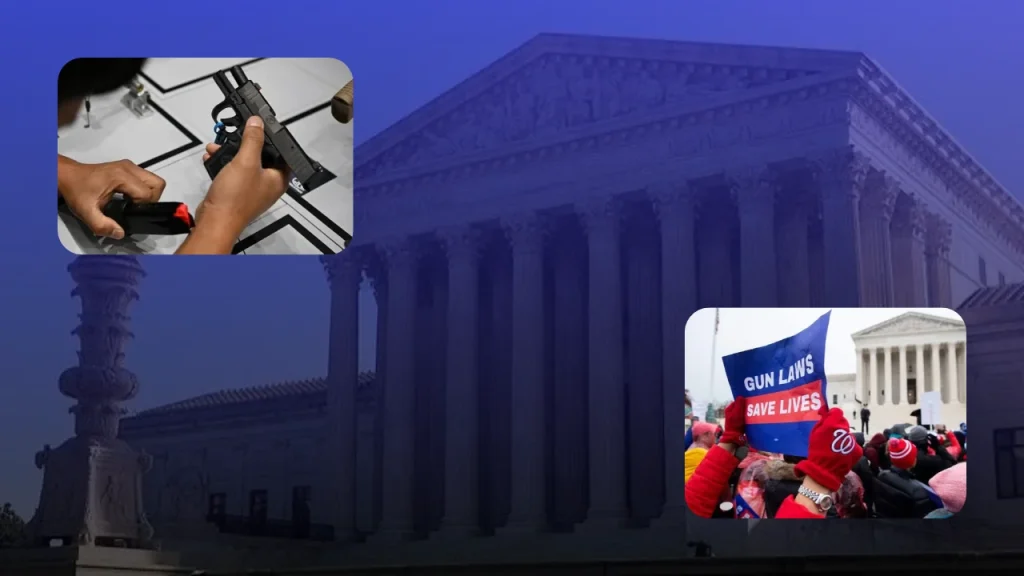
The Supreme Court turned away a challenge to Maryland’s rules on where permit holders may carry firearms. That leaves in place a federal appeals court decision upholding most of the state’s location-based bans, including schools, public transit, hospitals and state parks.
Justice Clarence Thomas wrote a statement alongside the denial. He said he has serious doubts that the nation’s historical tradition of firearm regulation supports many of these restrictions. He still agreed the Court should not take this particular case, because the lawsuit challenged so many different locations at once.
For Maryland residents with a Wear and Carry permit, the practical message is simple. A permit does not let you carry everywhere. Treat the listed sensitive places as off limits, and check the latest official guidance for the handful of rules that were tied up in court.
This article is general legal information, not legal advice.
What Did the Supreme Court Actually Decide?
Nothing about the merits. The justices denied a petition for a writ of certiorari, which simply means they chose not to hear the appeal. A denial is not a ruling that Maryland’s law is constitutional, and it sets no nationwide precedent.
The practical result is that the Fourth Circuit’s decision remains the law for Maryland, Virginia, West Virginia, North Carolina and South Carolina, the states in that circuit.
The plaintiffs argued Maryland had banned carrying in too many ordinary public places, in conflict with the Supreme Court’s 2022 decision in New York State Rifle & Pistol Association v. Bruen. That decision protects carrying handguns in public for self-defense and tells courts to test modern gun laws against the nation’s historical tradition of firearm regulation.
Where Is Carry Restricted in Maryland?
Maryland’s Gun Safety Act of 2023 (Senate Bill 1) lists locations where firearms are prohibited even for permit holders. The Fourth Circuit upheld most of them:
| Location | Fourth Circuit ruling |
| Schools (public, private and preschool) | Upheld |
| Government buildings | Upheld |
| Maryland Transit Administration vehicles and facilities | Upheld |
| Hospitals and certain healthcare facilities | Upheld |
| State parks and state forests | Upheld |
| Museums | Upheld |
| Stadiums and racetracks | Upheld |
| Amusement parks and casinos | Upheld |
| Places licensed to serve alcohol for on-site consumption | Upheld, but enforcement was tied up by an earlier injunction and stay |
| Within 1,000 feet of a public demonstration (CL § 4-208) | Upheld, but enforcement was tied up by an earlier injunction and stay |
| Private businesses open to the public without the owner’s express permission | Struck down |
The exact reach of each restriction depends on the statute or regulation behind it, and exceptions apply. Use the Maryland State Police list of prohibited places and the statute text rather than this table when you need precision.
What Can Be Enforced Right Now?
This is the part most coverage skips, and it matters most to permit holders.
In 2023, a federal district judge blocked three parts of the law before it took effect: the alcohol-establishment ban, the demonstration rule, and the default ban on carrying into private buildings. In January 2026, the Fourth Circuit dissolved most of that injunction, but the plaintiffs asked it to hold back its mandate while they sought Supreme Court review. Maryland State Police guidance dated July 10, 2026 described those provisions as unenforceable during that stay.
Now that the Supreme Court has denied review, the stay should end. Federal appellate rules generally require a court to issue its mandate promptly once it learns the Supreme Court has denied certiorari. We have not confirmed that the mandate has issued or that Maryland State Police has updated its guidance since November 16.
So don’t assume the old guidance still applies, and don’t assume every rule became enforceable on the day of the order. Check the Maryland State Police page and the Fourth Circuit docket before relying on either.
Related article: Can Nursing Homes Refuse Patients Taking Methadone? Pennsylvania Reaches Agreements With 12 Providers
Public Transportation
Maryland Transportation Code § 7-705 bars weapons on Maryland Transit Administration vehicles and property. The Fourth Circuit upheld it, pointing to the confined, crowded nature of transit and the historical regulation of firearms in comparable settings. Thomas questioned whether modern transit bans have close enough historical support, but he did not strike the rule down.
The ruling covers Maryland Transit Administration services. Other transit systems, such as federally regulated rail and other agencies’ property, may be governed by different rules.
Bars and Restaurants
Maryland Criminal Law § 4-111 covers places licensed to sell alcohol or cannabis for on-site consumption. The restriction turns on the establishment’s license, not on whether the person carrying plans to drink. Maryland separately prohibits carrying while under the influence.
The district court had enjoined this rule in 2023. The Fourth Circuit reversed that part of the ruling in January 2026 and upheld the ban. Because of the stay described above, check the current enforcement status before relying on either the old injunction or the appellate ruling.
State Parks and Forests
The Fourth Circuit upheld the bans in state parks, state forests and Chesapeake Forest Lands, which are set out in state regulations (COMAR 08.07.06.04, 08.07.01.04 and 08.01.07.14). The rules include exceptions for authorized hunting and target shooting. They do not necessarily apply to every county or city park, which may have their own rules, so check locally.
Public Demonstrations
Criminal Law § 4-208 is narrower than many people think. It does not simply ban guns within 1,000 feet of any protest. As described in the Maryland statute, it applies when a law enforcement officer tells a person a demonstration is under way and orders them to leave until the firearm is disposed of, and it also reaches certain conduct involving a person in a vehicle within 1,000 feet. A violation is a misdemeanor carrying up to one year in jail, a $1,000 fine, or both. Judge G. Steven Agee dissented from the part of the ruling upholding this rule.
Private Businesses: The Part That Went the Other Way
SB 1 made it illegal to carry onto another person’s private property without the owner’s express permission, with limited exceptions. The Fourth Circuit held that applying that default rule to private property open to the public violates the Second Amendment, and it left the injunction against that part of Criminal Law § 6-411 in place. According to the Supreme Court docket, Maryland dismissed its own petition on this issue in August 2026.
The Supreme Court reached the same conclusion about a similar Hawaii law in Wolford v. Lopez, decided June 25, 2026, by a 6-3 vote. That decision held Hawaii cannot ban permit holders from carrying onto private property open to the public unless the owner gives express permission.
Neither ruling means a store must let you carry. A business can still post a sign, tell you to leave or refuse entry, and carrying after being told to leave can lead to trespass charges. The change is only about the default: absent notice from the owner, the state cannot presume carry is forbidden at a store or restaurant open to the public. Separate rules about private homes were not invalidated in the same way.
What Justice Thomas Wrote
Thomas’s statement respecting the denial is only a few pages long, and it isn’t a binding opinion. In it, he:
- reaffirmed that the Second Amendment protects carrying firearms outside the home for self-defense;
- said he has “serious doubts” about how many of Maryland’s location bans line up with the nation’s history;
- acknowledged that places like courthouses and legislative assemblies have long been treated as sensitive, but distinguished them from broad categories such as entertainment venues, recreational spaces and large areas of public land;
- warned that treating nearly anywhere people gather as sensitive could swallow the public-carry right recognized in Bruen;
- agreed the Court should not take this case because the challenge covered many different locations, each needing its own historical analysis.
It is fair to read the statement as a signal that at least one justice would welcome a narrower sensitive-places case. It is not a ruling against Maryland.
How the Fourth Circuit Reasoned
The court applied the Bruen history-and-tradition test, asking whether Maryland’s modern restrictions resemble historical laws regulating firearms in particular public settings. For schools and government buildings, it leaned on places the Supreme Court has already described as traditionally sensitive. For transit, parks, entertainment venues and alcohol-serving establishments, it relied on broader historical analogies. Judge Agee agreed with some of the rulings but dissented from others, arguing the majority leaned too heavily on laws that came later and were too loosely connected to the founding-era understanding of the Second Amendment.
That disagreement is the core unresolved question in this area of law: how closely must a modern restriction match an older one?
Why Maryland Passed the Law
After Bruen struck down New York’s requirement that applicants show a special need for a carry license, Maryland had to rework its permitting system. The legislature passed the Gun Safety Act of 2023, which Governor Wes Moore signed in May 2023 and which took effect October 1, 2023. Supporters said the state needed to protect children, patients, transit riders and crowds. Gun-rights groups said Maryland had swapped an unconstitutional licensing barrier for location bans so broad that lawful carry became impractical. That dispute produced Kipke v. Moore and Novotny v. Moore.
The Supreme Court Cases That Shape This Area
| Case | Why it matters |
| District of Columbia v. Heller (2008) | Recognized an individual right to keep a handgun for self-defense |
| McDonald v. Chicago (2010) | Applied the Second Amendment to the states |
| Bruen (2022) | Protected public carry; set the history-and-tradition test |
| United States v. Rahimi (2024) | Explained how historical principles can support modern restrictions |
| Wolford v. Lopez (2026) | Struck down Hawaii’s default ban on carry onto private property open to the public |
| Novotny v. Moore (2026) | Review denied; Maryland’s location bans left in place |
A separate case on AR-15-style rifles is also before the Court. See our coverage: Supreme Court Assault Weapons Ban Case 2026. That case is about which firearms a state may ban, not about where permit holders may carry.
Penalties
Willfully violating the location restrictions in Criminal Law § 4-111 can bring up to one year in jail, a $1,000 fine, or both. Other laws carry different penalties, for example for carrying without a permit or for possession by a prohibited person. What actually happens in a given case depends on the charge, the evidence, any defenses and any court orders in effect.
The statutes include exceptions, such as for certain law enforcement and security personnel, qualifying military duties and some vehicle transport. Those exceptions are narrow, and they don’t override every other firearm law. If you think one applies to you, talk to a Maryland attorney before relying on it.
Does This Affect Other States?
Not directly. A denial of review doesn’t validate or invalidate any other state’s law. But similar fights are playing out over sensitive-place laws in states such as New York, New Jersey, California, Hawaii and Illinois. For a different state’s rules, see New California Gun Laws 2026 and Massachusetts Gun Laws After Question 9.
What Should Maryland Permit Holders Do?
- Treat the listed sensitive places as off limits. A valid permit does not exempt you from them.
- Check the destination before you go. Look up the specific statute and any exception that might apply.
- Verify current enforcement for the open items. That means bars and restaurants, areas near demonstrations and the private-property rule. Read the latest Maryland State Police guidance, which was last dated July 10, 2026 when we checked.
- Respect posted signs and requests to leave. A business can set its own rules.
- Ask a Maryland attorney if you’re unsure whether a rule applies to you. Not knowing a location is restricted is generally not a defense.
Official list: Maryland State Police, Prohibited Places to Carry a Firearm
Frequently Asked Questions
Did the Supreme Court uphold Maryland’s concealed carry law?
No. It declined to hear the case, which isn’t a ruling on the merits. That leaves in place the Fourth Circuit’s decision upholding most of the law’s location restrictions.
Can I carry in a Maryland bar or restaurant?
Maryland law restricts carry in places licensed to serve alcohol for on-site consumption, and the Fourth Circuit upheld that restriction. Enforcement was previously blocked by an injunction and a stay, so check the current court and State Police status before you rely on either.
Can I carry in Maryland state parks?
Generally no. State regulations restrict firearms in state parks and forests, with exceptions such as authorized hunting and target shooting.
Can a store ban customers from carrying?
Yes. Owners can post signs or ask you to leave. What courts struck down is the state’s default rule that carry is forbidden in businesses open to the public unless the owner gives express permission.
Does a Maryland Wear and Carry permit override gun-free zones?
No. A permit doesn’t exempt you from the statutory location restrictions.
What did Justice Thomas say?
He said he has serious doubts that many of the restrictions fit the nation’s historical tradition, but agreed the Court should not take this broad case. He suggested a narrower challenge might be a better vehicle. His statement isn’t binding precedent.
Could Maryland’s gun laws change again?
Yes. Further litigation, legislation or updated enforcement guidance could change specific rules. The Supreme Court’s denial didn’t create a new law.
The Bottom Line
The Supreme Court left the Fourth Circuit’s ruling in Kipke v. Moore alone. That ruling upheld most of Maryland’s sensitive-place bans and struck down the default ban on carrying into businesses open to the public. Justice Thomas signaled interest in a narrower future case. For permit holders, the safest approach is to treat the listed places as restricted, respect any business’s posted rules, and confirm current enforcement for the few provisions that were stuck in court.
Sources
- U.S. Supreme Court orders of November 16, 2026, including Justice Thomas’s statement in Novotny v. Moore
- Supreme Court docket, Novotny v. Moore, No. 25-1324
- Supreme Court docket, Moore v. Kipke, No. 25-1206
- Duke Center for Firearms Law, SCOTUS Gun Watch, November 16, 2026
- Maryland State Police, Prohibited Places to Carry a Firearm
- Maryland Criminal Law § 4-111
- Maryland Criminal Law § 4-208
- Maryland Criminal Law § 6-411
- Maryland Transportation Code § 7-705
- Maryland General Assembly, Senate Bill 1 (2023)
Last verified: November 17, 2026. Enforcement status for the open items may change quickly, so check official sources before you rely on this page.
Disclaimer: This article offers general legal information, not legal advice. Firearm laws, exceptions and court orders change. For questions about carrying at a specific location, check current Maryland State Police guidance or consult a qualified Maryland attorney.
About the Author
Israr Ahmad is a legal content researcher with 4+ years of experience covering class action settlements and consumer rights cases. He has researched and published coverage of 2,500+ settlements using verified court records, settlement administrator filings, and government sources. Learn more about Israr.