
CeraVe Lawsuit Update 2026, Benzene Class Action Dismissed, Baby Product Pricing Lawsuit Pending
Can You File a CeraVe Lawsuit Claim?
No. As of October 29, 2026, there is no CeraVe settlement, no official settlement website and no claim form for either lawsuit below. The benzene class action was dismissed with prejudice, and the CeraVe Baby pricing case is still at an early stage with no class certified. Do not pay any website that promises to get you money from these cases.
CeraVe (owned by L’Oréal) is involved in two separate sets of litigation, and they are often confused:
- The benzene case: a consolidated class action over benzoyl peroxide acne products, dismissed on September 15, 2026.
- The CeraVe Baby case: a proposed California class action over the price of two baby products, still pending.
CeraVe Lawsuit Quick Facts
| Detail | Latest verified information |
| Brand / parent company | CeraVe / L’Oréal |
| Official settlement website | None (no settlement exists) |
| Claim form | None |
| Claim deadline | None |
| Benzene case | In re L’Oréal USA Benzoyl Peroxide Products Litigation, No. 1:24-cv-02735 |
| Benzene court | U.S. District Court, Southern District of New York |
| Benzene outcome | Dismissed with prejudice on September 15, 2026; judgment entered September 16, 2026 |
| Baby case | Raymundo v. L’Oréal USA S/D, Inc., No. 3:26-cv-03951-RBM-DEB |
| Baby court | U.S. District Court, Southern District of California |
| Baby case filed | July 9, 2026 (amended complaint filed August 31, 2026) |
| Class certified? | No, in neither case |
| Settlement available? | No, in neither case |
This article covers separate lawsuits. A court dismissal on legal grounds is not a finding that CeraVe products are safe or unsafe, and allegations in a complaint are not proven facts.
CeraVe Benzene Lawsuit Update: Judge Dismisses Case With Prejudice
On September 15, 2026, U.S. District Judge Analisa Torres dismissed the consolidated benzoyl peroxide class complaint against L’Oréal USA with prejudice. The clerk entered judgment the next day. The judge also denied the plaintiffs another chance to amend.
The plaintiffs alleged that certain acne treatments containing benzoyl peroxide could contain or develop benzene, a known human carcinogen. They argued L’Oréal should have disclosed the risk and that consumers would not have bought the products, or would have paid less, had they known.
The court did not dismiss the case because it found the products free of benzene. It ruled that the plaintiffs’ state-law claims were preempted by federal law governing over-the-counter acne drugs. No plaintiff claimed to have developed cancer or another illness from the products.
Plaintiffs reportedly asked the court to reconsider, and L’Oréal opposed. No notice of appeal was found in publicly indexed records through October 29, 2026. Because appeal deadlines and dockets change, readers should check the live court docket for the current status.
Which CeraVe Products Were Named in the Benzene Lawsuit?
The consolidated case concerned three benzoyl peroxide acne treatments sold by L’Oréal USA, with claims covering purchases from 2020 to 2024:
- CeraVe Acne Foaming Cream Cleanser (4% benzoyl peroxide)
- CeraVe Acne Foaming Cream Wash (10% benzoyl peroxide)
- La Roche-Posay Effaclar Duo Dual Action Acne Treatment (5.5% benzoyl peroxide). This is a different L’Oréal brand included in the same case.
Most CeraVe products were never part of this lawsuit. Everyday moisturizers, hydrating cleansers and salicylic-acid products were not named.
Why Did Consumers Sue Over Benzene in CeraVe Acne Products?
Benzene is classified as a human carcinogen, and long-term exposure has been linked to blood cancers such as leukemia. The litigation followed a March 5, 2024 citizen petition to the FDA from the independent lab Valisure, which reported that benzoyl peroxide products could form benzene under certain conditions, including heat and time.
Plaintiffs argued that L’Oréal knew or should have known of the risk, failed to warn consumers and sold products people would not have bought had the risk been disclosed. The case was about economic loss from allegedly misleading marketing, not a court finding that anyone was sickened by CeraVe. Those allegations were never proven.
If you want earlier background on how the allegations began, see our original report on CeraVe facing a lawsuit over benzene contamination in acne products.
What Did the FDA Find About Benzene in Acne Products?
On March 11, 2025, the FDA announced results from testing 95 benzoyl peroxide acne products. It reported that most products had undetectable or very low benzene levels and identified a limited number of lots for voluntary retail-level recalls.
The FDA’s recall list did not include the two CeraVe acne products at the center of the lawsuit. It did include specific lots from other brands, such as:
- La Roche-Posay Effaclar Duo, lot MYX46W
- Certain Walgreens benzoyl peroxide acne products
- Certain Proactiv treatments
- SLMD Benzoyl Peroxide Acne Lotion
- Zapzyt Acne Treatment Gel (voluntarily recalled after the manufacturer’s own testing)
The court noted that none of the plaintiffs alleged buying the recalled La Roche-Posay lot. The FDA also stated that even with daily use of the recalled products for decades, the cancer risk from the detected benzene exposure was very low.
These findings do not prove every benzoyl peroxide product has zero benzene under every storage condition, and they do not validate every allegation in the lawsuits. The two raised different questions.
Why Did the Judge Dismiss the CeraVe Benzene Class Action?
The second amended complaint asserted four types of claims: deceptive business practices under state consumer-protection laws, breach of the implied warranty of merchantability, negligent misrepresentation or omission, and unjust enrichment. All depended on the theory that the products were unlawfully sold because they allegedly contained benzene without a warning.
1. Federal drug-labeling rules preempted the state-law claims. The court found that the FDA’s acne monograph allows benzoyl peroxide at specified concentrations and does not require the benzene warning plaintiffs wanted. It also concluded that benzene formed through degradation is not an intended inactive ingredient that must be listed. Imposing a state-law requirement beyond federal rules would conflict with the federal scheme.
2. No binding federal 2 parts-per-million limit. Plaintiffs relied on FDA guidance and pharmaceutical standards to argue that benzene above 2 ppm made the products adulterated. The judge found they had not identified a binding federal prohibition setting that limit for these products, and that nonbinding guidance could not support their state-law theory.
3. Dismissal with prejudice. Plaintiffs had already amended their complaint, and the court concluded the preemption problems could not be fixed by another amendment.
Does the Ruling Mean No One Can Ever Sue Over an Acne Product?
No. The ruling resolved the specific consolidated state-law claims before Judge Torres. The opinion noted that the federal labeling-preemption provision does not apply to product-liability claims in the same way. A person alleging a specific injury from a product may have a different legal theory than a consumer arguing a label needed an extra warning.
That does not mean such a claim would succeed. It would still have to meet legal requirements including causation, proof of injury and filing deadlines. A qualified attorney can assess an individual situation, and a healthcare professional can address health concerns.
Is There a CeraVe Benzene Settlement or Claim Form?
No. There is no verified settlement, administrator, payment schedule, settlement website or claim deadline for the dismissed benzene case. Keep purchase records if you wish, but the dismissed class claims do not create an open payment process.
Be aware that other benzoyl peroxide cases have produced real settlements with different defendants. For example, the Differin $990,000 benzene settlement involves different products and a different manufacturer. It does not create a claim for CeraVe purchases.
New CeraVe Baby Lawsuit: What Is Raymundo v. L’Oréal USA?
On July 9, 2026, Monica Raymundo filed a proposed class action against L’Oréal USA S/D, Inc. in the Southern District of California. This case has nothing to do with benzene. It is a false-advertising and pricing dispute.
Products named
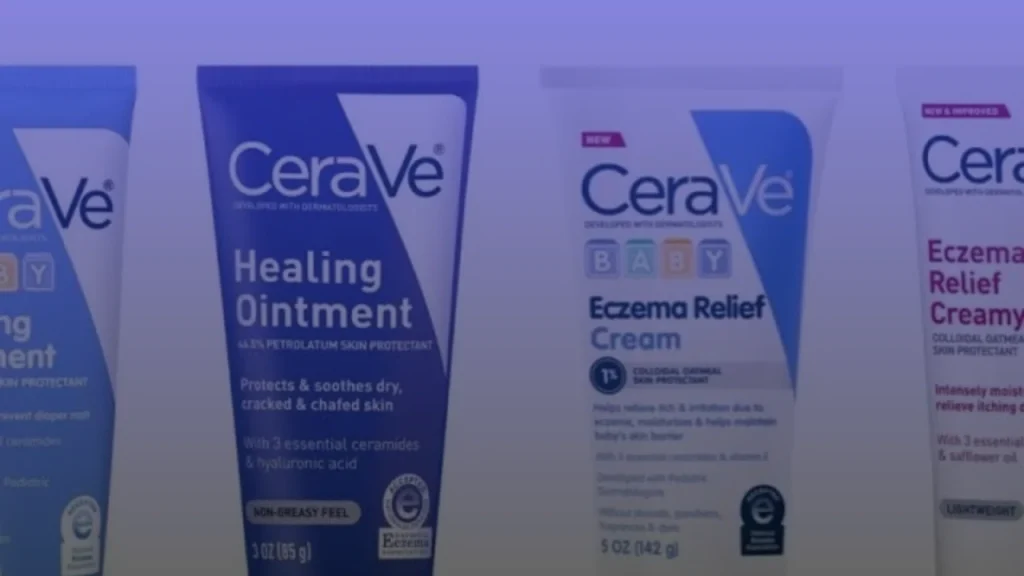
- CeraVe Baby Healing Ointment
- CeraVe Baby Eczema Cream
What the complaint alleges
The complaint alleges that baby-themed packaging, infant imagery and references to pediatric dermatologists lead consumers to believe these products are specially formulated for infants, when they are allegedly materially identical to cheaper standard CeraVe products. It claims:
- CeraVe Baby Healing Ointment and standard CeraVe Healing Ointment both contain 46.5% petrolatum.
- CeraVe Baby Eczema Cream and standard CeraVe Eczema Moisturizing Cream both contain 1% colloidal oatmeal.
- Active and inactive ingredients, formulations and directions for use are materially the same.
The price allegation
The complaint cites a 3-ounce CeraVe Baby Healing Ointment at $14.49 at CVS versus $10.79 for the standard 3-ounce Healing Ointment, and alleges a similar premium for the eczema cream. These are the plaintiff’s comparisons. Retail prices vary, and none of this has been established by a court.
Laws involved
The complaint asserts claims under California’s Unfair Competition Law (Business and Professions Code § 17200), Consumers Legal Remedies Act (Civil Code § 1750 and following) and False Advertising Law (Business and Professions Code § 17500). The central question is whether the marketing is likely to mislead reasonable consumers and whether the plaintiff can prove reliance and economic injury.
Current status
The docket shows the original complaint on July 9, 2026 and an amended complaint on August 31, 2026. A scheduling order set briefing for a possible motion to dismiss through October 9, 2026. The most recent docket snapshot available for this article was from August 31, so later filings, any ruling on a motion to dismiss and any class-certification activity could not be independently confirmed. No class has been certified and no settlement or claim form exists.
Who could be included?
The proposed class covers California consumers who bought either baby product for personal or household use during the proposed class period, generally the four years before filing through class notice. This is only a proposed definition. A judge must decide under Federal Rule of Civil Procedure 23 whether the case can proceed as a class action and may narrow or reject it. People outside California should not assume they are covered.
Other CeraVe Legal Matters Consumers Confuse With These Cases
“Oil-Free” moisturizing lotion case
In December 2020, Jake Gruber filed Gruber v. CeraVe LLC, No. 1:20-cv-07235, in the Northern District of Illinois, alleging that “oil-free” CeraVe lotions contained ingredients he characterized as oils. The latest docket snapshot verified was from January 2021, and the final outcome could not be confirmed, so it should not be described as either active or settled.
California Proposition 65 notices
California’s Attorney General database lists Proposition 65 notices involving diethanolamine (DEA) in certain CeraVe products:
| Product | Notice number |
| CeraVe Retinol Serum | 2024-03758 |
| CeraVe Eye Repair Cream | 2024-03754 |
| CeraVe SA Cream | 2024-03762 |
These are warning-and-penalty enforcement matters, not consumer refund class actions, and they do not show the products caused cancer. On June 24, 2026, a federal court entered an injunction in Personal Care Products Council v. Bonta, No. 2:26-cv-00682, restricting enforcement of the DEA cancer-warning requirement for cosmetics within its scope. How it affects any specific CeraVe matter must be checked in the court records.
What Should CeraVe Customers Do Now?
If you bought CeraVe Acne Foaming Cream Cleanser or Wash: The class case is dismissed and no claim form exists. Do not assume you are owed money. If you believe a product caused a specific injury, speak with a healthcare professional and, if you wish, an attorney about an individual claim.
If you bought CeraVe Baby Healing Ointment or Baby Eczema Cream in California: Keep receipts, order history and packaging in case the case proceeds. There is nothing to file today.
If you used Retinol Serum, Eye Repair Cream or SA Cream: The Proposition 65 notices do not automatically entitle buyers to payment. Check the official California records for updates.
For a broader look at how consumer product cases develop in 2026, our coverage of the TRESemmé hair loss class action shows how different these claims can be.
CeraVe Lawsuit Timeline
| Date | Development |
| December 7, 2020 | Jake Gruber files the “oil-free” lotion complaint |
| March 5, 2024 | Valisure submits its FDA citizen petition on benzoyl peroxide products |
| March 11, 2025 | FDA announces testing of 95 benzoyl peroxide products and limited voluntary recalls |
| May 28, 2025 | Related benzoyl peroxide cases consolidated before Judge Torres (S.D.N.Y.) |
| July 9, 2026 | Raymundo files the CeraVe Baby pricing class action |
| August 31, 2026 | Raymundo files an amended complaint |
| September 15, 2026 | Judge Torres dismisses the consolidated benzene complaint with prejudice |
| September 16, 2026 | Judgment entered for L’Oréal USA |
| October 29, 2026 | No settlement or claim form verified in either case |
Frequently Asked Questions About the CeraVe Lawsuit
Is the CeraVe benzene lawsuit still active?
The consolidated class complaint was dismissed with prejudice on September 15, 2026, with judgment entered September 16. No notice of appeal was found in publicly indexed records through October 29, 2026, but the live docket should be checked for the current appellate status.
Did the judge rule that CeraVe products are safe?
No. The claims were dismissed because federal law preempted them. The court made no finding that every CeraVe product is benzene-free, and it did not bar every possible personal-injury claim.
Which CeraVe products were named in the benzene lawsuit?
CeraVe Acne Foaming Cream Cleanser (4% benzoyl peroxide), CeraVe Acne Foaming Cream Wash (10%) and La Roche-Posay Effaclar Duo (5.5%).
Is CeraVe paying a benzene settlement?
No settlement or payment program has been verified, and there is no claim form.
Is there a new CeraVe Baby class action?
Yes. Raymundo v. L’Oréal USA S/D, Inc. was filed July 9, 2026 and alleges that CeraVe Baby Healing Ointment and Baby Eczema Cream are materially identical to cheaper standard products.
Who may qualify for the CeraVe Baby lawsuit?
The proposed class is California consumers who bought either product for personal or household use. No class has been certified.
Is there a CeraVe Baby claim form?
No. It is a proposed class action, not an approved compensation program.
What does the ruling mean for other benzoyl peroxide lawsuits?
It applied federal preemption to the consolidated claims before that court. Cases with different defendants, products or claims need their own analysis.
Can someone injured by a CeraVe product still bring an individual lawsuit?
Potentially, depending on the facts and applicable law. Individual injury claims raise different legal issues than the dismissed economic-loss class claims, and no outcome is guaranteed.
Sources
- Southern District of New York, September 15, 2026, Order on Motion to Dismiss, In re L’Oréal USA Benzoyl Peroxide Products Litigation, No. 1:24-cv-02735: https://law.justia.com/cases/federal/district-courts/new-york/nysdce/1%3A2024cv02735/619298/80/
- Southern District of New York, September 16, 2026, Clerk’s judgment: https://docs.justia.com/cases/federal/district-courts/new-york/nysdce/1%3A2024cv02735/619298/81
- U.S. FDA, March 11, 2025, Limited Number of Voluntary Recalls Initiated After FDA Testing of Acne Products for Benzene: https://www.fda.gov/drugs/drug-alerts-and-statements/limited-number-voluntary-recalls-initiated-after-fda-testing-acne-products-benzene-findings-show
- Raymundo v. L’Oréal USA S/D, Inc., No. 3:26-cv-03951, public docket (last retrieved snapshot August 31, 2026; confirm later filings on PACER): https://dockets.justia.com/docket/california/casdce/3%3A2026cv03951/862454
- 21 U.S.C. § 379s (preemption, cosmetics): https://uscode.house.gov/view.xhtml?req=granuleid:USC-prelim-title21-section379s&num=0&edition=prelim
- 21 U.S.C. § 379r (preemption, nonprescription drugs): https://uscode.house.gov/view.xhtml?req=granuleid:USC-prelim-title21-section379r&num=0&edition=prelim
- California Business and Professions Code § 17200: https://leginfo.legislature.ca.gov/faces/codes_displaySection.xhtml?sectionNum=17200.&lawCode=BPC
- California Civil Code § 1750: https://leginfo.legislature.ca.gov/faces/codes_displaySection.xhtml?lawCode=CIV§ionNum=1750.
- California Business and Professions Code § 17500: https://leginfo.legislature.ca.gov/faces/codes_displaySection.xhtml?sectionNum=17500.&lawCode=BPC
- California Attorney General Proposition 65 notices: https://oag.ca.gov/prop65/60-Day-Notice-2024-03758, https://oag.ca.gov/prop65/60-Day-Notice-2024-03754, https://oag.ca.gov/prop65/60-Day-Notice-2024-03762, and enforcement updates at https://oag.ca.gov/prop65
- Gruber v. CeraVe LLC, No. 1:20-cv-07235, public docket: https://dockets.justia.com/docket/illinois/ilndce/1%3A2020cv07235/393870 and original complaint: https://truthinadvertising.org/wp-content/uploads/2020/12/Gruber-v-CeraVe-complaint.pdf
This article is for informational purposes only and does not constitute legal advice or create an attorney-client relationship. AllAboutLawyer.com is a legal information website, not a law firm.
About the Author
Israr Ahmad is a legal content researcher with 4+ years of experience covering class action settlements and consumer rights cases. He has researched and published coverage of 2,500+ settlements using verified court records, settlement administrator filings, and government sources. Learn more about Israr.