
Kayem Foods Meat Recall 2026, USDA List of Recalled Hot Dogs, Bacon, Sausage, Ham and Poultry
Nearly 1.6 million pounds of ready-to-eat meat and poultry made by Kayem Foods Inc. are being recalled after a cooling-system malfunction at a warehouse may have exposed the products to unsafe storage temperatures. The USDA’s Food Safety and Inspection Service (FSIS) announced the recall on October 17, 2026, and classified it Class I, the agency’s highest-risk category. No illnesses had been confirmed in the USDA notice. The official recall notice, complete product list and label images are listed in the Sources section at the end of this article.
Kayem Foods Meat Recall 2026: Quick Facts
| Detail | Confirmed information |
| Company | Kayem Foods Inc. (Chelsea, Massachusetts) |
| Recall announced | Kayem: October 16, 2026. USDA-FSIS: October 17, 2026 |
| FSIS recall number | 026-2026 |
| Quantity | Approximately 1,584,361 pounds |
| Reason | Possible temperature abuse during storage |
| Underlying problem | Cooling-system malfunction at a company warehouse |
| Production dates | Approximately March 31 through October 7, 2026 |
| Storage and shipping period identified by Kayem | June 7 through October 14, 2026 |
| Products | Hot dogs, franks, bacon, sausages, ham, turkey, brisket and other ready-to-eat meat and poultry |
| Brands | Kayem, Al Fresco, Triple M, McKenzie, Deutschmacher, Jordan’s, Essem, Winnisimmet St. Butchery |
| USDA establishment numbers | EST. M/P 7839, EST. P 20935A, EST. M 9520 (inside the USDA mark of inspection) |
| Risk classification | Class I (high risk) |
| Illnesses | None confirmed in the USDA notice |
| Distribution | Retail and food-service locations nationwide and in Hong Kong |
| Consumer instruction | Do not eat; discard or follow retailer return instructions |
| Kayem customer service | 1-800-426-6100 / [email protected] (Mon–Fri, 7:30 a.m.–4 p.m. ET) |
| USDA Meat & Poultry Hotline | 1-888-674-6854 / [email protected] |
| Class action or claim form | None announced. This is a safety recall, not a settlement |
The key warning: This is not a recall of every product made by Kayem or every item sold under the listed brands. Check the exact product name, UPC, lot code and establishment number against the official USDA list before deciding whether a package is affected.
What To Do Right Now If You Have Kayem Meat at Home
The USDA says consumers should not eat the recalled products and should throw them away or return them to the place of purchase. Follow these steps in order:
- Stop eating it. Do not taste it to “check.” Harmful bacteria can be present without any change in smell, taste or appearance.
- Check the package. Find the brand, full product name, UPC, lot code and the establishment number inside the USDA mark (EST. M/P 7839, EST. P 20935A or EST. M 9520). Compare against the official USDA product list in the Sources section.
- Separate it. Keep any suspect package away from food that will be eaten.
- Discard or return it. Seal it in a trash bag so people and animals cannot get to it, or return it to the store. Retailer policies differ, so call the store before returning it.
- Clean up. Wash hands, refrigerator shelves, containers and any surface that touched the package.
- Keep records. Save the receipt or a photo of the label in case you need a refund or have to report an illness.
- Do not donate it, give it to anyone else, or feed it to pets.
- Watch for symptoms if you already ate it (see the symptoms section below) and contact a doctor if you are concerned.
Do not try to rescue it by cooking, reheating or freezing. The products were fully cooked when made. The problem happened afterward, during storage. Heating may not address every hazard from improper storage, and freezing does not undo temperature abuse. Being unopened, frozen now or within its printed date does not override the recall.
Why Did Kayem Foods Recall Nearly 1.6 Million Pounds of Meat?
A retail customer complained on October 1, 2026 that a delivery of ready-to-eat products arrived warm. Kayem investigated and found that a cooling-system malfunction at one of its warehouses had caused temperature deviations affecting various products. Kayem announced the voluntary recall on October 16, and the USDA published its notice on October 17.
| Date | Event |
| March 31 – October 7, 2026 | Approximate production window for affected products |
| June 7 – October 14, 2026 | Storage and shipping period identified by Kayem |
| October 1, 2026 | Retail customer reports warm product on delivery |
| October 16, 2026 | Kayem announces voluntary recall |
| October 17, 2026 | USDA-FSIS publishes Class I recall notice (No. 026-2026) |
These date ranges describe different stages of the products’ history. The production period is not the same as the storage and shipping period, and neither should be treated as an expiration-date range.
The concern is that harmful pathogens could have grown while products were held at unsafe temperatures. Neither Kayem nor the USDA has identified a specific pathogen as the confirmed cause. It would be inaccurate to call this a Listeria, Salmonella, E. coli or Staphylococcus outbreak without an official update.
Kayem said it is working with the USDA, contacting retail and wholesale customers, and has corrected the warehouse problem. The company’s president and CEO, Matt Monkiewicz, apologized and said the company takes responsibility.
The USDA reported no confirmed illnesses as of October 17, 2026. That does not mean the products are safe. The agency remains concerned that some packages may still be in consumers’ refrigerators.
What Does a USDA Class I Recall Mean?
| Classification | Meaning |
| Class I | A reasonable probability that using the product will cause serious adverse health consequences or death |
| Class II | A remote probability of adverse health consequences |
| Class III | Use is not expected to cause adverse health consequences |
Class I is the highest-risk classification FSIS uses. It does not mean every recalled package has been tested and found contaminated, or that everyone who eats an affected product will become ill. Here, the risk concerns possible pathogen growth in ready-to-eat foods after unsafe storage temperatures.
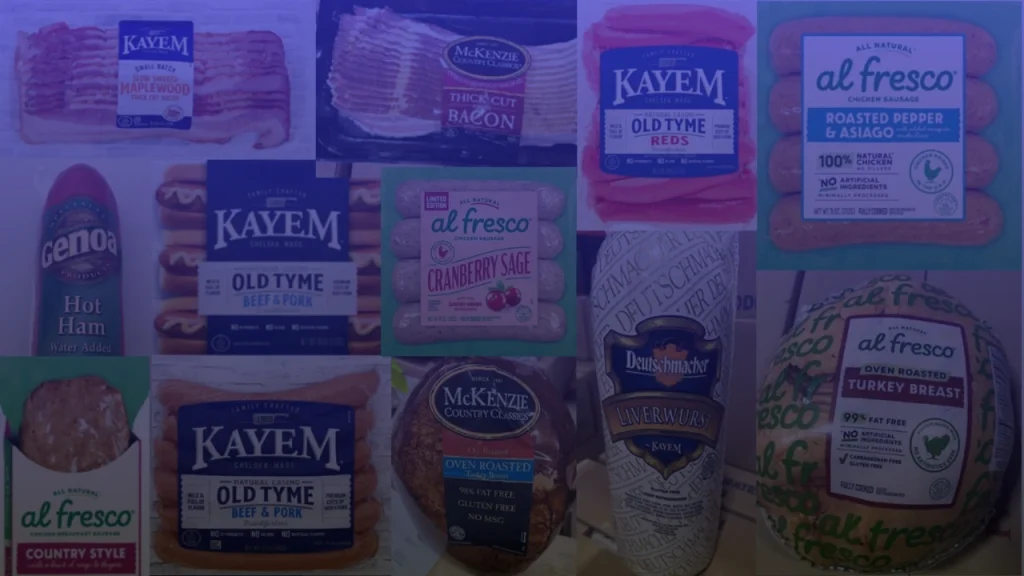
Which Brands and Products Are Included?
The recall covers selected products sold under eight brand names. Because many products were distributed to food-service operators, the recall reaches beyond packaged grocery items.
| Brand | Examples of affected product types reported |
| Kayem | Beef and pork hot dogs, franks, bacon, beef brisket |
| Al Fresco | Fully cooked chicken sausage, breakfast links and other poultry products |
| Triple M | Boneless ham steaks and other ready-to-eat meats |
| McKenzie | Bacon and other meat products, including Country Classics items |
| Deutschmacher | Ready-to-eat meat products |
| Jordan’s | Ball-game-style meat products and other Jordan’s items |
| Essem | Ready-to-eat meat products |
| Winnisimmet St. Butchery | Specialty ready-to-eat meats |
Reported product examples include:
- Kayem Beef & Pork Hot Dogs
- Kayem Old Tyme Beef & Pork Franks
- Kayem Fenway Franks
- Kayem Double Smoked Thick Cut Bacon
- Kayem Slow Smoked Beef Brisket
- Genoa Hot Ham
- Al Fresco Roasted Pepper & Asiago Chicken Sausage
- Triple M Boneless Ham Steaks
- McKenzie Cob Smoked Bacon
These are examples from recall reporting, not a complete list of SKUs or lot codes. The official USDA product list is nine pages long.
What about Al Fresco chicken sausage?
Individual retailers have published lists of specific Al Fresco varieties. Harris Teeter, for example, listed nine Al Fresco products in its October 16, 2026 notice:
| Product | Listed size | UPC as published by Harris Teeter |
| Pepper & Asiago Dinner Sausage | 11 oz. | 3077102630 |
| Garlic Chicken Sausage | 11 oz. | 3077102632 |
| Jalapeño Chicken Sausage | 11 oz. | 3077102635 |
| Sweet Italian Chicken Sausage | 11 oz. | 3077102636 |
| Sweet Apple Chicken | 12 oz. | 3077102637 |
| Andouille Chicken Sausage | 11 oz. | 3077102638 |
| Applewood Smoke Link | 11 oz. | 3077102641 |
| Breakfast Links | 7.5 oz. | 3077102666 |
| Breakfast Sausage Patty | 7 oz. | 3077109676 |
These are the UPCs and sizes shown in Harris Teeter’s notice. Descriptions and sizes can vary by retailer, so use Kayem’s complete affected-SKU list for the final check. Our related report, Al Fresco Chicken Sausage Recall 2026, Full Product List, UPC Codes, Lot Numbers and What Consumers Should Do, has more detail. Do not assume every Al Fresco product is recalled.
How To Check Whether Your Meat Is Recalled
Step 1: Identify the exact product. Read the brand and full product name. A brand name alone is not enough.
Step 2: Find the UPC and lot code. Compare the barcode and any production or lot information to the official USDA product list. Do not rely on package size or product name if lot details differ, and do not assume a product is safe because you bought it recently or its use-by date has not passed.
Step 3: Check the establishment number. Look inside the circular USDA mark for one of these:
- EST. M/P 7839
- EST. P 20935A
- EST. M 9520
Having one of these numbers does not by itself mean a product is recalled. You still need to match the item against the official list.
Step 4: Use the label images. If a package looks different from a description, compare it with the USDA label-image PDF.
Step 5: Ask the right people. For deli counters, restaurants, school cafeterias, hospital kitchens, caterers and other food-service settings, ask whether the establishment received products bearing the affected plant numbers. Contact Kayem (1-800-426-6100, [email protected]) with the brand, description, UPC and lot code if you remain unsure.
Where Were the Recalled Products Sold?
The USDA says products shipped to retail and food-service locations nationwide and to Hong Kong. The recall is not limited to Massachusetts, where Kayem is based. Affected products may have reached grocery stores, distributors, restaurant suppliers, institutional kitchens and other food-service customers in multiple states.
Some retailers publish their own recall instructions and refund policies. For example, our Harris Teeter Recall List 2026, Latest Recalled Foods, UPC Codes, Safety Risks and Refunds tracks retailer-specific notices, including Al Fresco items tied to this incident. A retailer’s list may not cover every item distributed nationally, and a food-service product may reach you through a restaurant, deli counter or caterer rather than as a retail package. Always compare against the official USDA records instead of relying on whether a store has posted a notice.
Why Is Temperature Abuse Dangerous?
Temperature abuse means a perishable food was exposed to temperatures that may compromise its safety. The USDA identifies 40°F to 140°F as the “danger zone,” where bacteria can multiply rapidly, in some cases doubling in as little as 20 minutes under suitable conditions.
For everyday food handling, FSIS advises not leaving perishable food out for more than two hours, or one hour when the temperature is above 90°F. These household rules do not establish how long any recalled product was held at an unsafe temperature. The official notice does not publish the temperature history of each batch.
Ready-to-eat products are of special concern because they are meant to be eaten without further cooking. Some bacteria, notably Listeria monocytogenes, can grow even at refrigeration temperatures, which is why uninterrupted cold storage matters for these foods. Again, no specific pathogen has been confirmed in this recall.
What Symptoms Should You Watch For?
If you ate a product that matches the recall, do not assume you will become ill, but pay attention to how you feel. Common foodborne illness symptoms include:
- Diarrhea
- Stomach pain or cramps
- Nausea
- Vomiting
- Fever
Symptoms and timing depend on the organism involved. Because no pathogen is confirmed here, no single incubation period or symptom pattern can be attributed to this recall. Some infections, including listeriosis, can take days or even weeks to show symptoms.
When to seek medical attention
The CDC advises seeking medical help for severe symptoms, including:
- Bloody diarrhea
- Diarrhea lasting more than three days
- Fever above 102°F
- Vomiting so frequent you cannot keep liquids down
- Signs of dehydration, such as very little urination, dry mouth or dizziness when standing
Higher-risk groups: Pregnant people, adults 65 and older, young children, and people with weakened immune systems can face greater risks from some foodborne infections. Pregnant people who develop fever or flu-like symptoms should contact a healthcare professional promptly.
If you believe the meat made you sick
Get medical care first. Tell the provider what you ate, when, and when symptoms began. Keep the packaging, receipt, lot code and medical records. You can report a problem through the USDA FSIS Electronic Consumer Complaint Monitoring System or call the USDA Meat and Poultry Hotline at 1-888-674-6854. A report does not automatically prove the product caused an illness, but accurate records help public-health agencies assess potential problems.
What Laws Govern the Kayem Foods Recall?
Meat and poultry products are regulated by USDA-FSIS under a separate framework from most other foods, which fall under the FDA. The following laws and regulations apply.
1. Federal Meat Inspection Act (FMIA)
The FMIA, 21 U.S.C. §§ 601–695, requires federal inspection of covered meat products and prohibits the sale of meat that is adulterated or misbranded. Under the Act, meat can be considered adulterated if, among other things, it has been prepared, packed or held under insanitary conditions that may have rendered it injurious to health. The temperature-abuse concern in this recall is a food-safety concern of that kind, and the recall removes potentially unsafe product from commerce.
2. Poultry Products Inspection Act (PPIA)
The PPIA, 21 U.S.C. §§ 451–472, is the poultry counterpart. It applies here because the recall includes chicken sausage and other poultry products, not only pork and beef.
3. FSIS recall regulations: 9 C.F.R. Part 418
Part 418 addresses recalls of meat and poultry products. Establishments must prepare written recall procedures and are expected to notify FSIS promptly when they believe adulterated or misbranded product has entered commerce. FSIS investigates the hazard, evaluates the need for recall action and works with the company on public notification and removal. FSIS also publishes recall guidance (FSIS Directive 8080.1) describing how it handles recalls.
4. HACCP and sanitation rules: 9 C.F.R. Parts 416 and 417
Federally inspected plants must follow Sanitation Standard Operating Procedures (Part 416) and operate under a Hazard Analysis and Critical Control Point (HACCP) system (Part 417). Temperature control during storage is a typical food-safety control point. Failures in these systems are the kind of issue FSIS reviews when a recall involves storage conditions.
5. Listeria control for ready-to-eat products: 9 C.F.R. Part 430
Part 430 sets requirements for controlling Listeria monocytogenes in ready-to-eat products. It is relevant background because this recall involves ready-to-eat items, but the USDA has not said Listeria is the confirmed cause of this recall.
6. Enforcement authority
FSIS does not have mandatory recall authority over meat and poultry. Most recalls are voluntary actions by the company, sometimes at FSIS’s request. If a company refuses, FSIS can detain product and seek seizure and condemnation through the federal courts under the FMIA and PPIA (see 21 U.S.C. §§ 672–674 and the parallel PPIA provisions), and the Acts carry civil and criminal penalties for violations.
7. Why a voluntary recall still matters legally
A voluntary recall does not mean the safety problem is minor, and it is not an automatic admission of legal liability. It is also not a court finding of negligence or a determination that a particular consumer suffered a compensable injury. Those questions are decided separately.
Can Consumers Sue Kayem Foods Over the Recall?
A recall does not automatically create a class action settlement or a cash payment. The official USDA and Kayem notices announce no settlement fund, claim form or compensation program.
Someone who actually became ill or was injured after consuming a recalled product may have claims under the law of their state, which could include:
- Strict product liability for a defective or unreasonably dangerous product
- Negligence in storing or handling the product
- Breach of the implied warranty of merchantability under state commercial codes (UCC § 2-314), since food must be fit for ordinary use
- State consumer-protection statutes, which may allow claims in some circumstances. Kayem is Massachusetts-based, and Massachusetts has its own consumer-protection and warranty laws that an attorney would evaluate
A claimant would generally need to show that:
- The product was part of the recall
- They consumed it or otherwise suffered harm from it
- The product caused or contributed to the harm
- They have evidence of medical expenses, lost income or another recognized loss
- The claim is filed within the applicable statute of limitations, which varies by state and claim type
Consumers who bought a recalled product but were not injured may have different, more limited rights, and whether any economic-loss or refund claim is available depends on the facts and state law. If you were harmed, preserve the packaging and purchase records, get medical care, and speak with a qualified product-liability attorney in your state. This article is not legal advice.
For context on another federal meat-safety action, see A&D Foods Meat Recall, 167,639 Pounds Pulled Nationwide Over Fake USDA Inspection Marks. That recall involved products reportedly made without federal inspection and bearing a false USDA mark, which is a different issue from the possible temperature abuse in the Kayem recall.
What Has Kayem Foods Said?
In its October 16 statement, Kayem said it was voluntarily recalling affected fully cooked meat and poultry products in coordination with the USDA. It said it corrected the warehouse cooling-system problem and is contacting wholesale and retail customers with instructions to identify and dispose of recalled products. These are company statements. They do not independently establish the temperature history of every package.
Kayem Foods Consumer Customer Service
- Telephone: 1-800-426-6100
- Email: [email protected]
- Hours: Monday through Friday, 7:30 a.m. to 4 p.m. Eastern Time
Frequently Asked Questions About the Kayem Foods Recall
Is Kayem Foods recalling hot dogs in October 2026?
Yes. The October 17 USDA notice covers approximately 1,584,361 pounds of ready-to-eat meat and poultry, including selected hot dogs, franks, bacon, ham, brisket and sausages.
Which brands are involved?
Selected products under Kayem, Al Fresco, Triple M, McKenzie, Deutschmacher, Jordan’s, Essem and Winnisimmet St. Butchery. Not every product from each brand is recalled.
Why were the products recalled?
A cooling-system malfunction at a Kayem warehouse caused temperature deviations during storage, raising concern that harmful bacteria could have grown.
Has anyone become sick?
The USDA notice reported no confirmed illnesses. That could change, so check the latest agency notice.
Is this a Listeria recall?
The notice does not identify Listeria or any other pathogen as a confirmed cause. The concern is potential bacterial growth after unsafe storage temperatures.
What establishment numbers should I look for?
EST. M/P 7839, EST. P 20935A and EST. M 9520 inside the USDA mark of inspection. Also match the exact product, UPC and lot code.
Can I still eat the meat if it smells normal?
No. Smell and appearance cannot show whether a product is safe.
Can I cook or freeze it to make it safe?
No. Follow the recall instruction not to eat it.
Can I get a refund?
The USDA advises throwing recalled products away or returning them to the place of purchase. Kayem tells consumers to dispose of them. Policies vary by retailer, so contact the store first.
Is this a class action lawsuit?
No class action settlement or claims process has been announced. The recall is a food-safety action.
Does the recall affect every state?
The USDA says products went to retail and food-service locations nationwide and to Hong Kong. Specific products and quantities vary by location.
Does the recall include school, hospital or restaurant food?
Possibly. Many products went to food-service customers. Ask the school, hospital, restaurant or deli whether it received products with the affected plant numbers.
Where can I get the full product list?
Use the official USDA product list and label PDF in the Sources section below.
Bottom Line
Kayem Foods’ October 2026 recall covers approximately 1.58 million pounds of ready-to-eat meat and poultry that may have been exposed to unsafe temperatures because of a warehouse cooling-system malfunction. The USDA classified it Class I and warned that affected items could still be in consumers’ refrigerators.
Check the exact product, UPC, lot code and establishment number against the official list. Do not eat any product confirmed to be included. Discard it or contact the retailer about a return. If you ate an affected item and become ill, seek medical advice and keep your product and purchase records.
As of October 20, 2026, the USDA notice reports no confirmed illnesses linked to the recalled products, and no class action settlement or consumer compensation program has been announced.
Sources
- USDA Food Safety and Inspection Service, Kayem Foods recall announcement: https://content.govdelivery.com/accounts/USFSIS/bulletins/42f8d37
- USDA-FSIS official recall notice: https://www.fsis.usda.gov/recalls-alerts/kayem-foods-inc-recalls-meat-and-poultry-products-due-possible-temperature-abuse
- USDA, complete product list and UPC codes (Recall 026-2026): https://www.fsis.usda.gov/sites/default/files/media_file/documents/Recall_026-2026-productlist.pdf
- USDA, recalled-product label images: https://www.fsis.usda.gov/sites/default/files/food_label_pdf/2026-10/Recall_026-2026-product-labels.pdf
- Kayem Foods, voluntary recall announcement: https://www.kayemfoods.com/kayem-foods-voluntary-product-recall-october-2026
- USDA, Understanding FSIS Food Recalls: https://www.fsis.usda.gov/food-safety/safe-food-handling-and-preparation/food-safety-basics/understanding-fsis-food-recalls
- USDA, How Temperatures Affect Food: https://www.fsis.usda.gov/food-safety/safe-food-handling-and-preparation/food-safety-basics/how-temperatures-affect-food
- USDA FSIS, Recall Process: https://www.fsis.usda.gov/inspection/compliance-guidance/recall-process
- USDA FSIS, Recalls and Public Health Alerts: https://www.fsis.usda.gov/recalls
- USDA FSIS, Electronic Consumer Complaint Monitoring System: https://foodcomplaint.fsis.usda.gov/eCCF/
- Federal Meat Inspection Act, 21 U.S.C. Chapter 12: https://uscode.house.gov/view.xhtml?path=/prelim@title21/chapter12&edition=prelim
- Poultry Products Inspection Act, 21 U.S.C. Chapter 10: https://uscode.house.gov/view.xhtml?path=/prelim@title21/chapter10&edition=prelim
- CDC, Food Poisoning Symptoms: https://www.cdc.gov/food-safety/signs-symptoms/
- Harris Teeter, Al Fresco recall notice (October 16, 2026)
This article is for informational purposes only and is not medical or legal advice. Recall lists and instructions can change. Verify product details against the latest USDA notice, consult a healthcare professional if you are concerned about a possible illness, and consult a licensed attorney about any legal claim.
About the Author
Israr Ahmad is a legal content researcher with 4+ years of experience covering class action settlements and consumer rights cases. He has researched and published coverage of 2,500+ settlements using verified court records, settlement administrator filings, and government sources. Learn more about Israr.