
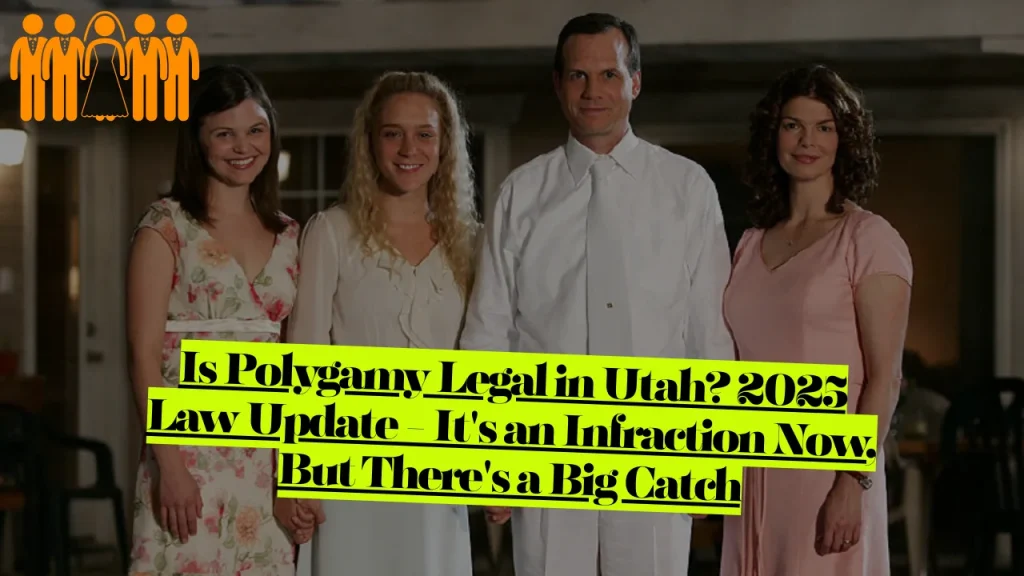
Is Polygamy Legal in Utah? 2025 Law Update – It’s an Infraction Now, But There’s a Big Catch
Polygamy is not legal in Utah, but as of 2020, it’s only an infraction—like a traffic ticket—punishable by a fine up to $750 for consenting adults. However, this changes to a third-degree felony if combined with fraud, abuse, child marriage, or other crimes. The law was amended in 2025 to strengthen protections against underage polygamous marriages after lawsuits exposed ongoing abuse in polygamous communities.
What Utah Law Says About Polygamy
Utah Code § 76-7-101 defines bigamy as when someone purports to marry or cohabits with another person while knowing they or the other person already has a spouse. The 2020 law (Senate Bill 102) decriminalized plural marriage among consenting adults, shifting it from a felony to an infraction.
An infraction in Utah is a civil offense with no jail time. Maximum penalty: $750 fine, community service, or both.
When Polygamy Becomes a Felony
Polygamy escalates to a third-degree felony (up to 5 years in prison) when combined with:
- Fraud or human trafficking
- Child abuse or sexual abuse
- Domestic violence or assault
- Immigration fraud
- Welfare fraud
- Witness tampering
- Kidnapping or child abduction
- Forcible sexual abuse
- Rape or sodomy
- Incest
- Criminal nonsupport
- Unlawful conduct with a minor
- Child bigamy (marriage involving anyone under 18)
Child Bigamy: A Second-Degree Felony
Utah Code § 76-7-101.5 makes child bigamy a second-degree felony when someone 18 or older:
- Knowingly has a spouse (or knows the minor has a spouse)
- Purports to marry a person under 18
- Cohabitates with that minor
This carries up to 15 years in prison.

The 2025 Legislative Update
Senate Bill 76, passed in March 2025 and awaiting the governor’s signature, prohibits juvenile courts from authorizing marriages where the age difference exceeds four years. This directly targets polygamous communities where underage girls are often married to much older men.
The bill came after lawsuits exposed systematic abuse. In January 2025, Kathrine Nichols sued the Kingston polygamous group, alleging she was forced at 16 to choose between three uncles to marry. She married Daniel Charles Kingston (her uncle and the leader’s son) in 2021, becoming his third wife through multiple ceremonies in multiple states.
Youth marriages in Utah jumped from 10 in 2019 to 42 in 2022, prompting lawmakers to tighten restrictions.
Historical Context: Why Utah Decriminalized Polygamy
Utah prosecuted polygamy as a felony for decades, but “vigorous enforcement during the mid-twentieth century did not deter the practice,” according to State Senator Deidre Henderson, who sponsored the 2020 decriminalization bill.
Henderson argued that felony prosecutions drove polygamous families “underground into a shadow society where the vulnerable make easy prey.” The goal was shifting focus from prosecuting consenting adults to protecting victims of abuse.
An estimated 30,000 Utahans currently live in polygamous communities, mostly in rural areas.
Utah Constitution Still Prohibits Plural Marriage
Article III of the Utah Constitution states: “perfect toleration of religious sentiment is guaranteed…but polygamous or plural marriages are forever prohibited.”
Utah cannot issue multiple marriage licenses to one person. The 2020 law didn’t legalize polygamy—it just removed criminal penalties for the lifestyle when practiced by consenting adults without other crimes.
The Sister Wives Case and Legal Challenges
In 2013, federal Judge Clark Waddoups ruled that Utah’s cohabitation clause violated the First Amendment, striking down parts of the bigamy law. The case involved Kody Brown and his four wives from the TLC show “Sister Wives.”
The ruling decriminalized cohabitation but kept prohibitions on obtaining multiple marriage licenses. The 10th Circuit Court of Appeals later dismissed the case in 2016, finding the Browns faced no credible threat of prosecution.
By 2020, Utah’s legislature formalized this approach with Senate Bill 102.
Current Enforcement: Who Gets Prosecuted?
Utah’s Attorney General’s office follows a longstanding practice: don’t prosecute law-abiding polygamists unless other crimes are involved.
Recent prosecutions focus on:
- The Kingston polygamous group (multiple lawsuits for sex trafficking, sexual abuse, child marriage)
- Cases involving underage marriages
- Financial fraud schemes
- Welfare fraud involving polygamous families
Law enforcement doesn’t target consenting adults who simply live in plural relationships.
Defenses Against Polygamy Charges
Utah law provides defenses if:
Unaware: You didn’t know the other person was married Fearful: You left the relationship due to reasonable fear of coercion or bodily harm Former Minor: You entered the relationship as a minor and later left it Protecting Others: Law enforcement discovered the relationship because you were protecting someone else’s safety
How Utah Compares to Other States
All 50 states prohibit polygamy, but enforcement varies:
Utah: Infraction for consenting adults ($750 max fine); felony if combined with other crimes
Most States: Felony with prison sentences ranging from 2-5 years
Federal Law: The Edmunds Act (1882) made polygamy a federal crime, but it was later repealed. Federal prosecution still occurs in cases involving fraud or trafficking.
Utah’s approach is unique—no other state treats simple polygamy among adults as merely an infraction.
Related Article: Preston Damsky Lawsuit, Judge Orders UF to Reinstate Expelled Law Student by Dec. 1 – First Amendment Victory Stuns Campus
The Kingston Group Lawsuits
Multiple lawsuits target the Kingston polygamous group (also called “the Order”), alleging systematic abuse:
2022: 10 former members sued alleging sexual abuse and exploitation
2025: Kathrine Nichols sued after being forced into marriage at 16; her marriage was annulled in 2023
These cases expose how polygamous communities can facilitate abuse, trafficking, and exploitation—exactly what Utah’s 2020 and 2025 laws aim to combat.
What “Purports to Marry” Means
Utah law doesn’t require a legal marriage license for bigamy charges. “Purports to marry” includes:
- Religious or spiritual ceremonies
- Claiming to be married in public
- Presenting yourself as married (even without a ceremony)
The 2013 Waddoups ruling narrowed this to exclude casual cohabitation, focusing on cases where people actually hold themselves out as spouses.
Penalties at a Glance
Infraction (Consenting Adults):
- Maximum $750 fine
- Community service
- No jail time
- No criminal record
Third-Degree Felony (With Other Crimes):
- Up to 5 years in prison
- Criminal record
- Possible fines
Second-Degree Felony (Child Bigamy):
- Up to 15 years in prison
- Criminal record
- Sex offender registration (if sexual abuse involved)
The Mormon Church’s Position
The Church of Jesus Christ of Latter-day Saints (mainstream Mormon church) abandoned polygamy in 1890 and strictly prohibits it today. The church excommunicates practicing polygamists.
Polygamist groups like the Fundamentalist Church of Jesus Christ of Latter-day Saints (FLDS) and the Kingston group are offshoots, not affiliated with the mainstream LDS church.
The LDS church issued a statement after the 2013 Waddoups ruling: “Polygamy is a legacy of the early teachings of the Mormon church but has no place in modern Mormonism.”
Why Utah’s Law Matters
Utah’s approach represents a shift in how states might handle polygamy:
Traditional Approach: Criminalize all polygamy as felony, driving it underground
Utah’s Approach: Decriminalize among consenting adults, focus resources on prosecuting actual harm (abuse, trafficking, child marriage)
Critics argue this gives cover to abusers. Supporters say it empowers victims to come forward without fear their entire community faces prosecution.
Implications for Other Family Law Issues
Utah’s polygamy law connects to broader family law questions about marriage law and religious freedom claims.
Courts continue balancing religious liberty with protecting vulnerable individuals, particularly children.
What Happens If You’re Charged
If facing polygamy charges in Utah:
- Determine the Charge Level: Infraction vs. felony depends on whether other crimes are alleged
- Gather Evidence: Demonstrate you’re a consenting adult (if infraction) or prove defenses (fear, lack of knowledge)
- Legal Representation: Hire a Utah criminal defense attorney experienced in these cases
- Consider Plea Options: Infractions can often be resolved with fines; felonies may require negotiation
Frequently Asked Questions
Is polygamy completely legal in Utah now?
No. Polygamy remains illegal, but it’s only an infraction (like a speeding ticket) for consenting adults. It becomes a felony if combined with abuse, fraud, child marriage, or other crimes.
Can you get multiple marriage licenses in Utah?
No. Utah will only issue one marriage license per person at a time. Having multiple state-recognized marriages is still illegal.
What’s the difference between polygamy and bigamy in Utah law?
Utah law uses “bigamy” as the legal term. Polygamy generally means multiple spouses; bigamy specifically means marrying or cohabiting while knowing you or the other person is already married. They’re treated the same under Utah Code § 76-7-101.
Will I go to jail for polygamy in Utah?
Not if you’re a consenting adult with no other crimes involved—you’ll face a fine up to $750. You will go to jail if polygamy is combined with abuse, child marriage, fraud, or other felonies.
How does Utah define “cohabitation”?
Living together as partners, sharing a home and domestic life, presenting yourselves as spouses. The 2013 federal court ruling clarified this doesn’t include casual roommates—it requires holding yourselves out as married.
Can I practice polygamy if it’s my religion?
Utah’s law applies regardless of religious belief. While the First Amendment protects religious practice, it doesn’t protect illegal conduct. However, consenting adults face only an infraction, not felony prosecution.
What about the 2025 law changes?
Senate Bill 76 (2025) strengthens protections against underage polygamous marriages by prohibiting juvenile court authorization of marriages where parties are more than four years apart in age. This targets forced child marriages in polygamous communities.
Are there still polygamous communities in Utah?
Yes, an estimated 30,000 people live in polygamous relationships in Utah, mostly in rural areas. Major groups include the FLDS and the Kingston group, though many practice independently.
Can polygamy charges be dropped?
Yes, especially if you can prove defenses like fear of coercion, lack of knowledge, or that you were protecting someone’s safety. Infractions might also be dismissed with payment of fines and completion of community service.
What’s the statute of limitations for polygamy charges?
For infractions: typically 1 year. For felonies: 4 years for third-degree felonies in Utah. However, if child abuse is involved, different statutes of limitations may apply.
Related Articles:
- Marriage Law Changes: When Did Gay Marriage Become Legal
- Kim Davis Supreme Court Ruling: Religious Liberty vs. Marriage Rights
- Family Law
Disclaimer: This article provides information about Utah’s polygamy laws and does not constitute legal advice. If you’re facing polygamy-related charges or have questions about Utah family law, consult with a qualified Utah-licensed attorney.
About the Author

Sarah Klein, JD, is a former family law attorney with over a decade of courtroom and mediation experience. She has represented clients in divorce, custody cases, adoption, Alimony, and domestic violence cases across multiple U.S. jurisdictions.
At All About Lawyer, Sarah now uses her deep legal background to create easy-to-understand guides that help families navigate the legal system with clarity and confidence.
Every article is based on her real-world legal experience and reviewed to reflect current laws.
Read more about Sarah