
Is Abortion Legal in Virginia? Current Law, the November 2026 Ballot Amendment, and What’s Actually Disputed
Yes, abortion is currently legal in Virginia, and has been through every point since Roe v. Wade was overturned in 2022. Virginia is the only state in the South without a post-Roe abortion ban.
What’s changing is a separate question. This November, Virginia voters decide whether to add a right to reproductive freedom directly into the state constitution — and that vote has produced genuine legal disputes, multiple active lawsuits, and a fair amount of confusion about what would and wouldn’t change if it passes. Here’s the current law, the amendment itself, and where the real disagreements are.
Quick Facts
| Is abortion legal in Virginia right now? | Yes |
| Legal Basis for Current Access | Virginia Reproductive Health Protection Act (2020), Va. Code Ann. §§ 18.2-72–18.2-76 |
| Gestational Limit (Elective) | Through the end of the second trimester — generally 26 weeks, 6 days from last menstrual period |
| Third-Trimester Abortion | Legal only if three physicians certify continuing the pregnancy would likely cause death or substantially and irremediably impair physical or mental health |
| Mandatory Waiting Period / Ultrasound | None — repealed in 2020 |
| Minors | Parental or guardian consent required, with judicial bypass option |
| Medication Abortion by Telehealth | Currently available, pending ongoing federal litigation |
| What’s on the November 2026 Ballot | A constitutional amendment adding a “fundamental right to reproductive freedom” (Section 11-A) |
| Amendment Status | Passed the General Assembly in 2025 and again in January 2026; goes to voters November 2026 |
| Active Legal Challenges to the Amendment | Two lawsuits as of this writing — one over ballot procedure, one over ballot language |
| Last Updated | September 15, 2026 |
What Virginia Law Actually Allows Right Now
Under the Reproductive Health Protection Act, which the General Assembly passed in 2020, Virginia repealed a set of restrictions that used to apply to abortion — a mandatory 24-hour waiting period, required counseling, and a mandatory ultrasound. None of those apply today.
The gestational framework itself is a trimester system. Elective abortion is legal through the first and second trimesters — in practical terms, up to roughly 26 weeks and 6 days of pregnancy, counted from the first day of the last menstrual period. Past that point, into the third trimester, the law tightens sharply: a third-trimester abortion is legal only if three separate physicians certify, in writing, that continuing the pregnancy is likely to result in death or to substantially and irremediably impair the patient’s physical or mental health.
That’s the legal ceiling. Actual clinical availability is narrower — most Virginia providers stop performing procedures well before the legal limit, commonly around 22 weeks, because later procedures require more specialized care that fewer clinics offer.
Minors and Parental Consent
Virginia currently requires parental or guardian consent before a minor can obtain an abortion. A minor who doesn’t want to or can’t involve a parent can petition a court for a judicial bypass — asking a judge to authorize the abortion without parental involvement. This is existing law today, independent of anything on the November ballot.
Medication Abortion by Telehealth
Medication abortion — the mifepristone-misoprostol combination — is currently available in Virginia through telehealth, with the patient required to be physically located in the state during the consultation. This method is generally used for pregnancies up to about 10–11 weeks.
This access isn’t fully settled at the federal level. A case challenging FDA rules on mifepristone telehealth access — Louisiana v. FDA — is working through the federal courts. In May 2026, the U.S. Supreme Court declined to reimpose restrictions while that litigation continues, meaning telehealth and mail access remain available for now. That litigation hasn’t concluded, so this is a status that could still change depending on how the case proceeds — it’s not a permanent guarantee either direction.
Related article: Is Weed Legal in Wyoming? Full 2026 Breakdown, Including the Rule Most Guides Miss
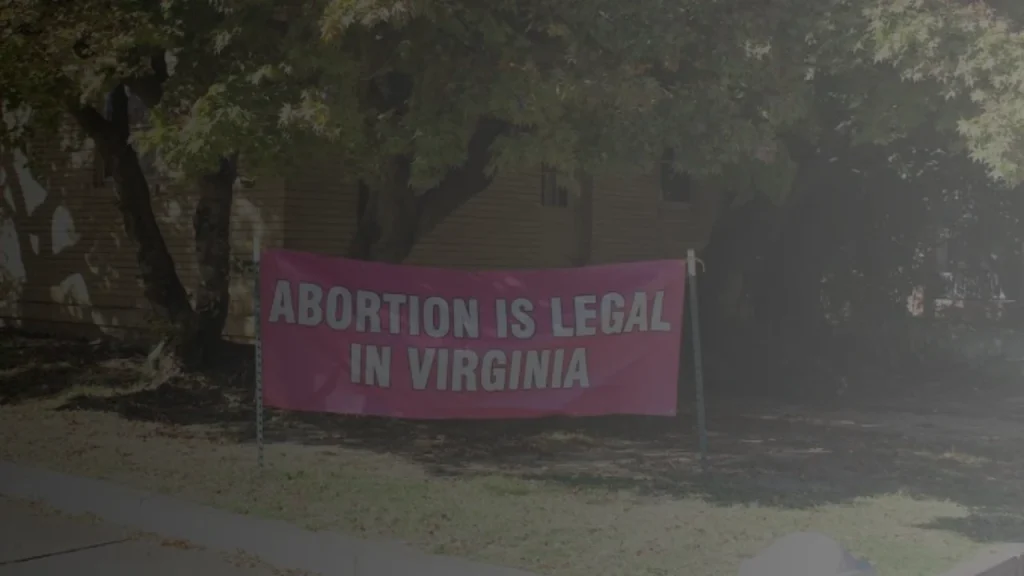
What the November 2026 Ballot Amendment Would Actually Do
Virginia requires a constitutional amendment to pass the General Assembly in two separate sessions, with an election in between, before it goes to voters. This amendment cleared the first vote in 2025 and the second in January 2026, which puts it on the November 2026 general election ballot as a yes/no question for voters.
The amendment would add a new section to the Virginia Constitution stating that every individual has a fundamental right to reproductive freedom — defined to include decisions about prenatal care, childbirth, postpartum care, contraception, abortion care, miscarriage management, and fertility care. It would also state that the government cannot deny, burden, or infringe on that right except that the state may still regulate abortion in the third trimester, so long as any regulation doesn’t apply when a physician determines the abortion is necessary to protect the patient’s life or physical or mental health.
In practice, supporters describe the amendment as writing the state’s existing abortion access into the constitution so that it can’t be undone by a future legislature or governor without another constitutional amendment process — not as a change to what’s currently legal.
Where the Real Disputes Are
This is the part general coverage tends to skip past, and it’s where most of the actual confusion sits.
Does the amendment eliminate the parental consent law? This is genuinely contested, not settled. The amendment’s text doesn’t mention parental consent one way or the other. Amendment supporters — including its legislative sponsors and Virginia’s attorney general — say it doesn’t override existing parental consent law, pointing to the amendment’s language being modeled on how the state constitution already treats individual rights, and to U.S. Supreme Court precedent that parental consent laws (paired with a judicial bypass option) are constitutionally permitted even where a broader right to abortion exists. Opponents — including the Family Foundation and Republican lawmakers who tried unsuccessfully to add explicit parental consent language to the amendment during the legislative process — argue that because the amendment grants the right to “every individual” without an age qualifier, it could be interpreted by courts to invalidate the parental consent statute. Virginia’s own legislative counsel said during committee debate that the question would likely end up being decided in court. That means this is a real open legal question, not a settled one on either side, and it’s one of at least two active lawsuits challenging the amendment.
Does it reduce the three-physician requirement for third-trimester abortions? The amendment’s third-trimester carve-out doesn’t specify how many physicians must certify a case — supporters have said that’s intentional, citing difficulty finding three available physicians in some parts of the state during urgent, time-sensitive situations. Opponents argue this effectively lowers a safety threshold that currently exists in state code. Which physician-count standard would actually govern after the amendment passed is not fully resolved in the amendment’s text itself.
Does it allow “abortion up until birth”? This claim has been made by some amendment opponents in legislative debate. It’s disputed by medical experts and by the amendment’s supporters, who point out that the amendment explicitly allows the state to continue regulating abortion in the third trimester, and that separate Virginia and federal law already make infanticide illegal — a distinct legal question from abortion regulation. Abortions after 21 weeks are rare nationally, accounting for roughly 1% of cases, and typically involve severe fetal anomalies or life-threatening complications rather than elective late-term decisions.
Would it affect Virginia’s statutory rape laws? One of the pending lawsuits against the amendment — filed by the Founding Freedoms Law Center on behalf of two healthcare nonprofits and a local elected official — argues that because the amendment grants “reproductive freedom” to “every individual” without an age limit, it could be read by courts to undermine age-of-consent laws. This is a contested legal theory raised by amendment opponents in active litigation; it has not been adjudicated or endorsed by any court, and amendment supporters strongly dispute it.
The Lawsuits Challenging the Amendment Itself
Separate from the abortion policy debate, there are at least two active legal challenges to whether the amendment can appear on the ballot at all:
- A procedural challenge filed in Bedford County Circuit Court by Liberty Counsel on behalf of a local elected official, arguing the General Assembly failed to properly notify circuit court clerks statewide before the second legislative vote, as state law required at the time. The Virginia legislature passed a bill in February 2026 retroactively removing that specific notice requirement, which is now part of the dispute.
- A ballot-language challenge filed in Tazewell County Circuit Court by the Founding Freedoms Law Center, arguing the official ballot question is misleading because it doesn’t fully explain the amendment’s legal consequences, including the parental consent and statutory rape questions above.
Neither case has a final ruling as of this writing. Both sides expect at least one of these to reach the Virginia Supreme Court before the November election, particularly since that court separately ruled on a related procedural challenge to a different 2026 ballot amendment (on redistricting) earlier this year — a decision both sides are watching as a signal for how the abortion amendment challenges might be resolved.
What Happens If the Amendment Passes — or Fails
If voters approve the amendment in November 2026, Virginia’s current abortion access — the trimester framework, third-trimester exception, absence of mandatory waiting periods — becomes constitutionally protected rather than resting on ordinary statute, which a future legislature could otherwise change with a simple majority vote. The unresolved legal questions above (parental consent, physician-count standard) would likely still need to be litigated or clarified afterward.
If the amendment fails, current Virginia law doesn’t change. Abortion remains legal under the existing statutory framework described above; it simply wouldn’t have constitutional-level protection, meaning a future General Assembly and governor could change the underlying law through ordinary legislation.
Frequently Asked Questions
Is abortion currently banned or restricted in Virginia?
No. Abortion is legal in Virginia through the second trimester (about 26 weeks, 6 days), with a narrower third-trimester allowance requiring certification from three physicians. Virginia has no post-Roe ban.
Does the November 2026 amendment make abortion legal in Virginia?
No — abortion is already legal. The amendment would add constitutional protection for that existing access, rather than change what’s currently allowed.
Will the amendment eliminate parental consent requirements for minors?
This is disputed and not legally settled. The amendment doesn’t address parental consent directly; supporters say it doesn’t override the existing law, opponents argue it could be interpreted by courts to invalidate it, and this question is part of active litigation.
Can I still get a medication abortion by mail in Virginia?
Yes, currently, pending ongoing federal litigation over FDA telehealth rules for mifepristone. Access has remained in place through 2026, but the underlying federal court case isn’t fully resolved.
Is there a waiting period or mandatory ultrasound before an abortion in Virginia?
No. Virginia repealed both requirements in 2020.
What if the amendment doesn’t make it onto the ballot because of the pending lawsuits?
If a court invalidates the amendment before November, current Virginia abortion law stays exactly as it is today — the amendment challenges concern the ballot process itself, not the underlying legality of abortion in the state.
Where can I read the exact text of the amendment?
The amendment adds proposed Section 11-A to Article I of the Virginia Constitution; the full text is available through the Virginia General Assembly’s legislative information system.
Sources Used in This Article
- Virginia Code Ann. §§ 18.2-72–18.2-76 (Reproductive Health Protection Act, 2020)
- Center for Reproductive Rights — Virginia abortion law summary
- Ballotpedia — “Virginia Right to Reproductive Freedom Amendment (2026)”
- Virginia Mercury — “Virginia moves to protect reproductive and voting rights, but the fight is far from over,” Feb. 2025
- WTOP — “New court challenge targets Va. abortion amendment ballot language,” May 2026
- The Daily Signal — reporting on the Founding Freedoms Law Center lawsuit, July 2026
- Guttmacher Institute — mifepristone telehealth litigation status, May 2026
This article is for informational purposes only and does not constitute legal advice. Litigation over the November 2026 amendment is ongoing and outcomes could change before the election. For advice about a specific situation, consult a qualified attorney licensed in Virginia.
Last Updated: September 15, 2026
About the Author
Israr Ahmad is a legal content researcher with 4+ years of experience covering class action settlements and consumer rights cases. He has researched and published coverage of 2,500+ settlements using verified court records, settlement administrator filings, and government sources. Learn more about Israr.