
US Attorney’s Office in Western Washington Will Stop Defending Many ICE Habeas Cases, What Singh v Blanche and the Detention Laws Mean
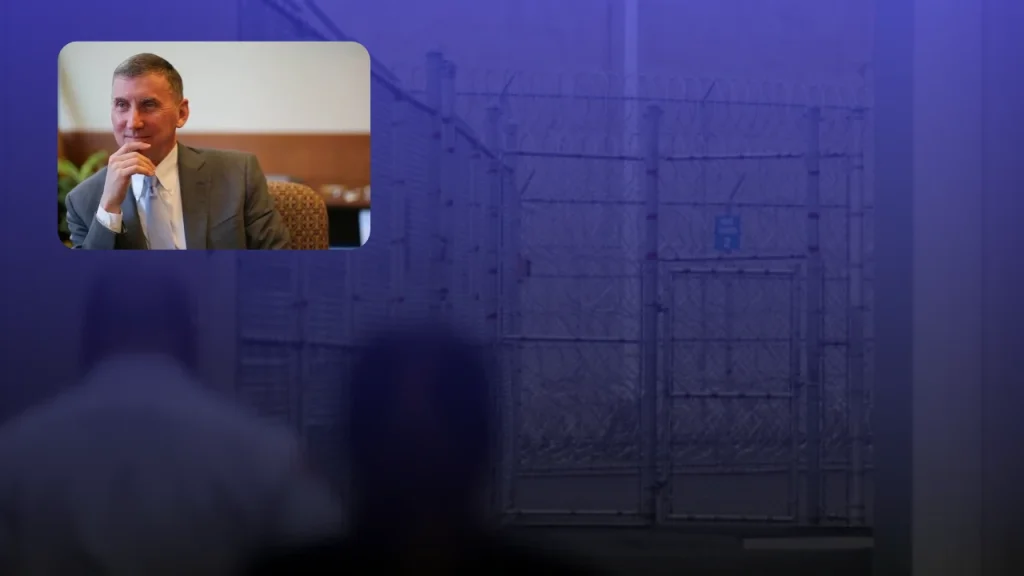
Federal prosecutors in Western Washington say they no longer have enough lawyers to answer every immigration detention lawsuit filed against U.S. Immigration and Customs Enforcement (ICE). In an October 26, 2026 letter to the court, Acting U.S. Attorney Charles Neil Floyd said his office will stop appearing in many, though not all, habeas corpus petitions filed by people held in ICE custody.
The letter became public after U.S. District Judge Tiffany M. Cartwright granted the habeas petition of Baljit Singh on November 7, 2026. Singh is an asylum seeker from India who was held at the Northwest ICE Processing Center in Tacoma. No government lawyer had appeared in his case, and the judge ordered his release within one day.
Families searching this story usually want to know one thing: if the government does not defend an ICE detention case, does the detainee get released? Not automatically. A judge can rule on a habeas petition without a government response, but the judge still has to find that the detention is unlawful. This is also a Western District of Washington policy, not a nationwide Department of Justice announcement.
Quick Facts: U.S. Attorney’s Office Habeas Policy in Western Washington
| Issue | What the record shows |
| Government office | U.S. Attorney’s Office, Western District of Washington |
| Acting U.S. Attorney | Charles Neil Floyd |
| Letter | October 26, 2026, addressed to Chief U.S. District Judge David Estudillo |
| Core of the policy | If no notice of appearance is filed within seven court days of the court’s standard scheduling order, the court may assume the office will not respond |
| Public example | Singh v. Blanche, No. 2:26-cv-04143-TMC (W.D. Wash.) |
| Judge | U.S. District Judge Tiffany M. Cartwright |
| Release order | November 7, 2026 (release within one day) |
| Detention site | Northwest ICE Processing Center, Tacoma, Washington |
| Habeas statute | 28 U.S.C. § 2241 |
| Detention statutes in dispute | 8 U.S.C. § 1225(b)(2)(A) and 8 U.S.C. § 1226(a) |
| Nationwide effect | None. Not a release rule for all ICE detainees |
Key Dates in the Western District of Washington ICE Habeas Timeline
| Date | Event |
| July 2025 | ICE adopts the position that people who entered without inspection are held under 8 U.S.C. § 1225(b)(2)(A) |
| September 5, 2025 | Board of Immigration Appeals decides Matter of Yajure Hurtado, 29 I&N Dec. 216 |
| July 30, 2026 | Ninth Circuit decides Rodriguez Vazquez v. Bostock; Seventh Circuit decides Cirrus Rojas v. Olson |
| September 2026 | ICE detains Baljit Singh in Washington State |
| October 1, 2026 | Supreme Court grants certiorari in Rhoney v. Barbosa da Cunha, No. 26-104 |
| October 26, 2026 | Acting U.S. Attorney Charles Neil Floyd sends the letter to Chief Judge David Estudillo |
| November 7, 2026 | Judge Tiffany M. Cartwright grants Singh’s petition in Singh v. Blanche |
| Early 2027 (reported) | Expected Supreme Court argument in Rhoney v. Barbosa da Cunha |
What Did Acting U.S. Attorney Charles Neil Floyd Tell the Court?
The October 26 letter told Chief Judge Estudillo that the office “does not have the available resources, at this juncture” to enter an appearance in every one of the dozens of § 2241 immigration petitions filed each week. Going forward, the letter says, there will be many habeas cases where the office will no longer take responsibility for defending the government.
The letter listed the work each case creates, including:
- Reviewing the petition and the facts of the detention.
- Filing responses, briefs and returns.
- Attending hearings and answering motions.
- Filing status reports, even after the person is released or gets a bond hearing.
- Opposing attorney-fee motions under the Equal Access to Justice Act.
- Responding to show-cause orders over what the letter calls technical violations of scheduling orders.
Floyd also wrote that many petitions are copies of earlier filings and that the volume is hurting the office’s ability to handle other civil cases against the federal government.
What the Letter Does Not Say
Some short news summaries leave out the limits. The office did not say it is abandoning all immigration habeas cases. According to the letter, the office will keep reviewing petitions and scheduling orders, forward those orders to ICE, and decide which cases get an appearance and a response. It also reserves the right to enter a case at any time.
For cases it skips, the office says it will not relay communications between the court and ICE. The court can send release orders directly to the Northwest ICE Processing Center.
The practical rule is simple. The seven-court-day clock starts when the court issues its standard scheduling order, not when the petition is filed. If no notice of appearance appears on the docket by then, the judge may decide the case on the petitioner’s papers alone.
What Happened in Singh v. Blanche
Baljit Singh, an asylum seeker from India, had been released under supervision while his asylum claim was pending. According to the court order and press reports of it, ICE detained him in September 2026 after he and friends visiting Peace Arch Historical State Park reached the exit toward the Canadian border. He filed his habeas petition in late October 2026.
Because no government lawyer appeared within the seven court days, Judge Cartwright treated the petition as “intentionally unopposed.” She still wrote a merits order. She found that Singh had stated a plausible claim for relief under the Due Process Clause of the Fifth Amendment, granted the writ, and ordered him released within one day. Reporting on the order says the government’s answer would not have been due until November 12, and that the judge wrote she knew of no precedent for the Department of Justice declining to appear for a federal agency instead of filing a statement of non-opposition.
This is the part worth remembering for SEO searchers and families alike: Singh won because a judge found a plausible legal claim on the record, not because the government was silent.
Why So Many Habeas Petitions Are Filed Against ICE
Most of this volume traces back to one legal change.
For decades, people who entered the United States without inspection and were later arrested inside the country were generally held under 8 U.S.C. § 1226(a). That section lets the government detain a person during removal proceedings but also allows release on bond or conditional parole. An immigration judge can hold a bond hearing.
In July 2025, ICE changed its position. It began treating many of these people as “applicants for admission” subject to 8 U.S.C. § 1225(b)(2)(A), which requires detention and, as the Supreme Court explained in Jennings v. Rodriguez, 583 U.S. 281 (2018), does not provide a bond hearing. The Board of Immigration Appeals endorsed that reading on September 5, 2025, in Matter of Yajure Hurtado, 29 I&N Dec. 216 (BIA 2025).
People who used to qualify for bond hearings now began filing habeas petitions in federal court. That is the surge the U.S. Attorney’s Office is describing. The habeasdockets.org tracker counted more than 1,400 active habeas cases in the Western District of Washington in October 2026, according to KING 5.
How a Habeas Corpus Petition Works Against ICE Detention
A habeas corpus petition asks a federal judge to decide whether the government has lawful authority to hold someone. Immigration detainees file under 28 U.S.C. § 2241, which lets a federal district court grant the writ to a person held in violation of the Constitution, federal law or a treaty.
Key rules in these cases:
- 28 U.S.C. § 2243 directs the court to issue the writ or an order to show cause, requires a return within three days (up to twenty days for good cause), and calls for a prompt hearing.
- The immediate-custodian rule from Rumsfeld v. Padilla, 542 U.S. 426 (2004), usually makes the warden of the detention facility the proper respondent and puts the case in the district where the person is held. For Tacoma, that is the Western District of Washington.
- Federal Rule of Civil Procedure 81(a)(4) applies the civil rules to habeas cases to the extent they fit.
- Federal Rule of Civil Procedure 55(d) is why silence is not an automatic win. A court can enter a default judgment against the United States only if the claimant proves a right to relief with evidence that satisfies the court.
- 28 U.S.C. § 547 makes U.S. Attorneys responsible for prosecuting and defending civil actions for the government, which is why a decision not to appear is unusual.
Habeas decides detention only. It does not decide the asylum claim or the removal case, and immigration proceedings usually continue after release.
Which Detention Law Applies? 8 U.S.C. §§ 1225, 1226 and 1231 Explained
Whether someone can get relief depends on which statute holds them.
| Statute | Who it covers | Bond hearing? |
| 8 U.S.C. § 1225(b)(1) | People subject to expedited removal at or near entry | No |
| 8 U.S.C. § 1225(b)(2)(A) | “Seeking admission” applicants, as the government reads it, people who entered without inspection | No, under the government’s view |
| 8 U.S.C. § 1226(a) | Most people arrested in the interior during removal proceedings | Yes, an immigration judge can set bond |
| 8 U.S.C. § 1226(c) | People with certain criminal or security grounds, including offenses added by the Laken Riley Act in 2025 | No |
| 8 U.S.C. § 1231(a) | People with a final order of removal | Limited, see Zadvydas v. Davis, 533 U.S. 678 (2001) |
Constitutional limits also apply. In Zadvydas, the Supreme Court read the post-removal-order statute to avoid indefinite detention, and in Demore v. Kim, 538 U.S. 510 (2003), it upheld brief mandatory detention under § 1226(c). Many habeas petitions rely on the Fifth Amendment’s Due Process Clause and the balancing test in Mathews v. Eldridge, 424 U.S. 319 (1976). The government often responds with jurisdiction arguments under 8 U.S.C. § 1252(b)(9) and (g) and § 1226(e).
Ninth Circuit Ruling in Rodriguez Vazquez v. Bostock
The most important appellate decision for Tacoma detainees is Rodriguez Vazquez v. Bostock, No. 25-6842 (9th Cir. July 30, 2026). The case began as a habeas petition and class complaint, and the district court certified a “Bond Denial Class” of people held at the Northwest ICE Processing Center under the government’s § 1225(b)(2)(A) policy.
In a 2-1 decision written by Judge Bress, with Judge Bea dissenting, the Ninth Circuit affirmed. It held that § 1225(b)(2)(A) covers only people seeking entry at the border, and that people arrested in the interior who entered without admission fall under § 1226(a). The decision does not guarantee release. It does not disturb detention under other mandatory provisions such as expedited removal or the criminal-ground provisions. The government has asked the Supreme Court to review the Ninth Circuit’s decision (No. 26-568).
That ruling is why bond-eligibility petitions from Tacoma are often strong, and why a petition on that issue may succeed even without government opposition.
The Circuit Split and the Supreme Court Case: Rhoney v. Barbosa da Cunha
The Ninth Circuit is not alone. The Second Circuit reached the same result in the case now before the Supreme Court, and the Seventh Circuit ruled for the detainee in Cirrus Rojas v. Olson, No. 25-3127 (7th Cir. July 30, 2026), over a dissent by Judge Sykes. The Fifth and Eighth Circuits have sided with the government’s reading.
On October 1, 2026, the Supreme Court granted certiorari in Rhoney v. Barbosa da Cunha, No. 26-104. The question is whether § 1225(b)(2)(A) requires detention, without bond, of people present in the United States without admission. Argument is reported to be expected in early 2027, with a decision by June.
This matters for the Washington policy. If the Court sides with the government, bond hearings could end for many people now covered by the Ninth Circuit’s ruling. If it sides with the detainees, the volume of habeas petitions should fall.
How the Western District of Washington Approach Differs From Colorado
Western Washington is not the only district where government silence now decides habeas cases. Colorado uses a formal October 8, 2026 agreement between the U.S. Attorney’s Office and the court clerk, under which a petitioner is to be released within 24 hours if the government does not answer within seven days, as reported by Immigration Analytics. The Washington approach is a one-sided letter, not an agreement with the court, and release is not automatic. A judge decides each petition, which is why Judge Cartwright wrote a merits order for Singh.
Colorado also shows the weak point: the handoff between the court and ICE. Reporting from Denver describes release orders that took days to reach ICE supervisors and testimony about re-arrests after release. In Western Washington, the court sends release orders straight to the Northwest ICE Processing Center in the cases the office skips, so petitioners should ask for clear written release terms.
Does a Skipped Defense Mean Release? Who Benefits and Who Does Not
Likely to benefit: Petitioners whose cases track issues the Western District has decided repeatedly, such as bond eligibility for long-time residents who entered without inspection, or re-detention of people already on supervision, as in Singh v. Blanche.
Less likely to benefit:
- People held under expedited removal, § 1226(c) or a final order of removal under § 1231(a), where different rules apply.
- People whose petition is thin or filed without a lawyer. An unopposed petition still has to carry the case on its own.
- Anyone outside the Western District. A Washington letter does not change practice elsewhere.
Other risks are also unsettled. The office reserves the right to appear later, so an unopposed win is not guaranteed to be the last word. Whether attorney-fee requests under the Equal Access to Justice Act, 28 U.S.C. § 2412, will go unopposed is also unresolved. Release terms and re-arrest after release have been a separate fight in other districts. See our report, ICE Re-Arrests Immigrants After Court-Ordered Release, At Least 20 Cases Raise Habeas Corpus Questions.
What Detainees and Families in Washington Can Do
This is general information, not legal advice, and a lawyer can confirm what applies to a specific person.
- Check the docket for a notice of appearance. After the seven-court-day window, its absence suggests the government may not oppose.
- Confirm which statute ICE is using. Section 1225, 1226, or 1231 changes the legal argument.
- Ask for release terms in writing, including whether ICE may add conditions or re-detain without notice.
- Keep records. Keep the A-number, custody paperwork, immigration court orders and the habeas case number.
- Talk to an immigration attorney or legal aid group. The Northwest Immigrant Rights Project represents detainees in the Tacoma class litigation.
Frequently Asked Questions About the Western District of Washington ICE Habeas Policy
Is the U.S. Attorney’s Office in Western Washington dropping all ICE habeas cases?
No. The October 26, 2026 letter says the office will keep reviewing every petition and will decide which cases get an appearance. It reserves the right to appear at any time.
Does the Singh v. Blanche order apply to every ICE detainee in Washington?
No. It is an individual order for Baljit Singh. Other detainees need their own petitions, and each judge decides each case.
Can a federal judge release an ICE detainee if the government does not respond?
A judge can rule without a response, but under Federal Rule of Civil Procedure 55(d) and the habeas statute the judge must still find a legal basis for relief. Judge Cartwright wrote a merits order in Singh.
What is the difference between 8 U.S.C. § 1225(b)(2)(A) and § 1226(a)?
Section 1226(a) allows bond hearings for people arrested in the interior. The government says § 1225(b)(2)(A) requires detention without bond for people who entered without inspection. The Ninth Circuit rejected that reading in Rodriguez Vazquez v. Bostock.
Will the Supreme Court’s decision in Rhoney v. Barbosa da Cunha change this?
Yes. The Court is reviewing the § 1225(b)(2)(A) question, and its ruling will bind every circuit, including the Ninth.
Is Singh v. Blanche a class action?
Singh v. Blanche is an individual case. The separate Rodriguez Vazquez v. Bostock case involves a certified class of Northwest ICE Processing Center detainees.
Can ICE re-arrest someone after a federal judge orders release in a habeas case?
It depends on the release order. In other districts, judges have begun writing orders that limit re-arrest or require notice to the court. Asking for written release terms is the safest step. See our report, ICE Re-Arrests Immigrants After Court-Ordered Release, At Least 20 Cases Raise Habeas Corpus Questions.
Will the U.S. Attorney’s Office still oppose attorney-fee requests under the Equal Access to Justice Act?
That is unclear. The October 26, 2026 letter lists fee motions under 28 U.S.C. § 2412 among the burdens the office wants to reduce, but it has not said how it will handle them in the cases it skips.
How many ICE habeas cases are pending in the Western District of Washington?
The habeasdockets.org tracker counted more than 1,400 active habeas cases in October 2026, as reported by KING 5. Check the court docket for current numbers.
Does this policy apply outside Western Washington?
No. The letter covers only the Western District of Washington. Other U.S. Attorney’s Offices set their own practices, and Colorado uses a different, court-agreed procedure.
Sources
- U.S. Attorney’s Office, W.D. Wash.: October 26, 2026 letter from Acting U.S. Attorney Charles Neil Floyd to Chief Judge David Estudillo (filed in Singh v. Blanche)
- W.D. Wash.: November 7, 2026 order granting habeas petition, Singh v. Blanche
- Ninth Circuit opinion, Rodriguez Vazquez v. Bostock, No. 25-6842 (July 30, 2026)
- Seventh Circuit opinion, Cirrus Rojas v. Olson, No. 25-3127 (July 30, 2026)
- Supreme Court docket, Rhoney v. Barbosa da Cunha, No. 26-104 (SCOTUSblog)
- 28 U.S.C. § 2241, 28 U.S.C. § 2243, 8 U.S.C. § 1225, 8 U.S.C. § 1226, 8 U.S.C. § 1231
- KING 5: Seattle U law students help ICE detainees challenge detention amid surge in habeas petitions (Oct. 2026)
- Immigration Analytics: Seattle Prosecutors Stop Defending Many ICE Habeas Cases (Nov. 9, 2026), for the Colorado agreement and Singh background
- Associated Press via ABC News: prosecutor in Washington says he lacks resources to defend immigration cases (Nov. 9, 2026)
This article is general legal information, not legal advice, and does not create an attorney-client relationship.
Researched and written by Israr Ahmad, legal content researcher and founder of AllAboutLawyer.com. All facts verified against the U.S. Attorney’s Office October 26, 2026 letter and the November 7, 2026 order in Singh v. Blanche, the Ninth Circuit’s July 30, 2026 opinion in Rodriguez Vazquez v. Bostock, and the Supreme Court docket for Rhoney v. Barbosa da Cunha, as of November 10, 2026. Last Updated: November 10, 2026.
About the Author
Israr Ahmad is a legal content researcher with 4+ years of experience covering class action settlements and consumer rights cases. He has researched and published coverage of 2,500+ settlements using verified court records, settlement administrator filings, and government sources. Learn more about Israr.