
Hyundai Sonata Plug-In Hybrid $1.43M Class Action Settlement, 10-15 Per Day for Battery Repair Delays — Claim by December 28, 2026
Hyundai Motor America has agreed to a class action settlement worth up to about $1.43 million over long delays in repairing high-voltage (HV) batteries in certain 2016–2019 Hyundai Sonata Plug-In Hybrid vehicles. Eligible owners and lessees can claim $10 for each day their car waited for a covered battery repair, and that rate could rise to $15 per day if total claims come in low.
The case is Kline et al. v. Hyundai Motor America, Inc., Case No. 8:23-cv-00245-GLS, in the U.S. District Court for the District of Maryland. The court granted preliminary approval on July 31, 2026, so the settlement is not final yet. Hyundai denies any wrongdoing, denies the vehicles or batteries are defective, and says the delays came partly from COVID-era supply-chain problems and supplier issues. The court has not decided who is right.
This one isn’t a flat check. Your payment depends on how many days Hyundai’s own records show your car waited for the repair. And the $1.43 million is a ceiling on Hyundai’s total obligation, not a pool split among owners.
Claim deadline: December 28, 2026. Objection deadline: November 30, 2026. Final approval hearing: December 21, 2026.
Quick Facts
| Detail | Information |
| Defendant | Hyundai Motor America, Inc. |
| Case | Kline et al. v. Hyundai Motor America, Inc. |
| Case number | 8:23-cv-00245-GLS |
| Court | U.S. District Court, District of Maryland |
| Maximum Hyundai obligation | $1,430,000 (includes fees, awards and administration) |
| Initial fund for Days Down payments | $250,000 |
| Eligible vehicles | Certain 2016, 2017, 2018 and 2019 Sonata Plug-In Hybrids |
| Qualifying delay | HV battery warranty repair that could not be finished within 60 days |
| Payment | $10 per qualifying day, up to $15 if claims are low |
| Typical minimum | About $600 (60 days at $10) |
| Preliminary approval | July 31, 2026 |
| Schedule extension order | August 19, 2026 |
| Opt-out deadline | October 29, 2026 (passed) |
| Objection deadline | November 30, 2026 |
| Final approval hearing | December 21, 2026, 10:00 a.m. |
| Claim deadline | December 28, 2026 |
| Claim form | Required |
| Settlement administrator | Angeion Group, 1-866-964-4271 |
| Official website | hvbatteryrepairsettlement.com |
What Is the Hyundai Sonata Plug-In Hybrid Lawsuit About?
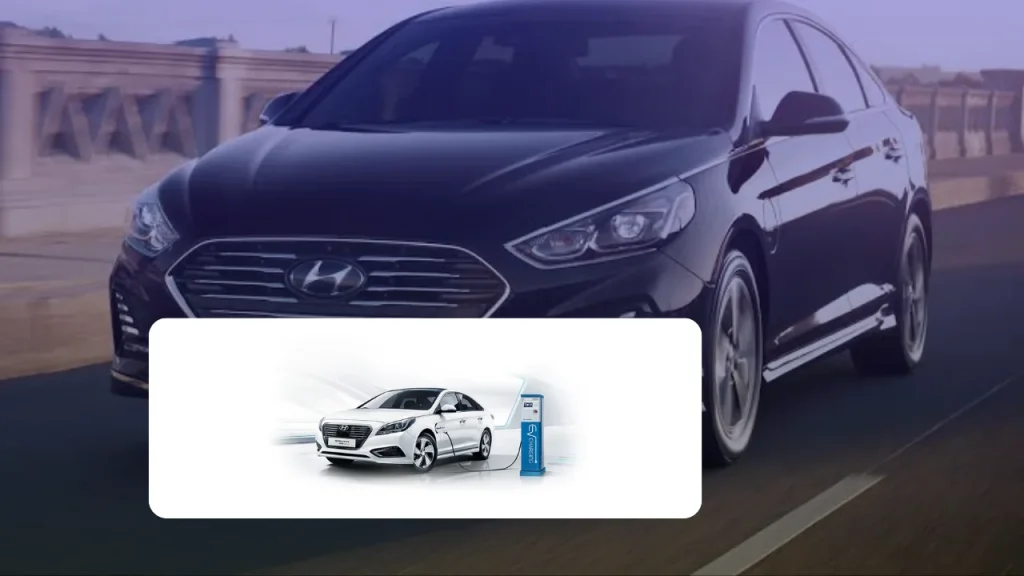
The plaintiffs own or leased 2016–2019 Sonata Plug-In Hybrids, which run partly on a lithium-ion polymer high-voltage battery and were marketed with an electric range of roughly 27 miles. They allege that when some of those batteries failed under warranty, Hyundai couldn’t get replacements fast enough to finish the repair. Some cars allegedly sat at dealerships for months, leaving owners without the vehicle they’d bought or leased. For most affected owners, the court-approved notice puts the out-of-service period at roughly late 2021 through summer 2023.
Hyundai’s position, as described in the notice, is that it did nothing wrong, that the vehicles and batteries weren’t defective, and that the delays came from circumstances outside its control. The parties settled to avoid the cost and risk of continuing. The settlement isn’t an admission that Hyundai violated a warranty or any consumer-protection law.
Which Vehicles and Owners Qualify?
The settlement covers certain 2016, 2017, 2018 and 2019 Hyundai Sonata Plug-In Hybrids. Owning one of those model years isn’t enough by itself. You qualify as a class member if you owned or leased a Class Vehicle and, during the applicable HV battery warranty period, the vehicle needed a battery repair or replacement that required unavailable parts and couldn’t be completed within 60 days, as shown in Hyundai’s records. Eligibility is mostly checked by VIN against those records.
What doesn’t qualify
This settlement does not automatically cover regular gasoline Sonatas, conventional Sonata Hybrids without a plug, Ioniq plug-in hybrids, Tucson hybrids or any other Hyundai with a high-voltage battery. A similar problem on another model doesn’t make that vehicle eligible here.
Do you have to own the car today?
No. Current and former owners and lessees can qualify if they owned or leased the car during the qualifying repair period and meet the other requirements.
Why the warranty matters
The battery repair has to have been needed during the vehicle’s applicable express warranty period. Coverage can differ by model year, original ownership and emissions certification. The court’s September 2024 opinion discussed warranty documents that gave certain original owners lifetime HV battery coverage alongside time-and-mileage provisions. The settlement doesn’t say every 2016–2019 car has identical coverage, so check the warranty on your own vehicle rather than assuming.
Who is excluded
The notice excludes:
- Hyundai Motor America and its subsidiaries and affiliates
- Hyundai officers, directors and employees
- Insurers of covered vehicles and anyone claiming subrogation rights through them
- Providers of extended warranties and service contracts
- People and entities that properly opted out
- Owners of vehicles declared total losses or salvage
- Owners who previously released the relevant claims against Hyundai
- Fleet owners, including rental and company vehicles
- The assigned judge and the judge’s immediate family
How Much Can You Receive?
The benefit is called a Days Down Payment: the number of qualifying days your vehicle waited for the HV battery repair, multiplied by $10. If total approved claims are under $250,000, the rate can rise proportionally to a maximum of $15 per day. Because covered repairs lasted at least 60 days, the minimum is generally about $600.
| Qualifying days | At $10 per day | At $15 per day |
| 60 | $600 | $900 |
| 90 | $900 | $1,350 |
| 120 | $1,200 | $1,800 |
| 150 | $1,500 | $2,250 |
| 180 | $1,800 | $2,700 |
| 240 | $2,400 | $3,600 |
| 300 | $3,000 | $4,500 |
These are arithmetic examples, not promised awards. The administrator uses Hyundai’s records to set the actual days and rate, so confirm exactly how days are counted in the official Notice.
Will everyone get $15 a day?
No. The base rate is $10. The increase to $15 happens only if total claimed payments are below $250,000. If claims run higher, Hyundai has to add funding under the agreement, subject to the overall cap.
What the $1.43 million actually covers
The $1,430,000 is Hyundai’s maximum total obligation. It has to cover all of the following:
- Days Down Payments to class members
- Attorneys’ fees and expenses (class counsel will ask for up to $375,000)
- Service awards to class representatives (up to $7,500 each)
- Notice and administration costs
The fee and award requests are subject to court approval. So the headline figure isn’t the amount reaching owners. Individual payments come from the Days Down formula.
Who decides how many days count?
Hyundai’s records do. You can’t pick the number of days you remember. If you think the records are wrong, keep your repair orders, warranty service records and dealership emails, and ask the administrator how to submit them. The notice doesn’t promise that your own estimate will override Hyundai’s records.
How to File a Claim
A claim form is required, and it must be signed under penalty of perjury. Deadline: December 28, 2026 (online, or paper postmarked by that date).
File online
Go to hvbatteryrepairsettlement.com/submit-claim. You’ll typically use the Claim ID and confirmation code from your notice, plus your VIN. The form asks for:
- Name and contact details
- Vehicle make, model, model year and VIN
- Approximate purchase or lease date
- Whether you still own the vehicle, and the date you sold or transferred it if not
- Your ownership period during the battery repair
File by mail
Download the official claim form (PDF), complete and sign it, and mail it to:
HV Battery Repair Settlement Administrator P.O. Box 129 East Brunswick, NJ 08816-9998
It must be postmarked no later than December 28, 2026.
Do you need proof of ownership?
Sometimes. If your ownership during the repair period is unclear or disputed, the administrator may ask for documents. Helpful ones include your registration, purchase or lease agreement, title, insurance records, dealership service invoices, battery replacement records and warranty repair orders. Keep copies of everything you send.
No notice in the mail?
If you think your VIN and repair history qualify but you never got a notice, contact Angeion at 1-866-964-4271 or through the official website and ask whether your vehicle shows up in the settlement records.
Deadlines and Your Options
The August 19, 2026 order extended the original schedule. Here’s where each date stands as of November 5, 2026:
| Action | Deadline | Status |
| Class notice distribution | September 29, 2026 | Passed |
| Opt out | October 29, 2026 | Passed |
| Object or file a Notice of Intention to Appear | November 30, 2026 | Upcoming |
| Final approval hearing | December 21, 2026 | Upcoming |
| File a claim | December 28, 2026 | Open |
File a claim. This is the only way to get a Days Down Payment.
Opt out. The deadline has passed. People who opted out in time receive nothing and aren’t bound by the release.
Object. You stay in the class and can still claim. You can object to the fairness of the deal, the payment structure, the fees or the service awards. A written objection must reach both the court and the administrator by November 30, 2026.
Court: U.S. District Court – District of Maryland, Suite 200, 6500 Cherrywood Lane, Greenbelt, MD 20770.
Administrator: HV Battery Repair Settlement Administrator, P.O. Box 58220, Philadelphia, PA 19102.
To speak at the hearing, you must also submit a Notice of Intention to Appear by November 30, 2026. You aren’t required to attend.
Do nothing. You get no payment, and if the court grants final approval you generally stay bound by the settlement and give up the right to bring the released battery-repair claims against Hyundai yourself. Nothing here is automatic. Unlike settlements that mail checks to identified people, this one requires you to claim.
When Will Payments Arrive?
There’s no guaranteed date. The notice says valid Days Down Payments are to go out 60 days after the court grants final approval and any appeals are resolved. The final approval hearing is December 21, 2026, at 10:00 a.m. at the U.S. District Court in Greenbelt (6500 Cherrywood Lane). The judge will decide whether the settlement is fair, reasonable and adequate and will rule on fees, costs and service awards. Even a same-day approval doesn’t mean checks the next week, since claims processing and appeals can add time. Confirm hearing details on the official website before you travel.
The Law Behind the Kline Lawsuit
The following is background on the legal claims. They’re allegations, and the settlement isn’t a finding that Hyundai broke any law.
Magnuson-Moss Warranty Act (15 U.S.C. §§ 2301–2312)
This federal statute governs written consumer product warranties and gives consumers a way to sue when a warrantor doesn’t honor one. Under 15 U.S.C. § 2310(d), a consumer who is damaged by a failure to comply with a written warranty may bring a civil action. The Kline complaint included Magnuson-Moss claims. The court dismissed the proposed class claims under that statute because of the Act’s federal class-action requirements, but allowed the individual plaintiffs’ claims to continue.
Breach of express warranty and state warranty law
The plaintiffs alleged Hyundai didn’t deliver the battery repair or replacement its written warranty promised. Express warranties are generally governed by state commercial law (in Maryland, the Uniform Commercial Code provisions on express warranties, Md. Code, Com. Law § 2-313, and remedies for breach). In its September 27, 2024 opinion, the court let important express-warranty allegations go forward past the motion to dismiss. That ruling only found the allegations legally sufficient to continue. It didn’t find that Hyundai breached anything.
Breach of contract
The plaintiffs also alleged Hyundai failed to meet contractual obligations tied to the vehicle purchases and warranties. The court allowed the principal breach-of-contract claim to survive.
Consumer protection and fraud
The amended complaint raised fraud and consumer-protection claims under applicable state laws, concerning alleged statements about the vehicles, the warranty and the availability of battery repair. Statutes of this kind include Maryland’s Consumer Protection Act, Md. Code, Com. Law § 13-101 et seq., and similar laws in other states. The court allowed several of these claims to proceed and dismissed others.
Class actions: Federal Rule of Civil Procedure 23
Rule 23(e) requires court approval of a class settlement after a finding that it is fair, reasonable and adequate, with notice to class members and a hearing. That’s why the July 31, 2026 order was only preliminary approval and why December 21 matters. Rule 23(e)(5) gives class members the right to object, and Rule 23(h) governs the court’s review of attorneys’ fee requests. Under the Class Action Fairness Act, 28 U.S.C. § 1715, defendants must notify appropriate federal and state officials of proposed class settlements, and final approval can’t come until a set period after that notice.
Emissions warranties and lemon laws
Two other bodies of law sometimes come up for hybrid and plug-in owners. Federal emissions rules (Clean Air Act, 42 U.S.C. § 7541(i)) require specified long-term warranty coverage for certain emissions-related parts, and some hybrid batteries fall under extended coverage. State lemon laws can give new-vehicle buyers a repurchase or replacement remedy after repeated unsuccessful repairs. The settlement documents don’t say either applies to the Class Vehicles here, and neither is what this settlement pays for. If you have a separate claim, an attorney can tell you whether time limits matter.
What the Settlement Does Not Cover
The notice expressly leaves out personal injury, wrongful death and other physical property damage claims. If a battery failure hurt someone or damaged other property, this settlement doesn’t release or resolve that, and a licensed attorney is the right person to ask about it.
Is This the Same as Hyundai’s $1.3 Billion Engine Settlement?
No, and the confusion is common because many 2016–2019 Sonatas appear in more than one Hyundai case. These are separate lawsuits with separate defects and benefits:
- Hyundai $1.3B engine settlement for Theta II defects covers engine defects in Theta II, Nu GDI and Gamma GDI engines.
- Hyundai and Kia $62.1 million airbag lawsuit involves alleged airbag control unit defects.
- Hyundai, Kia & Genesis ICCU lawsuit concerns alleged charging-system problems in newer electric vehicles.
The Kline settlement is only about delayed HV battery repairs in certain Sonata Plug-In Hybrids.
Tax Note
Whether a settlement payment is taxable can depend on what it compensates and on your own situation. Talk to a qualified tax professional if the amount is significant to you. This article doesn’t give tax advice.
Frequently Asked Questions About the Hyundai Sonata Plug-In Hybrid Settlement
Is the Hyundai Sonata Plug-In Hybrid $1.43 million settlement real?
Yes. It is a court-supervised settlement in Kline et al. v. Hyundai Motor America, Inc., Case No. 8:23-cv-00245-GLS, in the U.S. District Court for the District of Maryland. The court granted preliminary approval on July 31, 2026, and final approval is still pending.
How much can Hyundai Sonata Plug-In Hybrid owners receive?
The Days Down Payment is $10 for each qualifying day, rising up to $15 per day if total claims are under $250,000. With the 60-day minimum delay, that works out to about $600 at the base rate.
Which Hyundai Sonata models qualify for the settlement?
Certain 2016, 2017, 2018 and 2019 Hyundai Sonata Plug-In Hybrids. Regular Sonatas, standard Sonata Hybrids and other Hyundai models aren’t covered.
Does every 2016–2019 Hyundai Sonata Plug-In Hybrid qualify?
No. The vehicle must have needed an HV battery warranty repair that required unavailable parts and couldn’t be completed within 60 days, according to Hyundai’s records.
Do I have to own my Hyundai Sonata today to qualify?
No. Former owners and lessees can qualify if they owned or leased the vehicle during the qualifying repair period.
Will I get $15 per day from the Hyundai settlement?
Not necessarily. The rate rises above $10 only if total claimed payments are below $250,000, and it is capped at $15.
Do I need a claim form for the Hyundai battery repair settlement?
Yes. You must submit a claim form signed under penalty of perjury, online or by mail.
What is the Hyundai Sonata settlement claim deadline?
December 28, 2026, online or postmarked by that date.
Can I still opt out of or object to the Hyundai settlement?
The opt-out deadline was October 29, 2026, and has passed. You can still object until November 30, 2026, and you remain eligible to claim if you object.
How is my Hyundai settlement payment calculated?
Hyundai’s repair records set the number of qualifying days, and that number is multiplied by the daily rate. You can’t substitute your own estimate of the downtime.
Can Hyundai reject my Sonata settlement claim?
A claim can be denied if the vehicle doesn’t meet the class definition, your ownership during the repair period can’t be established, or the claim is incomplete or inaccurate.
When will Hyundai Sonata settlement payments arrive?
Valid payments are scheduled for 60 days after final approval and the resolution of any appeals. The final approval hearing is December 21, 2026.
Does Hyundai admit the Sonata Plug-In Hybrid batteries are defective?
No. Hyundai denies wrongdoing, liability and any defect, and attributes delays partly to COVID-era supply-chain and supplier problems.
Does the Hyundai battery settlement cover injuries or property damage?
No. The notice excludes personal injury, wrongful death and other physical property damage claims.
Is this the same as Hyundai’s $1.3 billion engine settlement?
No. That case involves Theta II, Nu GDI and Gamma GDI engine defects. The Kline settlement covers only delayed HV battery repairs in certain Sonata Plug-In Hybrids.
The Bottom Line
If your 2016–2019 Sonata Plug-In Hybrid sat waiting for an HV battery warranty repair for 60 days or more, you may be owed money, and the only way to get it is to file the claim by December 28, 2026. Your payment follows Hyundai’s repair records at $10 a day, maybe $15, with a floor around $600. The $1.43 million is a total cap that also pays the lawyers and the administrator. Final approval is set for December 21, 2026, and nothing gets paid until the court approves the deal and any appeals end. If you want to object, November 30 is the date to watch.
Official Documents, Court Records and Sources
Settlement website and claim process
- Official settlement website
- Submit a claim online
- Settlement FAQs
- Important documents
- Official claim form (PDF)
- Long-form settlement notice (PDF)
- Settlement agreement (PDF)
- Order extending deadlines, August 19, 2026
- Order preliminarily approving the settlement, July 31, 2026
Court records and laws
- Kline et al. v. Hyundai Motor America, Inc., No. 8:23-cv-00245-GLS (D. Md.)
- September 27, 2024 Memorandum Opinion
- Magnuson-Moss Warranty Act, 15 U.S.C. §§ 2301–2312
- Federal Rule of Civil Procedure 23(e), 23(e)(5) and 23(h)
- Class Action Fairness Act notice provision, 28 U.S.C. § 1715
- Md. Code, Com. Law § 2-313 and § 13-101 et seq.; Clean Air Act, 42 U.S.C. § 7541(i)
About the author: Researched and written by Israr Ahmad using official settlement notices, federal court orders, the claim form and the court’s published opinion.
Disclaimer: AllAboutLawyer.com is an independent legal information website. It is not a law firm and does not provide legal advice, and nothing here creates an attorney-client relationship. The settlement is subject to final court approval, and Hyundai denies wrongdoing and liability. Eligibility and payment amounts depend on the approved agreement, your vehicle’s warranty, your ownership period and Hyundai’s repair records. Laws and court deadlines can change, so confirm them with the official website or a licensed attorney before relying on this article.
About the Author
Israr Ahmad is a legal content researcher with 4+ years of experience covering class action settlements and consumer rights cases. He has researched and published coverage of 2,500+ settlements using verified court records, settlement administrator filings, and government sources. Learn more about Israr.