
Home Depot California ALPR Lawsuit, Did Its Parking Lot Cameras Track Your License Plate Without Your Consent?
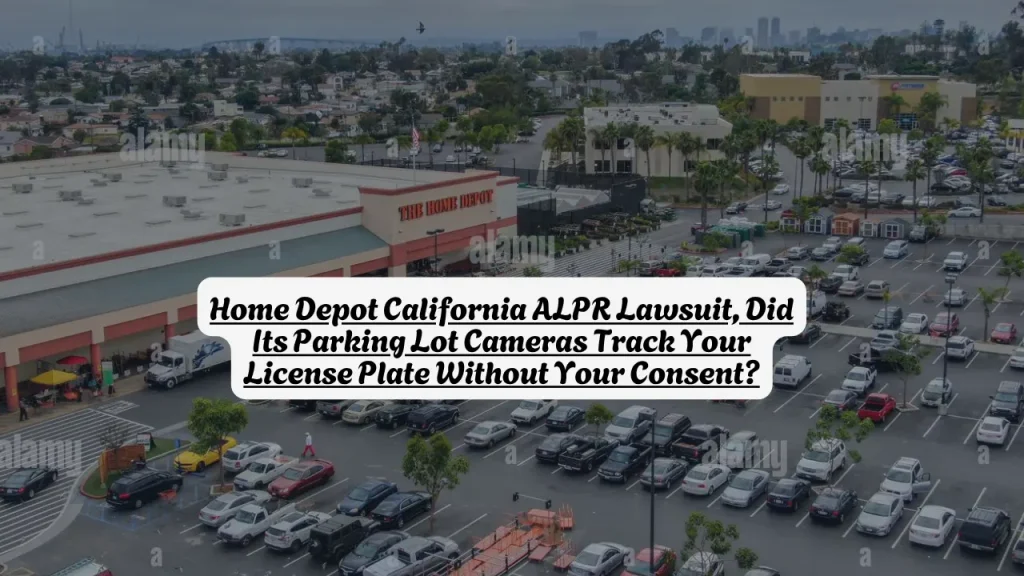
Home Depot is facing a class action lawsuit filed in California alleging it installed automated license plate recognition cameras across all 233 of its California store parking lots, captured shoppers’ vehicle data without proper notice, and shared that data with law enforcement — including federal immigration agencies — in violation of California’s Automated License Plate Recognition Privacy Act. The proposed class covers all individuals whose vehicles the ALPR systems captured at any California Home Depot store. No settlement exists yet. This is an active lawsuit in the litigation phase.
Home Depot ALPR Lawsuit — Quick Facts
| Field | Detail |
| Lawsuit Filed | April 2, 2026 (Sacramento Superior Court); April 10, 2026 (Northern District of California) |
| Defendant | Home Depot U.S.A., Inc. / The Home Depot, Inc. |
| Alleged Violation | California Automated License Plate Recognition Privacy Act; California Consumer Privacy Act; California Constitution (invasion of privacy) |
| Who Is Affected | Anyone who drove to a California Home Depot store while ALPR cameras were operating |
| Current Court Stage | Litigation phase — no settlement reached |
| Court & Jurisdiction | Superior Court of California, County of Sacramento; U.S. District Court for the Northern District of California (Case No. 4:26-cv-03103) |
| ALPR Vendor | Flock Safety |
| Next Hearing Date | TBD — case is in early stage |
| Official Case Website | None — no settlement administrator assigned |
| Last Updated | May 21, 2026 |
What Is the Home Depot ALPR Lawsuit About?
If you have driven to a Home Depot in California in the past year or two, there is a reasonable chance a camera scanned and logged your license plate without you knowing. That is the core of what this lawsuit is about.
On April 2, 2026, five California residents filed a class action lawsuit against Home Depot U.S.A. and The Home Depot in the Superior Court of California, County of Sacramento. The complaint alleges the retailer installed automated license plate recognition cameras across all 233 of its California stores without giving shoppers adequate notice or maintaining a legally compliant privacy policy.
The 57-page complaint contends that Home Depot violated California law by deploying large-scale camera systems that capture the license plate, make, model, color, and distinguishing features of every vehicle that enters or exits its parking lots. According to the lawsuit, this identifying data is logged with precise timestamps and location information and funneled into a centralized, searchable database accessible to nationwide law enforcement agencies.
The cameras are provided by Flock Safety, and since at least March 2025, Home Depot has been sharing camera feeds or footage from its Flock cameras with law enforcement. The complaint alleges that Flock’s database has also been shared with federal immigration officers, meaning a trip to buy lumber or paint supplies could have placed a California shopper in a government surveillance database. This type of consumer fraud lawsuit — where private companies create surveillance infrastructure that feeds government agencies without shoppers’ knowledge — is drawing increasing legal scrutiny across the country. Home Depot is also separately facing litigation over facial recognition and AI-based surveillance inside its stores, which we covered in detail in our Home Depot AI Surveillance Lawsuit breakdown.
Are You Part of the Home Depot California ALPR Class Action Lawsuit?
Here is how to know if this lawsuit includes you. The class definition is broad — it does not require you to prove your data was misused, only that your vehicle was captured by the system.
You may be part of this class if:
- You drove to any Home Depot location in California while the ALPR cameras were operational
- Your vehicle’s license plate was captured entering or exiting any of Home Depot’s 233 California stores
- You were not given clear, legally compliant notice of the data collection before or during your visit
- You are a California resident or were in California when the capture occurred
You are likely NOT included if:
- You only shopped at Home Depot locations outside of California
- You exclusively ordered online and never drove to a California store
The Home Depot license plate reader class action lawsuit looks to represent all individuals whose vehicles were captured by Home Depot-operated or vendor-operated ALPR systems at California retail locations from the installation date of the cameras through the present. Because the cameras scan every vehicle entering or exiting all 233 California locations, the potential class size is enormous — likely millions of California drivers.
Related article: Perry County Tennessee Pays $835,000 After Jailing Retired Officer Over a Facebook Meme What It Means for Free Speech
What Are Home Depot Plaintiffs Seeking in This Lawsuit?
This is not a payout case yet — no settlement exists, and no claim form is open. Plaintiffs are asking the court to hold Home Depot accountable for operating a surveillance system that they say violates three layers of California law.
Plaintiffs are suing for violations of California’s ALPR Privacy Act, invasion of privacy under the California Constitution, intrusion upon seclusion, negligence, and violations of the California Consumer Privacy Act.
The specific failures alleged against Home Depot’s ALPR policy are detailed. The complaint claims Home Depot’s policy fails on at least three counts: it names no custodian responsible for the system, provides no defined data retention period, and places no restrictions on federal, out-of-state, or immigration enforcement access. The complaint also alleges Home Depot failed to identify training requirements for employees and contractors who use the system, failed to describe how the system would be monitored, and failed to identify measures to ensure the system’s accuracy and correct errors.
Plaintiffs are seeking compensation for damages, injunctive relief requiring Home Depot to bring its ALPR practices into compliance with California law, and restrictions on how long collected data can be retained. In plain terms: they want the surveillance stopped, the illegal data deleted, and affected California drivers compensated. A data privacy attorney could bring an individual claim as well, though the class action approach covers the broadest group automatically.
What Should You Do If You Shopped at a California Home Depot?
Most class members do not need to take any action right now. Here is where things stand and what your practical options are.
If you drove to any California Home Depot store in the past two years:
- You are likely already included in the proposed class automatically — you do not need to register or sign up
- Save any receipts, loyalty card records, or evidence that places you at a California Home Depot during the relevant period — this establishes your connection to the case
- Monitor allaboutlawyer.com for updates as the case progresses through the courts
If you want to pursue an individual claim:
- You have the right to consult a consumer rights lawyer or data breach compensation attorney separately about your individual privacy rights under the California Consumer Privacy Act
- Individual CCPA rights — including the right to know what data was collected about you and the right to request deletion — exist independently of this class action
If you are concerned about immigration enforcement or law enforcement access:
- The complaint specifically alleges that Flock’s database has been shared with federal immigration agencies. If this is a concern, document your visits to California Home Depot locations and speak with a qualified attorney about your rights.
Do not file a lawsuit independently — that is the class counsel’s role. Your job right now is to stay informed and preserve any records you have.
Home Depot ALPR Class Action Lawsuit Timeline
| Milestone | Date |
| Lawsuit Filed (Sacramento Superior Court) | April 2, 2026 |
| Second Complaint Filed (N.D. California) | April 10, 2026 |
| Third Complaint Filed (Federal Court) | May 1, 2026 |
| Class Certification Motion | TBD — case is in early litigation stage |
| Last Major Court Ruling | TBD — no rulings yet in ALPR cases |
| Next Scheduled Hearing | TBD — not yet set |
| Expected Settlement Timeline | TBD — litigation phase; no settlement discussions publicly reported |
Frequently Asked Questions — Home Depot ALPR Lawsuit
Is there a class action lawsuit against Home Depot for license plate tracking in California?
Yes. A class action was filed on April 2, 2026 in the Superior Court of California, County of Sacramento, and a related federal case — McGinity v. The Home Depot, Inc., Case No. 4:26-cv-03103 — was filed in the Northern District of California on April 10, 2026. A third complaint followed in federal court on May 1, 2026. Multiple law firms are now investigating the same conduct.
Do I need to do anything right now to be included in the Home Depot ALPR class action?
No. Class members are automatically included in a class action at this stage. You do not need to register or file anything. If a settlement is reached, you will receive notice with instructions. Right now, preserve any records that place you at a California Home Depot location during the relevant period.
What law did Home Depot allegedly violate with its license plate cameras?
California’s Automated License Plate Recognition Privacy Act requires entities operating ALPR systems to publicly post a privacy policy meeting specific standards, including naming a custodian responsible for the system, defining a data retention period, and restricting access by federal, out-of-state, or immigration enforcement agencies. Plaintiffs allege Home Depot’s policy satisfies none of these requirements.
Can I file my own lawsuit against Home Depot instead of joining the class action?
You can consult a class action lawsuit attorney about whether an individual claim under the California Consumer Privacy Act or the California Constitution makes sense for your situation. Most California shoppers will be better served remaining in the class, but individual circumstances vary — an attorney can advise you.
When will a settlement be reached in the Home Depot ALPR case?
TBD — this case is in early litigation. No settlement discussions have been publicly reported as of May 2026. These cases typically take one to three years to reach resolution, depending on whether Home Depot contests class certification and whether the parties reach mediation.
How will I know if the Home Depot ALPR lawsuit settles?
Settlement notices are typically sent by mail or email to identified class members and posted on a court-approved settlement website. You can also monitor allaboutlawyer.com for updates. Signing up for loyalty program communications through Home Depot may also help administrators identify and reach you if a settlement is approved.
Is this the same as the Home Depot facial recognition lawsuit?
No. These are two separate legal cases involving different technology and different laws. The facial recognition and AI surveillance case involves biometric data collected inside the store at self-checkout kiosks. The ALPR case involves license plate cameras in parking lots governed by California’s ALPR Privacy Act. Both target Home Depot’s use of surveillance technology in California, but they are distinct lawsuits with distinct legal theories. Our Home Depot AI Surveillance Lawsuit article covers the facial recognition and investor angle in full.
Sources & References
- Court filing: McGinity v. The Home Depot, Inc., Case No. 4:26-cv-03103, U.S. District Court for the Northern District of California (filed April 10, 2026)
- Court filing: Sacramento Superior Court class action (filed April 2, 2026)
- California Daily Journal: Home Depot Sued Over License Plate Reader Use in Parking Lots (April 14, 2026)
- K-12 Dive / Claim Depot: Class Action Alleges Home Depot Illegally Shared California License Plate Data With Federal Agencies (April 9, 2026)
Prepared by the AllAboutLawyer.com Editorial Team and reviewed for factual accuracy against court filings and credible legal news sources on May 21, 2026. Last Updated: May 21, 2026
Disclaimer: This article is for informational purposes only and does not constitute legal advice. Legal claims and outcomes depend on specific facts and applicable law. For advice regarding a particular situation, consult a qualified attorney.
About the Author
Israr Ahmad is a legal content researcher with 4+ years of experience covering class action settlements and consumer rights cases. He has researched and published coverage of 2,500+ settlements using verified court records, settlement administrator filings, and government sources. Learn more about Israr.