
Heal 360 COVID Testing Settlement, Clinics and Owner Agree to Pay $20 Million Over Alleged Billing Fraud
Heal 360 Urgent Care PLLC, Heal 360 Primary Care PLLC and their owner, Dr. Mohammed Amer Mohiuddin of Plano, Texas, have agreed to pay the United States $20 million to resolve False Claims Act allegations that they billed a federal COVID-19 program for office visits that were never performed. The U.S. Department of Justice announced the settlement on October 7, 2026 (Press Release No. 26-1149).
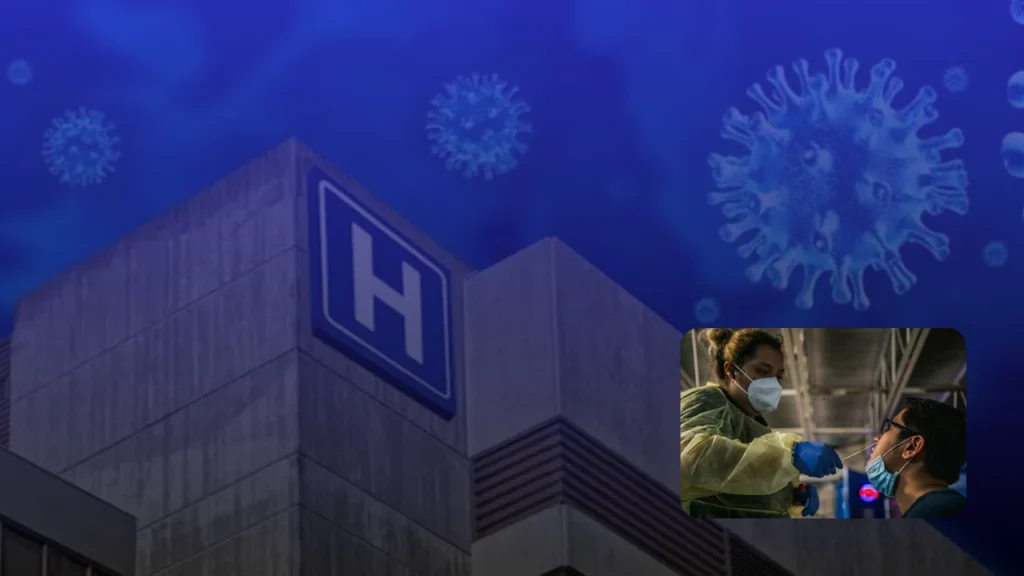
The program at issue is the Health Resources & Services Administration (HRSA) COVID-19 Claims Reimbursement to Health Care Providers and Facilities for Testing, Treatment, and Vaccine Administration for the Uninsured Program, which this article calls the Uninsured Program. The government alleges that patients at Heal 360’s drive-through and walk-up testing sites received only a nasal-swab specimen collection, yet the clinics billed for higher-level evaluation and management (“office visit”) services.
This is not a consumer class action. The $20 million is payable to the United States, with a separate share going to the whistleblowers. There is no public claim form, no settlement administrator and no deadline for patients to file a claim. The defendants deny the allegations, and the Justice Department states that the claims resolved by the settlement are allegations only and that there has been no determination of liability.
Heal 360 $20 Million Settlement: Quick Facts
| Detail | Information |
| Total settlement amount | $20,000,000, of which $10,000,000 is restitution |
| Interest | 4.375% per year on the settlement amount, running from August 17, 2026 |
| Credited for payments already made | $9,100,784.85 |
| Remaining principal balance | $10,899,215.15, plus accrued interest |
| Defendants | Heal 360 Primary Care, PLLC; Heal 360 Urgent Care, PLLC; and Dr. Mohammed Amer Mohiuddin |
| Location | Plano, Texas (testing sites across Texas) |
| Program involved | HRSA COVID-19 Uninsured Program |
| Alleged conduct period | January 1, 2021 through March 23, 2022 |
| Law involved | False Claims Act, 31 U.S.C. §§ 3729–3733 |
| Whistleblower (relator) share | $3,400,000 (17% of each payment the United States receives) |
| Announcement date | October 7, 2026 |
| Public claim form or deadline | None |
| Admission of liability | None; defendants deny the allegations |
What Did the Justice Department Allege About Heal 360’s COVID-19 Testing Billing?
According to the Justice Department and the settlement agreement, Heal 360 operated dozens of COVID-19 testing sites in Texas during the public health emergency, mostly walk-up or drive-through locations. Patients could register online or at the site, stayed in their vehicles while staff checked them in, and had a nasal swab collected. The government says no other medical treatment was given.
Which Billing Codes Were at Issue in the Heal 360 Case?
The United States alleges that the correct codes for these encounters were specimen-collection codes, CPT 99211 and G2023. During the public health emergency, CMS approved CPT 99211 for COVID-19 specimen collection, and physicians and practitioners such as nurse practitioners were required to use it when clinical staff collected the specimen.
Instead, the government alleges, Heal 360 and Dr. Mohiuddin billed higher-level evaluation and management (E/M) codes: CPT 99203 and 99204 for new patients, and 99213 and 99214 for established patients. These codes reflect more complex visits, with more detailed history, more decision-making or more time, and they pay at substantially higher rates. The government says they could not be used for mere specimen collection.
The point is narrow but important. The allegation is not that COVID-19 tests were never given. It is that the clinics billed for additional office-visit services that were allegedly not performed.
What Did the Government Say About Heal 360’s Medical Records?
The United States alleges that Heal 360 and Dr. Mohiuddin created fictitious, template-generated medical records for the testing dates to make it look as if E/M services had occurred, for example by including sections for “past medical history” and “examination.” The charts were allegedly produced by remote scribes located overseas who entered information collected at the testing sites.
The government also alleges that Dr. Mohiuddin did not visit or treat patients at the testing sites, yet was listed as the rendering physician on the majority of the claims. It says the clinics submitted hundreds of thousands of claims for the higher-level E/M services and received payments they were not entitled to.
These are the government’s contentions. The settlement agreement records that the defendants deny them and that the agreement is neither an admission of liability by the defendants nor a concession by the United States that its claims were unfounded.
Which Federal Cases Did the Heal 360 Settlement Resolve?
The settlement resolves two qui tam (whistleblower) lawsuits and a related asset-forfeiture case.
| Case | Court | Case number |
| U.S. ex rel. Hooper et al. v. Heal 360 Primary Care, PLLC et al. | U.S. District Court, Eastern District of Texas | 4:21-cv-00569 |
| U.S. ex rel. Hasan v. Heal 360 Urgent Care, PLLC et al. | U.S. District Court, Northern District of Texas | 3:22-cv-1333-E |
| United States v. Real Property Known as 3300 State Highway 78, Garland, TX et al. (asset forfeiture) | U.S. District Court, Northern District of Texas | 3:23-cv-2784-X |
The first case was filed on July 21, 2021, by RealTime Laboratories, Inc. On or about December 28, 2023, the complaint was amended to substitute Dennis G. Hooper, Jeffrey Hooper and David Murcott, the then-owners of RealTime Laboratories, as relators. The second case was filed on June 21, 2022, by Syed Hasan.
In the forfeiture case, the government and Dr. Mohiuddin reached an agreement involving real properties he purchased. Proceeds from the sale of those properties are credited toward the civil settlement.
The Justice Department said the matter was handled by its Civil Division’s Commercial Litigation Branch (Fraud Section), the U.S. Attorneys’ Offices for the Eastern and Northern Districts of Texas, with substantial help from the HHS Office of Inspector General.
How Is the $20 Million Heal 360 Settlement Being Paid?
Under the signed Settlement Agreement, the defendants pay $20,000,000, of which $10,000,000 is restitution, plus interest at 4.375% per year from August 17, 2026. They receive credit for $9,100,784.85 already paid, leaving $10,899,215.15 in principal.
Exhibit A to the agreement sets a three-installment schedule for the balance:
| Payment date | Payment | Interest | Principal |
| December 15, 2026 | $3,789,853.72 | $156,769.53 | $3,633,084.19 |
| March 15, 2027 | $3,711,468.82 | $78,384.63 | $3,633,084.19 |
| June 13, 2027 | $3,672,238.88 | $39,192.11 | $3,633,046.77 |
| Total | $11,173,561.42 | $274,346.27 | $10,899,215.15 |
Adding the $9,100,784.85 already credited, the total paid under the schedule comes to $20,274,346.27. The installments can be prepaid in whole or in part without penalty.
What Happens if Heal 360 Misses a Payment?
The agreement gives the defendants seven calendar days to cure after a written notice of default. If they do not, the entire unpaid balance becomes due immediately and interest rises to 12% per year, compounded daily. The United States may also rescind the agreement and pursue the original claims, offset amounts owed to the defendants, and refer the matter for collection with a surcharge. The HHS Office of Inspector General may exclude a defendant from federal health care programs until the amount is paid.
The agreement also contains bankruptcy protections. If a defendant files for bankruptcy before the settlement is paid in full, the United States may rescind its releases and has an agreed allowed claim of $86,179,935 less any payments received.
How Much Do the Heal 360 Whistleblowers Receive?
The Justice Department says the relators will receive $3,400,000 of the proceeds. The agreement provides that the United States pays the relators 17% of each payment it receives. That payment goes to the Eastern District relator group, which must tell Mr. Hasan and then pay his portion within 14 business days under a separate agreement among the relators.
The relators’ claims for attorneys’ fees and costs are handled separately. The Eastern District relator group resolved its fee claim in a separate confidential agreement. Mr. Hasan has 60 days after final judgment in his case to ask the court for fees, and the defendants reserved the right to challenge that request.
What Is the False Claims Act, and Why Did It Apply Here?
The False Claims Act (31 U.S.C. §§ 3729–3733) is the federal government’s main civil tool against fraud on federal programs.
- Liability. Under 31 U.S.C. § 3729(a)(1), a person who knowingly presents, or causes to be presented, a false claim for payment, or knowingly makes or uses a false record or statement material to a false claim, can be liable for three times the government’s damages plus a per-claim civil penalty that is adjusted for inflation.
- “Knowingly.” Under 31 U.S.C. § 3729(b)(1), this includes actual knowledge, deliberate ignorance and reckless disregard of the truth. The government does not have to prove a specific intent to defraud. An honest billing mistake is not enough.
- Whistleblower suits. Under 31 U.S.C. § 3730(b), a private person (a relator) can file a qui tam complaint under seal on behalf of the United States. The government investigates and decides whether to intervene.
- Relator share. Under 31 U.S.C. § 3730(d), a relator generally receives 15% to 25% of the recovery if the government intervenes and 25% to 30% if it does not. Here, the agreed share is 17%.
- Retaliation protection. Under 31 U.S.C. § 3730(h), employees who are fired, demoted or harassed for trying to stop an FCA violation can seek relief, including reinstatement and double back pay.
- Time limits. Under 31 U.S.C. § 3731(b), an FCA action generally must be filed within six years of the violation, or within three years of when the responsible government official knew or should have known the facts, but no more than ten years after the violation.
In this settlement, the United States also released related civil and administrative monetary claims under the Civil Monetary Penalties Law (42 U.S.C. § 1320a-7a), the Program Fraud Civil Remedies Act (31 U.S.C. §§ 3801–3812) and the common-law theories of payment by mistake, unjust enrichment and fraud.
Primary sources: 31 U.S.C. §§ 3729–3733 and 31 U.S.C. § 3730.
Does the Heal 360 Settlement Mean Dr. Mohiuddin Was Found Guilty of Fraud?
No. This is a civil settlement, not a criminal conviction or a trial verdict. The Settlement Agreement is not an admission of liability, and the defendants deny the allegations.
The release is also limited. After the United States receives the full settlement amount plus interest, it releases the defendants from civil and administrative monetary claims for the covered conduct. The United States specifically reserved:
- Any criminal liability
- Any liability under the Internal Revenue Code
- Administrative enforcement rights, including exclusion from federal health care programs
- Liability for any conduct other than the covered conduct
- Liability of individuals other than Dr. Mohiuddin
- Claims for personal injury or property damage arising from the covered conduct
Dr. Mohiuddin also agreed to cooperate fully and truthfully with the government’s investigation of other individuals and entities, including making himself available for interviews and providing non-privileged documents and electronic communications.
Can Heal 360 Patients File a Claim for the $20 Million?
No. The $20 million goes to the United States Treasury and the relators. It does not create a fund for patients who received COVID-19 tests at Heal 360 sites, and no claim process or deadline has been announced. Getting a nasal-swab test at a Heal 360 location does not make you eligible for a payment under this agreement.
Were Patients Billed Under the Heal 360 Settlement?
The Uninsured Program reimbursed providers for testing uninsured people, so patients generally were not the payers on these claims. The agreement adds a protection: the defendants agreed not to seek payment for the health care billings covered by the agreement from any beneficiaries or their parents, sponsors, legally responsible individuals or third-party payors.
What Should a Patient Do if a Heal 360 Bill Looks Wrong?
- Collect the bill, any explanation of benefits and payment records.
- Ask the billing provider or payer which services and billing codes were submitted.
- Request a correction in writing if the charges do not match the services you received, and keep copies of everything.
- If the problem is not resolved, consider contacting a qualified attorney or the relevant government agency.
These are general steps for checking a personal billing concern. They are not a way to claim money under this settlement.
What if You Have Information About Similar Billing Fraud?
The False Claims Act’s whistleblower provisions allow a person with firsthand knowledge of false billing to federal programs to file a sealed complaint on behalf of the government. These cases have strict procedural rules, and people who are considering one generally work with an attorney experienced in False Claims Act litigation. Do not rely on this article for legal advice about your own situation.
For another example of federal health care fraud enforcement, see our report on the Appleton Medical Clinic Pays $382K To Settle Medicare Fraud Allegations. That case involves separate allegations and a separate settlement.
Heal 360 COVID Testing Settlement: Key Dates
| Date | Event |
| May 2020 – April 2022 | Approximate period the Uninsured Program reimbursed providers (per the DOJ) |
| January 1, 2021 | Start of the alleged false billing period |
| July 21, 2021 | RealTime Laboratories, Inc. files the first qui tam action (E.D. Tex.) |
| June 21, 2022 | Syed Hasan files the second qui tam action (N.D. Tex.) |
| March 23, 2022 | End of the alleged false billing period |
| December 28, 2023 (on or about) | Hooper, Hooper and Murcott substituted as relators in the Eastern District case |
| August 17, 2026 | Interest at 4.375% begins to accrue |
| September 24–28, 2026 | Dates shown beside the government signatories on the Settlement Agreement |
| October 7, 2026 | Justice Department announces the $20 million settlement |
| December 15, 2026 | First scheduled installment: $3,789,853.72 |
| March 15, 2027 | Second scheduled installment: $3,711,468.82 |
| June 13, 2027 | Final scheduled installment: $3,672,238.88 |
The agreement takes effect on the date the last signatory signs it. After that, the government will file notices of intervention and settlement in both cases, with stipulations of dismissal.
Frequently Asked Questions About the Heal 360 COVID Testing Settlement
How much will Heal 360 pay in the COVID-19 billing settlement?
Heal 360 Primary Care, Heal 360 Urgent Care and Dr. Mohiuddin agreed to pay $20,000,000, of which $10,000,000 is restitution, plus 4.375% interest from August 17, 2026. They have been credited $9,100,784.85, leaving $10,899,215.15 in principal, payable in three installments through June 13, 2027.
Is there a Heal 360 settlement claim form or deadline?
No. This is a government enforcement settlement, not a consumer class action. There is no claim form, administrator or deadline for patients.
What did Heal 360 allegedly bill incorrectly?
The government alleges the clinics billed higher-level office-visit codes (CPT 99203, 99204, 99213 and 99214) for drive-through and walk-up COVID-19 testing where only specimen collection (CPT 99211 or G2023) was provided.
Which law was used in the Heal 360 case?
The False Claims Act, 31 U.S.C. §§ 3729–3733. The agreement also releases claims under the Civil Monetary Penalties Law and the Program Fraud Civil Remedies Act, plus common-law payment by mistake, unjust enrichment and fraud.
How much will the Heal 360 whistleblowers receive?
The Justice Department says $3,400,000. Under the agreement, the United States pays 17% of each settlement payment it receives to the relators.
Did Heal 360 or Dr. Mohiuddin admit wrongdoing?
No. The agreement states that it is not an admission of liability, and the defendants deny the allegations.
Can Dr. Mohiuddin still face criminal charges?
The settlement does not release criminal liability. The United States reserved it, along with administrative enforcement rights such as exclusion from federal health care programs.
Can patients be billed for the services covered by the settlement?
Under the agreement, the defendants agreed not to seek payment for the covered billings from beneficiaries or their parents, sponsors, legally responsible individuals or third-party payors.
What happens if Heal 360 stops paying?
After a seven-day cure period, the full unpaid balance becomes due, interest rises to 12% per year, and the government can rescind the agreement, offset amounts owed, pursue collection or seek exclusion from federal health care programs.
Sources and Legal References
- U.S. Department of Justice, Office of Public Affairs, Heal 360 Clinics and Owner Agree to Pay $20M to Resolve False Claims Act Allegations of Billing False Claims to the COVID-19 Uninsured Program for Services Not Rendered, October 7, 2026 (Press Release No. 26-1149)
- U.S. Department of Justice, Settlement Agreement among the United States, Heal 360 Primary Care, PLLC, Heal 360 Urgent Care, PLLC, Mohammed Amer Mohiuddin and the Relators (PDF, including Exhibit A payment schedule)
- False Claims Act, 31 U.S.C. §§ 3729–3733
- 31 U.S.C. § 3730, civil actions for false claims
This article provides general legal information, not legal advice. AllAboutLawyer.com is not a law firm. The claims resolved by the settlement are allegations only, and there has been no determination of liability. Consult a licensed attorney about your own situation.
Researched and written by Israr Ahmad, legal content researcher and founder of AllAboutLawyer.com. All facts verified against the official U.S. Department of Justice press release (No. 26-1149) and the Settlement Agreement with its Exhibit A payment schedule published by the Department of Justice, and the cited provisions of the False Claims Act, as of October 9, 2026. Last Updated: October 9, 2026.
About the Author
Israr Ahmad is a legal content researcher with 4+ years of experience covering class action settlements and consumer rights cases. He has researched and published coverage of 2,500+ settlements using verified court records, settlement administrator filings, and government sources. Learn more about Israr.