
Riddell, BSN Sports and Hibbett Bid-Rigging Lawsuit, Were Mississippi Schools Affected? Hancock County School District v. Riddell Sports Group, Inc., No. 1:26-cv-00324
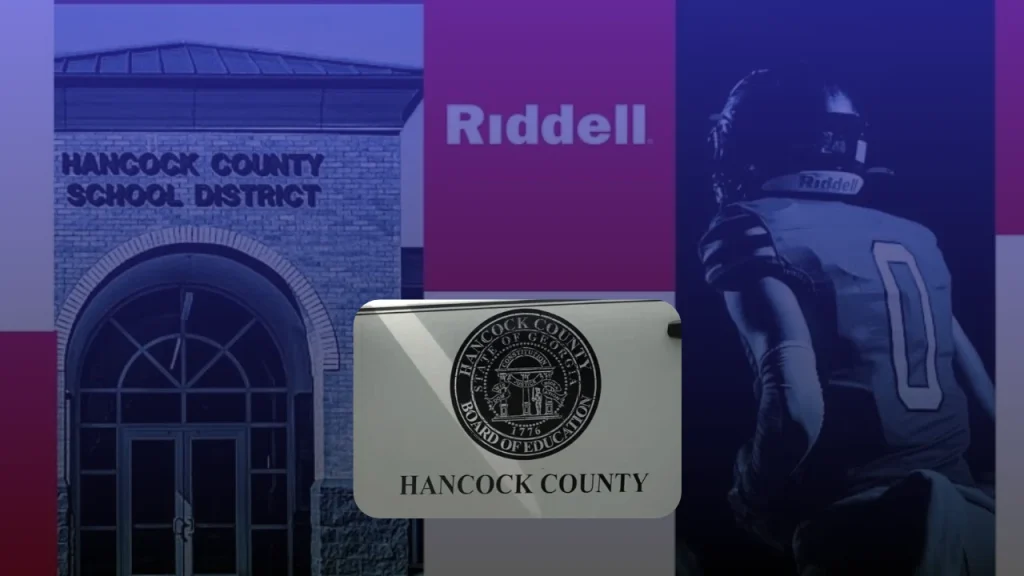
Hancock County School District v. Riddell Sports Group, Inc., No. 1:26-cv-00324, accuses seven sports equipment companies of rigging bids on Mississippi school purchases for more than a decade. Quick answer: the proposed class is Mississippi public school districts, not parents or students. The case was filed October 22, 2026. No class has been certified, no company has been found liable, and there is no claim form.
Riddell Bid-Rigging Lawsuit — Key Facts
| Detail | Information |
| Lawsuit Filed | October 22, 2026 (Dkt. 1) |
| Defendants | Riddell Sports Group, Inc.; Rex Team Sports; Sports Center, Inc.; Varsity Brands; BSN Sports LLC; Hibbett Inc.; Hibbett Team Sales, Inc. |
| Plaintiff | Hancock County School District (Mississippi) |
| Alleged Harm | Bid rigging and price fixing on sports equipment and related services sold to Mississippi public schools |
| Law Alleged | Sherman Act § 1 (15 U.S.C. § 1); treble damages and an injunction sought |
| Who Is Affected | Proposed class of Mississippi public school districts that bought covered equipment or services directly from the defendants or their co-conspirators. Mississippi has 137 public school districts. |
| Court & Case Number | U.S. District Court, Southern District of Mississippi, No. 1:26-cv-00324 |
| Judges | Halil S. Ozerden (presiding); Bradley W. Rath (listed as referring judge on Justia) |
| Current Stage | Newly filed. Summonses issued October 22, 2026. The Justia copy of the docket was last refreshed that day, so later filings may not appear. |
| Lead Plaintiff Deadline | None. Lead-plaintiff deadlines apply to securities class actions, not antitrust cases. |
| Settlement Status | None announced. No claim form. |
| Last Updated | October 31, 2026 |
Who Is Riddell, and Why Are the Seven Companies Being Sued for Bid Rigging?
Public schools can’t skip helmets, uniforms or helmet reconditioning, and the plaintiff’s lawyers say that gave suppliers a steady stream of required purchases. They also say sales employees of Riddell, BSN Sports and Rex Team Sports are among the people who have pleaded guilty or agreed to plead guilty in related federal criminal cases (Cuneo release, ¶ 3). Those pleas belong to individuals, so they don’t decide whether the companies are liable here.
What Did Riddell and the Other Suppliers Allegedly Do to Mississippi Schools Over More Than a Decade?
The complaint says the seven companies conspired to rig bids and fix prices on equipment sold to Mississippi public schools. Plaintiff’s lawyers say that forced districts to pay inflated prices for helmets, uniforms and other gear for more than a decade (Cuneo release, ¶ 1).
The complaint text isn’t free to read online, so this article relies on the docket and the plaintiff’s announcement. Reports on the filing put the alleged period at July 2010 through at least October 2023. That range is UNVERIFIED here, because the announcement says only “more than a decade.”
Federal prosecutors have described the same kind of scheme in separate criminal cases. In the February 2026 indictment of three individuals, conspirators agreed in advance who would win a bid and then submitted intentionally higher-priced “second quotes” (DOJ release No. 26-143, ¶ 4). In the Trimm case, prosecutors said false bids were submitted and a person’s signature was forged (USAO-SDMS release, May 13, 2024, ¶ 2).
Those are descriptions from criminal cases, not findings against Riddell or the six other companies. The civil case has to prove its own version.
How Does the Bid Rigging Alleged Against Riddell Work, and Why Is It Illegal?
Bid rigging happens when competitors secretly agree on who wins a contract instead of bidding on their own. In complementary bidding, the others submit deliberately high-priced offers so the chosen winner looks like the best deal. Prosecutors in the Trimm case said these schemes gave schools the “false appearance of competition” (USAO-SDMS release, May 13, 2024, ¶ 3).
Here is an illustration. These are not real prices from the case.
| Supplier | Submitted price | Intended result |
| Supplier A | $30,000 | Wins the contract |
| Supplier B | $36,000 | Loses on purpose |
| Supplier C | $39,000 | Loses on purpose |
The school sees three bids and believes it got competition. If the prices were arranged in advance, it didn’t.
Charging high prices isn’t illegal by itself. The legal problem is an agreement between competitors to avoid competing, which courts treat as unlawful on its face under Section 1 of the Sherman Act.
Antitrust cases don’t all work this way. Our report on the McDonald’s AI pricing lawsuit covers a different claim, that shared data helped competing restaurants line up prices, and a court hasn’t decided it.
Which Mississippi Bidding Rules Matter in the Riddell Case?
Mississippi’s public purchasing law is Miss. Code § 31-7-13. The 2010 version let a public buyer skip competitive bids on purchases up to $5,000, required at least two competitive written bids from over $5,000 up to $50,000, and required advertised bidding above $50,000 (2010 Miss. Code § 31-7-13(a), (b), (c)(i)(1)). Those dollar figures exclude freight and shipping.
The same section defines “competitive” bids as ones developed independently and without knowledge of other bids (§ 31-7-13(b)). Federal prosecutors say the Mississippi school schemes were built to get around the two-bid rule for purchases over $5,000 (DOJ release No. 26-143, ¶ 4).
One detail changes how you should read the case. On July 1, 2022, Senate Bill 2371 raised the advertising threshold from $50,000 to $75,000 (Mississippi State University Extension, Pub. 3834, p. 3). State guidance now lists two written bids for purchases from $5,000.01 to $75,000 (Mississippi DFA procurement checklist, item 3(ii)(a)).
| Period | No competitive bids needed | Two written bids | Advertised bidding |
| 2010 through June 30, 2022 | Up to $5,000 | Over $5,000 to $50,000 | Over $50,000 |
| From July 1, 2022 | Up to $5,000 | Over $5,000 to $75,000 | Over $75,000 |
So the $75,000 figure you see in some coverage did not apply to the whole alleged period. The table reflects the 2010 statute and the 2022 change. Later amendments may apply to newer purchases, and the version in effect on the purchase date is the one that counts.
That’s why a $60,000 equipment order could need advertising in 2020 but only two written bids in 2023.
Which Federal Laws Does Hancock County Use Against Riddell and the Other Defendants?
The docket lists the cause of action as 15 U.S.C. § 1, the Sherman Act’s ban on agreements that unreasonably restrain trade (Justia docket, Dkt. 1). The plaintiff also seeks treble damages and an injunction (Cuneo release, ¶ 5).
Treble damages come through the Clayton Act, 15 U.S.C. § 15, which lets a person injured by an antitrust violation recover three times proven damages plus costs and attorney’s fees. An injunction request rests on 15 U.S.C. § 26. The plaintiff has to prove the violation, the injury and the amount first.
Related article: McDonald’s McRib Putative Class Action, Judge Perry Denies Motion to Dismiss After October 30, 2026 Ruling
Are Mississippi School Districts Part of the Riddell Bid-Rigging Lawsuit?
Here’s how to tell whether a district fits the class the lawsuit describes.
- Mississippi public school districts that bought sports equipment directly from a defendant or an alleged co-conspirator
- Districts that paid for related services, such as helmet reconditioning or apparel customization
- Any of the state’s 137 public school districts that meets the final class definition once a judge sets it
The plaintiff’s lawyers describe the class as school districts (Cuneo release, ¶ 5). That description doesn’t include parents, students, athletes or booster clubs. Nobody is signing up individual families, and no one is collecting claims from them.
If your district bought from these suppliers, you’re probably in the group the lawsuit is aimed at. Whether it’s formally in the class is a question for the judge.
Riddell Bid-Rigging Lawsuit Outside Mississippi — Are Schools Still Covered?
The proposed class is limited to Mississippi public school districts (Cuneo release, ¶ 5). Federal prosecutors have also described bid rigging that affected Louisiana schools, including at least 69 public schools in one case (DOJ release No. 25-313, ¶ 2). Those are criminal cases, and they don’t widen the civil class.
Can Charter Schools, Private Schools, or Districts That Used a Co-op Join the Riddell Lawsuit?
The plaintiff’s announcement doesn’t say. It describes the class as public school districts that bought directly from the defendants or their co-conspirators (Cuneo release, ¶ 5). Charter schools, private schools, colleges and districts that bought through a purchasing co-op aren’t addressed, and the judge may change the class definition. A district with one of those situations should ask its own attorney.
Not sure whether your district’s purchases are covered by the Riddell bid-rigging lawsuit? A free consultation with an antitrust attorney can help you sort out your options.
What Are Hancock County and Other Mississippi Districts Asking the Court to Award?
The district seeks treble damages and an injunction against the alleged conduct, and it demanded a jury (Cuneo release, ¶ 5; Justia docket). The sources reviewed don’t state a dollar figure for the claimed overcharges.
No money yet. No claim form yet. Nothing in this case lets a parent or student file for compensation.
What Could Mississippi School Districts Receive If the Riddell Case Settles?
Nobody can say. The answer depends on whether a class is certified, what purchase records show, and what the parties negotiate.
Treble damages is a legal formula. In a made-up example, a district that proved a $100,000 overcharge could seek $300,000, plus fees and costs. That is not a prediction for this case.
Damages experts usually work from purchase orders, winning and losing bids, invoices, payment records and market comparisons. Talk to an antitrust attorney if you want help understanding what your district’s records could mean for a claim.
Why the Criminal Cases Matter to the Riddell Lawsuit, and What They Don’t Prove
The plaintiff’s lawyers say the civil case follows a Justice Department investigation into bid rigging in the school sports equipment market (Cuneo release, ¶ 3). That investigation has produced guilty pleas and a new indictment. The table lists each one the Justice Department has announced.
| Person or company | Date | Court | What the Justice Department reported |
| Charles Ferrell Trimm | May 13, 2024 | S.D. Miss. | Pleaded guilty to two Sherman Act bid-rigging conspiracies and one wire fraud conspiracy. At least 100 schools in Mississippi and elsewhere were victims. |
| Bradley D. Willcutt | September 2024 | S.D. Miss. | Pleaded guilty. The release gives no further detail. |
| Robert Tucker Craig | February 19, 2025 | S.D. Miss. | Pleaded guilty to three bid-rigging counts affecting at least 38 public schools, plus one obstruction count for deleting evidence. |
| Wilder Fitness Equipment Inc. | February 20, 2025 | N.D. Miss. | Company pleaded guilty to two bid-rigging counts affecting at least 60 public schools. |
| Robert Douglas Heflin | March 4, 2025 | S.D. Miss. | Pleaded guilty to two bid-rigging counts affecting at least 31 public schools. |
| Maurice Daniel Bowering Jr. | March 6, 2025 | S.D. Miss. | Pleaded guilty to five bid-rigging counts affecting at least 50 public schools. |
| Patrick Joseph Stewart | March 26, 2025 | E.D. La. | Pleaded guilty to one bid-rigging count and one wire fraud count affecting at least 69 public schools. |
| Jon Christopher Burt, Gerald Steven Lavender, Jack Nelson Purvis Jr. | Indicted February 11, 2026 | N.D. Miss. | Charged under the Sherman Act over alleged bid rigging from about July 2010 through July 2023, affecting at least 44 public schools. They are presumed innocent. |
Sources for the table: USAO-SDMS release (May 13, 2024); DOJ release No. 25-313 (March 27, 2025), ¶¶ 2–3; DOJ release No. 26-143 (February 18, 2026), ¶¶ 1–3.
One report on the Trimm plea, citing the plea papers, listed $2,354,115 in school procurement money and nearly 400 false bids (WLBT, May 14, 2024). That figure belongs to his criminal case. It isn’t Hancock County’s claim.
Honestly, the table shows how many separate cases sit behind one civil lawsuit. None of them names these seven companies as defendants, and the Justice Department releases don’t identify the employers. Hancock County still has to prove each company’s part.
Could the Time Limit Cut Back the Riddell Lawsuit’s Older Purchases?
Private federal antitrust damages claims generally must be filed within four years (15 U.S.C. § 15b). The complaint was filed October 22, 2026, and the alleged conduct reaches back to at least 2010. So the age of some purchases could become a fight.
It isn’t automatic, though. The Supreme Court has said that in a continuing antitrust conspiracy, each overcharge can start its own clock (Zenith Radio Corp. v. Hazeltine Research, Inc., 401 U.S. 321 (1971)). A separate federal statute can pause the clock during government antitrust proceedings (15 U.S.C. § 16(i)).
No court has ruled on how this applies here. It’s an issue to watch, not a prediction.
Is the Riddell Bid-Rigging Lawsuit a Certified Class Action?
No. It’s a proposed class action, and filing on behalf of other districts doesn’t make it one. A judge has to find that the class meets Federal Rule of Civil Procedure 23.
Rule 23(a) requires numerosity, commonality, typicality and adequacy of representation. For a damages class, Rule 23(b)(3) also requires that common questions outweigh individual ones. That could be contested here, since districts bought different products from different suppliers in different years.
The sources reviewed show no class-certification ruling.
What Should Districts Do Right Now About the Riddell Bid-Rigging Lawsuit?
- Nothing to file. There’s no claim form, and most members of a class are included automatically if one is ever certified.
- Save purchasing records. Districts generally keep bid files, quote sheets, purchase orders, invoices and helmet reconditioning records from the period.
- Keep records of what you paid. Dates, vendors and prices are what damages experts work from.
- Lead plaintiff deadline. None applies here. That deadline exists in securities class actions, not antitrust cases.
- Monitor the docket. It’s Hancock County School District v. Riddell Sports Group, Inc., No. 1:26-cv-00324, S.D. Miss. Justia offers a free docket feed, and PACER has the full filings.
- Individual claim option. If a class is certified, a district can talk with counsel about staying in or pursuing its own case. That choice comes later, and an antitrust attorney can explain it.
Parents and taxpayers have nothing to file. Watching the docket is the only step.
Is the Riddell Bid-Rigging Case the Same as the Hancock County Social Media Lawsuit?
Not necessarily, and it’s easy to mix them up. Several states have a Hancock County, so searches for a Hancock County School District lawsuit can pull up unrelated cases.
A separate case, Hancock County School District v. Meta Platforms, Inc., et al., No. 4:26-cv-08908, was filed August 26, 2026, in the Northern District of California before Judge Yvonne Gonzalez Rogers (Justia docket, Dkt. 1, Dkt. 4). The defendants include Meta, ByteDance and TikTok, Snap, and Google and YouTube entities. It’s a product-liability case, not an antitrust case.
The docket doesn’t say which state’s district filed it. It lists different counsel from the sports equipment case. Don’t assume the two cases involve the same school district.
What Happens Next in the Riddell Bid-Rigging Case?
The defendants have to respond to the complaint. They could answer, raise defenses or ask the court to dismiss some or all claims. After that come discovery, a fight over class certification and expert work on damages.
The docket I reviewed lists no hearing or trial date. Every deadline from here depends on what the court sets.
Riddell Bid-Rigging Lawsuit — Full Timeline
| Milestone | Date |
| Start of period alleged in DOJ’s separate indictment | About July 2010. The civil complaint’s start date is UNVERIFIED (complaint text not reviewed). |
| Trimm pleads guilty | May 13, 2024 |
| Willcutt pleads guilty | September 2024 |
| Craig pleads guilty | February 19, 2025 |
| Wilder Fitness Equipment pleads guilty | February 20, 2025 |
| Heflin pleads guilty | March 4, 2025 |
| Bowering pleads guilty | March 6, 2025 |
| Stewart pleads guilty | March 26, 2025 |
| DOJ announces the five 2025 pleas | March 27, 2025 |
| Grand jury indicts Burt, Lavender and Purvis | February 11, 2026 |
| DOJ announces the indictment | February 18, 2026 |
| Alleged conduct ends (civil complaint) | UNVERIFIED. Reported as at least October 2023; complaint text not reviewed. |
| Hancock County files the complaint, summonses issued, counsel appears | October 22, 2026 (Dkt. 1, 2, 3) |
| Plaintiff’s lawyers announce the suit | October 28, 2026 |
| Next scheduled hearing | UNVERIFIED. None appears on the docket reviewed. |
| Expected resolution | UNVERIFIED. No schedule has been set. |
Sources Used in This Riddell Bid-Rigging Article
- Docket — Hancock County School District v. Riddell Sports Group, Inc., et al., No. 1:2026cv00324, Dkt. 1 (complaint), Dkt. 2 (summonses), Dkt. 3 (notice of appearance), October 22, 2026: https://dockets.justia.com/docket/mississippi/mssdce/1:2026cv00324/136670
- Plaintiff’s counsel — Cuneo Gilbert Flannery & LaDuca, “Mississippi School District Sues Riddell, BSN Sports and Other Suppliers,” ¶¶ 1, 3, 5–6, October 28, 2026: https://www.cuneolaw.com/news/2026/october/mississippi-school-district-sues-riddell-bsn-spo/
- DOJ — U.S. Attorney’s Office, S.D. Miss., “Sports Equipment Sales Professional Pleads Guilty to Long-Running Bid Rigging Schemes and Conspiracy to Defraud Public Schools,” ¶¶ 1–3, May 13, 2024: https://www.justice.gov/usao-sdms/pr/sports-equipment-sales-professional-pleads-guilty-long-running-bid-rigging-schemes-and
- DOJ — Office of Public Affairs, Press Release No. 25-313, ¶¶ 1–3, March 27, 2025: https://www.justice.gov/opa/pr/four-individuals-and-one-company-plead-guilty-bid-rigging-schemes-and-related-crimes
- DOJ — Office of Public Affairs, Press Release No. 26-143, ¶¶ 1–4, February 18, 2026: https://www.justice.gov/opa/pr/sports-equipment-company-owners-and-sales-professional-indicted-bid-rigging-schemes
- Mississippi statute — Miss. Code § 31-7-13(a), (b), (c)(i)(1) (2010 version): https://law.justia.com/codes/mississippi/2010/title-31/7/31-7-13/
- Mississippi State University Extension — “2022 Legislation Affecting Municipalities,” Pub. 3834, p. 3 (SB 2371, effective July 1, 2022): https://extension.msstate.edu/sites/default/files/publications/P3834_web.pdf
- Mississippi DFA — State Procurement Checklist, item 3(ii)(a): https://www.dfa.ms.gov/sites/default/files/ARPA%20Funds%20Home/v3%20State%20Procurement%20Checklist%20DFA%20Guidance%20for%20Mississippi%20Procurement.pdf
- WLBT — “Sales rep snagged $2.3 million from Miss. schools to his employer through bid-rigging, documents show,” May 14, 2024: https://www.wlbt.com/2024/05/14/sales-rep-snagged-23-million-miss-schools-his-employer-through-bid-rigging-documents-show/
- Docket — Hancock County School District v. Meta Platforms, Inc., et al., No. 4:2026cv08908, Dkt. 1, Dkt. 4, August 26, 2026: https://dockets.justia.com/docket/california/candce/4:2026cv08908/477036
- Federal law — 15 U.S.C. §§ 1, 15, 15b, 16(i), 26; Fed. R. Civ. P. 23; Zenith Radio Corp. v. Hazeltine Research, Inc., 401 U.S. 321 (1971)
Related Antitrust Coverage on AllAboutLawyer.com
Researched and written by Israr Ahmad, legal content researcher and founder of AllAboutLawyer.com. Facts verified against the Justia-hosted federal dockets, the plaintiff’s counsel announcement, Department of Justice press releases and Mississippi purchasing statutes on October 31, 2026. Last Updated: October 31, 2026.
This article is for informational purposes only and does not constitute legal advice. Laws vary by state and individual circumstances differ. For advice about your specific situation, consult a qualified attorney. The allegations against the seven civil defendants are unproven, and criminal pleas and indictments in related cases are not findings against these companies.
About the Author
Israr Ahmad is a legal content researcher with 4+ years of experience covering class action settlements and consumer rights cases. He has researched and published coverage of 2,500+ settlements using verified court records, settlement administrator filings, and government sources. Learn more about Israr.