
FAA Nationwide Ground Stop on November 13, 2026, What Happened, When Flights Resume, and Your Refund Rights Under DOT Rules
Developing story. Last updated: November 14, 2026
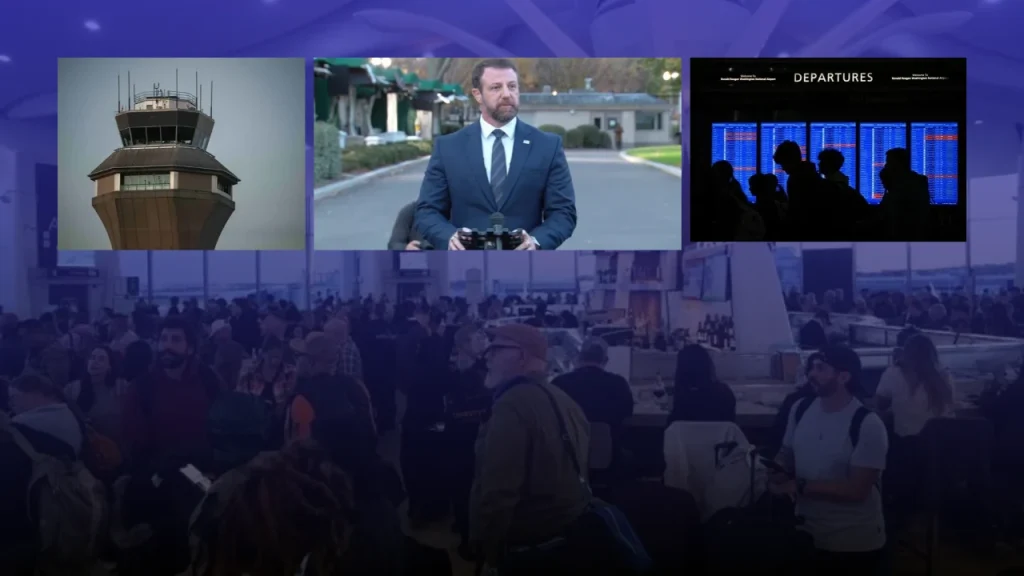
The Federal Aviation Administration (FAA) ordered a nationwide ground stop on Friday, November 13, 2026, halting all departures at U.S. airports after a telecommunications outage hit air traffic control. The order was issued shortly before 4 p.m. Eastern Time through the FAA’s Air Traffic Control System Command Center, “due to extraordinary circumstances and for reasons of safety.”
Aircraft already in the air were allowed to continue and land. New departures were held, and flights to the U.S. from abroad were handled case by case.
If your flight was canceled or significantly changed, federal law may entitle you to a refund even though the FAA, not your airline, caused the disruption. Hotels, meals and extra compensation are governed by different rules, covered below.
FAA Ground Stop Latest Status: What Is Confirmed and What Is Not
| Question | What is confirmed as of the latest reports |
| What happened? | FAA ordered a nationwide ground stop of departing flights |
| When? | Friday, November 13, 2026, shortly before 4 p.m. ET |
| Why? | Telecommunications outage affecting multiple Air Route Traffic Control Centers |
| Who ordered it? | FAA Air Traffic Control System Command Center |
| Were airborne planes affected? | No. Flights in the air continued to their destinations |
| Are airports closed? | No. A ground stop stops departures; it does not close terminals or runways |
| Is it a cyberattack? | Homeland Security Secretary Markwayne Mullin said there was “no indication as of yet” of a malicious attack |
| What is the exact technical cause? | Not publicly established |
| When will flights fully resume? | No guaranteed systemwide restart time; departures were being released in stages |
| Can passengers get refunds? | Yes, for qualifying cancellations and significant changes if the passenger declines alternatives |
Where it stood late Friday: In an update shortly after 6 p.m. ET, the FAA said the ground stop remained in effect and that as en route facilities recovered, flights would be allowed to depart through coordination with the Command Center. Some regional resumptions were reported, including Hawaiian and Alaska Airlines resuming West Coast flights. Homeland Security Secretary Mullin said there was no known timeline for full resolution.
Check the FAA’s current operations advisory and your airline’s flight-status page before leaving for the airport. This article will be updated when the FAA confirms the restriction has been lifted and when it identifies a cause.
What Caused the FAA Nationwide Ground Stop?
The FAA described the problem as a “temporary telecommunications outage” affecting communications, and according to an internal airline message reported by CNBC, radar, at multiple Air Route Traffic Control Centers (ARTCCs). These are the high-altitude facilities that guide aircraft between airports. Reports indicated the trouble began in the Chicago area and spread to other facilities.
When controllers cannot reliably communicate with aircraft and each other, the FAA stops adding departures to the system. That is the purpose of a ground stop.
Did a Cyberattack Cause the FAA Outage?
Mullin said there was no indication the outage was a deliberate attack, calling it a telecommunications outage “as of now,” and he said the incident was “not another 9/11.” He also said officials were not ruling anything out and that all flights were accounted for. “No indication” is not a final finding. The investigation was ongoing.
Was the Microsoft Outage Connected to the FAA Ground Stop?
Mullin said the ground stop was not linked to the disruptive Microsoft outage earlier in the week. No connection has been established.
Did the FAA’s New AI System Cause the Ground Stop?
Public reporting says investigators will look at whether there is any link to the FAA’s nationwide rollout of a new artificial intelligence system used to identify problems and reroute aircraft. No official finding has connected that system to the outage. Treat claims of a specific cause as unconfirmed until the FAA or the Department of Transportation says otherwise.
How Many Flights Were Delayed or Canceled by the FAA Ground Stop?
Flight-tracking services including FlightAware reported delays climbing from roughly 7,000 to more than 10,000 flights, along with thousands of cancellations, as Friday evening went on. These numbers are snapshots and change quickly. Trackers also reported roughly 3,000 to more than 4,000 aircraft inbound to U.S. airports when the order began.
Some airports reportedly began running short of space for parked aircraft during the stop.
When Will Flights Resume After the FAA Nationwide Ground Stop?
The FAA has not given a guaranteed time for every airport and airline to return to normal. Departures are being released in stages as en route facilities recover.
Even after the FAA lifts the order, delays can continue. Aircraft and crews are out of position, and a plane stuck in Chicago can delay later flights in Dallas or Atlanta. The end of an FAA ground stop and the end of airline delays are two separate events. Analysts noted that a long stop into the evening could stretch recovery into the weekend.
Saturday, November 14 travelers: Check your airline’s app and the FAA advisory before leaving. Do not assume your flight is canceled, and do not assume it is on time.
Can You Get a Refund if the FAA Ground Stop Canceled Your Flight?
Yes, in many cases. Under the U.S. Department of Transportation (DOT) refund rules, 49 U.S.C. § 42305 and 14 CFR Part 260, a passenger is entitled to a refund when the airline cancels a flight or makes a significant change and the passenger chooses not to accept the alternative offered. DOT states that the airline’s reason for the cancellation does not remove this right, so an FAA-caused outage does not erase it. The rules cover flights to, from and within the United States.
You may qualify for a refund if:
- The airline cancels your flight and you decline rebooking or other alternative transportation or compensation.
- The airline significantly delays your flight and you choose not to travel.
- The airline makes another significant change, such as a different origin or destination airport or added connections.
- The airline fails to provide a paid ancillary service, such as a seat or bag, and the rule’s conditions are met.
A nonrefundable ticket does not block a refund when the airline cancels or significantly changes your flight. If you take the delayed flight or accept the rebooking, you generally have no refund claim for the fare.
How Long Must a Delay Be to Qualify for a DOT Refund?
| Itinerary | Significant-delay threshold under 14 CFR Part 260 |
| Domestic | Arrival 3 hours or more later than scheduled |
| International | Arrival 6 hours or more later than scheduled |
The measure is the change in your scheduled arrival, not how long you sat at the gate. Check the DOT’s current refund page for the full definition of “significant change.”
Can an Airline Offer a Voucher Instead of a Cash Refund?
When federal law requires a refund and you decline the alternatives, the airline must refund your original form of payment. It cannot force a credit, voucher or eCredit on you. You may choose to accept a credit, but you are not required to.
| How you paid | Refund deadline after the refund is due |
| Credit card | Within 7 business days |
| Cash, check or other payment | Within 20 calendar days |
The refund covers the unused fare, taxes and required airline-imposed fees. If you already flew part of the trip, you are generally refunded the unused portion.
Whether an airline buries the cash option behind a credit is also the subject of a separate lawsuit, discussed in Delta Airlines Is Being Sued for Hiding Your Cash Refund Behind an Expiring eCredit Here Is What Passengers Need to Know. That case has no connection to the November 13 outage.
Do Airlines Have to Pay for Hotels and Meals During the FAA Ground Stop?
Not under U.S. federal law. There is no federal statute that makes a U.S. airline pay for hotels, meals or cash compensation for delays, and a nationwide FAA outage is outside an individual airline’s control. The DOT’s Airline Customer Service Dashboard shows what each major airline has committed to provide for delays and cancellations within its control, such as certain maintenance and crew problems.
Airlines can still help voluntarily, and some issue travel waivers during major disruptions. The airline’s contract of carriage controls what it has promised you.
| Item | What to know |
| Refund of unused fare | Required when the Part 260 conditions are met |
| Rebooking | Offered under airline policy; terms vary by carrier |
| Hotel | Not required by federal law for an FAA-caused disruption |
| Meal vouchers | Not required by federal law for an FAA-caused disruption |
| Cash compensation for inconvenience | Not required under U.S. law |
| Delayed-bag fee refund | May apply if the airline does not deliver your checked bag within the DOT’s time limits, which differ for domestic and international trips |
| Travel insurance | Depends on your policy, exclusions and documented losses |
Ask the airline for help before you buy an expensive replacement flight or hotel, and keep every receipt.
What Are Your Rights if You Are Stuck on a Plane During the FAA Ground Stop?
DOT’s tarmac-delay rule, 14 CFR § 259.4, with the underlying statute at 49 U.S.C. § 42301, requires covered U.S. airlines to follow tarmac-delay plans.
- Domestic flights: the airline must give passengers the opportunity to deplane before three hours on the tarmac.
- International flights: the airline must do so before four hours.
- Within two hours: the airline must provide adequate food and drinking water, and keep lavatories operable.
- Throughout: the airline must provide medical assistance for urgent needs and keep passengers informed.
Exceptions exist for safety, security and certain air traffic control determinations. Tell a flight attendant right away about urgent medical needs, and never leave an aircraft without authorization.
What Happens if the FAA Ground Stop Makes You Miss a Connection?
One ticket or one reservation: The airline is responsible for getting you to your final ticketed destination. If you are canceled or significantly changed and decline the alternative, you may be owed a refund for the unused portion. Tell the airline before abandoning any segment, because a no-show can cancel the rest of the itinerary.
Separate tickets: The second airline generally has no obligation to rebook you after a delay on an independently purchased first flight. Ask both airlines about waivers and check whether your travel insurance covers missed connections caused by air traffic control disruptions.
Are International Flights Affected by the FAA Ground Stop?
Yes. The FAA handled flights arriving from abroad individually, and departures from U.S. airports were held under the nationwide order. Check with your airline.
What Are Your Rights Under the Montreal Convention?
For international carriage, Article 19 of the Montreal Convention makes a carrier liable for damage caused by delay, subject to Article 20 and the carrier’s defense that it took all measures reasonably required to avoid the damage or that it was impossible to take them. Article 22 caps liability for delay damages per passenger. You must prove actual damage. It is not a fixed payment for everyone delayed.
What Are Your Rights Under European Union Regulation 261/2004?
Regulation (EC) No 261/2004 can apply to flights departing an EU airport, or arriving in the EU on an EU carrier. For cancellations and long delays, passengers keep the right to a refund or re-routing and to care such as meals and hotel when needed, even when the cause is an extraordinary circumstance. Fixed monetary compensation may not be owed when the airline shows extraordinary circumstances. A flight departing the U.S. on a non-EU airline generally falls outside the regulation.
Can You Sue an Airline or the FAA Over the November 13 Ground Stop?
A nationwide ground stop does not automatically create a class action or entitle everyone to damages. The FAA has authority over air traffic and ordered the stop for safety. Airlines are not automatically liable for a failure in federal air traffic control communications.
Can You File a Claim Against the FAA Under the Federal Tort Claims Act?
A claim against the federal government generally must go through the Federal Tort Claims Act (28 U.S.C. §§ 1346(b) and 2671-2680). It requires presenting an administrative claim first (28 U.S.C. § 2675(a)), and the statute bars claims based on discretionary functions (28 U.S.C. § 2680(a)). A decision to halt flights for safety is the type of decision the government can argue falls within that exception. This is a high bar. Speak with a licensed attorney about your specific facts.
Which Laws Protect Airline Passengers?
- 49 U.S.C. § 42305 and 14 CFR Part 260: airline refunds for cancellations, significant changes and unprovided services.
- 49 U.S.C. § 41712: DOT authority over unfair or deceptive airline practices, including misleading refund statements.
- 49 U.S.C. § 42301 and 14 CFR § 259.4: tarmac-delay protections.
- 49 U.S.C. § 41705 and 14 CFR Part 382: the Air Carrier Access Act, which protects passengers with disabilities during disruptions.
- Montreal Convention, Article 19: liability for delay on international flights.
- Regulation (EC) No 261/2004: passenger rights on covered EU flights.
- 15 U.S.C. § 1666 (Fair Credit Billing Act): you may dispute a credit-card charge for services not delivered, within the statutory time limits, if the airline refuses a refund you are owed.
No verified class action or compensation fund exists for the November 13, 2026 outage. Unrelated airline litigation should not be confused with this event, including Airline Price-Fixing Putative Class Action Lawsuits 2026, Can American, Delta, United and Southwest Passengers Get Refunds? and JetBlue Putative Class Action Claims Blue Fares Promised Free Seat Selection That Passengers Never Got, Kohanof v. JetBlue, Claims, Who May Qualify and Case Status.
What Should You Do Now if the FAA Ground Stop Affected Your Flight?
- Check your airline’s app or website for your flight’s current status.
- Check the FAA advisory for nationwide and airport-specific restrictions.
- Decide whether you still want to travel before accepting any rebooking.
- Request your refund in writing if you decline the alternative, and ask for it to your original form of payment.
- Save records: boarding passes, cancellation notices, itinerary changes and receipts.
- Ask about travel waivers, which may allow free changes.
- Check travel insurance and credit-card travel protections.
- Ask for a written explanation if the airline denies a refund.
How Do You File a Refund Complaint With the DOT Against an Airline?
- Contact the airline’s customer relations department in writing with your itinerary and what happened.
- Attach proof of the cancellation or significant change and state that you declined the alternative.
- If the airline refuses or does not respond, file a complaint through the DOT Aviation Consumer Protection complaint page.
DOT rules generally require airlines to acknowledge complaints within 30 days and respond substantively within 60 days. A DOT complaint can flag a violation, but it does not guarantee a payout.
When Was the Last Nationwide FAA Ground Stop?
The last nationwide ground stop before this one was on January 11, 2023, when a corrupted file crashed the FAA’s Notice to Air Missions (NOTAM) system; the stop was lifted by about 9 a.m. Eastern that morning. That event was the first nationwide ground stop since the September 11, 2001 attacks. The 2026 stop is tied to a telecommunications outage at en route control centers, not the NOTAM system.
The episode also revives debate over the strain on air traffic control, including aging equipment, communications reliability and controller staffing, and over federal modernization funding.
FAA Nationwide Ground Stop FAQ
Why were all U.S. flights grounded on November 13, 2026?
The FAA ordered a nationwide ground stop after a telecommunications outage affected communications at multiple Air Route Traffic Control Centers. It cited “extraordinary circumstances and reasons of safety.”
Is the FAA nationwide ground stop still in effect?
As of the latest reports reviewed, late on November 13, the FAA said the ground stop remained in effect while it allowed departures to resume in stages. Check the FAA advisory for the current status.
Were American, Delta, United and Southwest flights affected by the FAA ground stop?
The order covered departures nationwide, so all major U.S. airlines were affected. Individual flight status depends on each airline.
Does an FAA ground stop cancel every flight?
No. It holds departures. Airlines decide which flights to cancel or retime.
Can I get a refund for a flight canceled by the FAA ground stop?
Yes, if the flight was canceled or significantly changed and you decline the alternative. The reason for the cancellation does not remove the refund right under 14 CFR Part 260.
Does the airline have to pay for my hotel after the FAA ground stop?
Not under U.S. federal law for a disruption outside the airline’s control. Ask about voluntary assistance and check your travel insurance.
Can I get compensation for a missed wedding, cruise or meeting?
Not automatically. U.S. rules do not guarantee payment for consequential losses. Insurance or international rules such as the Montreal Convention may apply, depending on your facts.
Is the FAA ground stop a cyberattack?
Officials said there was no indication of one, but the investigation was ongoing.
Official FAA and DOT Resources for the Ground Stop
- FAA Air Traffic Control System Command Center, Current Operations Advisory
- DOT Airline Refund Rights
- DOT Airline Customer Service Dashboard
- DOT Tarmac Delay Rules
- DOT File an Airline Consumer Complaint
Bottom line: The November 13, 2026 FAA ground stop followed a telecommunications outage at air traffic control facilities, not a confirmed cyberattack. Passengers whose flights were canceled or significantly changed may be owed a cash refund even though the FAA caused the problem. Hotels, meals and extra compensation are not required by federal law and depend on airline policy, insurance and the facts of each trip.
This is a developing story, and details may change. This article provides general legal information, not legal advice.
Researched and written by Israr Ahmad, legal content researcher and founder of AllAboutLawyer.com. All facts verified against FAA statements as reported by CNBC, NBC News, PBS NewsHour, CNN and ABC7, and against the U.S. Department of Transportation’s published refund and tarmac-delay rules, as of November 14, 2026. Last Updated: November 14, 2026.
About the Author
Israr Ahmad is a legal content researcher with 4+ years of experience covering class action settlements and consumer rights cases. He has researched and published coverage of 2,500+ settlements using verified court records, settlement administrator filings, and government sources. Learn more about Israr.