
David Protein Bar Class Action Lawsuit 2026, Labels Allegedly Undercount Calories by 83%, Fat by 400%
A proposed class action lawsuit filed January 23, 2026, in New York federal court accuses Linus Technologies, Inc. — doing business as David Protein — of labeling its protein bars with significantly lower calorie and fat counts than they actually contain. Lab testing commissioned by the plaintiffs found the bars contain up to 83% more calories and up to 400% more fat per serving than advertised. No settlement exists. No claim form is available. The case is at the earliest litigation stage.
Quick Facts
- Case name: Lopez et al. v. Linus Technologies, Inc. d/b/a David Protein
- Case number: 1:26-cv-635
- Court: U.S. District Court, Southern District of New York
- Filed: January 23, 2026
- Defendant: Linus Technologies, Inc. d/b/a David Protein
- Settlement: ❌ None
- Claim form / deadline: ❌ None — active litigation only
- Who may be affected: U.S. consumers who purchased David Protein bars in California, Illinois, or New York
- Plaintiffs’ attorneys: Sultzer & Lipari PLLC; Bryson Harris Suciu & Demay PLLC
Current Status
The complaint was filed January 23, 2026. David Protein has not yet filed an answer. No class has been certified. No trial date has been set. No settlement. No claim form. No payment available at this time.
This page will be updated when a settlement is reached or a claim process opens.
What the Lawsuit Alleges
The 46-page complaint contends that Linus Technologies misleads consumers into believing its protein bars are healthier than they actually are by claiming on the front label and nutrition facts panel that the bars contain fewer calories and less total fat than they do.
Independent accredited laboratory testing commissioned by the plaintiffs found the bars contain between 268 and 275 calories per serving — compared to the 150 calories advertised. Fat content tested between 11 and 13.5 grams per serving, compared to just 2 grams stated on the packaging.
Why the Numbers Don’t Match: The EPG Dispute
The calorie and fat gap stems from how David calculates its nutrition figures. David’s bars use EPG — a modified saturated fat that the company says provides just 0.7 calories per gram. Because of this, David does not include EPG in the total fat count, even though it registers as fat in standard lab testing.
David has defended this approach, stating: “Some testing methods will incorrectly identify EPG as a 9-calorie-per-gram fat, which is both factually incorrect but also breaks all FDA guidelines.”
The plaintiffs counter that FDA regulations require the nutrient content of food products not to exceed the declared value by more than 20% — and that the discrepancies found in lab testing far exceed that threshold.
The lawsuit alleges David Protein knowingly misled consumers who rely on nutrition labels to make purchasing decisions — particularly health-conscious buyers managing calorie and fat intake for diet, weight management, or fitness goals.
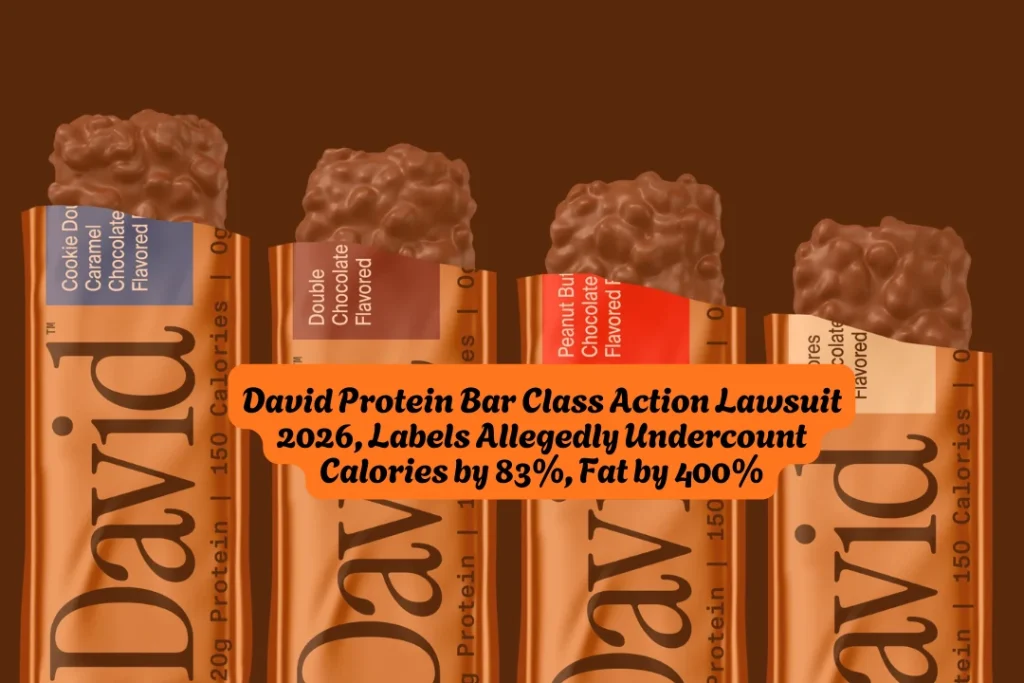
Products Named in the Lawsuit
The following David Protein bar flavors are named in the complaint:
- Chocolate Chip Cookie
- Cinnamon Roll
- Fudge Brownie
- Red Velvet
- Peanut Butter Chocolate Chunk
- Blueberry Pie
- Pumpkin Spice
- Cake Batter
Who Could Be Included
The lawsuit seeks to represent anyone in the United States who purchased the named David Protein bars, with state subclasses covering California, Illinois, and New York consumers.
You may qualify if:
- You purchased any of the eight named David Protein bar flavors
- You are a resident of the U.S. — particularly California, Illinois, or New York
- You relied on the nutrition label when deciding to buy the product
What the Lawsuit Alleges — Legal Claims
The complaint asserts violations of the Illinois Consumer Fraud and Deceptive Business Practices Act, the New York General Business Law, the California Unfair Competition Law, the California Consumers Legal Remedies Act, and the California False Advertising Law.
Plaintiffs are demanding a jury trial and are asking for damages, restitution, and injunctive relief to prevent David Protein from continuing to sell mislabeled products.
The Separate Antitrust Lawsuit: A Different Case
David Protein faces a second, entirely separate lawsuit — an antitrust case — that consumers should not confuse with the mislabeling class action.
Three food companies — OWN Your Hunger, Lighten Up Foods, and Defiant Foods — sued David Protein in June 2025 in the Southern District of New York, alleging it monopolized the supply of EPG, a novel low-calorie fat substitute, after acquiring Epogee — the sole manufacturer of EPG — just days before the lawsuit was filed.
A federal judge dismissed the antitrust case in February 2026, ruling the plaintiffs failed to adequately define the relevant market. The plaintiffs have stated the legal battle is not over. This antitrust case involves competing food businesses — not consumers — and no consumer claim process is associated with it.
Broader Context
The David Protein case is part of a growing wave of litigation targeting mislabeled nutrition claims in the supplement and fitness food space. AllAboutLawyer.com has covered the Jocko Protein Powder lawsuit — filed February 2026, alleging lead levels 2.5 times above California’s legal limit — and the Holmes Nutrition lawsuit, where independent lab tests found a $75 protein powder contained only 3.4 grams of protein per scoop despite advertising 22 grams.
FAQs
Is there a David Protein settlement I can file a claim for?
No. The lawsuit was filed January 23, 2026, and no settlement has been reached. No claim form or settlement website exists. Check back here for updates.
Which David Protein bars are covered?
Chocolate Chip Cookie, Cinnamon Roll, Fudge Brownie, Red Velvet, Peanut Butter Chocolate Chunk, Blueberry Pie, Pumpkin Spice, and Cake Batter.
How much more fat and calories do the bars allegedly contain?
Lab testing found 268–275 calories per bar versus 150 calories advertised — up to 83% more. Fat tested at 11–13.5 grams versus 2 grams advertised — up to 400% more.
Why does David say its labels are accurate?
David argues that EPG — the modified fat it uses — metabolizes at just 0.7 calories per gram, not the standard 9 calories per gram, and that standard lab testing methods misidentify EPG as a conventional fat. The lawsuit disputes whether this justifies the labeling methodology under FDA rules.
Has David Protein responded to the lawsuit?
David Protein had not filed an answer in court as of March 5, 2026, and has not issued a public statement directly addressing the mislabeling class action.
What should I do if I purchased these bars?
No action is required right now. Save any receipts or order confirmations showing your purchases — they may become relevant if a settlement is reached and a claim process opens.
By AllAboutLawyer.com Staff | Last Updated: March 5, 2026
This article is for informational purposes only and does not constitute legal advice. Legal claims and outcomes depend on specific facts and applicable law. For advice regarding a particular situation, consult a qualified attorney.
About the Author

Sarah Klein, JD, is a licensed attorney and legal content strategist with over 12 years of experience across civil, criminal, family, and regulatory law. At All About Lawyer, she covers a wide range of legal topics — from high-profile lawsuits and courtroom stories to state traffic laws and everyday legal questions — all with a focus on accuracy, clarity, and public understanding.
Her writing blends real legal insight with plain-English explanations, helping readers stay informed and legally aware.
Read more about Sarah