
Hefty Recycling Bags on Trial in Connecticut, What Reynolds Consumer Products Is Accused Of and What Comes Next
Connecticut state officials told a court that Hefty “recycling” bags marketed by Reynolds Consumer Products were routinely thrown away at recycling facilities because plastic bags can jam sorting machinery and contaminate recycling streams. The bench trial in Connecticut’s false advertising class action lawsuit against Reynolds began May 12, 2026 — four years after the state first sued — and puts one of the country’s most visible “greenwashing” cases squarely before a judge.
Hefty Recycling Bags Lawsuit Quick Facts
| Field | Detail |
| Case Name | State of Connecticut v. Reynolds Consumer Products LLC and Reynolds Consumer Products Inc. |
| Case Number | HHD-CV-22-6156769-S |
| Court | Connecticut Superior Court |
| Filed | June 14, 2022 |
| Trial Started | May 12, 2026 |
| Plaintiff | State of Connecticut, Attorney General William Tong |
| Defendant | Reynolds Consumer Products LLC and Reynolds Consumer Products Inc. |
| Law Allegedly Violated | Connecticut Unfair Trade Practices Act (CUTPA) |
| Relief Sought | Disgorgement of profits, civil penalties, attorneys’ fees, injunctive relief |
| Trial Type | Bench trial (judge decides — no jury) |
| Current Stage | Active trial — no verdict yet |
| Last Updated | May 21, 2026 |
What Is the Connecticut Hefty Bags Lawsuit About?
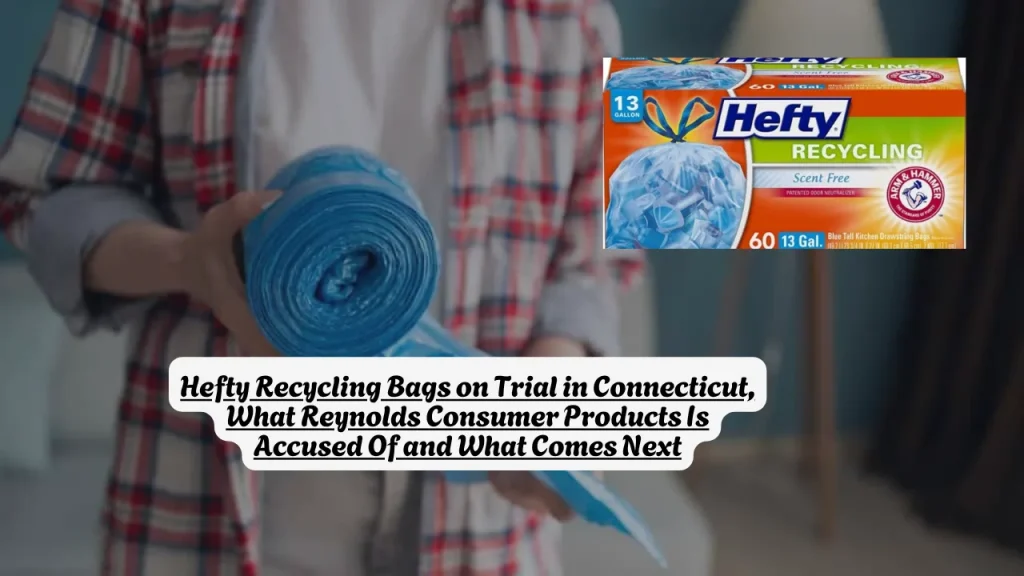
Reynolds advertises that their Hefty “Recycling Bags” are “perfect for all of your recycling needs” and “designed to handle all types of recyclables.” Connecticut’s Attorney General William Tong accused the company of making false and deceptive claims, arguing there is nothing about these bags that makes them more recyclable than any other basic garbage bag.
The core problem is how recycling facilities actually work. Sherrill Baldwin, an environmental analyst with the Connecticut Department of Energy and Environmental Protection, testified that plastic bags are considered “tanglers” at material recovery facilities because they can become caught in sorting equipment and require machinery shutdowns for removal. When a Hefty recycling bag full of bottles, cans, and cardboard arrives at a facility, workers do not open it to sort the contents. They throw the whole thing away — bag and recyclables together.
Connecticut’s guidance has clearly stated since at least 2017 that plastic bags should not go in curbside recycling. The Office of the Attorney General stated it is unaware of any recycling facility nationwide that welcomes these bags, describing them as fundamentally unsuitable for their advertised purpose.
The lawsuit alleges consumers who used the Hefty bags to collect recyclable items unknowingly sent otherwise recyclable cardboard, glass, and aluminum materials to landfills or incinerators. Connecticut AG Tong’s office filed the lawsuit in 2022, alleging Reynolds misled consumers through product packaging and advertising that suggested the bags were appropriate for municipal recycling programs. The state claims more than 100,000 boxes of the bags were sold in Connecticut.
This kind of deceptive environmental marketing — sometimes called “greenwashing” — is at the center of a growing wave of consumer fraud lawsuits against manufacturers who use eco-friendly language on products that do not deliver what that language implies. If you have followed other false advertising class action cases in this space, the pattern here is consistent with what other states have already proven in court.
Related article: The Farmer’s Dog Sued Over Excessive Fat in Dog Food, Are You Part of This Class Action?
Are You Part of the Connecticut Hefty Bags Lawsuit?
This case is brought by the Connecticut Attorney General on behalf of Connecticut residents — not a private class action. That means individual consumers do not need to do anything to be included, and there is no claim form to file right now.
You may be directly affected if:
- You purchased Hefty “Recycling” bags — including blue or clear bags marketed for recycling — in Connecticut
- You used those bags for curbside recycling and your recyclable materials ended up in the waste stream as a result
- You paid a premium for these bags believing they were compatible with Connecticut’s recycling system
You are likely NOT a party to this specific action if:
- You purchased the bags outside of Connecticut
- Your state has already reached a separate settlement (Minnesota, Arizona)
- You purchased the bags before July 2018 (covered by a now-closed separate national class action)
If you live outside Connecticut and believe you were harmed by the same marketing, read the section below on other states’ actions.
What Are Connecticut Plaintiffs Seeking in This Lawsuit?
Connecticut’s suit seeks damages including disgorgement of profits, civil penalties, costs and attorneys’ fees, as well as non-monetary relief to prevent further deception and harm to Connecticut consumers and the state’s recycling systems.
Disgorgement means Reynolds would have to pay back every dollar it made selling these bags in Connecticut — not just a fine. Combined with civil penalties under CUTPA and attorneys’ fees, the total exposure for Reynolds could significantly exceed what the company paid in other states to settle similar claims.
The court already denied Reynolds’s motion for summary judgment on Connecticut’s claims of unfair and deceptive practices, finding that the evidence is sufficient to raise genuine issues of fact — though it did grant the motion on the willfulness claim, meaning the judge found no evidence Reynolds acted willfully rather than negligently. That ruling narrowed the case but kept the core deception claims fully alive heading into trial.
What Should You Do If You Were Affected?
Most Connecticut residents who bought these bags do not need to take any action right now. Here is what makes sense depending on your situation:
- Connecticut residents: The AG is litigating this on your behalf. No claim form exists yet. Monitor the Connecticut AG’s website at portal.ct.gov/ag for updates as the trial progresses.
- Save your receipts or packaging if you still have them — if a settlement is eventually reached, documentation could support a larger individual restitution amount.
- Arizona residents: A separate $212,000 settlement is already in place. File a consumer complaint with the Arizona AG’s office before October 1, 2026 to be considered for restitution. No proof of purchase is required.
- Residents of other states: Contact your state AG’s consumer protection office if you believe you were misled by the same marketing.
Hefty Recycling Bags Lawsuit Timeline
| Milestone | Date |
| Connecticut AG files lawsuit | June 14, 2022 |
| Minnesota AG files similar lawsuit | June 2023 |
| National class action settled ($3–4M) — Gudgel v. Reynolds | 2023 (claims now closed) |
| Minnesota AG settles with Reynolds and Walmart ($216,670 + sales ban) | August 1, 2024 |
| Arizona AG files lawsuit | August 20, 2025 |
| Arizona AG settles with Reynolds ($212,000) | February 23, 2026 |
| Connecticut court denies Reynolds summary judgment on core claims | December 2025 |
| Connecticut bench trial begins | May 12, 2026 |
| Verdict | TBD — no timeline announced by the court |
| Possible settlement or appeal | TBD — pending trial outcome |
Frequently Asked Questions
Is there a class action lawsuit against Reynolds Consumer Products over Hefty bags?
Yes — though the main active case right now is the Connecticut state AG lawsuit, which went to trial on May 12, 2026. A separate national consumer class action (Gudgel v. Reynolds) already settled for approximately $3–4 million, but that claim period is now closed.
Do I need to do anything right now to be included in the Connecticut case?
No. The Connecticut AG is litigating this on behalf of Connecticut consumers. You are automatically covered if you are a Connecticut resident affected by the marketing. No claim form exists yet.
When will a settlement be reached in the Connecticut case?
TBD. The case is now in active trial before a judge. Reynolds and Connecticut could reach a negotiated resolution at any point, or the judge could issue a verdict after both sides present their full cases. There is no announced timeline.
Can I file my own lawsuit against Reynolds over the Hefty bags?
You can consult a consumer rights lawyer about your options. The national class action already settled and is closed. Individual suits are possible but complex. If you live in Arizona, filing a consumer complaint with the Arizona AG before October 1, 2026 is a simpler and faster path to restitution.
How will I know if the Connecticut lawsuit results in a settlement or judgment?
Follow updates from the Connecticut Attorney General at portal.ct.gov/ag. If a settlement fund is created for consumers, a claims process will be announced publicly, and AllAboutLawyer.com will cover it as soon as it is available.
Are the bags still being sold?
Originally branded as “recycling” bags, they have been relabeled as “blue” or “clear” bags since 2024, but the packaging still uses images associated with recycling and states the bags are “developed for use in participating municipal programs only.” Reynolds changed the labeling after pressure from multiple state AG offices but has not admitted wrongdoing in any of the cases.
Sources & References
- Connecticut AG Office press release, June 14, 2022: portal.ct.gov/ag
- State of Connecticut v. Reynolds Consumer Products, Case No. HHD-CV-22-6156769-S, Connecticut Superior Court
- Law360, “Hefty ‘Recycling’ Bags Are Trash, Connecticut Court Told,” May 12, 2026
- Arizona AG press release, February 23, 2026
Prepared by the AllAboutLawyer.com Editorial Team and reviewed for factual accuracy against Connecticut Superior Court records, the Connecticut AG’s official press releases, and Law360 trial coverage on May 21, 2026. Last Updated: May 21, 2026
Disclaimer: This article is for informational purposes only and does not constitute legal advice. Legal claims and outcomes depend on specific facts and applicable law. For advice regarding a particular situation, consult a qualified attorney.
About the Author
Israr Ahmad is a legal content researcher with 4+ years of experience covering class action settlements and consumer rights cases. He has researched and published coverage of 2,500+ settlements using verified court records, settlement administrator filings, and government sources. Learn more about Israr.