
Can Insurance Charge You for a Colonoscopy After a Positive Cologuard Test? Your Legal Rights in 2026 and 2027
Generally, no. Under the Affordable Care Act (ACA), most non-grandfathered private health plans must cover a qualifying follow-up colonoscopy after a positive Cologuard or other stool-based screening test without a deductible, copayment or coinsurance. Federal guidance issued January 10, 2022, treats the follow-up colonoscopy as an integral part of colorectal cancer screening, so an insurer cannot reclassify it as “diagnostic” just because the first test was abnormal.
There are real exceptions: Original Medicare has its own coinsurance rules when polyps or tissue are removed, grandfathered and short-term plans fall outside the mandate, out-of-network care can change the result, and a colonoscopy done to investigate symptoms is treated differently. If you were billed for a qualifying follow-up, you may be able to dispute the bill and recover the money.
By Israr Ahmad, Legal Content Researcher | Last updated: November 28, 2026
Colonoscopy After Positive Cologuard: Insurance Coverage Quick Facts
| Question | Answer |
| Is a follow-up colonoscopy covered after a positive Cologuard? | Generally yes |
| Can qualifying private insurance charge a deductible, copayment or coinsurance? | No, for in-network care |
| Federal requirement | ACA § 2713 (42 U.S.C. § 300gg-13) |
| Applies to plan or policy years beginning on or after | May 31, 2022 |
| Screening ages protected | 45-75 (USPSTF A and B recommendations) |
| Anesthesia | Generally included when medically appropriate |
| Polyp removal during screening | Generally no cost sharing under private insurance rules |
| Medicare coinsurance when tissue is removed, 2023-2026 | 15% |
| Medicare coinsurance, 2027-2029 | 10% |
| Medicare coinsurance, 2030 onward | 0% |
| Typical internal appeal deadline | 180 days from the denial notice |
| Automatic compensation program | None |
What Federal Law Requires Insurers to Cover After a Positive Cologuard: ACA Section 2713 and FAQs Part 51
Section 2713 of the Public Health Service Act (42 U.S.C. § 300gg-13) requires non-grandfathered plans to cover preventive services with an A or B U.S. Preventive Services Task Force (USPSTF) rating without cost sharing. In May 2021 the USPSTF lowered the starting age for colorectal screening to 45 (grade B for 45-49, grade A for 50-75) and recognized that stool-based screening is incomplete if an abnormal result isn’t followed by a colonoscopy.
On January 10, 2022, the Departments of Health and Human Services, Labor and Treasury issued FAQs About Affordable Care Act Implementation Part 51. Questions 7 and 8 address follow-up colonoscopies and the implementation date. For calendar-year plans, that generally meant January 1, 2023.
Why Did Insurers Charge for Follow-Up Colonoscopies Before?
Insurers often covered the stool test at $0, then coded the follow-up colonoscopy as diagnostic and applied the deductible and coinsurance. The federal clarification closed that gap: a colonoscopy after a qualifying positive test completes the screening, so an abnormal Cologuard result alone doesn’t justify diagnostic cost sharing.
Does a Positive Cologuard Test Mean You Have Colon Cancer?
No. A positive result means the test detected abnormalities that may be linked to cancer or precancerous changes. It isn’t a diagnosis. A follow-up colonoscopy lets a clinician investigate. Contact your provider promptly, and don’t delay care while resolving a billing dispute.
Which Positive Screening Tests Lead to a No-Cost Follow-Up Colonoscopy?
| Initial screening test | Follow-up under applicable ACA rules |
| Cologuard (multi-target stool DNA) | Generally required without cost sharing |
| Cologuard Plus | Generally protected if it qualifies as a covered screening test |
| Fecal immunochemical test (FIT) | Generally required without cost sharing |
| High-sensitivity guaiac fecal occult blood test | Generally required without cost sharing |
| CT colonography | Generally required after abnormal findings |
| Flexible sigmoidoscopy | Generally required after abnormal findings |
| Blood-based screening test | Depends on coverage requirements and state law |
| Test ordered to investigate existing symptoms | Diagnostic coverage rules may apply |
Blood-based tests need extra care because Medicare, state mandates and private plans don’t all use the same guidelines.
Who Qualifies for a Colonoscopy Without Out-of-Pocket Costs After a Positive Cologuard?
The federal mandate generally protects people who:
- Are in a non-grandfathered plan subject to the ACA requirement.
- Fall within the USPSTF population (average-risk, asymptomatic adults).
- Had a qualifying screening test with an abnormal result.
- Use in-network providers and satisfy lawful plan requirements.
Adults 76-85 get an individualized C recommendation, so the automatic no-cost mandate may not apply. People under 45 or with symptoms may have rights under their policy or state law instead. Source: USPSTF Colorectal Cancer Screening Recommendations.
Which Health Plans Must Cover a Follow-Up Colonoscopy? UnitedHealthcare, Aetna, Cigna, Humana, Blue Cross and Kaiser
The insurer’s name doesn’t decide your rights. The same company can administer ACA plans, self-funded employer plans, Medicare Advantage and grandfathered policies.
| Arrangement | General position |
| ACA Marketplace plans | Covered without cost sharing |
| Non-grandfathered employer plans, including self-funded | Generally protected |
| High-deductible plans subject to the mandate | Qualifying screening covered before the deductible |
| Original Medicare | Separate federal rules and coinsurance |
| Medicare Advantage | Separate Medicare rules and plan procedures |
| Medicaid expansion alternative benefit plans | Federal preventive coverage generally applies |
| Traditional Medicaid | Depends on eligibility and state rules |
| Grandfathered plans (unchanged since March 23, 2010) | Generally outside the mandate |
| Short-term, limited-benefit plans and health care sharing ministries | Generally outside the mandate |
| Uninsured | No automatic entitlement |
Can Your Insurer Charge a Deductible for a Colonoscopy After a Positive Cologuard?
For a qualifying colonoscopy protected by § 2713, no. Hypothetical example:
| Billing detail | Amount |
| Negotiated colonoscopy cost | $2,400 |
| Remaining deductible | $1,500 |
| Coinsurance after deductible | 20% |
| Patient cost if wrongly treated as diagnostic | $1,680 |
| Patient cost if protected preventive screening | $0 |
Actual figures depend on the plan and services performed.
Can Insurance Charge You if a Polyp Is Removed During the Colonoscopy?
Under private-insurance preventive rules, generally no. Federal guidance from February 2013 treats polyp removal during a qualifying screening colonoscopy as part of the screening, so finding and removing a polyp doesn’t by itself justify cost sharing. Separate therapeutic or surveillance procedures done for different clinical reasons may follow different rules, and Medicare has its own coinsurance schedule.
Related article: Federal Student Loan Interest Rate Reduction Deadline December 31, 2026, How Borrowers Can Qualify for the 1% Discount
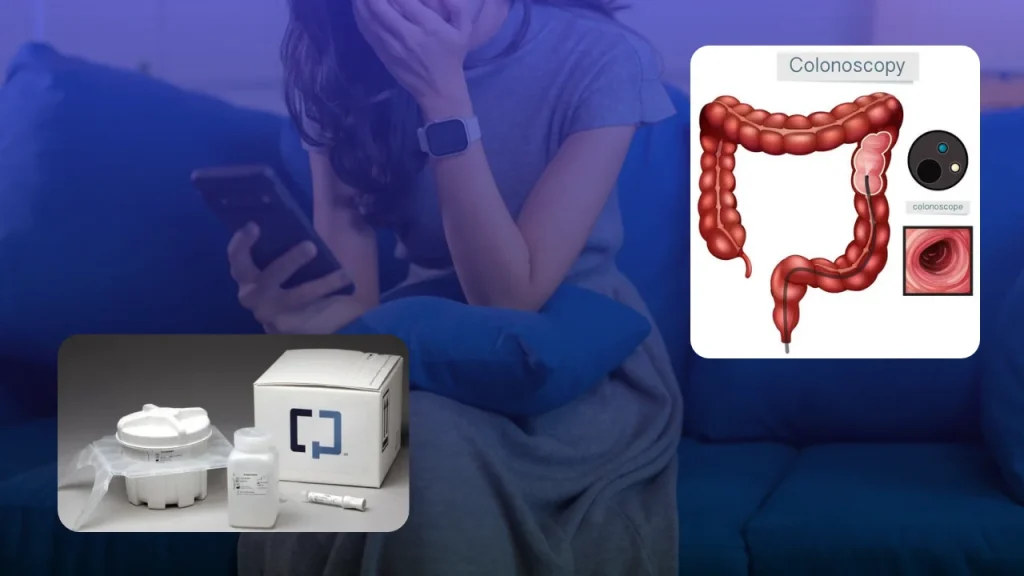
Medicare Colonoscopy Coverage 2027: Coinsurance Drops From 15% to 10%
Since January 1, 2023, Original Medicare has treated a colonoscopy after a positive Medicare-covered stool-based or blood-based test as a screening service, with no Part B deductible or coinsurance when the provider accepts assignment. But when a polyp or tissue is removed, coinsurance can apply. Section 122 of Division CC of the Consolidated Appropriations Act, 2021, phases it out:
| Year | Medicare coinsurance |
| 2022 | 20% |
| 2023-2026 | 15% |
| 2027-2029 | 10% |
| 2030 onward | 0% |
| Medicare-approved amount | 2026 at 15% | 2027 at 10% |
| $1,000 | $150 | $100 |
| $2,000 | $300 | $200 |
| $3,000 | $450 | $300 |
| $4,000 | $600 | $400 |
These are illustrations. Medigap, Medicaid or other coverage may lower what a beneficiary pays. Don’t delay a medically necessary colonoscopy to get a lower rate.
Sources: Medicare: Colonoscopy coverage and CMS: CY 2022 Physician Fee Schedule final rule.
Are Anesthesia, Pathology and Bowel Prep Free With a Preventive Colonoscopy?
Yes, when they are integral to a qualifying preventive colonoscopy and the services are in-network.
| Service | General ACA protection |
| Pre-procedure specialist consultation | Covered without cost sharing when medically appropriate |
| Prescribed bowel preparation | Covered, subject to plan medical management |
| Medically appropriate anesthesia | Covered without cost sharing |
| Polyp removal during screening | Covered without cost sharing |
| Pathology of a polyp removed during screening | Covered without cost sharing |
| Unrelated medical treatment | Ordinary coverage rules |
An insurer can’t necessarily avoid its obligation because the anesthesiologist or lab bills separately. If you get several bills, ask for review of each.
Why Was My Colonoscopy Billed as Diagnostic? Common Coding Errors
A colonoscopy can be diagnostic when it investigates symptoms or a known condition. But many improper bills come from errors, not exclusions:
- Missing or wrong preventive modifier.
- The positive stool test not linked to the claim.
- Anesthesia or pathology claims submitted without the preventive indicator.
- Wrong application of screening frequency limits.
- Network-status disputes.
Colonoscopy Billing Codes: Modifier 33, Modifier PT and Modifier KX
| Code or modifier | General purpose |
| CPT modifier 33 | Identifies a preventive service on commercial claims |
| Medicare modifier PT | Marks a colorectal screening that became diagnostic or therapeutic |
| Medicare modifier KX | Used for a follow-on screening colonoscopy after a positive stool test |
| ICD-10-CM Z12.11 | Encounter for colorectal cancer screening |
| ICD-10-CM R19.5 | Other fecal abnormalities (may include abnormal stool test results) |
| CPT 45378 | Common colonoscopy code |
| CPT 45385 | Colonoscopy with snare removal of lesions |
In October 2024, federal agencies issued ACA Implementation FAQs Part 68 on preventive claims processing, including a preventive colonoscopy with polyp removal. Ask your provider and insurer whether the claims were coded and processed correctly, but don’t demand a code that misstates the procedure. Coding must match the services and documentation.
Can You Be Charged for Out-of-Network Anesthesia After a Free Colonoscopy? The No Surprises Act
ACA zero-cost rules generally apply to in-network providers. But the federal No Surprises Act can protect you when an out-of-network anesthesiologist, pathologist or assistant surgeon treats you at an in-network hospital, hospital outpatient department or ambulatory surgical center, and you generally can’t be charged more than in-network cost sharing, which for a protected preventive colonoscopy is $0. Under 45 C.F.R. § 147.130, a plan must also cover a required preventive service without cost sharing out-of-network if it has no in-network provider able to deliver it. Choosing an out-of-network facility on your own may give a different result.
Official guidance: CMS: Medical Bill Rights.
How to Dispute an Incorrect Colonoscopy Bill After a Positive Cologuard
- Get your Explanation of Benefits (EOB). It shows how the claim was processed and what was applied to your deductible, coinsurance or noncovered amounts. It isn’t a bill.
- Request itemized bills from the physician, facility, anesthesia group and pathology lab, including procedure codes, modifiers and diagnosis codes.
- Collect documentation: the positive Cologuard result, the referral and colonoscopy order, and relevant records.
- Ask the provider for a coding review to confirm the claim reflects a colonoscopy completing a qualifying screening.
- Ask the insurer to reprocess the claim, citing ACA § 2713 and FAQs Part 51, Questions 7 and 8.
- File a formal written internal appeal. Many private plans allow 180 days from the denial notice. A phone complaint may not count.
- Request independent external review if the appeal is denied, generally within four months of the final determination. Purely administrative billing disputes may not qualify, so also contact your insurance regulator.
Official resources: HealthCare.gov internal appeals and external review.
Sample appeal letter
Subject: Formal Appeal of Improper Cost Sharing for Follow-Up Colorectal Cancer Screening
Dear Appeals Department, I am appealing the cost-sharing determination for my colonoscopy performed on [date] following a positive [Cologuard / FIT / other] screening test. Claim number: [number]. Disputed patient responsibility: $[amount]. Under Section 2713 of the Public Health Service Act, 42 U.S.C. § 300gg-13, and ACA Implementation FAQs Part 51, Questions 7 and 8, a qualifying follow-up colonoscopy is an integral part of colorectal cancer screening and must be covered without cost sharing. Please review the clinical documentation, billing codes and policy provisions, reprocess the claim if cost sharing was imposed in error, and remove or reimburse any improper patient responsibility. Please provide a written determination with any remaining appeal rights. Sincerely, [Name, member number, claim reference, contact information]. Enclosed: screening result, referral, bills and EOB.
Can You Get a Refund if You Already Paid for the Colonoscopy?
Potentially. If the insurer finds the claim was processed incorrectly, it can reprocess it and adjust what is owed, and if you already paid, ask the provider’s billing department to refund you after the corrected determination. There is no universal refund program for procedures done before the federal requirements applied, and eligibility depends on the rules in effect at the time, your coverage and claim deadlines.
Can a Hospital Send Your Disputed Colonoscopy Bill to Collections?
An appeal doesn’t automatically stop collection activity. Tell the billing department about the dispute and ask for a written collection hold. If a covered third-party collector contacts you, the Fair Debt Collection Practices Act gives you debt validation rights, and a written dispute within the 30-day validation period generally requires the collector to pause collection until it verifies the debt.
Incorrect medical billing can also draw state enforcement, as discussed in Crozer Health Medical Debt Collections Paused, What Delaware County Patients Should Do About United MediCorp Bills. That investigation is separate from the federal screening rules.
Can an Unpaid Colonoscopy Bill Hurt Your Credit Score?
Potentially, though the three major credit bureaus voluntarily exclude certain medical collections, generally paid collections, collections with an original balance under $500 and collections within the one-year waiting period. State laws may add limits. Read Does Medical Debt Affect Your Credit Score? What Every American Needs to Know in 2026 and Which States Ban Medical Debt From Credit Reports in 2026 and 2027? Complete State-by-State Guide. These protections don’t cancel valid medical debts.
Can You Sue Your Insurer for Charging You for a Preventive Colonoscopy?
Possibly, depending on your coverage and the facts.
| Authority | Relevance |
| 42 U.S.C. § 300gg-13 | Federal preventive services mandate |
| 45 C.F.R. § 147.130 | Preventive services regulations |
| 45 C.F.R. § 147.136 | Internal claims and external review |
| ERISA § 502, 29 U.S.C. § 1132 | Employer plan benefit claims |
| ERISA § 514, 29 U.S.C. § 1144 | Preemption of some state-law claims |
| Insurance contract law | Failure to provide promised coverage |
| State insurance bad-faith laws | Unreasonable claim denials |
| No Surprises Act | Prohibited out-of-network charges |
| Fair Debt Collection Practices Act | Improper collection activity |
| Fair Credit Reporting Act | Incorrectly reported medical collections |
Not every wrong bill is bad faith, since the provider may have submitted inaccurate information or the insurer may have made a fixable error. Employer-plan members may need to exhaust ERISA claims procedures before suing. No automatic damages exist simply because a bill was first processed incorrectly.
Where to Report an Improper Colonoscopy Charge
| Organization | Contact |
| State Department of Insurance | Find your state insurance department |
| Employee Benefits Security Administration (self-funded employer plans) | 1-866-444-3272 |
| Federal No Surprises Help Desk | 1-800-985-3059 |
| Medicare | 1-800-633-4227 |
| Medicare appeals | Official Medicare appeal procedures |
| Health Insurance Marketplace | 1-800-318-2596 |
| Consumer Financial Protection Bureau | Submit a complaint |
For a state-regulated individual or fully insured employer policy, your state insurance department may investigate. For a self-funded employer plan, the Employee Benefits Security Administration is usually the right agency.
FAQ: Colonoscopy Coverage After a Positive Cologuard Test
Is a colonoscopy after a positive Cologuard preventive or diagnostic?
For patients covered by the federal mandate, it completes the preventive screening for coverage purposes, though clinical and billing classifications can still vary.
Can my insurer charge me $2,000 for a follow-up colonoscopy after Cologuard?
Only if an exception applies, such as a grandfathered plan or out-of-network care. Otherwise the charge may be improper.
Is a follow-up colonoscopy free with a high-deductible health plan?
Generally yes, when the plan is subject to the ACA mandate and the procedure qualifies.
Does Medicare pay for a colonoscopy after a positive Cologuard?
Yes for qualifying Medicare-covered screenings, but coinsurance may apply if a polyp or tissue is removed.
What is Medicare’s colonoscopy coinsurance in 2027?
It falls to 10% on January 1, 2027, for qualifying screening procedures involving tissue removal.
Can insurance charge separately for anesthesia?
Not generally when medically appropriate anesthesia is part of a protected preventive colonoscopy, though out-of-network rules can matter.
Does a positive Cologuard result mean cancer?
No. Further evaluation is needed to find the cause.
Can I refuse to pay an incorrect bill?
You can dispute it, but ignoring it may lead to collections. Dispute in writing and ask for a collection hold.
Can I appeal without a lawyer?
Yes. Patients can generally file insurance appeals themselves, though a lawyer may help with large or unresolved disputes.
Final Takeaway on Insurance Coverage for a Colonoscopy After a Positive Cologuard
A positive Cologuard result doesn’t let a covered private plan charge a deductible, copayment or coinsurance on the required follow-up colonoscopy. Medicare follows separate rules, including coinsurance on tissue removal that falls from 15% to 10% in 2027. If you get an unexpected bill, get your EOB, ask for a coding review, cite the preventive services requirements and file a formal appeal before the deadline. Don’t put off medical care over coverage questions.
Primary Sources and Legal References
- U.S. Department of Labor: ACA Implementation FAQs Part 51
- U.S. Department of Labor: ACA Implementation FAQs Part 68
- USPSTF: Colorectal Cancer Screening Recommendations
- 42 U.S.C. § 300gg-13
- 45 C.F.R. § 147.130
- Medicare: Colonoscopy Screening Coverage
- CMS: Medicare Coinsurance Phaseout for Colorectal Cancer Screening
- Medicaid: ACA Preventive Services Provisions
- HealthCare.gov: Insurance Appeal Rights
- CMS: Medical Bill Rights
Disclaimer: AllAboutLawyer.com is an independent legal information site, not a law firm or healthcare provider. This is general information, not legal or medical advice. Coverage depends on your plan, medical circumstances and applicable law.
Researched and written by Israr Ahmad, legal content researcher and founder of AllAboutLawyer.com. All facts verified against the U.S. Department of Labor’s ACA FAQs, USPSTF recommendations, CMS and Medicare guidance, and HealthCare.gov appeal rules, as of November 28, 2026. Last Updated: November 28, 2026.