
Cento Fine Foods Faces “Tomato Fraud” Lawsuit, Are the San Marzano Tomatoes on Your Shelf the Real Thing?
Cento Fine Foods, based in New Jersey, is facing a proposed class action lawsuit claiming it misled consumers by labeling its tomatoes as “certified” San Marzano despite allegedly failing to meet the strict standards associated with the variety, according to a May 4 complaint filed in federal court in California. Two California grocery shoppers brought the case, accusing the country’s most recognizable Italian food brand of selling a premium product under a label it no longer has the right to use. Cento has dismissed the claims and called the allegations meritless.
Quick Facts About Cento Fine Foods Faces “Tomato Fraud” Lawsuit
| Field | Detail |
| Defendant | Cento Fine Foods, Inc. (Thorofare, New Jersey) |
| Products at Issue | Cento Certified San Marzano Tomatoes; Cento Organic Certified San Marzano Tomatoes |
| Plaintiffs | Two California residents |
| Court | U.S. District Court for the Northern District of California |
| Date Filed | May 4, 2026 |
| Current Case Stage | Proposed class action — litigation phase, no settlement |
| Alleged Violation | California Unfair Competition Law; California Consumer Legal Remedies Act |
| Claim Deadline | TBD — no settlement or claims process exists |
| Damages Sought | $25 million or more |
| Cento’s Response | Denies all allegations; calls lawsuit “entirely without merit” |
| Last Updated | May 7, 2026 |
What Is the Cento Fine Foods Lawsuit About?
Walk into any grocery store in the country and you will find Cento’s signature cans with their red-and-white label and the words “Certified San Marzano” printed prominently on the front. For millions of home cooks, those words mean something — they signal that what is inside is not just any canned tomato. They suggest Italy’s most prized tomato variety, grown in a specific volcanic soil region south of Naples, certified by the organization that has regulated these tomatoes for decades.
The lawsuit says that signal is false.
On the tomato cans and on the company’s website, Cento says its San Marzano tomatoes are certified by an independent third-party agency called Agri-Cert. The lawsuit alleges Cento’s labeling suggests the product has an official DOP designation, a label granted to San Marzano tomatoes by an Italian consortium that stands for “protected designation of origin.”
DOP — Denominazione d’Origine Protetta in Italian, or Protected Designation of Origin in English — is a legal classification under European Union rules. In the same way that sparkling wines marketed as champagne should originate from France’s Champagne region, under EU law and international treaties, a true San Marzano tomato should always originate from Campania in southern Italy. The certification body for San Marzano tomatoes is Il Consorzio di Tutela del Pomodoro San Marzano DOP, a private consortium based in Italy that sets and enforces every requirement — from the exact fields where the tomatoes must grow to how they are harvested and processed.
Related article: Apple Brings In HSF Kramer to Fight the £3 Billion iCloud Class Action Here Is What UK iPhone Users Need to Watch
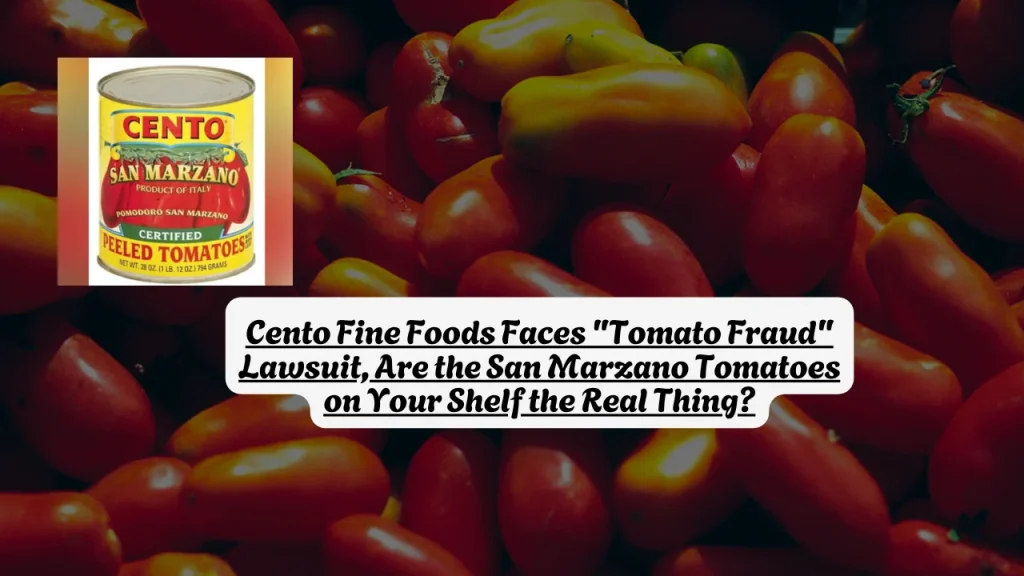
The complaint alleges Cento’s use of “certified” falsely suggests the products are officially recognized San Marzano tomatoes, calling the brand “the primary culprit of this tomato fraud in the United States.”
“San Marzano tomatoes are considered the Ferrari or Prada of canned tomato varieties,” the lawsuit states, quoting Martha Stewart’s website. “Loyalists say they are well worth the higher price tag compared to other Italian or domestically produced options.”
That higher price tag is central to the legal theory. If consumers pay a premium believing they are getting the real thing, and they are actually getting something certified by a lesser-known third party with no connection to the Italian consortium, the plaintiffs argue they have been deceived and overcharged. For related context on how courts handle this kind of food labeling dispute, see our coverage of the Hershey false advertising class action, which raises similar questions about the gap between packaging and product reality.
Are You Part of the Cento San Marzano Class Action Lawsuit?
This case is in its early stage. No class has been certified by a court yet — the two plaintiffs have asked a judge to let them represent all affected consumers, but that has not been approved. Still, it is worth knowing whether you fall within the group they are trying to represent.
You may be part of this class if:
- You purchased Cento Certified San Marzano Tomatoes or Cento Organic Certified San Marzano Tomatoes in the United States
- You paid a price premium for the product based on its “Certified San Marzano” labeling
- You believed the tomatoes were certified by the Italian consortium (DOP) or of equivalent quality
You are likely NOT included if:
- You purchased other Cento products not labeled as “Certified San Marzano”
- You purchased the product knowing the certification came from a third-party certifier other than the Italian consortium
- You are a director, officer, or employee of Cento Fine Foods
The plaintiffs said they bought the tomatoes assuming they were certified San Marzanos but found them “not satisfactory” because “they were not authentic.” The customers added that they “never” would buy the tomatoes at the premium price “if they had known they were inauthentic.”
What to do right now: Nothing yet. There is no claim form, no settlement website, and no deadline to file anything. Most class members are automatically included if the case proceeds — they do not need to file a separate lawsuit or take any legal action at this stage. Save your receipts if you have them. Monitor official case filings on PACER.gov for updates.
What Plaintiffs Are Asking the Court to Do In Cento Fine Foods Faces “Tomato Fraud” Lawsuit
The lawsuit does not ask for the tomatoes to be pulled from shelves. What it asks for is money and a change in how Cento markets its products.
The plaintiffs are demanding that Cento bears the cost of the class notice and pays $25 million or more to the class members. The complaint also demands $500 “in restitution, damages, punitive damages, and interest” to each plaintiff, along with an additional $10,000. It also demands $500,000 for attorney fees and costs.
The lawsuit also asks the court to order Cento to change its labeling and marketing practices. Specifically, the plaintiffs want Cento to stop describing its tomatoes as “certified” in any way that creates the impression that the certification comes from the Italian consortium, unless that is actually the case.
No specific amount is available to consumers yet. No money has changed hands. No settlement has been proposed. Those numbers will only become real if the court certifies the class, if the case survives a motion to dismiss, and if Cento ultimately agrees to settle or loses at trial.
What Cento Fine Foods Says
Cento has pushed back firmly and pointed to a history of defending exactly this type of claim.
In a statement to ABC News, a lawyer for Cento Fine Foods said the lawsuit is “entirely without merit” and vowed to “defend this claim vigorously.” “We believe this claim is entirely without merit. We have previously successfully defended a comparable lawsuit in New York federal court and will defend this claim vigorously as well, including seeking prompt dismissal,” the statement read.
The company’s defense rests on several points. The company claims its San Marzano tomatoes are grown and produced in the Sarnese Nocerino area of Italy, and that its production plant in the San Marzano region of Campania sits in the shadow of Mount Vesuvius. The company website offers consumers a way to trace their product back to its exact origin, including a “Find My Field” option by lot code.
It said it voluntarily stopped seeking certification from the consortium in the 2010s because of labeling requirements. The lawsuit tells a different story. The lawsuit alleges the removal was linked to an investigation into “counterfeit DOP labeling.” Cento has not commented on that specific allegation.
Why This Case Is Harder to Win Than It Looks — and Why It Might Succeed Anyway
Cento has been here before. The New York case referenced in the statement refers to a similar lawsuit against Cento that was dismissed by a federal judge in 2020. That lawsuit alleged Cento was selling unknowing customers an “inferior” product — third-party-certified San Marzano tomatoes — and that customers would not pay for Cento’s products if they “knew the truth” about them. The judge in that case wrote that a “reasonable consumer” was unlikely to seek out a specific “Consortium certified” San Marzano tomato over one that matched the same standards but was certified by a different body.
That 2020 ruling is Cento’s strongest argument for a quick dismissal here. California federal courts apply a similar “reasonable consumer” standard. If the judge finds that a typical grocery shopper buying Cento’s cans would not specifically expect consortium DOP certification — only some form of certification — the case could be dismissed early.
But the 2026 lawsuit may be constructed to avoid that outcome. The case also highlights a broader legal difference between Europe and the United States. In the EU, PDO protections carry binding legal force. In the U.S., however, geographic and origin-related food terms are regulated more loosely unless they amount to explicit fraud. The plaintiffs’ legal theory under California’s Unfair Competition Law and Consumer Legal Remedies Act gives them a somewhat broader toolkit than federal law alone, and California courts have historically been willing to let food labeling cases move forward past the pleading stage.
The complaint also alleged that Cento makes many false references asserting the product is DOP certified on its website and Amazon page — claims that go beyond the label itself and could provide additional grounds for the case to survive initial court challenges.
Cento Fine Foods Lawsuit Timeline
| Milestone | Date |
| Similar lawsuit filed in New York | 2019 |
| New York lawsuit dismissed | 2020 |
| Current California lawsuit filed | May 4, 2026 |
| Court & Jurisdiction | U.S. District Court for the Northern District of California |
| Class Certification Motion | TBD — pending court scheduling |
| Next Scheduled Hearing | TBD |
| Expected Settlement Timeline | TBD — no settlement exists; litigation in early stage |
Frequently Asked Questions
Is there a class action lawsuit against Cento Fine Foods?
Yes. A proposed class action was filed on May 4, 2026, in the U.S. District Court for the Northern District of California. Two California consumers are suing on behalf of all U.S. shoppers who purchased Cento Certified San Marzano Tomatoes believing them to be authentic DOP-certified products.
Do I need to do anything right now to be included?
No. If the court certifies a class, most eligible consumers will be automatically included based on purchase history. There is no claim form, no deadline, and nothing to file at this stage. Save your receipts if you have them.
What makes San Marzano tomatoes special — and why does certification matter?
San Marzano tomatoes originate from Italy’s Campania region and carry a “protected designation of origin” — DOP — status regulated by Il Consorzio di Tutela del Pomodoro San Marzano DOP, which oversees production standards and regional origin requirements. The consortium requires hand harvesting, a specific growing region, and strict quality controls. Certified cans carry a DOP seal and a numbered label. Cento’s cans do not carry that seal — they reference Agri-Cert, a different certifying body.
When will a settlement be reached in the Cento case?
There is no settlement and no settlement talks have been reported. The case is at its earliest stage. Cento has signaled it will seek dismissal promptly, so the next major development will likely be a motion to dismiss — not a settlement.
Can I file my own lawsuit against Cento instead of joining this class action?
Yes, but you would need to opt out of the class action before the opt-out deadline — which has not been announced yet because the class has not been certified. Individual consumer fraud claims against food companies are difficult and expensive to pursue alone. Most attorneys advise waiting to see whether the class action proceeds.
How will I know if the case settles or a claim form becomes available?
Monitor this page for updates. You can also track the case directly at PACER.gov by searching for the defendant name Cento Fine Foods in the Northern District of California filings from May 2026.
Has Cento won similar cases before?
Yes. A comparable lawsuit was dismissed by a federal judge in New York in 2020. The judge found that a “reasonable consumer” was unlikely to seek out a specific Consortium-certified San Marzano tomato over one that matched the same standards but was certified by a different body. The California plaintiffs have structured their complaint to address that reasoning, citing California-specific consumer protection statutes and pointing to additional marketing claims on Cento’s website and Amazon page beyond just the label.
Sources & References
- Court Filing: U.S. District Court for the Northern District of California, complaint filed May 4, 2026
Disclaimer: This article is for informational purposes only and does not constitute legal advice. Legal claims and outcomes depend on specific facts and applicable law. For advice regarding a particular situation, consult a qualified attorney.
Prepared by the AllAboutLawyer.com Editorial Team and reviewed for factual accuracy against the original complaint filed in the U.S. District Court for the Northern District of California and verified reporting from ABC News and CBS News on May 7, 2026. Last Updated: May 7, 2026
About the Author
Israr Ahmad is a legal content researcher with 4+ years of experience covering class action settlements and consumer rights cases. He has researched and published coverage of 2,500+ settlements using verified court records, settlement administrator filings, and government sources. Learn more about Israr.