
California Loud Commercials Law 2027, What Streaming Services, Spotify and Podcasts Must Change
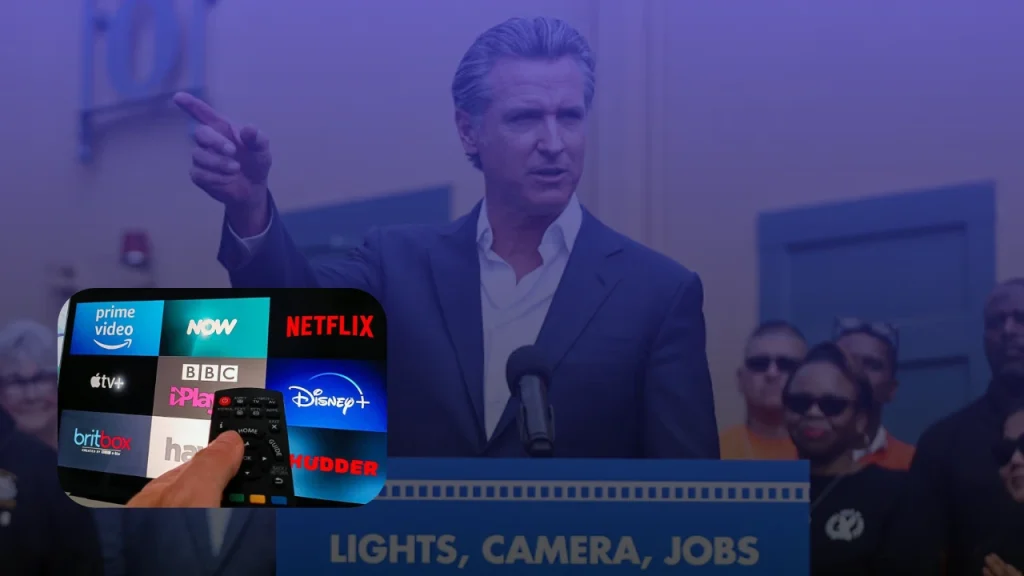
Starting January 1, 2027, California will bar covered music streaming, podcast streaming and video streaming services from transmitting the audio of commercial ads louder than the content those ads accompany. The law is Senate Bill 96 (SB 96), Chapter 735 of the Statutes of 2026, signed by Governor Gavin Newsom on September 28, 2026.
SB 96 builds on SB 576, California’s earlier law covering video streaming platforms, which began July 1, 2026. The new law extends the same idea to music, podcasts and user-generated video services.
It does not ban ads, set a decibel limit or promise consumers money. It also does not name specific companies, so whether a platform is covered depends on how its service works and how it carries ads.
California SB 96 at a Glance
| Detail | Information |
| Bill | Senate Bill 96 |
| Law | Chapter 735, Statutes of 2026 |
| Signed | September 28, 2026 |
| Effective date | January 1, 2027 |
| Author | Senator Thomas Umberg |
| Code sections | Business and Professions Code §§ 22775–22776 |
| Earlier law | SB 576 (video streaming, effective July 1, 2026) |
| Newly covered | Music streaming and podcast streaming |
| User-generated video | Expressly included |
| Technical standard | Federal CALM Act loudness rules |
| Universal decibel limit | None |
| Automatic consumer compensation | None |
| Who is protected | Consumers residing in California |
Official source: Chaptered text of SB 96.
What Does SB 96 Require?
Covered services that serve California residents may not transmit the audio of commercial ads louder than the content the ads accompany. The loudness standard follows the federal CALM Act framework rather than a single volume number.
The law covers three kinds of services:
- Music streaming services
- Podcast streaming services
- Video streaming services, including user-generated video streaming services
It does not require every song, show or ad to play at the same absolute volume. It compares an ad to the content around it.
Why California Passed the Law
The complaint behind it
Many people have noticed ads that jump out louder than the music, podcast or show they interrupt. That is especially jarring with headphones, late at night, or when a child is asleep nearby. Senator Umberg’s earlier SB 576 was reportedly inspired by a staffer whose sleeping baby was woken by a loud streaming ad.
The gap in federal law
Congress passed the federal Commercial Advertisement Loudness Mitigation (CALM) Act in 2010, but it was written for broadcast and cable television, not internet streaming. SB 576 closed part of that gap for video streaming. SB 96 closes more of it.
SB 576 vs. SB 96
| Feature | SB 576 | SB 96 |
| Compliance date | July 1, 2026 | January 1, 2027 |
| Video streaming | Covered | Covered |
| Music streaming | Not expressly covered | Covered |
| Podcast streaming | Not expressly covered | Covered |
| User-generated video | Not clearly covered | Expressly included |
| Technical standard | Federal CALM Act rules | Federal CALM Act rules |
Video streaming rules already apply under SB 576. The 2027 law expands them rather than creating California’s first streaming ad rule.
For other state changes, see our roundup of 900+ new California laws.
Which Services Are Covered?
The statute works by category, not by company name. A video streaming service generally means an entity that delivers video programming or content directly to consumers over the internet, and user-generated video services are expressly included.
Illustrative examples
These are examples of the types of services that may fall within the statute. They are not an official list, and they do not mean any company has broken the law.
| Service type | Examples that may fit |
| Ad-supported music streaming | Spotify free tier, Pandora, YouTube Music, Amazon Music |
| Ad-supported podcast streaming | Spotify, other podcast apps and networks that carry ads |
| Ad-supported video streaming | Netflix, Hulu, Disney+, Peacock, Prime Video, with ad tiers |
| User-generated video | YouTube, TikTok, Instagram, Twitch |
The law’s definitions for music and podcast services are not detailed, so some arrangements may need further legal interpretation.
Services outside the video definition
The video streaming definition excludes broadcast stations, cable operators and other multichannel video programming distributors, plus services that carry no commercial ads. Those traditional providers are generally covered by federal CALM Act rules instead. An ad-free premium tier does not exempt a company’s separate ad-supported tier.
Related article: California Disability Paperwork Fee Law 2027, Can Doctors Charge You for EDD Disability and Paid Family Leave Forms?
Does SB 96 Apply to Spotify?
Spotify’s ad-supported music and podcast services are the kind of service SB 96 is aimed at. Spotify publishes its own technical specifications for audio ads, but those are the company’s standards, not the numeric requirements of California law.
Whether a particular ad complies depends on the applicable loudness standard, the ad as transmitted and the content it accompanies. See Spotify’s audio ad specifications.
Does SB 96 Apply to YouTube, TikTok and Instagram?
Potentially. The law expressly brings user-generated video streaming services within the video streaming definition, which matters for platforms where users upload videos and the platform places ads.
The law does not regulate the volume of every user video. It applies to commercial ads the service transmits, and coverage of a specific feature depends on whether it meets the definition.
Does It Apply to Podcast Sponsorships?
Podcast streaming services are covered starting January 1, 2027, but podcasts carry ads in different ways.
| Ad format | Likely treatment |
| Dynamically inserted audio ads | Potentially covered |
| Prerecorded commercial spots | Potentially covered |
| Host-read sponsorships | Unclear; depends on whether they count as commercial ads in the circumstances |
| Video podcast ads | Potentially covered |
| Loud conversation or sound effects | Not automatically an ad |
The statute does not clearly assign responsibility among independent creators, ad networks and distribution platforms. A loud sponsorship is not automatically a violation.
How Loud Can Commercials Be?
California sets no maximum such as 70 or 90 decibels. SB 96 points to federal loudness rules, which measure average perceived loudness rather than the loudest single sound.
| Term | Meaning |
| LUFS | A standard measure of perceived loudness |
| LKFS | A similar measure commonly used in broadcast |
| True peak | The maximum level of the audio signal |
An ad with constant speech and music can feel louder than a quiet conversation even if peak levels look similar. Your own perception or a phone sound meter may help support a complaint, but it does not by itself prove a violation.
The Federal CALM Act and Its Rules
Congress enacted the CALM Act in December 2010. The FCC then adopted rules for television broadcasters and cable and other pay-TV distributors, including:
- 47 C.F.R. § 73.682(e) for television broadcast stations
- 47 C.F.R. § 76.607 for cable operators and other multichannel video programming distributors
Those rules incorporate an industry standard known as ATSC A/85. They do not generally reach standalone internet streaming, which is the gap California is addressing.
Proposed Federal Bill: H.R. 11061
On November 18, 2026, Representative Pramila Jayapal introduced H.R. 11061, the Commercial Advertisement Loudness Mitigation Modernization Act of 2026, with Representative Eleanor Holmes Norton as a cosponsor. It would extend federal loudness rules to video streaming services and was referred to the House Committee on Energy and Commerce.
The bill has only been introduced. It is not law, and nothing in it changes what California requires. See the GovInfo record for H.R. 11061.
Does the Law Apply Nationwide?
No. SB 96 applies to covered services serving consumers who live in California, including Los Angeles, San Francisco, San Diego, Sacramento, San Jose, Fresno and Oakland. Companies may choose to apply one standard everywhere, but that would be a business decision, not a legal right created by SB 96.
How to Report Loud Streaming Ads
If ads keep jumping in volume after the law takes effect:
- Identify the service and your subscription type.
- Record the date and time of the ad.
- Note the song, podcast episode or video that was playing.
- Write down the advertiser name if you can see it.
- Note your device, app and audio settings.
- Contact the service and ask it to investigate.
- If the problem continues, submit a complaint to the California Attorney General.
Do not crank your volume up on purpose to recreate the problem. You do not need professional equipment to file a complaint.
Sample complaint
I am a California resident writing about repeated jumps in ad volume on your service.
On [date and time], an ad played at a noticeably higher perceived volume than the [song, podcast or video] it interrupted, while I used [device and app].
Please investigate whether the ad complies with California Business and Professions Code §§ 22775 and 22776 and the applicable loudness standards. I would appreciate a written response explaining what you found and any corrective steps.
Keep a copy of your complaint and any reply.
Where to complain
| Where | Best for |
| Streaming service support | Individual ad and playback problems |
| California Attorney General | Possible violations by covered businesses |
| FCC Consumer Complaint Center | Loud ads on broadcast and cable TV |
| Federal Trade Commission | Separate deceptive advertising or unfair practices |
The FCC’s TV complaint process is separate from California’s SB 96 and should not be confused with it.
Penalties: Is There a Fine?
SB 96 does not set its own fixed monetary penalty. California’s Unfair Competition Law (Business and Professions Code § 17200 and following) may offer enforcement routes. Under § 17206, authorized public officials can seek civil penalties of up to $2,500 per qualifying violation, and § 17203 allows injunctions and restitution.
Whether an SB 96 violation supports such an action depends on the facts, the evidence and how courts interpret the law. The $2,500 figure is not an automatic fine for every loud ad and is not a payment to consumers.
See related coverage of a Disney CCPA settlement affecting California streaming consumers, which involved privacy and ad data rather than loudness.
Can You Sue Over Loud Commercials?
SB 96 does not expressly create a private right to sue. A claim under the Unfair Competition Law generally requires an injury in fact and loss of money or property under § 17204, and being annoyed by an ad may not meet that bar. Subscription terms may also include arbitration clauses.
There is no compensation fund or settlement claim process under SB 96. For a different example of an advertising dispute, see our coverage of the Kars4Kids false advertising ruling.
Can You Get a Refund Because Ads Are Too Loud?
Not automatically. Refund options depend on your subscription terms, the company’s refund policy, what it promised about the service and any other consumer protection law that applies. You can ask support for a refund or credit, but a refusal does not by itself prove a violation of SB 96.
What Companies and Advertisers Should Do Before January 2027
- Standardize how ad loudness is measured.
- Review dynamically inserted ads.
- Monitor the gap between ad audio and surrounding content.
- Set technical requirements for third-party advertisers.
- Review podcast sponsorship and ad arrangements.
- Keep records of ad quality checks.
- Create a process for investigating complaints.
SB 96 sets a transmission requirement rather than prescribing how to meet it, so each service will need to adapt to its own mix of music, speech and video.
Key Dates
| Date | Event |
| December 2010 | Federal CALM Act enacted |
| October 6, 2025 | SB 576 signed |
| July 1, 2026 | California video streaming loudness rules begin |
| September 28, 2026 | SB 96 signed |
| November 18, 2026 | H.R. 11061 introduced in Congress |
| January 1, 2027 | SB 96 takes effect |
Frequently Asked Questions About California’s Loud Commercials Law
When does California’s new streaming ad law take effect?
January 1, 2027, for music, podcast and the expanded video coverage under SB 96.
Are loud video streaming ads already restricted?
Yes. SB 576 has applied to video streaming services since July 1, 2026.
Does SB 96 ban streaming ads?
No. It regulates how loud ads are, not whether they run.
Is there a maximum decibel level?
No. The law relies on federal loudness measurement standards, not a single decibel limit.
Will Spotify ads get quieter?
Covered ads must meet the applicable loudness requirements. The law does not promise that every ad will feel the same as every song to every listener.
Does it cover social media video?
Potentially. User-generated video streaming services are expressly included when they meet the statutory definition.
Can I get $2,500 for each loud ad?
No. Civil penalties under California’s unfair competition law are government enforcement tools, not automatic payments to consumers.
Does it apply in other states?
No. SB 96 protects consumers who live in California. Other laws or company policies may apply elsewhere.
Is there a nationwide law?
Not yet. H.R. 11061 has been introduced, but it has not become law.
Final Takeaway
Starting January 1, 2027, California extends its loud-ad rules to music, podcast and qualifying user-generated video services. If ads keep blasting past the content you chose, document each incident, contact the service and consider a complaint to the Attorney General.
The law does not remove ads or guarantee compensation, but it gives covered services a clear legal duty to keep ads in line with the content around them.
Disclaimer: AllAboutLawyer.com is an independent legal information website, not a law firm. This article provides general information and is not legal advice. Naming a service does not mean it has violated California law. Consult a qualified attorney about your situation.
Official Sources and Legal References
- California Legislature: SB 96 Legislative Record
- Chaptered SB 96, Chapter 735, Statutes of 2026
- Governor of California: September 28, 2026 Announcement
- Governor of California: SB 576 Announcement
- Assembly Privacy and Consumer Protection Committee: SB 96 Analysis
- GovInfo: H.R. 11061
- 47 CFR § 73.682
- 47 CFR § 76.607
- California Attorney General: Consumer Protection
- Spotify: Audio Ad Specifications
Last updated: November 28, 2026 | By All About Lawyer, Legal Content Researcher
About the Author
Israr Ahmad is a legal content researcher with 4+ years of experience covering class action settlements and consumer rights cases. He has researched and published coverage of 2,500+ settlements using verified court records, settlement administrator filings, and government sources. Learn more about Israr.