
California Customer Service Law 2027, Can Companies Force You to Talk to an AI Chatbot Instead of a Human?
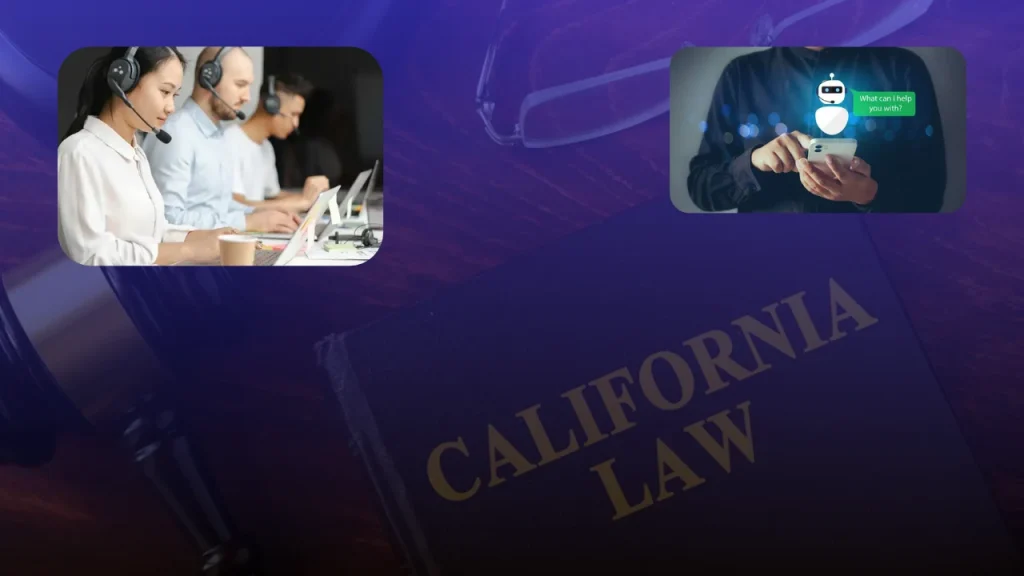
Not forever. Starting January 1, 2027, large companies serving California customers must make a good-faith effort to connect you with a real person within 15 minutes of your request, or offer a specific appointment within one business day. That is the core of Assembly Bill 1609 (AB 1609), the Right to Human Customer Service Act, which Governor Gavin Newsom signed on September 28, 2026.
The law has limits. It does not ban AI chatbots, it does not promise your problem will be solved in 15 minutes, and it does not let you sue a company directly under the statute. Violations can lead to civil penalties of up to $5,000 for a first violation and up to $10,000 for each later one, enforced by public prosecutors.
California AB 1609 at a Glance
| Detail | Information |
| Law | Assembly Bill 1609 (Right to Human Customer Service Act) |
| Signed | September 28, 2026 |
| Effective date | January 1, 2027 |
| Author | Assemblymember Rick Chavez Zbur |
| Sponsor | Communications Workers of America |
| Code sections | Business and Professions Code §§ 22625–22629 |
| Covered businesses | Private businesses with more than $500 million in annual gross revenue nationally |
| Human connection standard | Good-faith effort within 15 minutes, or an appointment within one business day |
| Hold-time standard | Good-faith effort to limit later individual waits to 15 minutes and total hold or escalation time to one hour |
| Penalties | Up to $5,000 (first violation); up to $10,000 (each later violation) |
| Private lawsuit under AB 1609 | No |
| AI chatbots banned | No |
| Status | Signed into law; takes effect January 1, 2027 |
Source: Chaptered text of California AB 1609 and the Governor’s September 28, 2026 announcement.
Why California Passed the Right to Human Customer Service Act
The problem lawmakers wanted to fix
Automated support works fine for simple questions like tracking a package. It tends to fail on disputed charges, complicated refunds, prescription problems, canceled reservations and account errors, which are the situations where people most need a person.
Assemblymember Zbur has described spending hours trying to get medication for his elderly mother during the pandemic, and eventually driving to the pharmacy while still on hold. The Communications Workers of America sponsored the bill, arguing that complex problems need human judgment.
How the bill changed along the way
Business groups, including the California Chamber of Commerce, raised concerns about staffing costs and one-size-fits-all rules. Earlier drafts proposed a shorter connection time. The final law uses a 15-minute good-faith standard, adds an appointment option and includes several exemptions.
What AB 1609 Requires From Businesses
1. An easy way to ask for a human
Covered businesses must give customers a simple way to request human help on their existing customer service channels during regular operating hours. That could be a menu option, a “live agent” button, a typed request or a spoken request. A dedicated button is not required if customers can easily ask through the existing system.
2. A good-faith effort to connect within 15 minutes
Once a California customer asks for a human, the business must make a genuine effort to connect them within 15 minutes. The rule covers access to a person, not resolution of the problem. A retailer can reach you in 10 minutes and still need days to investigate a missing delivery.
3. An appointment instead
A business can instead offer a specific appointment within one business day, at which a representative calls or otherwise connects with the customer. You cannot always demand a live answer on the spot.
4. Limits on repeated waits
Once you reach a representative, the business must make reasonable efforts to keep further individual waits under 15 minutes and total hold and escalation time under one hour. This targets the familiar cycle of being transferred from department to department.
5. A visible phone number for businesses that already offer phone support
Covered online businesses that offer telephone customer service must display that phone number clearly on their websites. Businesses that do not offer phone support are not automatically required to start, but they must still provide compliant access to human help through their existing channels.
Which Businesses Must Comply?
The $500 million revenue test
The law generally covers private businesses with more than $500 million in gross annual revenue nationally that provide goods or services to California customers. It is a revenue test, not a profit test. Depending on revenue and exemptions, covered businesses could include:
| Industry | Typical customer service problems |
| Online retailers | Missing orders, returns, refunds |
| Banks and financial companies | Account problems, disputed charges |
| Subscription and streaming companies | Cancellations, recurring billing |
| Insurance companies | Billing and policy questions |
| Retail chains | Product complaints, refunds |
| Pharmacies | Prescription and medication questions |
| Technology companies | Paid account and technical support |
| Travel businesses | Reservations and cancellations |
| Delivery platforms | Missing orders, payment disputes |
There is no official list of covered companies. Coverage depends on the statute’s definitions, the specific service and the exemptions. Having headquarters or a call center outside California does not automatically remove a company from the law, though other jurisdictional and federal issues may apply.
Related article: Can Your Employer Deduct Money From Your Paycheck Without Your Permission? Your Legal Rights in 2026 and 2027
Do Amazon, Walmart, Apple or Netflix have to comply?
Large retailers, tech firms and paid subscription platforms could be covered if they meet the revenue threshold and serve California customers. But size alone does not decide it. A paid subscription and a free account from the same company can be treated differently.
Who Is Protected?
The law protects individuals who live in California, determined by the account address. It applies statewide, including Los Angeles, San Diego, San Francisco, Sacramento, San Jose, Fresno, Bakersfield and Long Beach. There is no separate application process.
Covered services are those paid for through a subscription, recurring fee, one-time purchase or another monetary arrangement. Free services, including free tiers with optional paid upgrades, fall outside the definition. A paying subscriber may have protections that a free-tier user does not.
Does the Law Ban AI Customer Service Chatbots?
No. Businesses can keep using AI, automated phone systems and chatbots. But under Business and Professions Code § 22626:
- A business cannot falsely present a customer service chatbot as a human.
- A business must clearly disclose the chatbot’s artificial nature when a reasonable customer might otherwise think it is a person.
The disclosure has to fit the channel. A voice assistant may need to say so out loud, while a text chatbot needs a visible written notice.
Does AB 1609 Require 24-Hour Human Support?
No. The law applies during regular customer service hours, defined as either ten hours a day across a five-day week or eight hours a day across a seven-day week. Days when the business is ordinarily closed and state or federal holidays are excluded. Asking for help at midnight does not automatically trigger the 15-minute rule.
Exemptions and Exceptions
Know these before you file a complaint.
| Business or service | Exemption |
| Businesses with $500 million or less in national revenue | Below the threshold |
| Hospitals | Communications about healthcare delivery, payment and administration |
| Consumer reporting agencies | Exempt under § 22628 |
| Certain telecommunications and water utility services | Exempt when specified regulatory requirements are met |
| Business-to-business and employee-only channels | Exempt |
| Free online services | Outside the definition of covered services |
| Emergencies and outages beyond the business’s control | Protected when they prevent compliance |
Email, contact forms and voicemail
The 15-minute requirement does not apply to email, website contact forms or voicemail. It applies to live chat, automated phone support and similar interactive platforms. If you want a fast human response, use the company’s live channel.
Pharmacies
Businesses subject to California Code of Regulations, Title 16, § 1707.2 can satisfy the connection requirement by returning a phone call within one business hour.
Hospitals
Hospital communications about patient care, appointments, insurance, prior authorizations, billing and financial assistance are exempt. Patients still keep their rights under other healthcare and consumer protection laws.
Emergencies and outages
Businesses may avoid liability when circumstances outside their reasonable control prevent compliance, such as telecom failures, IT outages or electrical grid emergencies.
Can You Sue a Company Under AB 1609?
No, not directly. Section 22628 states that the law does not create a private right of action. Public prosecutors enforce it, and penalties are up to $5,000 for a first violation and up to $10,000 for each later violation.
Those are civil penalties, not payments to customers. Waiting longer than 15 minutes is not automatically a violation, because a business can meet the standard by showing commercially reasonable compliance efforts.
You may still have separate claims if the same conduct violates another law or your contract.
Other Laws That Protect You From Bad Customer Service Tactics
AB 1609 adds to existing protections. Section 22629 preserves obligations under other laws.
California Unfair Competition Law (Bus. & Prof. Code § 17200)
This law prohibits unlawful, unfair and fraudulent business practices. People who lose money because of independently unlawful conduct may be able to seek restitution or an injunction. Standing rules apply, and you should not assume it works as a workaround for AB 1609’s lack of private enforcement.
Consumers Legal Remedies Act (Civil Code §§ 1750–1784)
The CLRA bars specified deceptive practices in consumer transactions. A damages claim generally requires advance written notice under Civil Code § 1782.
California Automatic Renewal Law (Bus. & Prof. Code §§ 17600–17606)
This law covers improper recurring charges, weak subscription disclosures and obstacles to cancelling. A business cannot use a chatbot maze to dodge cancellation rules. Read more in our coverage of the X.AI lawsuit over Grok subscription cancellation and the California Attorney General’s guidance on automatic renewal.
California Bot Disclosure Law (Bus. & Prof. Code § 17941)
This older law restricts certain deceptive uses of bots in commercial transactions and elections. AB 1609 adds more specific rules for customer service chatbots.
California False Advertising Law (Bus. & Prof. Code § 17500)
Misleading claims about the support a company offers, such as promising live human help it does not provide, could raise issues under this law, depending on the facts.
FTC Act (15 U.S.C. § 45)
Section 5 prohibits unfair or deceptive practices, including misleading automated systems or billing. The FTC can investigate, but individuals generally cannot sue under it.
Restore Online Shoppers’ Confidence Act (15 U.S.C. §§ 8401–8405)
ROSCA governs online subscriptions, including disclosure, consent and simple cancellation. Automation does not excuse a business from these duties. See our coverage of the Uber One class action, Jesus v. Uber Technologies.
What to Do If a Company Won’t Connect You to a Human
Step-by-step
- Ask clearly. Use the official support channel and state that you want a human representative.
- Record the time. Note when you asked, how long you waited and whether an appointment was offered.
- Save evidence. Keep screenshots, call logs, case numbers, confirmations and billing records.
- Complain in writing. Describe the problem, cite AB 1609 and ask for help.
- Report it. File a complaint with the California Attorney General or the relevant regulator.
- Protect your other rights. If you were charged improperly or lost money, use dispute procedures and consider independent legal remedies.
Before recording a call, review California Penal Code § 632, which generally requires consent from all parties to a confidential phone conversation.
Where to report problems
| Problem | Where to complain |
| General consumer protection violations | California Attorney General |
| Deceptive business practices | Federal Trade Commission |
| Banking and credit card disputes | Consumer Financial Protection Bureau |
| Insurance complaints | California Department of Insurance |
| Pharmacy complaints | California State Board of Pharmacy |
| Regulated utilities | California Public Utilities Commission |
| Local concerns | Your local district attorney’s office |
The Attorney General’s office accepts complaints but does not act as your personal lawyer or guarantee compensation.
Sample complaint wording
I am a California resident requesting help from a human customer service representative about my account.
Under California Business and Professions Code § 22627, established by Assembly Bill 1609, covered businesses must provide a way to request human assistance and make a good-faith effort to connect customers with a representative within 15 minutes or offer a specific appointment within one business day.
Please connect me with a human representative or give me an appointment time. Please also provide a reference number for this request.
Can You Get a Refund If a Chatbot Blocks You From Cancelling?
Possibly, but not because of AB 1609 itself, which creates no refund program. If a business keeps charging you after a valid cancellation, or blocks a legally required cancellation method, you may have claims under the Automatic Renewal Law or other statutes.
Act quickly on card disputes. Under federal billing rules, written notice of a billing error generally must reach your card issuer within 60 days after it sends the statement containing the error. Waiting on a chatbot does not pause that deadline. Related coverage: WHOOP $11 million auto-renewal settlement.
Frequently Asked Questions About California AB 1609
When does California’s 15-minute customer service law take effect?
January 1, 2027. Governor Newsom signed AB 1609 on September 28, 2026.
Is California banning AI customer service?
No. Companies can keep using chatbots but must disclose that they are bots and provide access to human help as the law requires.
Can I get $10,000 if a company makes me wait too long?
No. The $10,000 figure is the maximum civil penalty for each later violation, enforced by public prosecutors. It is not a payment to customers.
Does AB 1609 apply nationwide?
No. It protects California residents. Some companies may choose to extend similar practices elsewhere.
Do small businesses have to follow it?
Not under AB 1609. It covers businesses with more than $500 million in annual gross revenue nationally.
Does AB 1609 guarantee a refund?
No. It addresses access to customer service, not refund rights.
Can a company offer only online support in California?
In some circumstances, yes. A business without phone support is not automatically required to create it, but it must still provide compliant access to human help.
Does it apply to hospital billing departments?
Qualifying hospital billing and healthcare administrative communications are exempt.
Can I join a class action over AB 1609?
AB 1609 creates no private right of action. You may have separate claims under other laws, but the statute itself does not set up a class action or compensation program.
What to Expect in 2027
Beginning January 1, 2027, qualifying California customers should have a clearer path to a human when dealing with large businesses. The law keeps AI in customer service but limits its use as a wall between you and real help.
Know the exemptions, keep evidence and use the right complaint channel if a business falls short.
Disclaimer: This article provides general legal information for educational purposes. It is not legal advice and does not create an attorney-client relationship.
Last updated: November 28, 2026 | By All About Lawyer, Legal Content Researcher
Official Sources and Legal References
- California Legislature: AB 1609 Legislative Record
- AB 1609 Final Chaptered Text
- Governor of California: September 28, 2026 Signing Announcement
- Assemblymember Zbur: Californians Gain Right to Human Customer Service
- California Department of Justice: Protecting Consumers
- FTC: Restore Online Shoppers’ Confidence Act
- CFPB: How to Dispute a Credit Card Charge
About the Author
Israr Ahmad is a legal content researcher with 4+ years of experience covering class action settlements and consumer rights cases. He has researched and published coverage of 2,500+ settlements using verified court records, settlement administrator filings, and government sources. Learn more about Israr.