
Bed Bath & Beyond Class Action Lawsuit, Indiana Shopper Says “Fake” Sale Deadlines in Emails Misled Subscribers
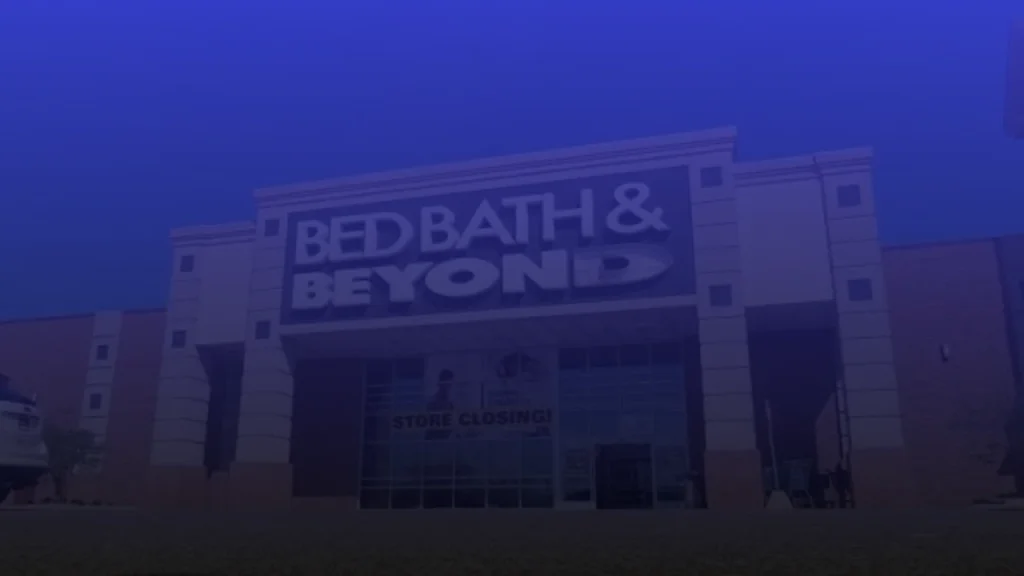
An Indiana shopper has filed a putative class action accusing Bed Bath & Beyond of sending marketing emails with misleading sale deadlines to push consumers into buying before promotions supposedly expired.
The case is Coelho v. Neighborhood Intelligence Inc., d/b/a Bed Bath & Beyond, Case No. 1:26-cv-00495-HAB-ALT, in the U.S. District Court for the Northern District of Indiana. The plaintiff says the retailer advertised sales as ending soon, emailed customers that only hours remained, and then extended the same promotions after the deadline passed.
The claim rests on the Indiana Deceptive Commercial Electronic Mail Act, a state law that bars commercial emails containing false or misleading subject-line information. A winning plaintiff who cannot prove actual damages can seek presumptive damages of $500 for each qualifying email.
One point matters before anything else. The federal docket indexes show a November 4, 2026 entry labelled “Dismiss,” followed by a separate “Brief” entry the same day. The full text of those filings and their legal effect have not been confirmed, so the case should not be described as either clearly active or clearly over.
This is not a settlement. No verified claim form, payment amount or claim deadline exists. The allegations are unproven, and no court order certifying a class has been identified.
Bed Bath & Beyond Class Action Lawsuit: Quick Facts
| Case detail | Information |
| Case name | Coelho v. Neighborhood Intelligence Inc., d/b/a Bed Bath & Beyond |
| Federal case number | 1:26-cv-00495-HAB-ALT |
| Court | U.S. District Court, Northern District of Indiana |
| Judges (per docket suffix and reporting) | District Judge Holly A. Brady; Magistrate Judge Andrew L. Teel |
| Plaintiff | Caitlin Coelho |
| Defendant | Neighborhood Intelligence Inc., doing business as Bed Bath & Beyond |
| Main law | Indiana Deceptive Commercial Electronic Mail Act (Ind. Code ch. 24-5-22) |
| Key provisions | Ind. Code §§ 24-5-22-7 and 24-5-22-10 |
| Original state case | Adams County Circuit Court, Cause No. 01C01-2608-PL-000020 |
| State filing date | August 25, 2026 |
| Service on defendant | August 31, 2026 |
| Removal to federal court | September 30, 2026 |
| Proposed class | Indiana residents who received qualifying commercial emails with misleading sale or promotional subject lines |
| Relief requested | Injunction, damages, attorneys’ fees and costs; jury trial demanded |
| Class certified? | No certification order identified |
| Settlement or claim form? | None verified |
| Latest docket activity identified | November 4, 2026: entries labelled “Dismiss” (Doc. 13) and “Brief” (Doc. 14); contents and effect unconfirmed |
What Does the Bed Bath & Beyond Lawsuit Allege?
Caitlin Coelho claims Bed Bath & Beyond used marketing emails to create false urgency around sales and promotions. The complaint reportedly describes a repeating pattern:
- Bed Bath & Beyond announces a sale or promotional offer.
- Marketing emails tell customers the promotion is about to expire.
- After the stated deadline passes, the retailer announces the same sale has been extended.
Coelho alleges the extensions were not unexpected business decisions. Her theory is that the retailer planned them while still sending emails that presented the original deadline as real.
That distinction matters. Extending a promotion does not, on its own, prove the earlier deadline was false. The legal question is whether the commercial email, read as a whole, contained false or misleading information when it was sent.
The Bed Bath & Beyond Cyber Monday Countdown Timer
The complaint reportedly points to the retailer’s 2025 Cyber Monday promotion. According to the allegations, Bed Bath & Beyond sent an email on December 1, 2025 showing a countdown timer with roughly 17 hours left. The next day, December 2, it allegedly sent another email titled “Cyber Monday EXTENDED” with a new timer and a reset deadline.
Coelho says this sequence suggests the original deadline was not genuine.
The Bed Bath & Beyond Presidents’ Day Sale Extension
Coelho says she received an email on February 16, 2026 stating that the Presidents’ Day Sale “ends tonight.” According to the complaint, Bed Bath & Beyond announced the next day that the sale had been extended.
The complaint reportedly identifies more than a dozen similar examples and refers to 16 emails sent to Coelho’s personal email address.
How Many Emails Did the Bed Bath & Beyond Complaint Identify?
The lawsuit reportedly refers to about 1,208 marketing emails per year between 2023 and 2025. Coelho relies on that volume, along with possible sources of location data, to argue the retailer knew or had reason to know its emails were reaching Indiana residents.
Those possible sources reportedly include account and purchase information, self-reported addresses, IP-address tracking, email analytics, commercial data brokers and identity-resolution services. These are allegations about what the retailer knew and could do. They are not findings that it used each method or knowingly broke Indiana law.
What Does the Indiana Deceptive Commercial Electronic Mail Act Say?
The lawsuit does not simply complain about discounts or email volume. It invokes the Indiana Deceptive Commercial Electronic Mail Act, found in Indiana Code Chapter 24-5-22.
The most relevant provision is Indiana Code § 24-5-22-7(b)(3), which covers a commercial email containing false or misleading information in its subject line.
Section 24-5-22-7(c) prohibits initiating or assisting in the transmission of a qualifying commercial email:
- From a computer located in Indiana; or
- To an email address the sender knows, or has reason to know, is held by an Indiana resident.
The statute also explains how a sender may be treated as knowing a recipient is an Indiana resident. Section 7(a), for example, refers to information available on request from the registrant of the internet domain name in the recipient’s email address.
This is why the plaintiff must tie each allegedly misleading email to Indiana. A Bed Bath & Beyond email received elsewhere in the country does not automatically fall within the proposed class.
Does Indiana’s Email Law Cover Emails Shoppers Signed Up For?
Section 24-5-22-7 deals with commercial emails containing false or misleading subject-line information. A separate section, § 24-5-22-8, addresses certain practices involving unsolicited commercial emails, such as advertising labels and opt-out requirements. The two should not be confused.
In Carter v. Vineyard Vines, LLC, a federal court examining Indiana’s statute explained that § 24-5-22-7 applies to commercial emails sent to Indiana residents, while § 24-5-22-8 separately addresses unsolicited ones.
So signing up for Bed Bath & Beyond emails does not, by itself, decide whether a message could violate § 24-5-22-7. It can, however, matter when a federal court asks whether the recipient suffered a concrete injury (see the standing discussion below).
Can Indiana Shoppers Get $500 for Every Bed Bath & Beyond Email?
The $500 figure will be the biggest question for consumers. Indiana Code § 24-5-22-10 gives a person who receives a commercial email violating the chapter a private right of action against whoever initiated or assisted in transmitting it.
If the plaintiff prevails, § 10(d) describes these remedies:
- An injunction against future violations.
- Compensatory damages for actual harm the plaintiff proves.
- If actual damages are not proven, presumptive damages of $500 for each qualifying commercial email sent to that plaintiff or through the plaintiff’s interactive computer service.
- Reasonable attorneys’ fees and litigation costs.
The statute does not say everyone who received an ordinary Bed Bath & Beyond promotion gets $500. The plaintiff must win and show the messages violated the law, and the amount is tied to qualifying messages sent to that plaintiff, not to the retailer’s whole mailing list.
The 16 emails reportedly identified in Coelho’s complaint, for example, do not mean she has been awarded $8,000. The court would first have to resolve the legal and factual requirements of the claim.
There is also a possible defense in § 24-5-22-10(c). A defendant may avoid liability by showing, by a preponderance of the evidence, that the violation resulted from a good-faith error despite procedures reasonably adopted to prevent violations.
The statute provides a possible remedy, not a guaranteed payment.
Do You Have to Buy Something to Be Covered? Standing in the Bed Bath & Beyond Case
The text of Indiana Code § 24-5-22-10 does not expressly make a purchase a condition of the private right of action. Section 10(a) identifies a person who receives a violating commercial email as someone who may sue.
But a case in federal court raises a separate hurdle: Article III standing. Under Spokeo, Inc. v. Robins, 578 U.S. 330 (2016), and TransUnion LLC v. Ramirez, 594 U.S. 413 (2021), a plaintiff must show a concrete injury, not just a statutory violation. A bare procedural violation, with no real harm, is not enough, and each class member must also have standing to recover individual damages.
This is a live issue in promotional-email cases. In Carter v. Vineyard Vines, LLC, a federal judge in Maryland considered claims under Indiana’s email statute and found the plaintiffs had not alleged a sufficiently concrete injury. They had voluntarily signed up for the emails and did not allege reliance on the subject lines, purchases made because of them, economic harm or a comparable privacy harm. On those facts, mere receipt of the emails was not enough.
That ruling does not decide Coelho’s case. It came from a different federal district court and does not bind the Northern District of Indiana. It does show why “Do I have to have bought something?” has no simple yes-or-no answer. A purchase is not listed in the statute, but reliance, purchasing decisions and other harm may matter once a federal court examines standing.
How the CAN-SPAM Act Could Affect the Bed Bath & Beyond Case
The federal CAN-SPAM Act is part of the analysis in two ways.
First, the federal standard. Under 15 U.S.C. § 7704(a)(2), it is unlawful to send a commercial email when the sender has actual or implied actual knowledge that the subject heading is likely to mislead a reasonable recipient about a material fact about the contents or subject matter of the message.
Second, preemption. Under 15 U.S.C. § 7707(b)(1), CAN-SPAM generally supersedes state statutes that expressly regulate commercial email. But there is an exception for state laws that prohibit falsity or deception in any portion of a commercial email or information attached to it. Because Indiana Code § 24-5-22-7(b)(3) targets false or misleading subject-line information, the exception is central to the Indiana claim.
CAN-SPAM also does not give ordinary consumers their own right to sue. Federal enforcement belongs to the FTC and other agencies, and the statute’s private right of action in 15 U.S.C. § 7706(g) is limited to internet access service providers. That is one reason plaintiffs turn to state statutes like Indiana’s.
A Recent Indiana Federal Ruling on the Same Email Law
A significant ruling under the same Indiana statute is Johnson v. Ulta Salon, Cosmetics & Fragrance, Inc., No. 1:25-cv-02521-JRO-MJD, decided September 15, 2026 by the U.S. District Court for the Southern District of Indiana.
The plaintiffs challenged Ulta emails with subject lines referring to free gifts and discounts, arguing the messages were misleading because conditions and exclusions appeared in the email body. The court made two important points.
First, the entire commercial email must be considered when deciding whether it contains false or misleading subject-line information. A plaintiff cannot necessarily isolate the subject line and ignore text that changes its meaning.
Second, the court separated “false” from “misleading.” It dismissed the theory that the offers were simply false, because the plaintiffs had not adequately alleged the gifts or discounts were unavailable on their stated terms. It allowed the misleading-subject-line theory to proceed at the motion-to-dismiss stage and held that CAN-SPAM’s savings clause did not preempt that claim at that stage.
The ruling is relevant to Coelho because it interprets the same Indiana statute and the same preemption question. It does not decide whether Bed Bath & Beyond’s alleged extensions violated the law. It came from the Southern District, not the Northern District, and it was not a finding of liability.
Are Fake Countdown Timers Considered a Deceptive Sales Tactic?
The Federal Trade Commission addressed this in its 2022 staff report, Bringing Dark Patterns to Light. It describes a “baseless countdown timer” as one that pressures consumers to act now even though it disappears or resets at zero. It also identifies a “false limited time message” as a promotion presented as ending soon when there is no real deadline or the deadline resets.
Those descriptions resemble the conduct alleged against Bed Bath & Beyond, especially the reported Cyber Monday timer reset.
Section 5 of the FTC Act, 15 U.S.C. § 45, prohibits unfair or deceptive acts or practices, and the FTC uses it against deceptive marketing. But the staff report is agency guidance, not a court ruling. It does not show that Bed Bath & Beyond used a deceptive design, and it does not prove Coelho’s allegations. It simply explains why artificial urgency draws attention from regulators and consumers.
Who Could Be in the Proposed Bed Bath & Beyond Class?
Coelho seeks to represent Indiana residents who received a commercial email sent by Bed Bath & Beyond, or with its assistance, containing subject-line messaging that misrepresented the facts of a sale, deal or other promotion.
This is not a nationwide case covering everyone who ever bought from Bed Bath & Beyond. A consumer may have more reason to look into it if they:
- Were an Indiana resident when they received the emails.
- Received commercial promotional emails from Bed Bath & Beyond.
- Saw subject lines saying a sale or promotion was ending at a particular time.
- Received a later email saying the same sale had been extended.
- Kept the original emails, with their dates, subject lines and contents.
This is not a final eligibility test. The class definition could change, and the court would have to decide whether to certify a class.
Under Federal Rule of Civil Procedure 23(a), a proposed class must show numerosity, common questions, typical claims and adequate representation, and then fit one of the Rule 23(b) categories. Rule 23(c)(1)(A) calls for the court to decide certification at “an early practicable time.” No such ruling has been identified here.
People outside Indiana should not assume they are covered. Other states have different consumer-protection and commercial-email laws, and similar lawsuits elsewhere may rest on different statutes.
AllAboutLawyer has covered related allegations against other retailers, including Office Depot Class Action Lawsuit, Washington Consumers Say Deceptive “Last Day” Sale Emails Created False Urgency and Orvis Putative Class Action Alleges “Sale Ends Tonight” Emails Were Misleading. Those cases involve different defendants, allegations and legal questions, and they do not show the Indiana claim will succeed.
Why Was the Bed Bath & Beyond Case Moved to Federal Court?
Coelho filed the lawsuit in Adams County Circuit Court on August 25, 2026 (Cause No. 01C01-2608-PL-000020). Neighborhood Intelligence Inc. was served on August 31, 2026 and filed a notice of removal on September 30, 2026, which is within the 30-day removal window of 28 U.S.C. § 1446(b).
The removal notice invoked 28 U.S.C. §§ 1332, 1441, 1446 and 1453, the provisions governing diversity jurisdiction, removal and the Class Action Fairness Act (CAFA).
Under 28 U.S.C. § 1332(d), CAFA generally allows federal jurisdiction over a qualifying class action where:
- The proposed class has at least 100 members.
- The aggregate amount in controversy exceeds $5 million, excluding interest and costs.
- Minimal diversity exists, meaning at least one class member is a citizen of a different state than at least one defendant.
Exceptions and additional requirements can apply.
Removal does not mean the federal court has found a violation or approved a class. It changes which court hears the case. The claims still have to be addressed.
What Is the Latest Status of the Bed Bath & Beyond Lawsuit?
The public docket indexes reviewed show two entries dated November 4, 2026:
- Document 13: “Dismiss.”
- Document 14: “Brief.”
Docket Nexus reports indexing 16 docket entries but warns its records may not reflect the complete docket, and it does not establish whether the case is active or terminated. CaseMagic independently reports court activity through November 4 and lists a “Brief” as the latest activity in the court’s public feed.
The full text of Document 13 was not available in the records reviewed. The label “Dismiss” alone does not show whether the entry is a motion, a notice, a court order or something else, and it does not show whether any dismissal is with or without prejudice. One description on the tracker that referred to a “Notice of Voluntary Dismissal” was checked against the docket feed and belongs to a different case, so it should not be attributed to Coelho’s case.
What Could the November 4 “Dismiss” Entry Mean?
The label could point to different things, and the difference matters:
- A defense motion to dismiss. A defendant can ask a court to dismiss a complaint under Federal Rule of Civil Procedure 12(b), for example for lack of standing or failure to state a claim. A brief filed the same day would be consistent with a motion and supporting brief, but that is a possibility, not a confirmed fact. If so, the case continues while the court decides the motion.
- A notice of voluntary dismissal. Under Rule 41(a)(1)(A)(i), a plaintiff may dismiss without a court order by filing a notice before the opposing party serves an answer or a motion for summary judgment. Unless the notice says otherwise, that dismissal is without prejudice. Under Rule 41(a)(1)(B), a second voluntary dismissal of the same claim generally operates as an adjudication on the merits.
- A court-approved dismissal. Under Rule 41(a)(2), after that point a plaintiff generally needs a court order or a stipulation signed by all parties, and the court can set terms.
Because a putative class has not been certified, a dismissal of the named plaintiff’s individual claims would not by itself bind unnamed Indiana consumers, though that depends on the exact filing and any later order.
Neither reading proves a settlement or a final win for the defendant. Equally, readers should not assume the case is moving normally without checking the current docket.
As of November 10, 2026, the safest description is that the docket contains unresolved November 4 activity. Check the official PACER/ECF record for the full filing and any later order before making a firm statement about the case’s status. No class-certification order, approved settlement, settlement administrator, official claim form or consumer payment deadline was identified in the records and reporting reviewed.
Bed Bath & Beyond Lawsuit Timeline
| Date | Event |
| December 1–2, 2025 | Alleged Cyber Monday countdown email, followed by a “Cyber Monday EXTENDED” email |
| February 16–17, 2026 | Alleged “ends tonight” Presidents’ Day email, followed by an extension announcement |
| August 25, 2026 | Lawsuit filed in Adams County Circuit Court, Indiana |
| August 31, 2026 | Neighborhood Intelligence Inc. served |
| September 15, 2026 | S.D. Indiana decides Johnson v. Ulta under the same Indiana statute |
| September 30, 2026 | Defendant removes the case to the Northern District of Indiana |
| November 4, 2026 | Docket entries labelled “Dismiss” (Doc. 13) and “Brief” (Doc. 14); contents unconfirmed |
| November 10, 2026 | Status unresolved based on available public records |
What Should Bed Bath & Beyond Customers Do Now?
Consumers who think they received misleading sale-deadline emails can protect their evidence while the case status is clarified.
Keep the original promotional emails, not just a cropped screenshot. Save the subject line, sender, date and time, body, countdown timer and any links or promotional terms. Also keep any later message announcing the sale was extended, plus screenshots of the product or promotion page. If a deadline influenced a purchase, keep the receipt and records showing when you bought.
There is currently no verified claim form or payment process for this lawsuit. Be careful with websites or messages promising a guaranteed $500 payment or asking for money or sensitive personal information to join.
Anyone who wants advice about their own situation should speak with a qualified attorney. Indiana law and federal law both have deadlines for filing claims, and a lawyer can explain how they apply.
Who Represents the Plaintiff and Bed Bath & Beyond?
According to the lawsuit reporting, Caitlin Coelho is represented by:
- Lynn A. Toops, Natalie A. Lyons and Ian R. Bensberg of CohenMalad LLP.
- Samuel J. Strauss and Raina C. Borrelli of Strauss Borrelli PLLC.
- J. Gerard Stranch IV and Michael C. Tackeff of Stranch, Jennings & Garvey PLLC.
The defendant, Neighborhood Intelligence Inc., is reportedly represented after removal by Vivek R. Hadley and Matthew T. Albaugh of Taft Stettinius & Hollister LLP. The existence of the lawsuit does not mean the defendant has admitted wrongdoing.
Why Are “False Urgency” Email Lawsuits Increasing?
The Bed Bath & Beyond case is part of a wider run of putative class actions over “sale ends today” and similar subject lines. Plaintiffs have used state commercial-email and consumer-protection statutes against retailers, and results often turn on the exact wording of subject lines, whether the offer was truly time-limited, internal marketing calendars showing planned extensions, and whether the plaintiff can show concrete injury. Some similar cases elsewhere have ended in settlements, but nothing like that has been confirmed here.
Frequently Asked Questions About the Bed Bath & Beyond Lawsuit
Is there a Bed Bath & Beyond class action lawsuit over fake sale deadlines?
Yes, a putative class action. Caitlin Coelho alleges Bed Bath & Beyond used misleading email subject lines to make sales appear to be ending before later extending them. The case is Coelho v. Neighborhood Intelligence Inc., d/b/a Bed Bath & Beyond, No. 1:26-cv-00495-HAB-ALT.
Is the Bed Bath & Beyond lawsuit still active?
The latest docket indexes show November 4, 2026 entries labelled “Dismiss” and “Brief.” Their full text and legal effect have not been confirmed, and the docket monitor does not say whether the case is active or terminated. Check the official federal docket.
Can I claim $500 from the Bed Bath & Beyond lawsuit?
Not now. Indiana law provides for presumptive damages of $500 per qualifying email if a plaintiff prevails and does not prove actual damages. It is not an automatic payment, an approved settlement amount or an open claims program.
Do I have to live in Indiana to be in the Bed Bath & Beyond proposed class?
The class described in the lawsuit focuses on Indiana residents who received the allegedly misleading emails. People in other states should not assume they are covered.
Do I have to buy something from Bed Bath & Beyond to be covered by the Indiana email law?
Indiana Code § 24-5-22-10 does not expressly require a purchase. But federal Article III standing requires a concrete injury. In a separate Indiana-statute case, Carter v. Vineyard Vines, a federal court found that receiving voluntarily requested marketing emails, without reliance or other concrete harm, was not enough on the facts before it. That issue could matter here.
Does a “sale ends tonight” email from Bed Bath & Beyond automatically qualify me?
No. The message must meet the statute’s requirements, including the Indiana connection and the bar on false or misleading information. The whole email may matter, not just the subject line, and a later extension alone does not establish a violation.
Has Bed Bath & Beyond agreed to a settlement?
No settlement has been verified. There is no confirmed settlement fund, claims administrator, payment amount or claim deadline.
Can I sue Bed Bath & Beyond myself under the federal CAN-SPAM Act?
Generally no. CAN-SPAM’s private right of action is limited to internet access service providers, with enforcement otherwise left to the FTC and other agencies. The Indiana statute gives recipients their own claim, which is why this case relies on it.
Where can I check the Bed Bath & Beyond lawsuit docket?
Search the Northern District of Indiana’s PACER/ECF system using case number 1:26-cv-00495. Third-party docket sites can help, but they may be incomplete and should not replace the official docket.
Sources and Legal References
- Indiana Code § 24-5-22-7 — false or misleading commercial-email subject lines
- Indiana Code § 24-5-22-10 — private right of action, defenses and remedies
- 15 U.S.C. § 7704 — CAN-SPAM restrictions on deceptive subject headings
- 15 U.S.C. § 7707 — CAN-SPAM preemption and state-law exceptions
- Johnson v. Ulta Salon, Cosmetics & Fragrance, Inc., No. 1:25-cv-02521-JRO-MJD (S.D. Ind. Sept. 15, 2026)
- Carter v. Vineyard Vines, LLC, No. 1:25-cv-03178-ELH (D. Md. 2026)
- Federal Rule of Civil Procedure 23 — class actions
- Federal Rule of Civil Procedure 41 — dismissal of actions
- Federal Trade Commission, Bringing Dark Patterns to Light
- Docket Nexus — Coelho v. Neighborhood Intelligence
- CaseMagic — Coelho v. Neighborhood Intelligence
Update log: November 10, 2026 — Article published. Docket entries of November 4, 2026 flagged as unresolved pending review of the full filings on PACER.
This article is for informational purposes only and does not constitute legal advice. Laws vary by state and individual circumstances differ. For advice about your specific situation, consult a qualified attorney. The lawsuit contains allegations that have not been proven in court. AllAboutLawyer.com is an independent legal-information website, not a law firm, and does not represent consumers in this case.
Researched and written by Israr Ahmad, legal content researcher and founder of AllAboutLawyer.com. All facts verified against the Indiana Code, 15 U.S.C. §§ 7704 and 7707, the Federal Rules of Civil Procedure, the federal docket records for Case No. 1:26-cv-00495, the FTC staff report on dark patterns and the court opinions cited below, as of November 10, 2026. Last Updated: November 10, 2026.
About the Author
Israr Ahmad is a legal content researcher with 4+ years of experience covering class action settlements and consumer rights cases. He has researched and published coverage of 2,500+ settlements using verified court records, settlement administrator filings, and government sources. Learn more about Israr.