
Aimée Raclot and the Stray Cat Lawsuit, What Really Happened
A French woman named Aimée Raclot took in a sick stray cat, nursed it back to health, and kept it for over a year. Then another family showed up claiming the cat was theirs — and filed a criminal theft complaint against her. Aimée Raclot, who lives in Augicourt, France, now faces a potential criminal prosecution for theft after the alleged former owners filed a police complaint. The case went viral because it raises a question millions of pet lovers have asked: if you rescue a stray and nobody comes looking for years, is it really yours?
Quick Facts
| Field | Detail |
| Who | Aimée Raclot vs. unnamed family claiming prior ownership |
| Where | Augicourt, Haute-Saône, France |
| Cat’s Name | “Pompon” (Raclot family) / “Flocon” (claimant family) |
| Allegation | Criminal theft of a domestic animal |
| Case Type | Individual civil/criminal dispute — not a class action |
| Settlement | None — case is ongoing |
| Court | French criminal court (correctionnel) |
| Current Status | Criminal complaint filed; outcome pending |
What Happened — The Full Story
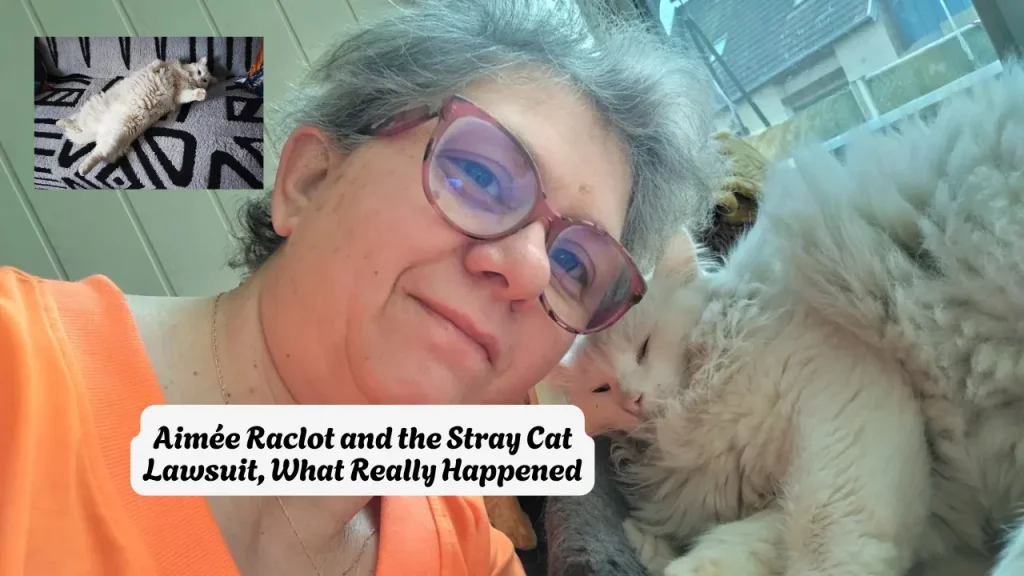
A Cat Shows Up in the Barn
The Raclot family discovered the white cat in their barn early one morning. Aimée’s husband called her over, and there were two cats — one microchipped, one not. The family kept the one without a chip.
They fed it, cared for it, had it treated by a vet, and gave it a name: Pompon. By all accounts, the cat settled in comfortably. No one called. No one came looking.
According to Aimée Raclot, the family kept the cat for over a year — a year and a half — without anyone asking about it. Then one day she received a message from a woman asking if her daughter could take the cat to Spain, after which she would return it and leave it in the streets of Augicourt.
Aimée refused. And not just because she had grown attached — she had also registered the cat under her family’s name with a new microchip. She considered the request absurd: someone she had never met wanted to borrow her cat for a holiday and then abandon it on a street corner.
Related article: Alec Bohm Sues His Parents for $3 Million, What the Lawsuit Says
The Other Family Steps Forward
The family who sent that message claims the cat is actually theirs — and that his name is not Pompon at all. Their attorney, Samy Ihadahene, says the cat’s name is Flocon and has always been Flocon — a name listed in his veterinary records from birth.
Their position is straightforward: the cat went missing, a neighbor took it in, registered it under a new name, and now refuses to return it. They filed a police complaint for theft.
Aimée’s Side
Aimée’s response is equally direct. When asked whether she intends to return the cat, her answer is firm: “It’s no. Now we are attached, we love him. We will not give them Pompon. We will fight, but we will not give them Pompon.”
She also raises questions about how the other family cares for their animals. She says the claimant family moved to Paris and their house in the area has been empty, with dogs left inside that rarely seem to be attended to.
The claimants’ attorney disputes this, saying his client has multiple animals and has never faced any legal proceedings for animal neglect.
Why This Case Matters Beyond Two Families Fighting Over a Cat
This dispute taps into something millions of pet owners and animal lovers deal with every year. Someone finds a stray, takes it in, and assumes that because no one came looking, the animal is now theirs. But is that legally true?
The answer — in France, in the U.S., and in most countries — is: it depends, and it’s more complicated than most people think.
What French Law Says
In France, domestic animals are legally considered property. The fact that the cat was not microchipped or tattooed at the time the Raclots found it complicates the case significantly. Without proof of prior ownership at the time of discovery, establishing who the rightful owner is becomes difficult.
French law does not have a simple “finders keepers after X days” rule for pets the way some U.S. jurisdictions do. A criminal complaint for theft requires proving that the person who took the animal knew it belonged to someone else and intended to deprive the owner of it — a high legal bar when the animal appeared abandoned and was unregistered.
What U.S. Law Says — And Why This Could Happen to You
If you live in the United States and have ever taken in a stray, this case should make you think twice. American law generally treats pets as personal property, and the legal rules around stray animals vary significantly from state to state.
In Oregon, a lawsuit over a stray cat — Squeakers — that a shelter incorrectly assumed was abandoned caused the state’s entire stray cat adoption system to grind to a halt. The Oregon Humane Society ended the practice of adopting out stray cats after reviewing state law and determining that the lost property law likely required animals to be held for at least 90 days before any shelter could assume ownership.
That case shows the same core tension: the person or organization that takes in a stray genuinely believes they are doing the right thing — but if someone else has legal ownership, good intentions do not override property rights.
In most U.S. states, if you find a stray animal:
- You are generally required to make a reasonable effort to locate the owner — posting notices, checking with local shelters, reporting to animal control
- Many states require you to hold or report the animal before you can legally claim ownership
- Simply keeping a stray without reporting it can, in some jurisdictions, expose you to a civil or even criminal claim
The Microchip Question
One of the most important facts in the Raclot case is that the cat had no microchip when she found it. This cuts both ways.
For Aimée, it supports her claim that the cat appeared abandoned — a responsibly owned pet in France should be microchipped. For the claimant family, a missing chip does not erase prior ownership if they can produce vet records, photos, and other documentation proving the cat lived with them before going missing.
In the U.S., microchipping is one of the most important things you can do to protect ownership of your pet. If a pet is found, shelters and vets typically scan for a chip first. A registered microchip is strong legal evidence of ownership and can be the difference between getting your pet back and losing them permanently.
If you have taken in a stray and it has no chip — check with your local shelter, animal control, and lost pet registries before assuming the animal is yours to keep.
What Happens to Pompon/Flocon Now?
That is the question everyone following the story wants answered. A French criminal court will ultimately have to decide whether Aimée Raclot committed theft — or whether she simply did what any compassionate person would do when a sick, unchipped animal showed up at her door with no one looking for it.
The outcome will likely turn on two things: whether the claimant family can prove they are the original owners with documented evidence, and whether Aimée can demonstrate she made reasonable efforts to find those owners before registering the cat under her name.
As of the date of publication, the case is ongoing and no verdict has been reached.
Frequently Asked Questions
Who is Aimée Raclot?
Aimée Raclot is a woman from Augicourt, a small village in the Haute-Saône region of France. She took in a stray white cat that appeared in her barn in poor condition, cared for it, and kept it after no one came forward to claim it for over a year.
What is the cat’s name — Pompon or Flocon?
The Raclot family calls the cat Pompon, while the family claiming prior ownership says his name is Flocon and that it appears under that name in his veterinary records. The name dispute reflects the broader ownership conflict at the heart of the case.
Is Aimée Raclot facing jail time?
She faces a potential prosecution in a criminal court (correctionnel) for theft after the alleged former owners filed a police complaint. Criminal theft charges in France can carry fines and imprisonment, though outcomes in cases like this depend heavily on what evidence each side can produce.
Could this happen in the United States?
Yes. Pets are legally treated as property in the U.S., and keeping a stray animal without reporting it or making efforts to find the owner could expose you to civil or criminal liability in many states. Laws vary by state and even by county, so checking local ordinances before keeping a found animal is strongly advised.
What should you do if you find a stray cat or dog?
Report the animal to your local animal control or shelter, check for a microchip at a vet, post notices in the area, and check lost pet registries online. Many states require a waiting period before you can legally assume ownership of a found animal. Documenting every step you take protects you legally if the original owner comes forward later.
Does microchipping really matter legally?
Yes. In both France and the U.S., a registered microchip is one of the strongest forms of proof of pet ownership. It can settle disputes quickly that would otherwise end up in court.
Last Updated: April 6, 2026
Disclaimer: This article is for informational purposes only and does not constitute legal advice. Legal claims and outcomes depend on specific facts and applicable law. For advice regarding your particular situation, consult a qualified attorney.
About the Author
Israr Ahmad is a legal content researcher with 4+ years of experience covering class action settlements and consumer rights cases. He has researched and published coverage of 2,500+ settlements using verified court records, settlement administrator filings, and government sources. Learn more about Israr.