
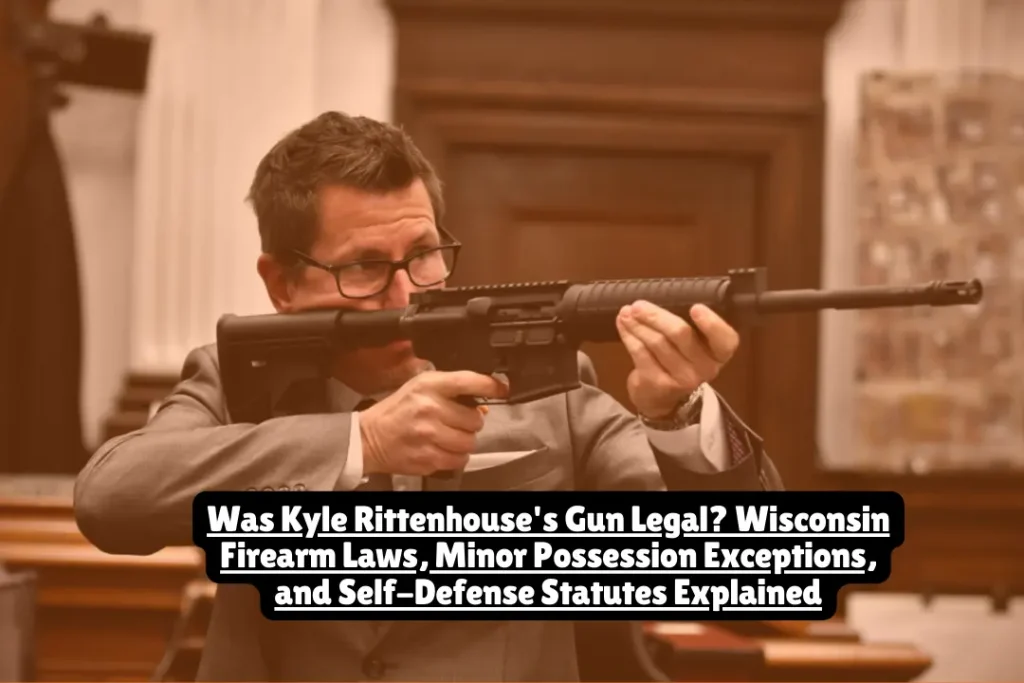
Was Kyle Rittenhouse’s Gun Legal? Wisconsin Firearm Laws and Minor Possession Exceptions Explained
Kyle Rittenhouse’s rifle was legal under Wisconsin law. Wisconsin Statute § 948.60(3)(c) permits minors aged 16-17 to possess rifles that are not short-barreled, Wisconsin allows open carry without a permit, and the judge dismissed the gun possession charge based on the statute’s plain language. The high-profile 2021 trial raised critical questions about Wisconsin’s weapons statutes.
How Wisconsin Firearm Laws Work
Federal law under 18 U.S.C. § 922 generally prohibits minors from possessing handguns but allows states to set rifle and shotgun possession rules. The ATF classifies rifles differently from restricted weapons like short-barreled rifles (barrels under 16 inches). Federal law permits state exceptions for hunting and sport shooting.
Wisconsin’s Minor Possession Statute
Wisconsin Statute § 948.60(2)(a) states any person under 18 possessing a dangerous weapon (including firearms) is guilty of a Class A misdemeanor punishable by up to nine months in jail.
However, subsection 948.60(3)(c) creates a critical exception: The prohibition applies ONLY if the minor violates § 941.28 (short-barreled rifle law) OR is not in compliance with hunting regulations under §§ 29.304 and 29.593.
Why Rittenhouse’s Rifle Was Legal
Rittenhouse carried a Smith & Wesson M&P 15 rifle with a barrel longer than 16 inches. He was not in violation of § 941.28 because his rifle was not short-barreled.
Judge Schroeder dismissed the gun charge, finding Rittenhouse’s possession fell outside the statute’s prohibition. “I have been wrestling with this statute with, I’d hate to count the hours I’ve put into it,” Schroeder said.
Wisconsin’s Open Carry Framework
Wisconsin permits open carry of firearms without a permit for anyone legally allowed to possess firearms. Open carry differs from concealed carry, which requires a license. Rittenhouse openly carried his rifle, which was legal under Wisconsin law.
The Trial and Charges
Rittenhouse faced six charges including first-degree intentional homicide, first-degree reckless homicide, attempted first-degree intentional homicide, and recklessly endangering safety. Judge Schroeder dismissed the gun possession charge (Count 6) before jury deliberation based on the statutory analysis.
The jury acquitted Rittenhouse of all remaining charges on November 19, 2021, finding he acted in lawful self-defense under Wisconsin Statute § 939.48. This statute permits force when a person reasonably believes it necessary to prevent unlawful interference. Wisconsin imposes no duty to retreat before using force in self-defense.
When Minor Firearm Possession Matters
If a minor in Wisconsin possesses a rifle for hunting or sport shooting, possession is legal under Wisconsin Statute § 29.304. The exception applies to rifles meeting legal length requirements.
When a person reasonably believes they face imminent threat and uses a firearm in self-defense, Wisconsin Statute § 939.48 permits force if the person didn’t provoke the attack. Lawful firearm possession and lawful self-defense use must be established independently.
Common Misconceptions
“Rittenhouse’s Gun Was Illegal Because He Was a Minor”
Wisconsin Statute § 948.60(3)(c) permits minors aged 16-17 to possess rifles under defined conditions. Rittenhouse’s possession fell within this exception because his rifle was not short-barreled. The judge’s dismissal confirmed this interpretation.
“Open Carry Laws Mean Anyone Can Carry Anywhere”
Open carry laws vary significantly by state. While Wisconsin permits open carry of rifles without a permit, other states prohibit it. Certain locations like schools prohibit firearms regardless of open carry status. Understanding state vehicle laws is similarly complex—what’s legal in one state may be criminal in another.
What You Should Do
Understand your state’s firearm laws including minor possession exceptions, open carry provisions, and permit requirements. Each state has different rules—Wisconsin’s exception for 16-17 year olds doesn’t exist in many states.
Check federal firearm regulations under 18 U.S.C. § 922 to understand which minors can legally possess firearms. If you’re a minor interested in firearm possession, contact your state fish and wildlife department for lawful hunting and sport shooting exceptions. If you face firearm charges, consult an attorney immediately.
Related Article: Are Snowmobiles Street Legal? State Laws, Regulations, and Legal Riding Locations You Should Know (2026)
Frequently Asked Questions
Was Kyle Rittenhouse’s rifle legal under Wisconsin law?
Yes. Judge Schroeder dismissed the gun possession charge, ruling Rittenhouse’s rifle met the exception in Wisconsin Statute § 948.60(3)(c) for minors possessing non-short-barreled rifles. The rifle had a barrel longer than 16 inches, making it legal for a 17-year-old to possess.
Can minors legally possess rifles in Wisconsin?
Yes, under specific conditions. Wisconsin permits minors aged 16-17 to possess rifles and shotguns that are not short-barreled (barrel 16+ inches for rifles). Minors under 16 face additional restrictions requiring adult supervision under Wisconsin Statute § 29.304.
What federal laws apply to minor firearm possession?
Federal law under 18 U.S.C. § 922 prohibits minors from possessing handguns but allows states to regulate rifle and shotgun possession. Federal law permits exceptions for hunting and sport shooting.
How did self-defense law apply to Rittenhouse’s case?
The jury found Rittenhouse acted in lawful self-defense under Wisconsin Statute § 939.48, which permits force when a person reasonably believes it necessary to prevent unlawful interference. Wisconsin doesn’t require duty to retreat.
What was the outcome of the illegal possession charge?
Judge Schroeder dismissed the charge before jury deliberation, ruling Wisconsin Statute § 948.60(3)(c) created an exception for non-short-barreled rifles. Rittenhouse was acquitted of all remaining charges.
Last Updated: January 26, 2026
Disclaimer: This article provides general information about Wisconsin firearm laws and is not legal advice for your specific situation.
Need Help? Consult your state firearm laws and regulations to understand minor possession rules in your jurisdiction. Contact local law enforcement for questions about firearm legality, or consult an attorney if you face firearm-related charges or self-defense questions.
Stay informed, stay protected. — AllAboutLawyer.com
Sources:
- Wisconsin Statute § 948.60 – Possession of Dangerous Weapon by Person Under 18
- Wisconsin Statute § 941.28 – Short-Barreled Rifle/Shotgun Prohibition
- Wisconsin Statute § 939.48 – Self-Defense
- 18 U.S.C. § 922 – Federal Firearm Regulations
- State of Wisconsin v. Kyle Rittenhouse Trial Records
- PBS News Hour: “Why Did Judge Drop Kyle Rittenhouse Gun Charge?” November 19, 2021
About the Author

Sarah Klein, JD, is a licensed attorney and legal content strategist with over 12 years of experience across civil, criminal, family, and regulatory law. At All About Lawyer, she covers a wide range of legal topics — from high-profile lawsuits and courtroom stories to state traffic laws and everyday legal questions — all with a focus on accuracy, clarity, and public understanding.
Her writing blends real legal insight with plain-English explanations, helping readers stay informed and legally aware.
Read more about Sarah