
Breaking, ICE Agent Fatally Shoots Minneapolis Mother During Enforcement Operation—What We Know Right Now (January 2026)
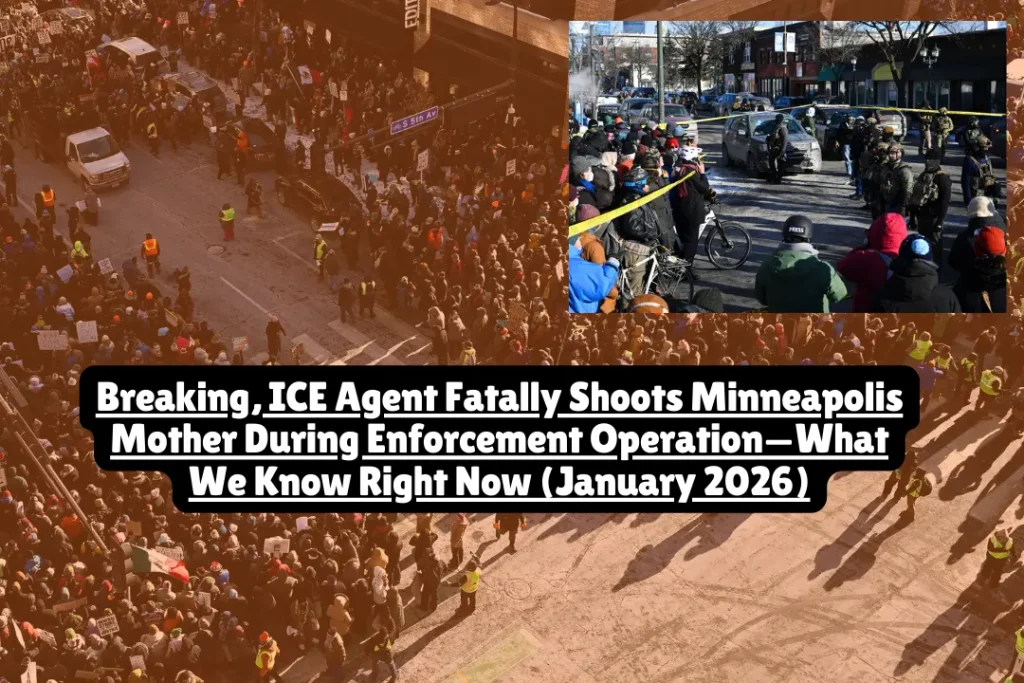
On January 7, 2026, an ICE agent fatally shot Renee Nicole Good, a 37-year-old Minneapolis resident and mother, during a federal immigration enforcement operation near East 34th Street and Portland Avenue. The shooting occurred just after 9:30 a.m., and Good later died at Hennepin County Medical Center. This incident has sparked nationwide protests, raised urgent questions about ICE use of force standards, and exposed tensions between federal enforcement authority and constitutional protections.
How Federal Use of Force Law Actually Works
ICE Authority and the Legal Framework
Federal immigration agents operate under specific legal authorities outlined in federal regulations. Under 8 CFR § 287.8, ICE agents authorized to use deadly force may do so only when they have reasonable grounds to believe such force is necessary to protect themselves or others from imminent danger.
This standard comes from the Fourth Amendment and Supreme Court precedent. The reasonableness of force must be judged from the perspective of an officer on the scene, considering the totality of circumstances. The Department of Homeland Security’s use of force policy emphasizes that respect for human life and the communities they serve shall guide all law enforcement officers.
When Deadly Force Is Legally Justified
DHS policy states officers may only use deadly force when there’s a reasonable belief that a subject poses an imminent threat of death or serious injury to officers or others. The policy also establishes that deadly force cannot be used solely to prevent escape unless officers reasonably believe a significant threat exists and such force is necessary.
ICE training materials emphasize de-escalation as a core principle. According to former DHS officials, the number one priority in DHS regulations is no loss of life, and the second is de-escalation—requiring law enforcement agents to avoid putting themselves in positions creating imminent danger. As a general rule across most law enforcement agencies, officers should not shoot into moving vehicles or position themselves in front of cars because these situations can be de-escalated.
Constitutional Limits on ICE Operations
The Fourth Amendment protects everyone in the United States—regardless of immigration status—from unreasonable searches and seizures. Only warrants signed by judges carry authority to enter homes, and all law enforcement operations including those by ICE are governed by Fourth Amendment protections.
ICE uses two types of warrants. Administrative warrants (Form I-205) are signed by ICE officials and authorize arresting specific individuals but do NOT authorize entering homes without consent. Judicial warrants are signed by judges based on probable cause and can authorize home entry. Understanding this distinction is critical to knowing your rights during ICE encounters.
The Minneapolis ICE Shooting Incident: What Official Sources Confirm
The Events of January 7, 2026
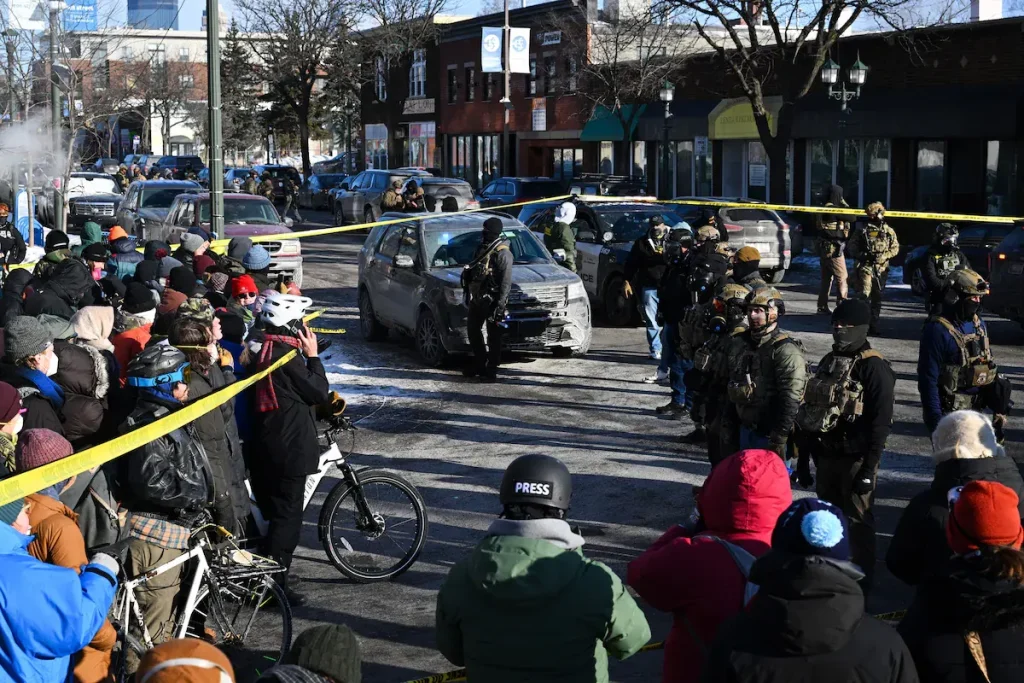
Minneapolis Mayor Jacob Frey stated this was a federal agent recklessly using power that resulted in somebody dying. Witnesses described seeing ICE agents in a convoy on Portland Avenue yelling at Good, who was in an SUV that appeared to be blocking them from passing.
According to eyewitness accounts, an ICE agent stepped in front of Good’s vehicle and fired through her windshield as the car began moving. Videos reviewed by news outlets show federal officers approaching Good’s vehicle, pulling on the driver’s side door, and the vehicle reversing before moving forward with an officer positioned in front.
Federal and Local Accounts Diverge
The Department of Homeland Security and Minneapolis city officials presented conflicting narratives. DHS Secretary Kristi Noem claimed Good was part of a group stalking ICE agents and targeting them with her vehicle, calling the incident domestic terrorism. Federal officials stated the officer followed training and acted in self-defense.
Minnesota officials disputed Noem’s account, with Governor Tim Walz stating he had been warning for weeks that ICE operations in Minnesota were a threat to public safety. Minneapolis authorities emphasized that Good was acting as a legal observer—volunteers who attend protests to document police-demonstrator interactions—when she was killed.
Investigation Status and Accountability Questions
A CNN poll found 62% of Americans have just some or no trust at all in the federal government to carry out a fair investigation of the Minneapolis shooting, with 47% having no trust at all. Minnesota state law enforcement officials initially participated in investigating the shooting but withdrew after federal agencies denied state investigators access to evidence.
The incident occurred during a massive federal enforcement operation. Roughly 3,000 federal agents were deployed to the Minneapolis area, including more than 2,000 ICE officers and agents and hundreds of Border Patrol agents.
What People Get Wrong About ICE Authority and Shooting Incidents
Myth: ICE Can Enter Any Home Without Permission
Many people believe ICE can force entry into homes without restrictions. The legal reality is different. People can legally refuse federal immigration agents entry into private property if agents only have an administrative warrant, with limited exceptions.
Recently revealed internal ICE guidance has sparked controversy by instructing agents they can forcibly enter homes with only administrative warrants for individuals with final removal orders. Legal experts and advocacy groups argue this policy flies in the face of Fourth Amendment protections and contradicts ICE’s own historical training materials.
Myth: All ICE Operations Involve Force or Violence
The vast majority of ICE enforcement actions do not involve use of force. ICE conducts targeted enforcement operations, investigations, and administrative processes. However, recent deployment increases and tactical approaches have raised concerns. A CNN poll found 51% of Americans saying ICE enforcement actions were making cities less safe, reflecting public concern about current tactics.
Myth: Shooting Incidents Automatically Mean Wrongdoing
Use of force incidents require investigation to determine whether actions were legally justified. The reasonableness of an officer’s use of force must be judged from the perspective of a reasonable officer on the scene, rather than with 20/20 vision of hindsight.
However, this doesn’t mean all shootings are justified. Law enforcement experts have raised concerns about the Minneapolis incident. DHS policy states officers should always avoid intentionally and unreasonably placing themselves in positions where they have no alternative to using deadly force.
What to Do If This Applies to You
Know Your Rights During ICE Encounters
If ICE approaches you, understanding your constitutional protections is essential. You have the right to remain silent and refuse to answer questions about your immigration status, where you were born, or how you entered the country. Simply state: “I am exercising my right to remain silent.”
You have the right to refuse searches of your person, vehicle, or home without a judicial warrant signed by a judge. Clearly state: “I do not consent to searches.” If ICE comes to your home, ask them to slide any warrant under the door. Check whether it’s signed by a judge (judicial warrant) or an ICE official (administrative warrant).
For detailed guidance on protecting your rights during ICE stops, see Your Rights When ICE Stops You.
Document ICE Encounters and Incidents
If you witness ICE enforcement actions, you have First Amendment rights to observe and record from a safe distance. Document officer badge numbers, vehicle numbers, what was said, and any witnesses. Do not interfere with law enforcement operations, but you can serve as a legal observer.
If you believe your constitutional rights were violated, document everything immediately. Note the date, time, location, officer names or badge numbers if visible, exactly what happened, and contact information for any witnesses. Photograph or video evidence if safe to do so.
File Complaints Through Official Channels
If ICE violated your rights, you can file complaints through the DHS Office of Inspector General or the DHS Office for Civil Rights and Civil Liberties. You may also have grounds for legal action under civil rights laws. Consult with an immigration attorney or civil rights attorney to understand your options.
Organizations like the ACLU and National Immigration Law Center provide resources for documenting ICE activity and filing complaints. Understanding ICE’s legal authority and its limits helps you identify when agents exceed their powers.
When to Consult an Immigration Attorney
Contact an immigration attorney immediately if ICE detained you or a family member, agents entered your home without a judicial warrant, you were subjected to force during an encounter, agents damaged property during an operation, or you witnessed potential constitutional violations.
Immigration attorneys can assess whether your rights were violated, file appropriate legal actions, represent you in removal proceedings if applicable, and help document incidents for potential civil rights claims.
Frequently Asked Questions
What authority does ICE have to use force during operations?
ICE agents may use deadly force only when they have reasonable grounds to believe it’s necessary to protect themselves or others from imminent danger. Federal regulations require force to be objectively reasonable based on the totality of circumstances. ICE policy states that use of excessive force is strictly prohibited.
Can ICE enter my home without a warrant signed by a judge?
Traditionally, no. The Supreme Court has long held that the Fourth Amendment prohibits the government’s nonconsensual entry into a person’s home without a judicial warrant, absent certain exceptions. However, a controversial 2025 ICE memo claims agents can forcibly enter homes with only administrative warrants for individuals with final removal orders, a position legal experts say conflicts with Fourth Amendment protections.
What should I do if I witness an ICE enforcement action?
You can observe and record from a safe distance without interfering with law enforcement operations. Document what you see, including officer actions, what’s said, and any concerning behavior. Do not physically intervene or obstruct agents. If you witness potential constitutional violations, contact immigrant rights organizations and consider filing reports with oversight agencies.
How are ICE shooting incidents investigated?
Federal shooting incidents are typically investigated by multiple agencies including the FBI, DHS Office of Inspector General, and the agency involved. However, in the Minneapolis case, 62% of Americans expressed little or no trust in the federal government to conduct a fair investigation. State and local authorities may also investigate, though federal agencies sometimes deny state investigators access to evidence, as occurred in Minnesota.
What are my rights if ICE stops me in public or my vehicle?
You have the right to ask “Am I free to leave?” If they say yes, you can calmly walk away. You can remain silent beyond confirming identity in some jurisdictions. You can refuse consent to vehicle searches by clearly stating “I do not consent to searches.” You should stay calm, keep hands visible, and document the encounter afterward including officer information and exactly what occurred. For comprehensive guidance, read Can ICE Force You Out of Your Car.
Can U.S. citizens be detained by ICE?
U.S. citizens cannot be detained for immigration violations but can be stopped if ICE suspects criminal activity. However, hundreds of citizens have been wrongfully detained due to misidentification or documentation issues. If you’re a U.S. citizen and ICE stops you, clearly state your citizenship, provide proof if available, invoke your right to remain silent beyond that, and request an attorney if detained. To understand the full scope of ICE authority over citizens, see No, ICE Cannot Legally Arrest or Deport US Citizens.
Last Updated: January 24, 2026
Disclaimer: This article provides legal information, not legal advice. For specific guidance regarding your situation, consult with a qualified immigration attorney.
Stay informed about your constitutional rights during federal law enforcement encounters. Understanding the law protects you, your family, and your community.
Stay informed, stay protected. — AllAboutLawyer.com
Sources:
- City of Minneapolis Official Statement (January 7, 2026)
- 8 CFR § 287.8 – Standards for Enforcement Activities
- DHS Use of Force Policy Documents
- U.S. Supreme Court Fourth Amendment Precedent
- Department of Homeland Security Official Statements
- Minneapolis Police Department Reports
- Minnesota Governor’s Office Public Statements
About the Author

Sarah Klein, JD, is a licensed attorney and legal content strategist with over 12 years of experience across civil, criminal, family, and regulatory law. At All About Lawyer, she covers a wide range of legal topics — from high-profile lawsuits and courtroom stories to state traffic laws and everyday legal questions — all with a focus on accuracy, clarity, and public understanding.
Her writing blends real legal insight with plain-English explanations, helping readers stay informed and legally aware.
Read more about Sarah