
$3M Regence BlueShield Hearing Aid Settlement On his Class Action Lawsuit, Washington Consumers Finally Getting Paid After Decade-Long Coverage Denial
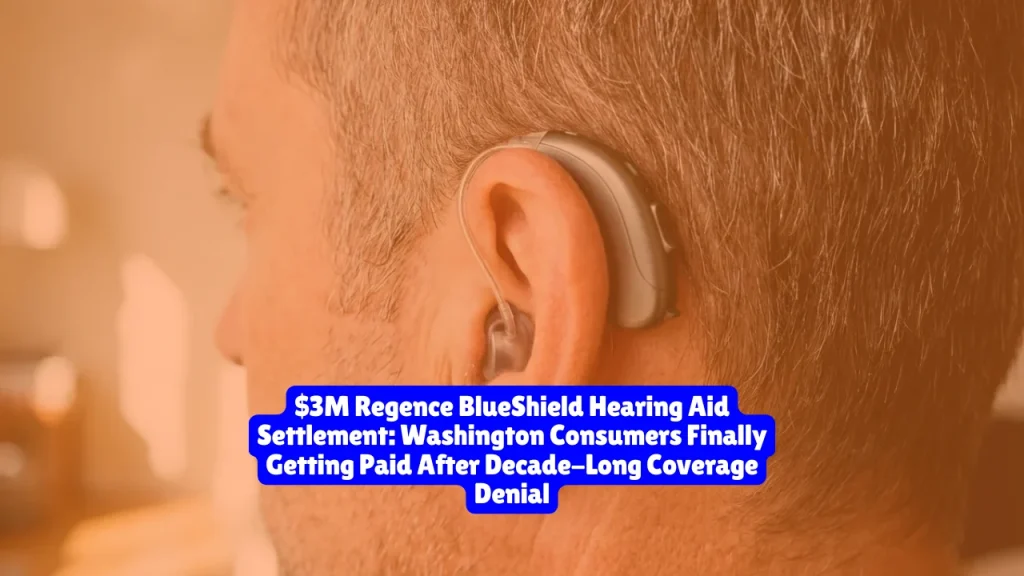
Regence BlueShield has agreed to pay $3 million to settle a class action lawsuit alleging the insurer discriminated against Washington residents with hearing loss by excluding or limiting coverage for hearing aids and related services. If you purchased hearing aids out-of-pocket between October 30, 2014, and December 31, 2025, under a Regence plan that denied coverage, you could be entitled to money. The claim deadline is February 3, 2026.
Here’s what makes this settlement shocking: the lawsuit claims Regence violated federal health insurance anti-discrimination laws by systematically denying hearing aid coverage to thousands of Washington consumers over an 11-year period. Many people paid thousands of dollars out-of-pocket for medically necessary hearing aids, believing they had no recourse. Now, they’re finally getting a chance at reimbursement.
What the Lawsuit Accused Regence BlueShield of Doing
The story behind this settlement is straightforward but troubling. Two Washington residents who needed hearing aids sued Regence BlueShield and its parent company, Cambia Health Solutions, Inc., claiming the insurer excluded hearing aids and associated services from certain health plans.
The plaintiffs alleged that this exclusion violated federal health insurance anti-discrimination law. Think about it: if you have hearing loss and your insurance plan specifically excludes the very devices you need to function in daily life, that’s not just frustrating—the lawsuit argues it’s illegal discrimination.
Regence denied all claims but agreed to settle the case to avoid prolonged litigation.
Who Qualifies for Settlement Money?
You’re eligible if you meet both of these requirements:
1. You Had the Right Insurance Plan
You or a family member were insured between October 30, 2014, and December 31, 2025, under a Washington health insurance plan delivered, issued, or renewed by Regence BlueShield and/or Cambia Health Solutions Inc. or its affiliates that excluded or limited coverage for hearing aids and associated services.
Important: The settlement excludes those enrolled in large group plans from January 1, 2024, to December 31, 2025.
2. You Paid Out-of-Pocket
You incurred unreimbursed out-of-pocket expenses for medically necessary hearing aids and associated services between October 30, 2014, and December 31, 2025.
“Associated services” includes things like fittings, repairs, batteries, and other hearing aid-related expenses.
Here’s something critical to understand: individuals are not automatically eligible for settlement benefits just because they received a notice. You must meet both criteria above.
The class includes both policyholders and their dependents who meet the requirements, so if your child or spouse incurred hearing aid expenses under your plan, they may qualify too.
How Much Money Are People Getting?
This is where it gets complicated. Claimants will receive a pro rata payment based on the value of their claim, meaning the more you spent on hearing aids, the larger your share of the settlement pot.
No payment estimates are available at this time. Here’s why: the final payment amount depends on how many people file valid claims and how much each person spent.
The math works like this: the $3,000,000 settlement fund will be used to pay attorneys’ fees, litigation costs, incentive awards, arbitration costs, taxes, and administration costs first. What’s left gets divided among all approved claimants based on their documented expenses.
Related article: Invitation Homes Class Action Lawsuit Settlement, Minnesota Renters Win Compensation for Years of Unpaid Lawn Care and Snow Removal
Class counsel can seek attorney fees up to, but not exceeding, 35% of the fund. That’s potentially $1.05 million in legal fees, leaving roughly $1.95 million for claimants (before other administrative costs).
If you spent $2,000 on hearing aids and someone else spent $4,000, they’d get roughly double what you receive. Everyone gets a percentage of their documented expenses back.
How to File Your Claim
To be eligible for payment, you may submit the online claim and certification form online at the official settlement website: www.WAHearingAidSettlement.com
You can also request that the claim form be mailed to you by calling 1-877-706-9538 (Toll-Free) or 1-877-721-6680 (TTY).
What You Need to Submit
Claimants must provide the date(s) they received hearing aids and/or associated services, the names and contact information of the providers who sold them the hearing aids and/or provided associated services, the unreimbursed charges or debt incurred, and documentation showing the payments made or debt incurred for the hearing aids and/or associated services.
Acceptable documentation includes:
- Receipts or invoices
- Cancelled checks
- Credit card statements
- Provider ledgers
- Invoices stamped “paid” or showing amounts due
- Signed letters from providers documenting payment or debt
Do not send original documents as they will not be returned.
Special Process for Previously Denied Claims
Class members who previously submitted to Regence claims for hearing aids or associated services that were denied do not need to resubmit those documents. Instead, these class members can access an online pre-populated claim form that they must verify.
If you submit incomplete information, the notice and claims processor will provide you with notice and an opportunity to correct any problems with the claim.
You can get free help from class counsel when submitting your claim by emailing class counsel at [email protected].
Critical Deadlines You Cannot Miss
- Claim Deadline: February 3, 2026
- Objection/Opt-Out Deadline: March 6, 2026
- Final Approval Hearing: March 20, 2026, at 9:00 a.m.
When Will You Get Paid?
For class claimants with valid and approved claims, payment will occur after: (1) the court finally approves the agreement after a fairness hearing; (2) any appeals of the court’s approval is resolved; and (3) all claims are fully adjudicated, so that the percentage payment may be determined.
Translation: Don’t expect money immediately. The court needs to approve the settlement at the March 2026 hearing, then wait for any appeals, then calculate everyone’s payments. Realistically, payments could arrive late 2026 or early 2027.
What Happens If You Do Nothing?
If you don’t file a claim by February 3, 2026, you won’t receive any money. But here’s the catch: if you have any actual or potential claims arising out of Regence’s alleged failure to pay for hearing aids and associated services, those claims will be resolved as part of the agreement, and your right to payment for any damages related to hearing aid coverage will be governed exclusively by the agreement for the period between October 30, 2014, and December 31, 2025.
This means you’re giving up your right to sue Regence separately, even if you don’t file a claim.
Want to preserve your right to sue independently? You may opt out of the settlement by writing to E.S. v. Regence BlueShield, Notice and Claims Processor, PO Box 2287, Portland, OR 97208-2287, saying that you wish to opt out of the agreement, along with your signature. But if you opt out, you get nothing from this settlement.
What Happens to Unclaimed Money?
It is unlikely that excess funds will remain after all payments described in the settlement agreement are made. However, if there are leftover funds, any excess funds, up to $300,000, shall be donated to the Washington State Communication Access Project, a nonprofit organization dedicated to enabling persons who are hard of hearing to fully enjoy public venues.
Any remaining excess funds shall be donated to the Legal Foundation of Washington to distribute to charitable organizations dedicated to advocacy on behalf of people who are deaf or hard of hearing.
Why This Settlement Matters Beyond the Money
This case highlights a broader issue in health insurance: discrimination against people with disabilities. Hearing aids can cost thousands of dollars, yet many insurance plans historically excluded them entirely.
The Affordable Care Act includes anti-discrimination provisions specifically designed to prevent insurers from excluding coverage in ways that discriminate against people with disabilities. This settlement sends a message that insurers can’t simply write hearing aids out of policies without potential legal consequences.
For many Washington residents, this settlement represents more than just reimbursement—it’s validation that their insurance company’s denial was wrong.
How to Contact the Settlement Administrator
E.S. v. Regence BlueShield Settlement Claims Administrator
- Mailing Address: P.O. Box 2287, Portland, OR 97208-2287
- Phone: 1-877-706-9538 (Toll-Free)
- TTY: 1-877-721-6680
- Email: [email protected]
- Website: www.WAHearingAidSettlement.com
Frequently Asked Questions
Q: Do I need a lawyer to file a claim?
No. The claim process is designed for individuals to complete on their own. If you need help, you can contact class counsel for free assistance at [email protected].
Q: What if I lost my receipts?
Contact your hearing aid provider. They should have records of your purchase. Provider letters documenting the amount paid or debt incurred are acceptable proof.
Q: Can I claim for hearing aid batteries and accessories?
Yes. “Associated services” includes batteries, fittings, repairs, and other hearing aid-related expenses.
Q: What if I had Regence insurance but bought hearing aids through a different plan?
You must have incurred expenses while covered under a Regence plan that excluded or limited hearing aid coverage. If you used a different insurance plan that covered hearing aids, you don’t qualify.
Q: Is this a scam?
No. The settlement was preliminarily approved by the U.S. District Court for the Western District of Washington. Always verify you’re using the official settlement website (wahearingaidsettlement.com) and never pay money to file a claim.
Q: What if I moved out of Washington?
You still qualify if you had a qualifying Regence Washington health plan during the class period and incurred eligible expenses.
Q: Can I file a claim for a deceased family member?
The settlement documents don’t specifically address this, but typically estates can file claims on behalf of deceased class members. Contact the settlement administrator at 1-877-706-9538 for guidance.
The Bottom Line
If you’re a Washington resident who paid out-of-pocket for hearing aids between October 2014 and December 2025 because Regence BlueShield excluded or limited coverage, you have until February 3, 2026, to file a claim for reimbursement.
While the exact payment amount remains unknown, this settlement represents a significant acknowledgment that insurance companies cannot discriminate against people with hearing loss by categorically excluding hearing aid coverage.
Don’t let the deadline pass. Gather your documentation, file your claim at www.WAHearingAidSettlement.com, and potentially recover some of what you spent on medically necessary hearing aids.
Official Settlement Resources:
- Settlement Website: www.WAHearingAidSettlement.com
- Claims Administrator: 1-877-706-9538
- Email: [email protected]
- Class Counsel: [email protected]
Case Information: E.S. v. Regence BlueShield, Case No. 2:17-cv-01609, U.S. District Court for the Western District of Washington
Disclaimer: This article is for informational purposes only and does not constitute legal advice. Settlement terms, deadlines, and payment amounts are subject to court approval and may change. Always verify information with the official settlement website or consult with a qualified attorney for personalized guidance regarding your specific situation.
About the Author

Sarah Klein, JD, is a licensed attorney and legal content strategist with over 12 years of experience across civil, criminal, family, and regulatory law. At All About Lawyer, she covers a wide range of legal topics — from high-profile lawsuits and courtroom stories to state traffic laws and everyday legal questions — all with a focus on accuracy, clarity, and public understanding.
Her writing blends real legal insight with plain-English explanations, helping readers stay informed and legally aware.
Read more about Sarah