
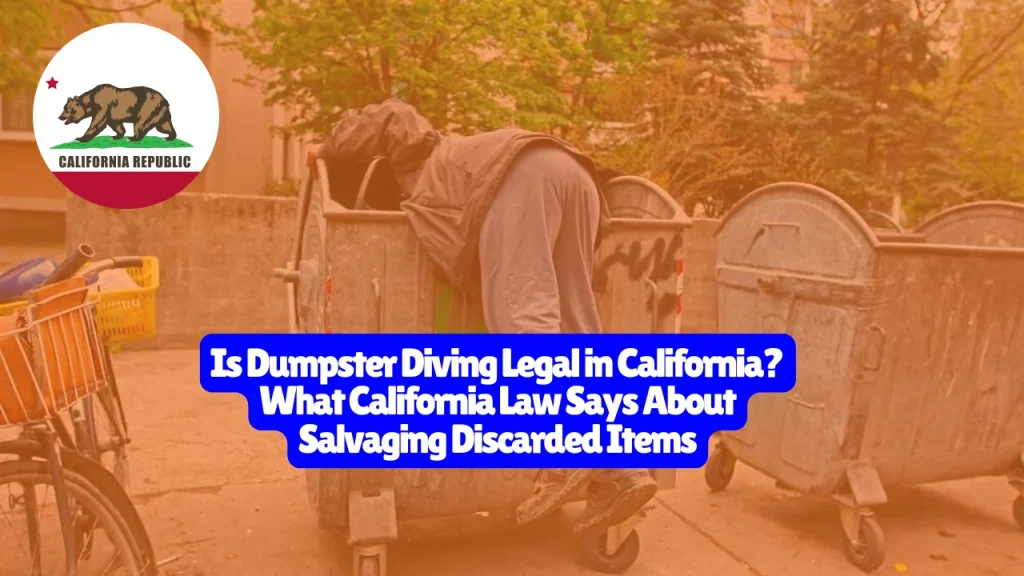
Is Dumpster Diving Legal in California? What California Law Says About Salvaging Discarded Items
Dumpster diving is legal in California if the dumpster is on public property and accessible without trespassing. However, California Penal Code Section 602 makes it illegal to enter private property without permission. Most dumpsters sit on private property, making dumpster diving there a trespassing violation punishable by fines or arrest.
What California Law Says About Dumpster Diving
California has no specific statute prohibiting dumpster diving itself. The legality depends on where the dumpster is located and whether accessing it requires trespassing.
California Penal Code Section 602 defines criminal trespass as entering or remaining on someone else’s property without permission. This applies to:
- Parking lots where dumpsters are located
- Fenced areas containing dumpsters
- Private business property
- Apartment complex grounds
If a dumpster sits behind a locked gate, fence, or on clearly marked private property, accessing it constitutes trespassing regardless of what you take.
California Penal Code Sections 484-488 cover theft. Once property owners discard items in trash, they generally abandon ownership rights. However, some businesses post “No Trespassing” signs or lock dumpsters, which indicates they maintain control over the contents.
California v. Greenwood: What the Case Means for Dumpster Divers
The landmark 1988 Supreme Court case California v. Greenwood established that people have no reasonable expectation of privacy in trash left for collection.
The Case Background:
Police searched Billy Greenwood’s trash without a warrant after it was placed at the curb for collection. They found evidence of drug use and obtained a search warrant for his home based on the trash contents.
Greenwood argued the warrantless trash search violated his Fourth Amendment rights. The Supreme Court disagreed, ruling that trash left at the curb for collection is abandoned property accessible to animals, scavengers, and the public.
What This Means for Dumpster Divers:
California v. Greenwood established that discarded trash has no privacy protection. Once someone throws something away, they surrender legal claims to it.
However, this case addressed Fourth Amendment protections against government searches—not whether civilians can legally access dumpsters. The ruling means police can search your trash without warrants, but it doesn’t automatically make all dumpster diving legal.
The key distinction is trespassing. If accessing the dumpster requires entering private property, California v. Greenwood doesn’t protect you from trespass charges.
Related article: Is Dumpster Diving Legal in Georgia? What Georgia Law Says About Salvaging Discarded Items
The Legal Distinction: Public vs. Private Property Dumpsters
Where the dumpster sits determines legality in California.
Public Property Dumpsters:
Dumpsters on public streets, parks, or other government property are generally accessible without trespassing. If you can reach the dumpster without entering private land, salvaging items is legal.
Public property includes:
- Street-side dumpsters
- Public park trash receptacles
- Sidewalk refuse containers
- Dumpsters on public easements
Private Property Dumpsters:
Most commercial and residential dumpsters sit on private property. Accessing them requires crossing private land, which constitutes trespassing under California Penal Code Section 602.
Private property includes:
- Store parking lots
- Behind shopping centers
- Apartment complex grounds
- Restaurant back areas
- Warehouse loading docks
- Business premises
Even if dumpsters are visible from the street, reaching them usually requires trespassing. Business owners can prosecute dumpster divers for entering their property without permission.
Municipal Ordinances Across California Cities
Many California cities have specific ordinances restricting dumpster diving beyond state trespass laws.
Los Angeles:
Los Angeles Municipal Code Section 190.02 makes it illegal to remove items from trash containers without the owner’s consent. This applies even if the dumpster is technically accessible without trespassing.
LA also prohibits scavenging from commercial waste bins under its waste management ordinances. Violations result in fines up to $1,000.
San Francisco:
San Francisco takes a more lenient approach. The city has no specific ordinance prohibiting dumpster diving, but standard trespass laws apply. Accessing dumpsters on private property remains illegal.
San Francisco’s zero waste initiatives sometimes create gray areas. Some environmental advocates argue salvaging reduces waste, but law enforcement still enforces trespass statutes.
San Diego:
San Diego Municipal Code restricts scavenging from commercial and residential waste containers. The city considers unauthorized removal of recyclables or trash a misdemeanor.
San Diego passed stricter enforcement measures in 2024 after complaints from businesses about overnight dumpster diving creating safety issues and property damage.
Sacramento:
Sacramento has no specific anti-dumpster diving ordinance but strictly enforces trespass laws. Business districts frequently report dumpster divers to police, leading to citations.
Oakland:
Oakland permits dumpster diving on public property but prohibits it on private business premises. The city’s approach balances waste reduction advocacy with property rights protection.
Penalties for Illegal Dumpster Diving in California
Consequences vary depending on circumstances and local enforcement priorities.
Trespassing Charges (California Penal Code 602):
- Infraction-level trespassing: fines up to $250 for first offense
- Misdemeanor trespassing: fines up to $1,000 and/or up to six months in county jail
- Aggravated trespassing (with threats or violence): felony charges possible
Theft Charges (California Penal Code 484):
While rare, some businesses claim dumpster diving constitutes theft of their discarded property, especially recyclables with monetary value.
- Petty theft (items under $950): misdemeanor with fines up to $1,000 and/or six months jail time
- Grand theft (items over $950): felony with up to three years in state prison
Additional Consequences:
- Criminal record impacting employment and housing
- Mandatory community service
- Restitution for property damage
- Restraining orders prohibiting return to premises
Real Enforcement Cases in California
Law enforcement approaches vary, but prosecution happens regularly.
2024 San Diego Case:
Police arrested three individuals for repeated dumpster diving behind a strip mall. Businesses complained about scattered trash, property damage, and late-night disturbances. The divers faced misdemeanor trespass charges and $500 fines each.
2023 Los Angeles Incident:
A woman collecting discarded food from grocery store dumpsters received citations under LA’s scavenging ordinance. Despite arguing she was reducing waste, she paid $800 in fines.
2025 Sacramento Enforcement:
Sacramento police increased patrols in commercial districts after business complaints. Officers issued over 40 trespass citations to dumpster divers in the first quarter of 2025. Most cases resulted in fines between $250-$500.
These cases show that enforcement depends on business complaints, property damage concerns, and local priorities rather than systematic crackdowns.
What Business Owners Can Do
California law gives property owners several options to prevent dumpster diving.
Legal Protections Include:
- Posting “No Trespassing” signs (required for some trespass prosecutions)
- Installing locks on dumpster enclosures
- Building fences around waste areas
- Hiring security guards or installing cameras
- Contracting with private waste companies that maintain ownership of dumpster contents
Some waste management companies include clauses in contracts stating they retain ownership of all discarded materials until collection. This creates potential theft claims against dumpster divers.
The Gray Area: When Is Dumpster Diving Actually Legal?
Few scenarios exist where dumpster diving is clearly legal in California.
Legal Dumpster Diving Situations:
- Dumpsters on public streets or sidewalks accessible without crossing private property
- Residential curbside trash on collection day (though taking recyclables may violate municipal ordinances)
- Abandoned property in public areas
- Items placed outside store entrances marked “free” or “take”
Questionable Situations:
- Open dumpsters in parking lots without fences or signs
- Dumpsters shared between multiple businesses with unclear property boundaries
- Items near but not inside dumpsters on quasi-public property
Even in unclear situations, property owners can pursue trespass charges. The safest approach is asking permission before accessing any dumpster on private property.
Asking Permission: The Legal Way to Dumpster Dive
The most legally sound approach is obtaining explicit consent.
How to Ask:
- Identify the property owner or business manager
- Explain you’re interested in salvaging discarded items
- Request written permission if possible
- Clarify which areas you can access and when
- Respect any restrictions or time limits
Some businesses, particularly grocery stores and restaurants, refuse due to liability concerns. Others, especially smaller operations, may allow access if approached respectfully.
Documented permission eliminates trespass concerns and creates a legal defense if questioned by law enforcement.
What Law Enforcement Officials Say
Police perspectives on dumpster diving vary across California.
Common Law Enforcement Views:
Many officers consider dumpster diving a nuisance rather than serious crime. They prioritize responding to complaints from property owners.
Officers typically warn first-time offenders rather than immediately citing them, unless property damage or aggressive behavior occurs.
When Police Take Action:
- Repeated violations at the same location
- Business owners pressing charges
- Property damage or vandalism
- Late-night disturbances
- Connection to other criminal activity
Some California police departments explicitly state they won’t pursue dumpster diving cases without property owner complaints. Others actively patrol commercial areas and cite anyone trespassing.
Liability Concerns for Dumpster Divers
Beyond criminal charges, dumpster divers face civil liability risks.
Potential Liabilities:
- Injuries from sharp objects, broken glass, or hazardous materials
- Property damage claims if dumpsters are damaged or trash scattered
- Medical expenses without health insurance coverage for diving-related injuries
- Civil trespass lawsuits from property owners
California generally doesn’t protect trespassers from injury on private property. If you’re hurt while dumpster diving illegally, you likely cannot sue the property owner.
Environmental and Social Context
While this article focuses on legality, understanding why people dumpster dive provides context.
Common Motivations:
- Financial necessity and poverty
- Environmental concerns about waste
- Freegan philosophy rejecting consumerism
- Food insecurity
- Finding materials for art or resale
California produces enormous waste volumes. Advocates argue salvaging reduces environmental impact and helps those in need. However, legal frameworks prioritize property rights over waste reduction.
Some California municipalities explore alternative approaches, like food rescue programs or donation incentives, that address waste concerns without conflicting with trespass laws.
Best Practices for Legal Compliance
If you’re considering dumpster diving in California, follow these guidelines to minimize legal risks.
Legal Risk Reduction Strategies:
- Only access dumpsters clearly on public property
- Never enter fenced areas or cross “No Trespassing” signs
- Avoid locked or secured dumpsters
- Dumpster dive during daylight hours
- Don’t scatter trash or damage property
- Leave immediately if asked by property owners
- Carry identification in case police question you
- Document permission if you obtained it
What to Avoid:
- Commercial property dumpsters
- Residential complex dumpsters
- Hospital or medical facility waste
- Construction site dumpsters on private property
- Any location with posted restrictions
Even following these practices doesn’t guarantee avoiding legal trouble, but it significantly reduces risks.
FAQ About Dumpster Diving Legality in California
Is dumpster diving illegal in California?
Dumpster diving itself isn’t explicitly illegal in California, but accessing dumpsters on private property constitutes trespassing under California Penal Code Section 602. Since most dumpsters are on private property, dumpster diving is illegal in most situations.
Can I be arrested for dumpster diving in California?
Yes. Police can arrest you for trespassing if you access dumpsters on private property. Arrests are more common for repeat offenders or when property damage occurs.
What is California Penal Code Section 602?
California Penal Code Section 602 defines criminal trespass as entering or remaining on someone else’s property without permission. It applies when accessing dumpsters located on private business or residential property.
Does California v. Greenwood make dumpster diving legal?
No. California v. Greenwood established that discarded trash has no Fourth Amendment privacy protection, meaning police can search trash without warrants. However, it doesn’t protect civilians from trespassing charges when accessing dumpsters on private property.
Can I dumpster dive in Los Angeles?
Los Angeles Municipal Code Section 190.02 prohibits removing items from trash containers without owner consent. Combined with trespass laws, dumpster diving is effectively illegal throughout Los Angeles.
What happens if a business catches me dumpster diving?
Business owners can call police and press trespass charges. You may receive a warning, citation, or arrest depending on circumstances. You’ll likely be banned from returning to the property.
Is it legal to take items from curbside trash in California?
Generally yes for residential trash on collection day, but some cities have ordinances prohibiting recyclable removal. Check your local municipal code. Taking items from business curbside dumpsters may still constitute trespassing if you cross private property to access them.
Can I get permission to dumpster dive legally?
Yes. Obtaining explicit permission from property owners or business managers makes dumpster diving legal. Written permission is best for documenting consent if questioned by police.
What are the fines for illegal dumpster diving in California?
Fines vary by jurisdiction and offense level. Infraction-level trespassing typically carries $250-$500 fines. Misdemeanor trespassing can result in fines up to $1,000 plus possible jail time. Municipal ordinance violations add additional fines.
Is dumpster diving legal in San Francisco?
San Francisco has no specific anti-dumpster diving ordinance, but standard California trespass laws apply. Accessing dumpsters on private property remains illegal. Dumpsters on public property are generally accessible.
Understanding California’s Approach to Property Rights
California’s legal framework reflects strong property rights protections.
The state prioritizes landowner control over their premises, including waste disposal areas. This contrasts with some jurisdictions that explicitly permit salvaging from commercial waste.
California courts consistently uphold business owners’ rights to control access to their property. Even abandoned items in dumpsters remain on private land, making access without permission illegal.
This approach frustrates waste reduction advocates who view salvaging as environmentally beneficial. However, property owners cite liability concerns, security issues, and rights to dispose of waste privately without public interference.
Comparing California to Other States
California’s dumpster diving laws are neither the most restrictive nor most permissive nationally.
More Restrictive States:
Texas explicitly prohibits dumpster diving under certain municipal ordinances. Some Texas cities impose harsher penalties than California equivalents.
More Permissive Approaches:
Some states have clearer legal protection for dumpster diving on commercial property. A few jurisdictions explicitly recognize salvaging rights under abandoned property doctrines.
California falls in the middle—no explicit statewide ban on dumpster diving, but strong trespass enforcement and municipal ordinances that restrict the practice significantly.
Recent Trends in California Dumpster Diving Enforcement
Enforcement patterns shifted in 2024-2025 as cities responded to changing circumstances.
Increased Enforcement:
Some California cities increased dumpster diving enforcement due to:
- Business complaints about property damage and scattered trash
- Concerns about late-night activity and safety
- Liability fears from property owners
- Rising homeless populations in urban areas
Sacramento, San Diego, and Los Angeles all reported increased citations in 2024-2025.
Changing Attitudes:
Simultaneously, some California municipalities explore waste reduction policies that create tension with strict enforcement. Food rescue programs and donation incentives address similar goals as dumpster diving without legal conflicts.
The tension between environmental advocacy and property rights enforcement continues shaping California’s approach.
What This Means for California Residents
California’s legal landscape creates clear risks for dumpster divers.
Unless you can access dumpsters on genuinely public property without trespassing, you risk criminal charges. Most dumpster diving situations involve private property access, making them legally risky.
Financial necessity doesn’t create legal exceptions. While some officers may show leniency understanding economic hardship, property owners can still press charges.
The safest approach is avoiding dumpster diving on private property entirely or obtaining explicit permission from property owners. Alternative resources—food banks, donation centers, community organizations—provide legal ways to access needed items.
For those committed to waste reduction, volunteering with food rescue organizations or advocating for policy changes offers legal alternatives to illegal dumpster diving.
Understanding California’s legal framework helps residents make informed decisions about whether dumpster diving’s potential benefits outweigh its legal risks.
About the Author

Sarah Klein, JD, is a licensed attorney and legal content strategist with over 12 years of experience across civil, criminal, family, and regulatory law. At All About Lawyer, she covers a wide range of legal topics — from high-profile lawsuits and courtroom stories to state traffic laws and everyday legal questions — all with a focus on accuracy, clarity, and public understanding.
Her writing blends real legal insight with plain-English explanations, helping readers stay informed and legally aware.
Read more about Sarah