
YouTube Paid Trump $24.5 Million For White House Ballroom Renovation, Here’s What the Lawsuit Was Really About
YouTube agreed to pay $24.5 million to settle a four-year-old lawsuit filed by President Donald Trump after the platform suspended his account following the January 6, 2021 Capitol attack. The settlement, filed in the U.S. District Court in Northern California, ends a legal battle between the company and Trump. Most of the money does not go to Trump personally — $22 million will support Trump’s construction of a White House State Ballroom and will be held by a tax-exempt entity called the Trust for the National Mall.
Quick Facts
| Field | Detail |
| Defendant | YouTube (Google / Alphabet Inc.) |
| Plaintiff | Donald J. Trump + co-plaintiffs |
| Settlement Amount | $24.5 million total |
| Where Most Money Goes | Trust for the National Mall — White House Ballroom project |
| Co-Plaintiff Payout | $2.5 million to other plaintiffs |
| Case Filed | Mid-2021 |
| Settlement Filed | September 29, 2025 |
| Court | U.S. District Court, Northern District of California |
| Admission of Liability | None — YouTube admitted no wrongdoing |
| Settlement Status | Filed / Settled |
Where Things Stand Right Now
- The settlement was signed off by YouTube CEO Neal Mohan. YouTube, Google, and Alphabet admitted no wrongdoing as part of the agreement.
- U.S. Senators Elizabeth Warren, Ron Wyden, Bernie Sanders, and others have questioned whether the settlement represented a quid-pro-quo arrangement connected to regulatory issues Google faces from the Trump administration.
- The agreement follows Meta and X earlier this year reaching deals to settle similar lawsuits challenging the suspensions of Trump’s accounts.
Why Trump Sued YouTube in the First Place
YouTube suspended Trump’s account following the January 6, 2021 attack on the U.S. Capitol by his supporters. Trump alleged a violation of the First Amendment, claiming the suspension was carried out in response to government pressure.
The problem with that argument? First Amendment protections normally apply to government action — not decisions made by private companies. Free speech experts said the lawsuits brought by Trump did not raise credible legal claims, since First Amendment protections typically apply to government officials censoring speech, not private companies.
YouTube maintained at the time that Trump violated its policy against inciting violence. It indefinitely suspended his account but allowed him back onto the platform in 2023 to let voters hear equally from major national candidates in the run-up to an election.
Despite the weak legal footing, YouTube ultimately chose to settle. Legal observers have noted that the tech firms were motivated to settle because of Trump’s return to office. In other words, the business and political climate — not the strength of the legal claim — drove the decision.
Why $22 Million Is Paying for a White House Ballroom
This is the part of the story that surprised most people following it.
The settlement language specifies the money will be contributed on Trump’s behalf to the Trust for the National Mall, a 501(c)(3) tax-exempt entity dedicated to restoring, preserving, and elevating the National Mall, to support construction of the White House State Ballroom.
Related article: Trump Signed Executive Order a Second College Sports Order Here’s What Actually Changes for Athletes
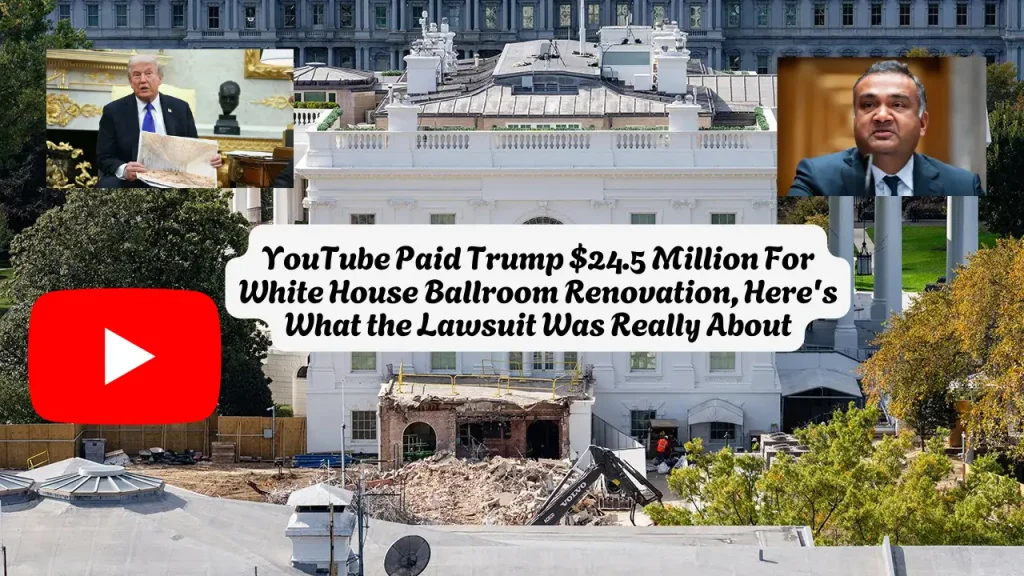
YouTube’s contribution represents nearly 10% of the ballroom’s projected $250 million price tag. Trump has promised that taxpayers will not fund the project, saying he is honored to be the first president to finally get this much-needed project underway with zero cost to the American taxpayer.
The work is being funded via private donations from individuals, corporations, and tech companies, including Google and Amazon, raising uncomfortable questions about the level of access this might give donors to the most powerful person in the country.
You can read the full background on the ballroom’s legal challenges in our related article: National Trust for Historic Preservation sues Trump over White House ballroom demolition
Who Else Got Money From the Settlement
The full $24.5 million was not split evenly. The remaining $2.5 million was paid to other parties in the case, including writer Naomi Wolf and the American Conservative Union. These individuals were co-plaintiffs who also claimed their accounts were removed or restricted on the platform.
The Quid-Pro-Quo Question Lawmakers Are Asking
The timing of the settlement raised red flags for several U.S. senators.
Senators Warren, Wyden, Blumenthal, Sanders, and Merkley sent a letter to Google CEO Sundar Pichai and YouTube CEO Neal Mohan asking whether the settlement represented a quid-pro-quo agreement in exchange for favors from the Trump administration. The senators warned that if YouTube settled Trump’s legally questionable lawsuit to discourage the Justice Department from appealing a ruling favorable to Google, the company and its executives may have run afoul of the law.
The concern is based on a striking sequence of events. On September 2, a federal judge handed down a favorable antitrust penalties ruling for Google in the online search monopoly case. Just two days after the favorable ruling, Trump referenced Google’s case while hosting Google and other Big Tech executives at the White House. The YouTube settlement followed shortly after.
Neither Google nor YouTube has confirmed any connection between the settlement and the antitrust case.
What YouTube’s CEO Said About It
At TIME’s annual event in December 2025 — where Mohan was named CEO of the Year — he was asked how he explains the decision to staff and creators. Mohan said: “Our mission is to give everyone a voice and show them the world. I think things that get in the way of that mission can be distractions. So finding a way to contribute to, ultimately, what I hope is a good cause and putting it behind us is really the best way that we could have addressed that.”
Mohan did not address the quid-pro-quo allegations directly at the event.
How YouTube’s Settlement Fits Into a Larger Pattern
YouTube is not the only company to have paid Trump to end a lawsuit over account suspensions and related claims.
In January 2025, Meta agreed to pay $25 million to settle Trump’s lawsuit. The following month, X paid Trump about $10 million. Media companies have also paid Trump millions, including Paramount Global, which paid the president $16 million to settle his lawsuit over a “60 Minutes” segment, and Disney, which paid a total of $16 million to Trump to settle a defamation lawsuit against ABC News.
This means Trump has collected nearly $90 million from tech and media companies through legal settlements since returning to office.
For more context on a closely related settlement, see our article on the ABC News George Stephanopoulos Trump defamation settlement.
Frequently Asked Questions
Did YouTube admit it did something wrong by settling?
No. Under the settlement, YouTube, Google, and Alphabet did not admit any wrongdoing, nor did they agree to make any policy or product changes. Settling a lawsuit is not the same as losing one or admitting fault.
Was Trump’s First Amendment argument legally valid?
Most legal experts said no. The First Amendment protects individuals from government censorship — not from decisions made by private companies like YouTube. YouTube is a private platform, not a government agency, so it is generally free to set and enforce its own content rules.
Why did YouTube settle if the case was legally weak?
Legal observers noted that tech firms were motivated to settle because of Trump’s return to office. Companies often settle cases for business or political reasons regardless of their legal strength, especially when the cost of continued litigation and political friction outweighs a settlement payment.
Who actually receives the $24.5 million?
$22 million goes to the Trust for the National Mall to fund the White House State Ballroom construction. The remaining $2.5 million goes to the other plaintiffs in the lawsuit, including the American Conservative Union, Naomi Wolf, and other co-plaintiffs. Trump does not personally pocket the bulk of the money.
Could this settlement be considered bribery or illegal?
Senators have raised the question, but no charges have been filed. The senators warned that if the settlement was made to influence the Trump administration’s pending antitrust actions against Google, the company and its executives may have run afoul of federal bribery laws. Investigations or formal proceedings have not been publicly confirmed as of this writing.
Does this settlement affect regular YouTube users?
Not directly. YouTube has made no policy changes as part of this agreement. YouTube did not agree to make any product or policy changes as part of the settlement. Everyday creators and viewers will not notice any difference to how the platform operates.
Can regular people file a claim or get money from this settlement?
No. This was an individual lawsuit between Trump and YouTube. There is no consumer class action, no claims process, and no settlement fund available to the public. Only the named plaintiffs receive money.
Sources & References
Last Updated: April 5, 2026
Disclaimer: This article is for informational purposes only and does not constitute legal advice. Legal claims and outcomes depend on specific facts and applicable law. For advice regarding a particular situation, consult a qualified attorney.
About the Author

Sarah Klein, JD, is a licensed attorney and legal content strategist with over 12 years of experience across civil, criminal, family, and regulatory law. At All About Lawyer, she covers a wide range of legal topics — from high-profile lawsuits and courtroom stories to state traffic laws and everyday legal questions — all with a focus on accuracy, clarity, and public understanding.
Her writing blends real legal insight with plain-English explanations, helping readers stay informed and legally aware.
Read more about Sarah