
WWE Accused Of Deceptive Marketing Tied To ESPN Premium Live Events—Class Action Claims “Bait And Switch” Forced Fans To Pay $30/Month Despite Already Having ESPN Access
WWE faces a class action lawsuit filed January 8, 2026 in U.S. District Court in Connecticut alleging the company misled fans about accessing Premium Live Events on ESPN’s streaming service. Plaintiffs Michael Diesa of New Jersey and Rebecca Toback of New York claim they were ESPN subscribers who paid $29.99 monthly for ESPN’s direct-to-consumer service after being told existing subscribers would have access—only to discover they’d been deceived.
The lawsuit seeks to represent anyone who subscribed to ESPN’s DTC service between August 6, 2025 and September 20, 2025 despite already having ESPN through cable or satellite, potentially affecting thousands of wrestling fans who felt forced into the expensive upgrade.
What WWE Is Accused Of
In August 2025, WWE announced all Premium Live Events would move from Peacock to ESPN’s new direct-to-consumer streaming platform under a landmark five-year, $1.6 billion rights deal. This made ESPN the exclusive U.S. home for WrestleMania, Royal Rumble, SummerSlam, and all other WWE PLEs starting September 2025.
The problem? Fans previously paid just $11 per month for Peacock to watch these same events. ESPN’s new DTC service costs $29.99 monthly—a 172% price increase.
The lawsuit alleges WWE and ESPN issued marketing materials and press releases suggesting existing ESPN subscribers would automatically have access to WWE events at no additional cost. When Wrestlepalooza—the first ESPN-era PLE—aired on September 20, 2025, fans discovered they’d been misled.
The Marketing Claims That Sparked The Lawsuit
An August 6, 2025 press release stated that ESPN app features would “be available to all fans who watch on the ESPN App on mobile and connected TV devices, whether they subscribe directly or through a traditional pay TV package.”
The plaintiffs argue this language led them to believe their existing ESPN subscriptions through cable or satellite providers would include WWE event access. Similar messaging in ESPN’s promotional materials reinforced this impression by stating “all fans who subscribe to ESPN” would have access when watching WWE PLEs on the ESPN app.
WWE President Nick Khan made statements on The Varsity podcast that plaintiffs claim compounded the deception. Discussing WWE’s move from pay-per-view to Peacock and now ESPN, Khan stated: “When we did the Peacock deal in 2020, same thing, no upcharge for what were pay-per-views. Same thing here with what has been referred to as ‘ESPN Flagship.’ You subscribe to that product, you get WrestleMania, SummerSlam, Royal Rumble, all of our other premium live events, with no upcharge.”
The complaint alleges these statements created the clear impression that existing ESPN customers wouldn’t face additional charges to watch WWE events.
Why Only WWE Was Sued
Notably, the lawsuit names only WWE as a defendant—not ESPN, Disney, or Hulu. This strategic decision stems from Disney’s subscriber agreements, which include arbitration clauses and class action waivers preventing these exact types of lawsuits.
The complaint acknowledges these provisions exist but argues they “only apply—at most (if at all)—to disputes between subscribers and Disney, ESPN, and/or Hulu.” By targeting WWE specifically, plaintiffs avoid forced arbitration that would kill the class action.
This legal strategy mirrors tactics used in other subscription service lawsuits like the Amazon Subscription And Membership Class Action Lawsuit Latest Update, $2.5 Billion FTC Settlement And Prime Video Litigation, where consumers challenged deceptive enrollment practices.
What The Lawsuit Alleges
The complaint accuses WWE of “unfair methods of competition and/or deceptive acts and/or practices,” characterizing the marketing as a classic “bait and switch.” Specifically, the lawsuit claims:
Willful Misrepresentation: WWE intentionally, willfully, knowingly and/or recklessly misled consumers who already subscribed to ESPN to believe they wouldn’t need to pay anything additional to watch WWE PLEs.
Conspiracy With ESPN: The lawsuit alleges WWE conspired with ESPN to mislead existing ESPN subscribers into paying for a separate $29.99 monthly service despite marketing suggesting their current subscriptions would suffice.
Unfair Business Practices: The alleged deception violated consumer protection laws by extracting additional payments from consumers who reasonably believed they already had access based on WWE’s representations.
The complaint describes fans as “predictably—and understandably—upset by this willful, intentional and outlandish money-grab.”
Related article: Grubhub Class Action Alleges Customer And Driver PII Compromised In 2025 Data Breach—Names, Emails, Payment Card Data Exposed Through Third-Party Hack
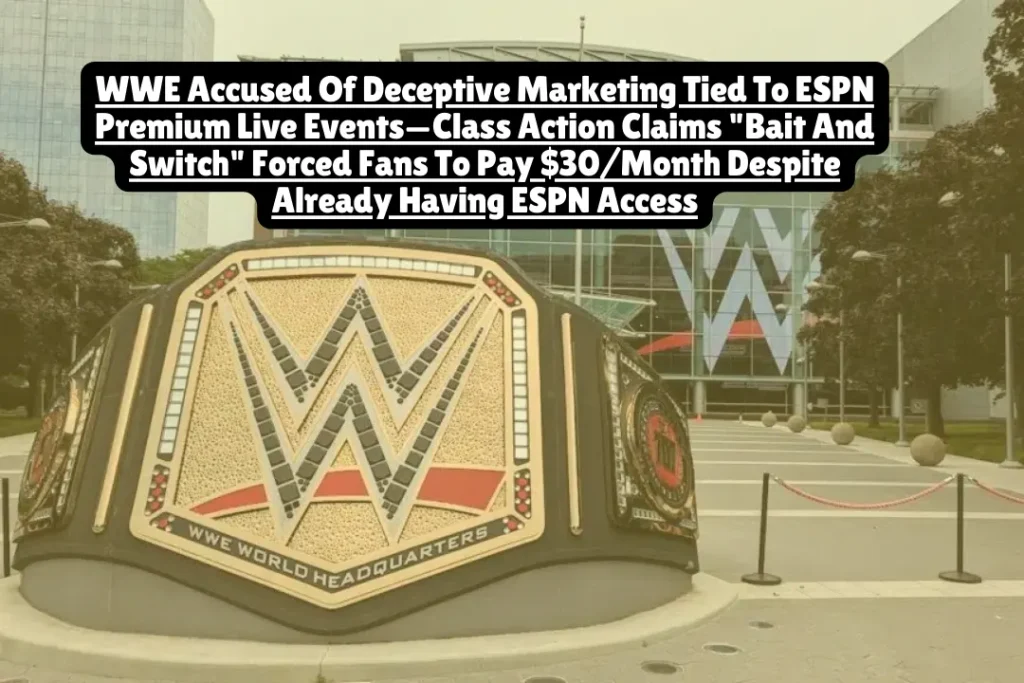
Who Can Join The Class Action
The proposed class includes U.S. consumers who paid for ESPN’s direct-to-consumer “Unlimited” service between August 6, 2025 and September 20, 2025 (the date of Wrestlepalooza) even though they were already ESPN subscribers via traditional pay-TV packages, cable, or satellite providers.
If you purchased ESPN’s DTC service during this window despite already having ESPN access through another provider, believing WWE’s marketing claims that you’d have access to PLEs, you likely qualify for the class.
The lawsuit values potential damages at more than $5 million, with eligible class members potentially receiving refunds or partial reimbursement if the case succeeds.
How This Fits Broader Subscription Deception Trends
WWE’s alleged practices echo a disturbing pattern across subscription services. The Bumble Faces Class Action Lawsuit Over Alleged Deceptive Practices And Auto-Renewal Billing—Millions Of US Users May Qualify For Compensation demonstrates how companies use misleading marketing to extract payments consumers shouldn’t owe.
Federal regulators increasingly scrutinize “dark patterns” and deceptive subscription practices. The FTC’s $2.5 billion Amazon settlement shows the government’s willingness to pursue companies that trick consumers into paying for services they believed they already had.
What Affected Fans Should Do Now
If you subscribed to ESPN’s DTC service between August 6 and September 20, 2025 despite already having ESPN through a TV provider, take these steps:
Preserve Documentation: Save all marketing emails, screenshots of ESPN and WWE promotional materials, subscription confirmation emails, billing statements showing the $29.99 charges, and any customer service communications about event access.
Document Your Existing ESPN Access: Keep records proving you already had ESPN through cable, satellite, or another provider when you signed up for the DTC service.
Monitor The Case: Watch for class action notices and court developments. You don’t need to “join” now—once a class is certified, you’ll automatically be included unless you opt out.
Consider Legal Consultation: If you experienced substantial financial harm beyond the subscription fees—such as canceled cable services in reliance on WWE’s statements—consult consumer protection attorneys about individual claims.
Frequently Asked Questions
What if I only subscribed for one month to watch Wrestlepalooza?
Even single-month subscriptions qualify if you paid between August 6 and September 20, 2025 while already having ESPN access through another provider. The key is whether you relied on WWE’s allegedly deceptive marketing.
Can I still get a refund if the lawsuit is pending?
Contact ESPN customer service to request refunds for the subscription fees. Document your request and their response. Refund requests don’t prevent you from participating in the class action.
What if I canceled my cable to avoid paying twice?
This could strengthen your claim. If you canceled existing ESPN service in reliance on WWE’s statements that you’d have access through the DTC app, document this decision and any financial harm from early termination fees or lost bundled services.
How much compensation might class members receive?
The lawsuit alleges damages exceeding $5 million. Individual payouts depend on how many people join the class, litigation costs, and settlement negotiations. Similar cases result in refunds of challenged fees plus additional damages.
What has WWE said in response?
As of January 22, 2026, WWE has not publicly responded to the lawsuit. The company must file an answer to the complaint, which typically happens within 21 days of being served.
Why isn’t ESPN being sued too?
Disney’s subscriber agreements include arbitration clauses and class action waivers. By suing only WWE, plaintiffs avoid these provisions that would force individual arbitration instead of class action litigation.
How long will this lawsuit take?
Class action consumer protection cases typically take 2-4 years from filing to resolution. Key milestones include class certification motions, discovery, potential settlement negotiations, and possibly trial if no settlement is reached.
Last Updated: January 22, 2026
Disclaimer: This article provides informational content only and does not constitute legal advice.
Take action now: If you paid for ESPN’s DTC service between August 6 and September 20, 2025 despite already having ESPN access, preserve your documentation and watch for class action notices about joining the lawsuit.
Stay informed, stay protected. — AllAboutLawyer.com
Official Sources:
- Court Filing: Diesa, et al. v. World Wrestling Entertainment, LLC, Case No. 3:26-cv-00058, U.S. District Court for the District of Connecticut (Filed January 8, 2026)
About the Author

Sarah Klein, JD, is a licensed attorney and legal content strategist with over 12 years of experience across civil, criminal, family, and regulatory law. At All About Lawyer, she covers a wide range of legal topics — from high-profile lawsuits and courtroom stories to state traffic laws and everyday legal questions — all with a focus on accuracy, clarity, and public understanding.
Her writing blends real legal insight with plain-English explanations, helping readers stay informed and legally aware.
Read more about Sarah