
Which ICE Agent Just Knocked? How to Tell ERO from HSI at Your Door
You can identify which type of ICE officer is at your door by asking specific questions through the closed door, checking their credentials and badges carefully, and understanding that ERO officers handle civil immigration enforcement while HSI special agents conduct federal criminal investigations. Knowing the difference tells you what they want, what authority they have, and critically—what rights you can invoke.
As of January 2026, ICE enforcement has reached unprecedented levels with over 20,000 officers nationwide conducting daily home visits. In the first week of January alone, Minneapolis witnessed over 300 ICE encounters including the fatal shooting of Renee Good, a U.S. citizen, during what appeared to be an immigration enforcement operation. The tragedy highlights why identifying which type of officer is at your door matters—ERO and HSI have different missions, different authorities, and require different responses to protect your rights.
Why Knowing Which ICE Officer Is at Your Door Changes Everything
This affects you if you hear a knock and see federal agents at your door, need to protect yourself and your family immediately, or want to understand what ICE can and cannot do before you open that door.
ERO and HSI operate as two independent law enforcement agencies with completely separate missions. ERO focuses on civil immigration violations and deportation, while HSI investigates federal crimes like drug trafficking, human smuggling, and money laundering. The officer type determines whether you’re facing deportation proceedings or federal criminal charges—completely different legal processes with different consequences.
Many people panic when ICE knocks and either open the door immediately or refuse to engage at all. Both responses can jeopardize your rights. The smart approach: identify which type of officer you’re dealing with through the closed door, verify their credentials and warrant, then make informed decisions about how to respond.
How to Identify Which ICE Officer Type Through Your Closed Door
Step 1: Do NOT open the door immediately. The moment you open the door, officers may interpret that as consent to enter your home.
Step 2: Ask “Who is it?” and “What agency are you with?” through the closed door or window. Both ERO and HSI personnel carry official photo identification cards issued by the Department of Homeland Security that you should request to examine.
Step 3: Ask the critical question: “Are you with ERO or HSI?” This tells you immediately whether you’re dealing with immigration enforcement or criminal investigation.
Step 4: Ask “What is this visit about?” Their answer reveals whether it’s about immigration status or criminal activity.
Step 5: Tell them to slide their credentials under the door or hold them up to a window. You have the right to verify their identity before any interaction.
Step 6: Look carefully at the badge. ERO badges contain words like “Immigration and Customs Enforcement,” “ICE,” “ERO,” “Enforcement and Removal Operations,” while HSI badges say “HSI,” “Homeland Security Investigations,” or “Special Agent”.
Step 7: Ask “Do you have a warrant?” If they claim yes, make them slide it under the door—never open the door to receive it.
Step 8: Check if the warrant is signed by a judge. Administrative warrants are issued by ICE officials, not judges, and do not authorize entry into your home without consent. Only judicial warrants signed by judges authorize forced entry.
Step 9: Write down the officer’s name, badge number, and which agency (ERO or HSI). This documentation protects your rights and helps your attorney.
Step 10: If unsure, say “I need to speak with my attorney before opening the door” and do not open it.
What ERO Officers Look Like and What They Do
ERO handles arrests, detention, custody determinations, and removals under the Immigration and Nationality Act. ERO officers are the immigration enforcement agents most people think of when they hear “ICE.”
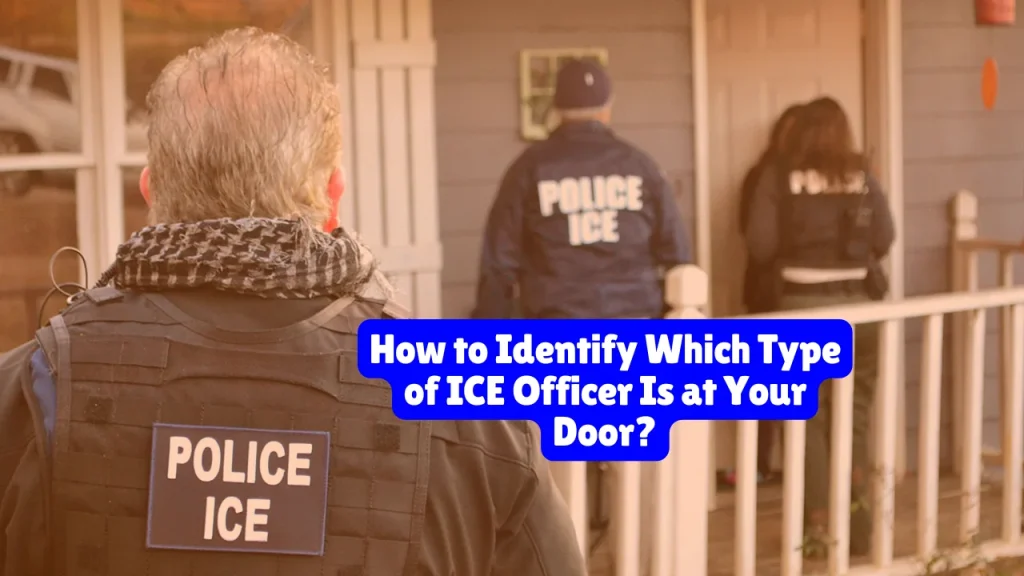
ERO badges clearly say “Enforcement and Removal Operations,” “ICE,” or “Deportation Officer.” ERO agents typically wear bulletproof vests and clothing that read “POLICE ICE,” “FEDERAL AGENT,” or sometimes just “POLICE” to obscure their affiliation. They may wear tactical gear, uniforms, or plain clothes depending on the operation.
ERO enforces Title 8 immigration violations—being in the country without authorization, overstaying visas, working without authorization, or violating immigration terms. Their goal is arresting individuals for deportation or removal proceedings in immigration court, not federal criminal court.
ERO typically has administrative warrants signed by ICE officials, not judges. These administrative warrants (Form I-200 or I-205) do NOT authorize forced entry into your home. If ERO only has an administrative warrant, you can legally refuse to open your door.
If ERO is at your door, they likely want to arrest you for civil immigration violations and begin removal proceedings. This leads to immigration court, not federal prison.
Related article: HSI vs. ERO Powers, Which ICE Branch Is Knocking On Your Door? Two Branches of ICE and Their Different Enforcement Powers
What HSI Officers Look Like and What They Do
HSI is ICE’s federal criminal investigative division that investigates human smuggling and trafficking, worksite crime, visa and benefit fraud, sanctions evasion, export control violations, money laundering, IP theft, cybercrime, and child exploitation.
HSI badges say “Homeland Security Investigations,” “HSI,” “Special Agent,” or “Criminal Investigator.” HSI agents may wear badges or vests labeled “HSI” or “POLICE” without any mention of ICE, which often causes confusion. HSI agents typically wear plain clothes with displayed badges or tactical gear.
HSI agents are Series 1811 federal criminal investigators—the same classification as FBI agents. They investigate federal crimes under Title 18 like drug trafficking, human trafficking, weapons smuggling, money laundering, fraud, terrorism, cybercrime, and child exploitation.
HSI agents typically have criminal warrants signed by federal judges. These judicial warrants authorize home entry and searches. If HSI has a valid judicial warrant signed by a judge with your correct name and address, they can legally enter your home.
If HSI is at your door, they likely want to question you about a federal crime, execute a search warrant, or arrest you for criminal charges. This leads to federal criminal court, not immigration court.
The Critical Differences You Can See at Your Door
Badge Wording: ERO says “Enforcement and Removal Operations” or “Deportation Officer”; HSI says “Homeland Security Investigations” or “Special Agent.”
Job Title: ERO officers are “Immigration Enforcement Officers”; HSI agents are “Criminal Investigators” or “Special Agents.”
Purpose: ERO is there for immigration violations and deportation; HSI is there for federal criminal investigations.
Warrant Type: ERO typically has administrative warrants NOT signed by judges; HSI typically has judicial warrants signed by federal judges.
Authority to Enter: ERO cannot enter without your consent or a judicial warrant; HSI can enter with a valid judicial search warrant.
Legal Consequences: ERO visits lead to deportation proceedings in immigration court; HSI visits lead to criminal charges in federal court.
What They Investigate: ERO investigates immigration status; HSI investigates federal crimes.
What Documents They Must Show and How to Verify Them
ICE officers must show credentials including a badge and photo identification. Ask them to slide credentials under the door or hold them to a window—you don’t have to open the door to verify identity.
Check that the badge matches the agency they claim (ERO or HSI). Check that the photo ID matches the person at your door. Write down the badge number.
If they claim to have a warrant, make them slide it under the door. A valid judicial warrant names a person in your residence and/or specific areas to be searched and is signed by a judge—not an immigration judge.
An ICE administrative warrant is different from a search warrant signed by a local judge. Look for phrases like “United States District Court” and a judge’s signature with court seal. Administrative warrants say “Department of Homeland Security” and are signed by ICE officials.
Check that any warrant has your correct name and address. If the warrant is for someone else or a different address, they cannot enter. If unsure whether the warrant is valid, say “I need to show this to my attorney” and don’t open the door.
You can call the local ICE office to verify officers are conducting operations at your address. Be cautious of scams—real ICE officers have proper credentials and never demand immediate payment over the phone.
Your Rights When ICE Comes to Your Door
You have the right to remain silent about your immigration status, where you were born, or how you entered the country. You have the right to speak with an attorney before opening the door or answering questions.
You have the right to refuse entry if ICE does not have a judicial warrant signed by a judge. Administrative warrants don’t give ICE authority to enter without your consent.
If ICE has a judicial warrant signed by a judge, you must allow entry. You have the right to see the warrant before allowing entry—make them slide it under the door. You have the right to verify officer credentials before opening your door.
You don’t have to open the door just because ICE knocks. You can speak through the closed door without opening it. If you choose to open the door, you can step outside and close the door behind you so they cannot enter your home.
You have the right to refuse to sign documents without consulting an attorney. Anything you say can be used against you in immigration or criminal proceedings and know ice is law enforcement.
You should not lie to federal agents—lying creates criminal charges. If ICE enters your home without consent or a valid warrant, state clearly “I do not consent to this entry” but don’t physically resist. Document everything: officers’ names, badge numbers, what they said, what they did.
Common Mistakes That Jeopardize Your Safety
Mistake 1: Opening the door immediately without asking who it is. This can allow ICE to enter your home.
Mistake 2: Answering questions about immigration status or how you entered the country. You have the right to remain silent.
Mistake 3: Consenting to entry when ICE only has an administrative warrant. You can refuse entry if they don’t have a judicial warrant signed by a judge.
Mistake 4: Not asking to see credentials or a warrant. You have the right to verify their identity and authority.
Mistake 5: Signing documents without understanding them or consulting an attorney. Never sign anything without legal advice.
Mistake 6: Lying to federal agents about your identity or status. This creates new criminal charges under Title 18.
Mistake 7: Letting ICE search your home without a warrant. You can refuse consent to search.
Mistake 8: Not documenting the encounter. Write down everything immediately.
Mistake 9: Not contacting an attorney immediately. Legal help is critical after any ICE encounter.
Mistake 10: Assuming you have no rights. You have constitutional rights even if you’re undocumented.
What to Do If You’re Unsure Whether to Open the Door
If unsure whether officers are really ICE, ask them to slide credentials under the door to verify identity. If unsure whether the warrant is valid, ask them to slide it under the door and check if it’s signed by a judge.
If unsure what to do, say “I need to speak with my attorney before I can open the door or answer questions.” Don’t open the door if you feel unsafe or uncertain.
You can call the local ICE office to verify officers are conducting operations at your address. You can call an immigration attorney hotline for immediate advice.
Remember: you have the right to remain silent and the right to an attorney. It’s better to be cautious and protect your rights than to open the door and make your situation worse.
If ICE forces entry without a valid warrant, don’t physically resist but clearly state “I do not consent to this entry.” Document everything and contact an attorney immediately to discuss your options.
What to Do When ICE Knocks: Step-by-Step
Immediate Actions:
- Stay calm and don’t panic
- Do NOT open the door immediately
- Ask “Who is it?” and “What agency are you with?”
- Ask “Are you with ERO or HSI?”
- Ask them to show credentials by sliding them under the door or holding to a window
- Check the badge—ERO or HSI?
- Ask “Do you have a warrant?”
- If yes, make them slide it under the door
- Check if the warrant is signed by a judge or just an ICE official
- If administrative warrant, say “I do not consent to entry without a judicial warrant”
- If judicial warrant signed by a judge, you must allow entry but say “I am exercising my right to remain silent and I want to speak to an attorney”
- If you choose to speak with ICE, step outside and close the door behind you
- Exercise your right to remain silent: “I am exercising my right to remain silent”
- Do not answer questions about immigration status or any crimes
- Say “I want to speak to an attorney”
- Write down officers’ names, badge numbers, agency (ERO or HSI), what they said, time and date
- Contact an immigration attorney immediately if ERO or criminal defense attorney if HSI
Protecting Your Family Before ICE Comes
Create a family emergency plan including what to do if ICE knocks. Teach family members not to open the door for ICE and to ask for credentials and a warrant.
Keep important documents in a safe place accessible to family. Memorize the phone number of an immigration attorney or legal aid organization.
Know your rights: you have the right to remain silent and the right to an attorney. Practice what to say: “I am exercising my right to remain silent,” “I want to speak to an attorney,” “Do you have a warrant signed by a judge?” “I do not consent to entry.”
Designate a trusted person to care for your children if you’re arrested. Keep a list of emergency contacts including attorneys and family. Document any previous ICE encounters.
Understand the difference between ERO and HSI so you know what to expect. Do not keep false documents in your home.
Finding Legal Help Fast
For ERO immigration matters: Contact an immigration attorney through the American Immigration Lawyers Association at aila.org. Call legal aid organizations providing free or low-cost immigration services. Call an immigration attorney hotline for immediate advice if ICE is at your door.
For HSI criminal matters: Contact a federal criminal defense attorney. Contact the federal public defender’s office if you can’t afford an attorney. You have the right to court-appointed counsel in criminal cases.
General resources: Contact your consulate if you’re not a U.S. citizen. Document everything about ICE encounters. File complaints about agent misconduct with DHS Office of Civil Rights and Civil Liberties.
Having an attorney significantly increases your chances of success in both immigration and criminal cases. Be cautious of scams—ICE never calls demanding payment or threatening immediate arrest. Real ICE officers have proper credentials and follow procedures.
Frequently Asked Questions
How do I know if it’s really ICE at my door?
Ask them to slide their credentials under the door or hold them to a window. Check for an official DHS badge and photo ID. Real ICE officers will have proper credentials showing either ERO or HSI. You can call the local ICE office to verify officers are at your address.
What is the difference between ERO and HSI officers?
ERO handles civil immigration enforcement including arrests for deportation. HSI investigates federal crimes like drug trafficking, human smuggling, and money laundering. ERO cases go to immigration court; HSI cases go to federal criminal court. They’re completely separate divisions with different missions.
Do I have to open the door for ICE?
No. You don’t have to open your door unless ICE has a judicial warrant signed by a judge with your correct name and address. Administrative warrants issued by ICE don’t authorize forced entry. You can refuse entry if they only have an administrative warrant.
What should I ask ICE officers through the door?
Ask: “Who are you with—ERO or HSI?” “What is this visit about?” “Do you have a warrant?” “Can you slide your credentials and the warrant under the door?” “Is the warrant signed by a judge?” Never open the door until you’ve verified their identity and authority.
Can ICE enter my home without a warrant?
Not without your consent. ICE needs either your permission or a judicial warrant signed by a judge to enter your home. Administrative warrants don’t authorize forced entry. If ICE forces entry without a valid judicial warrant, don’t resist physically but clearly state “I do not consent to this entry.”
What does an ICE warrant look like?
A judicial warrant is signed by a judge from a “United States District Court” and has a court seal. It includes your name and address and what’s authorized. An administrative warrant is signed by an ICE official, not a judge, and doesn’t authorize home entry without your consent.
What should I do if ICE forces entry into my home?
Don’t physically resist as that creates criminal charges. Clearly state “I do not consent to this entry.” Exercise your right to remain silent. Ask for an attorney. Document everything: officers’ names, badge numbers, what they said and did. Contact an attorney immediately after they leave.
Last Updated: January 15, 2026 — We keep this current with the latest legal developments.
PRO TIP: The single most important question to ask through your closed door is: “Do you have a warrant signed by a judge?” This immediately tells you whether ICE has legal authority to enter your home. If they say yes, make them slide it under the door—NEVER open the door to receive it. Look for a judge’s signature and court seal. If you see “Department of Homeland Security” and an ICE official’s signature instead, it’s an administrative warrant and you can legally refuse entry by saying “I do not consent to entry without a judicial warrant.” This one question protects your Fourth Amendment rights.
Disclaimer: This article provides general educational information about identifying ICE officers at your door and is not legal advice. Immigration law and federal law are complex and fact-specific, and individual circumstances dramatically affect your rights and options. ICE enforcement policies and procedures change frequently based on current administration priorities and court decisions. The information presented does not constitute legal representation, and AllAboutLawyer.com does not provide legal services. If ICE comes to your door or you face immigration enforcement or federal criminal investigation, consult a qualified immigration attorney or criminal defense attorney immediately for advice tailored to your specific situation. Do not rely solely on this article when making decisions affecting your freedom or immigration status.
Take Action: Know your rights before ICE knocks. Find a qualified immigration attorney through the American Immigration Lawyers Association or access know-your-rights resources from the ACLU. If ICE is at your door right now, call an immigration attorney hotline immediately for real-time guidance.
Stay informed, stay protected. — AllAboutLawyer.com
About the Author

Sarah Klein, JD, is a legal writer with experience in immigration and migration law, covering topics like green cards, marriage-based visas, and asylum applications. Through All About Lawyer, she provides straightforward legal insights to help individuals and families navigate complex immigration processes with clarity and confidence.
Read more about Sarah