
What States Have Homewrecker Laws? The 6 States Where You Can Sue for Alienation of Affection
As of 2026, only six U.S. states still recognize “homewrecker laws”—North Carolina, Mississippi, South Dakota, New Mexico, Utah, and Hawaii—which allow spouses to sue third parties for alienation of affection or criminal conversation when someone interferes with their marriage. These controversial civil lawsuits can result in substantial financial damages, with some North Carolina cases awarding over $1 million to jilted spouses.
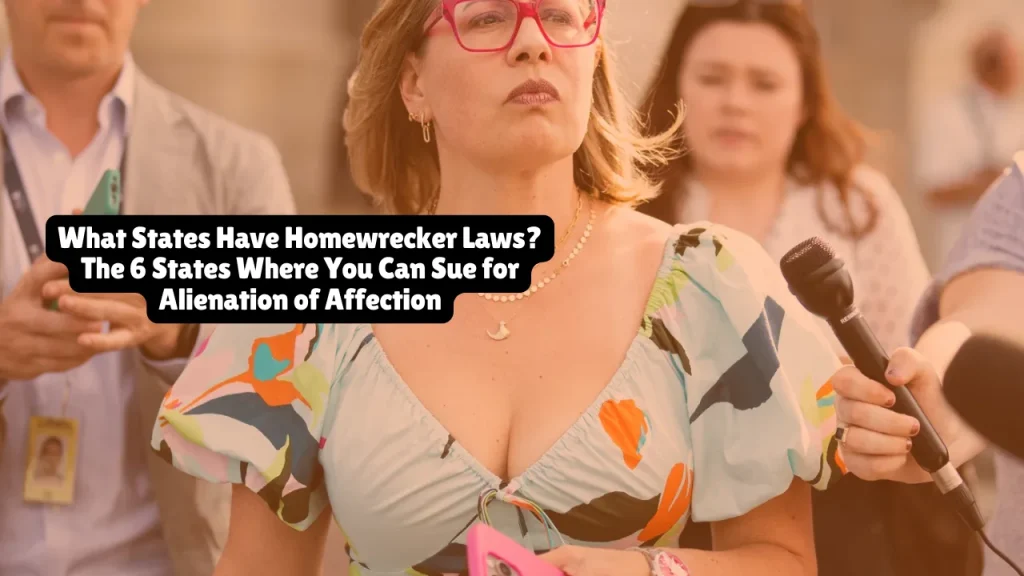
The most recent high-profile example emerged in January 2026 when Heather Ammel of Moore County, North Carolina, sued former U.S. Senator Kyrsten Sinema, alleging the Arizona politician had an affair with her husband Matthew Ammel, a member of Sinema’s security team, destroying their 14-year marriage.
What Are Homewrecker Laws?
Homewrecker laws refer to two related civil torts known as alienation of affection and criminal conversation. These are part of a group of English common law remedies called “heart balm torts,” originally designed to provide compensation when someone’s heart was broken by romantic betrayal. Despite their historical origins treating wives as husbands’ property, these laws evolved into gender-neutral protections of marital relationships.
Alienation of affection allows a spouse to sue a third party who caused the loss of love, affection, and companionship in their marriage. The lawsuit targets the “homewrecker”—the person who interfered with the marital relationship—not the cheating spouse. Criminal conversation, despite its misleading name, is a separate civil lawsuit allowing a spouse to sue a third party who engaged in adultery with their spouse during the marriage.
Alienation of Affection Explained
To prove alienation of affection under North Carolina General Statutes § 52-13 and similar laws in other states, plaintiffs must establish four elements. First, a valid marriage existed with genuine love and affection between spouses. Second, that love and affection was alienated and destroyed. Third, the defendant’s wrongful and malicious conduct caused the alienation. Fourth, the plaintiff suffered damages from losing their spouse’s companionship and affection.
Importantly, sexual relationships are not required to prove alienation of affection. Emotional affairs, persistent interference, or manipulation that destroys a marriage can be sufficient. The key is whether the defendant intentionally engaged in conduct that foreseeably would damage the marriage. In North Carolina cases, courts have found liability when defendants knowingly pursued married individuals and engaged in conduct that destroyed marital relationships, regardless of whether physical intimacy occurred.
Related article: Kyrsten Sinema Lawsuit, Former Senator Sued for $75K+ in Alienation of Affection Case Over Alleged Affair With His Married Bodyguard Matthew Ammel
Criminal Conversation: Not Actually a Crime
Despite its name, criminal conversation is not a criminal charge—it’s a civil lawsuit seeking monetary damages. Under this tort, a spouse can sue someone who engaged in sexual intercourse with their spouse during the marriage. The elements are straightforward: a valid marriage existed, the defendant had sexual relations with the plaintiff’s spouse during that marriage, and damages resulted.
Criminal conversation is considered a strict liability tort in most jurisdictions that recognize it. This means plaintiffs don’t need to prove the affair caused the marriage to fail or that the defendant knew the person was married. The act of adultery itself is sufficient. However, South Dakota Codified Laws § 20-9-7 and interpretations in other states have clarified that defendants may have defenses if they genuinely didn’t know the person was married.
Which States Still Allow These Lawsuits in 2026
North Carolina is by far the most active jurisdiction for homewrecker lawsuits. The state has seen numerous high-profile cases with substantial damage awards, and the North Carolina legislature has repeatedly declined to abolish these torts. In 2009, lawmakers added procedural limits through N.C. Gen. Stat. § 52-13, establishing a three-year statute of limitations and prohibiting claims for conduct occurring after spouses permanently separate.
South Dakota vigorously defends its alienation of affection law under SDCL 20-9-7. The South Dakota Supreme Court reaffirmed the tort’s validity in 2018, ruling that only the legislature can abolish it. Mississippi recognizes both torts through common law precedent established by the Mississippi Supreme Court. New Mexico, Utah, and Hawaii technically maintain these laws but see very few cases filed, with Utah limiting claims by judicial decisions that abolished criminal conversation while preserving alienation of affection.
The Kyrsten Sinema Case: A Modern Example
The lawsuit against former Senator Kyrsten Sinema demonstrates how alienation of affection claims work in practice. Heather Ammel’s complaint, originally filed in Moore County Superior Court in September 2025 and moved to federal court in January 2026, seeks at least $75,000 in damages plus punitive damages and attorney’s fees.
According to the lawsuit, Matthew Ammel was hired as Sinema’s security detail in April 2022 after retiring from the Army. The complaint alleges that Sinema knowingly pursued Matthew Ammel despite being aware he was married with three children. The alleged conduct included sending him sexually suggestive messages and photos via the encrypted messaging app Signal, purchasing expensive gifts including a Theragun personal massager, and taking him on lavish trips to Napa Valley, Las Vegas, Saudi Arabia, and concerts including Taylor Swift’s Eras Tour and U2 at The Sphere in Las Vegas.
The lawsuit claims the relationship escalated throughout 2023 and 2024, with Sinema allegedly offering Matthew Ammel MDMA and paying for psychedelic treatment for his military-related PTSD. In early 2024, Heather Ammel discovered the romantic messages on Signal. By summer 2024, Matthew Ammel had stopped wearing his wedding ring, and Sinema hired him as a salaried national security fellow on her Senate staff while he continued providing security services paid through her campaign funds.
The case illustrates key elements of alienation of affection claims: a valid marriage with genuine love and affection, deliberate interference by a third party who knew about the marriage, conduct that destroyed the marital relationship, and resulting damages including emotional distress, humiliation, and loss of consortium. Matthew Ammel filed for divorce in January 2026, and the lawsuit alleges he and Sinema remain in a romantic relationship. Sinema now works as a lobbyist for Hogan Lovells in Washington, D.C.
Beyond the alienation of affection claims, legal experts have noted the case raises potential criminal issues regarding possible misuse of campaign funds and Senate ethics violations if public or campaign money funded personal expenses disguised as security services.
Typical Damage Awards and Legal Outcomes
Damage awards in homewrecker lawsuits vary dramatically based on the strength of evidence and circumstances of each case. In North Carolina, awards have ranged from tens of thousands to over $9 million. A 2010 North Carolina jury awarded a woman $9 million in an alienation of affection case, though such massive verdicts are exceptional. In November 2025, a TikTok influencer was ordered to pay $1.75 million after being found liable for destroying a Durham couple’s marriage. A 2021 case involving a former North Carolina state senator resulted in a $3 million settlement.
South Dakota cases have produced awards from $250,000 to $950,000, later reduced to $400,000 in one notable case involving an orthopedic surgeon. Plaintiffs can recover loss of consortium (companionship, affection, and sexual relations), emotional distress damages, economic losses such as income or support, and in some cases punitive damages designed to punish particularly egregious conduct. North Carolina and South Dakota both allow punitive damages, though South Dakota limits them to 20% of the defendant’s net worth.
Common Misconceptions About Homewrecker Laws
Many people mistakenly believe homewrecker laws involve criminal charges. They don’t. Both alienation of affection and criminal conversation are civil lawsuits seeking monetary damages, not criminal prosecutions. No one goes to jail for breaking up a marriage under these laws, though as the Sinema case demonstrates, related criminal issues involving campaign finance or ethics violations could arise separately.
Another myth is that you can sue your cheating spouse under homewrecker laws. You cannot. Spousal immunity prevents suing your own spouse for alienation of affection or criminal conversation in jurisdictions recognizing these torts. The lawsuit must target the third party who interfered with the marriage.
People also wrongly assume divorce is required before filing these lawsuits. It’s not. The marriage must simply exist at the time of the alleged wrongful conduct. Many plaintiffs file alienation of affection or criminal conversation lawsuits while still legally married or during divorce proceedings.
Finally, these lawsuits are not easy to win. Defendants have strong defenses available, including proving the marriage was already broken before their involvement, demonstrating they didn’t know the person was married, showing they were not the active pursuer, or establishing that no genuine love existed in the marriage to alienate.
Understanding Your State’s Law
If you live in North Carolina, Mississippi, South Dakota, New Mexico, Utah, or Hawaii, these laws theoretically apply to you. However, practical enforcement varies dramatically. North Carolina handles hundreds of these cases, while Hawaii rarely sees any filed. Understanding your state’s specific requirements, statute of limitations, and procedural rules is essential before considering such a lawsuit.
Evidence is critical in proving these claims. Plaintiffs need documentation showing the marriage was loving, proof of the defendant’s conduct (text messages, emails, witness testimony, hotel records, financial records showing gifts or travel), and evidence linking that conduct to the destruction of the marriage. The three-year statute of limitations in North Carolina and similar timeframes in other states mean acting quickly is important.
What states have homewrecker laws in 2026?
Six states recognize homewrecker laws: North Carolina, Mississippi, South Dakota, New Mexico, Utah, and Hawaii. These states allow civil lawsuits for alienation of affection and/or criminal conversation when third parties interfere with marriages.
What is alienation of affection?
Alienation of affection is a civil lawsuit allowing a spouse to sue a third party who caused the loss of love and affection in their marriage through wrongful conduct. Sexual relationships are not required—emotional interference can be sufficient.
Can you sue someone for breaking up your marriage?
Yes, but only in the six states that recognize alienation of affection laws. You must prove your marriage had genuine love, the defendant’s wrongful conduct caused alienation, and you suffered damages. You cannot sue your own spouse.
Is criminal conversation an actual crime?
No. Despite the misleading name, criminal conversation is a civil lawsuit, not a criminal charge. It allows spouses to sue third parties who engaged in adultery with their spouse during the marriage for monetary damages.
How much can you win in a homewrecker lawsuit?
Awards vary from thousands to millions of dollars. North Carolina cases have reached $9 million, though most awards are substantially lower. The recent Sinema lawsuit seeks at least $75,000 plus punitive damages. Damages can include loss of companionship, emotional distress, economic losses, and sometimes punitive damages.
Can the cheating spouse be sued under homewrecker laws?
No. Spousal immunity prevents you from suing your own spouse for alienation of affection or criminal conversation. These lawsuits can only be filed against third parties who interfered with the marriage.
Last Updated: January 17, 2026
Disclaimer: This article is for informational purposes only and does not constitute legal advice.
If you are considering filing or have been named as a defendant in an alienation of affection or criminal conversation lawsuit, consult with a qualified family law attorney in your state to understand your rights and legal options.
Stay informed, stay protected. — AllAboutLawyer.com
Citations:
- North Carolina General Statutes § 52-13, Procedures in causes of action for alienation of affection and criminal conversation, https://www.ncleg.net/enactedlegislation/statutes/html/bysection/chapter_52/gs_52-13.html
- South Dakota Codified Laws § 20-9-7, Abduction, enticement and seduction forbidden by rights of personal relation
- Ammel v. Sinema, Case No. 1:26-cv-00043 (E.D.N.C. Jan. 2026)
- Cedar v. Johnson, 2018 SD 59 (S.D. 2018)
- Veeder v. Kennedy, 1999 SD 23 (S.D. 1999)
About the Author

Sarah Klein, JD, is a licensed attorney and legal content strategist with over 12 years of experience across civil, criminal, family, and regulatory law. At All About Lawyer, she covers a wide range of legal topics — from high-profile lawsuits and courtroom stories to state traffic laws and everyday legal questions — all with a focus on accuracy, clarity, and public understanding.
Her writing blends real legal insight with plain-English explanations, helping readers stay informed and legally aware.
Read more about Sarah